Category Archives: Energy and Climate Change

News and articles on climate change, vehicle pollution, and renewable energy.

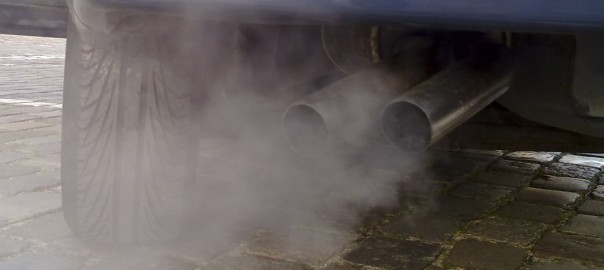
Car exhaust pollution (Image: Wikipedia)

Use pram covers ‘to protect babies from air pollution’ during school run

Parents should use pram covers to protect babies and young children from harmful air pollution during the school run, researchers suggest.

Traffic lights and bus stops were pollution hotspots and there were higher levels of pollution in the morning compared with the afternoon, the University of Surrey study said.

Young children are more at risk because their bodies are small and developing.

And they could be breathing in damaging substances, the study said.

Car exhaust pollution (Image: Wikipedia)

A recent World Health Organization report said that 570,000 children under the age of five died every year from illnesses that could be linked to pollution.

The Surrey research, published in Environmental Pollution, was based on measurements from air monitoring equipment inside toddlers’ prams being pushed to and from schools during drop-off and pick-up times.

Scientists looked at pollution levels in prams during 64 trips, covering about 50 miles (80km), in Guildford.

Bus stops and traffic lights were the worst places for being exposed to the tiny particles from exhaust fumes and tyres that can get into the bloodstream.

And there were more of these harmful particles in the air during morning drop-off times, when traffic was at its busiest.

Dr Prashant Kumar, lead study author from the University of Surrey, said his findings were a warning to parents.

“Young children are far more susceptible to pollution than adults, due to their immature and developing systems and lower body weight,” he said.

“Essentially, children could be at risk of breathing in some nasty and harmful chemical species such as iron, aluminium and silica that form together the particles of various size ranges.”

Dr Kumar said the best way to stop this happening was to use a barrier between children in prams and the emissions from vehicle exhausts, especially at traffic lights, crossroads and bus stops.

He said his research team was also trying to find a way to clean the air around children sitting in their prams.

Source: BBC

Severe Flooding, Against a Background of Wind Turbines: November 2012, Tyringham, Bucks. (Image: T. Larkum)

Drastic cooling in North Atlantic beyond worst fears, scientists warn

Climatologists say Labrador Sea could cool within a decade before end of this century, leading to unprecedented disruption, reports Climate News Network

For thousands of years, parts of northwest Europe have enjoyed a climate about 5C warmer than many other regions on the same latitude. But new scientific analysis suggests that that could change much sooner and much faster than thought possible.

Climatologists who have looked again at the possibility of major climate change in and around the Atlantic Ocean, a persistent puzzle to researchers, now say there is an almost 50% chance that a key area of the North Atlantic could cool suddenly and rapidly, within the space of a decade, before the end of this century.

Severe Flooding, Against a Background of Wind Turbines: November 2012, Tyringham, Bucks. (Image: T. Larkum)

That is a much starker prospect than even the worst-case scientific scenario proposed so far, which does not see the Atlantic ocean current shutdown happening for several hundred years at least.

A scenario even more drastic (but fortunately fictional) was the subject of the 2004 US movie The Day After Tomorrow, which portrayed the disruption of the North Atlantic’s circulation leading to global cooling and a new Ice Age.

To evaluate the risk of extreme climate change, researchers from the Environnements et Paléoenvironnements Océaniques et Continentaux laboratory (CNRS/University of Bordeaux, France), and the University of Southamptondeveloped an algorithm to analyse the 40 climate models considered by the Fifth Assessment Report.

The findings by the British and French team, published in the Nature Communications journal, in sharp contrast to the IPCC, put the probability of rapid North Atlantic cooling during this century at almost an even chance – nearly 50%.

Read more: The Guardian

Exxon Caves to Oil Crash With Historic Global Reserves Cut

  • International oil giant wipes 3.3 billion barrels from books
  • Entire Kearl oil-sands project in western Canada de-booked

Exxon Mobil Corp. disclosed the deepest reserves cut in its modern history as prolonged routs in oil and natural gas markets erased the value of a $16 billion oil-sands investment and other North American assets.

The equivalent of about 3.3 billion barrels of untapped crude was removed from the so-called proved reserves category in Exxon’s books, the Irving, Texas-based explorer said in a statement. The revisions were triggered when low energy prices made it mathematically impossible to profitably harvest those fields within five years. The sprawling, 3.5-billion barrel Kearl oil-sands development in western Canada accounted for most of the hit.

The 19 percent drop amounts to the largest annual cut since at least the 1999 merger that created the company in its modern form, according to data compiled by Bloomberg. That includes 1.5 billion barrels of reserves that were pumped from wells. The previous record cut was a 3 percent reduction taken during the height of the global financial crisis in 2008. The reserves are now at their lowest since 1997.

The shares gained 0.2 percent to $81.08 in after-hours trading as of 5:46 p.m. in New York on Wednesday, after closing at $80.93.

Exxon, facing a U.S. Securities and Exchange Commission probe into how it valued its portfolio amid the worst oil market collapse in a generation, signaled in October and again last month that the revision was probably coming.

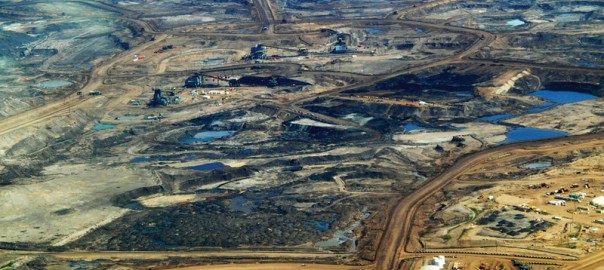
The oil-sand mines in northern Alberta are among the costliest types of petroleum projects to develop because the raw bitumen extracted from the region must be processed and converted to a thick, synthetic crude oil. As such, they have been particularly hard hit by the worst oil slump in a generation.

ConocoPhillips on Tuesday removed the equivalent of 1.15 billion barrels of oil-sands crude from its books as part of a 21 percent cut that pushed the Houston-based company’s reserves to a 15-year low.

Read more: Bloomberg

Tar Sands in Alberta (Image: Wikimedia/Howl Arts Collective)

Government pension scheme begins ditching oil and gas investments

A giant pension scheme with more than 4 million members is shifting almost 10% of its investments into a new climate change fund designed to move people’s money out of fossil fuels and into renewable energy.

Nest (National Employment Savings Trust), a publicly owned scheme set up by the government, said it was moving £130m into the fund because it wanted to protect its worker members from the risks associated with climate change by reducing their exposure to companies with reserves of coal, oil and gas.

Tar Sands in Alberta (Image: Wikimedia/Howl Arts Collective)

Nest has named oil groups Shell and ExxonMobil as two of the companies in which it is set to scale back its investment, with SSE, one of Britain’s biggest energy firms, one of those likely to be a beneficiary of the new strategy.

The move has been welcomed by climate change campaigners and comes amid an ongoing global carbon divestment campaign that has succeeded in persuading hundreds of institutions, including universities, pension funds and charitable foundations, to dump billions of pounds of shares in carbon-intensive industries. The Guardian has been running its own campaign called Keep it in the ground.

The move by Nest is notable because it is a public body – it was set up by the government to help employers meet their obligations under the automatic enrolment retirement saving initiative, which went live in 2012. Nest is now looking after the pension pots of more than 4 million UK workers, investing £1.5bn on their behalf, and has signed up more than 290,000 employers. These numbers are expected to increase markedly over the next few years, making Nest a major shareholder and, it hopes, a difficult voice to ignore.

Most of the money looked after by Nest is invested in its retirement date funds – there are 47 of these, with each worker put into the one appropriate for their age. It is £130m of this total pot that is being moved into a new “climate-aware” fund managed by UBS Asset Management, which has been developed to allow members to

“benefit from the transition to a low-carbon economy”.

Read more: The Guardian

Diesel car (Image: Y. Mok/PA)

Diesel drivers should think twice before buying – Transport Secretary

Drivers should think long and hard before buying a diesel car, the Transport Secretary has said.

Chris Grayling suggested motorists should consider buying a low-emission vehicle rather than spending their money on a diesel.

Diesel car (Image: Y. Mok/PA)

His intervention follows reports the Government is considering a scrappage scheme for diesel cars to improve air quality.

The reported scheme would see drivers offered a cash incentive for replacing an old diesel car with a low-emission vehicle.

Asked whether motorists should hesitate before buying a diesel, Mr Grayling told The Daily Mail:

“People should take a long, hard think about what they need, about where they’re going to be driving, and should make best endeavours to buy the least polluting vehicle they can.

“I don’t think diesel is going to disappear but someone who is buying a car to drive around a busy city may think about buying a low-emission vehicle rather than a diesel.”

Read more: MSN

Air pollution causes 40,000 early deaths in the UK and costs the country £27.5bn a year, according to a government estimate

End UK tax incentives for diesel vehicles, ministers are urged

Ministers are coming under growing pressure to remove tax incentives for diesel cars and offer compensation to motorists so they can swap to more environmentally friendly vehicles

A group of medical professionals, environmental campaigners and lawyers has written to the chancellor ahead of the budget to demand a change to the vehicle excise duty that they say subsidises diesel cars.

Separately, senior Labour and Tory politicians have called for a comprehensive vehicle scrappage scheme to help people with diesel cars change to greener alternatives.

Air pollution causes 40,000 early deaths in the UK and costs the country £27.5bn a year, according to a government estimate

The letter from campaigners, including the British Lung Foundation, Greenpeace and doctors’ groups, says toxic air poses a daily risk to people’s health – particularly the young and those suffering from lung problems.

“Air pollution has … been shown to stunt children’s lung growth, which could leave them with health problems in later life,” it states. “We all deserve to breathe clean air.”

On Saturday the Guardian revealed that thousands of children and young people at more than 800 nurseries, schools and colleges in London faced dangerous and illegal levels of toxic air, much of it from diesel cars.

The transport secretary, Chris Grayling, indicated the government may bow to pressure, saying motorists should be wary of buying diesel cars, adding: “We’re going to have to really migrate our car fleet, and our vehicle fleet more generally, to cleaner technology.” However, he said that diesel “was not going to disappear”.

Air pollution causes 40,000 early deaths in the UK and costs the country £27.5bn a year, according to a government estimate. MPs have called it a public health emergency.

The letter adds:

“We know diesel vehicles, in particular diesel cars, are a major source of pollution in towns and cities … yet vehicle excise duty (VED) not only fails to recognise this, but is still incentivising them. We are therefore asking for a revision of the VED first-year rate in your upcoming budget statement.”

Read more: Edie.net

‘The shelves looked wonderful, perfect, almost clinical, as though invented in a lab in my absence; but there was no smell.’ (Image: A. Britton/PA)

The Supermarket Food Gamble May Be Up

Brexit, migration and climate pressures mean our ‘too big to fail’ global food chain could unravel

The UK’s clock has been set to Permanent Global Summer Time once more after a temporary blip. Courgettes, spinach and iceberg lettuce are back on the shelves, and the panic over the lack of imported fruit and vegetables has been contained. “As you were, everyone,” appears to be the message.

But why would supermarkets – which are said to have lost sales worth as much as £8m in January thanks to record-breaking, crop-wrecking snow and rainfall in the usually mild winter regions of Spain and Italy – be so keen to fly in substitutes from the US at exorbitant cost?

Why would they sell at a loss rather than let us go without, or put up prices to reflect the changing market? Why indeed would anyone air-freight watery lettuce across the whole of the American continent and the Atlantic when it takes 127 calories of fuel energy to fly just 1 food calorie of that lettuce to the UK from California?

‘The shelves looked wonderful, perfect, almost clinical, as though invented in a lab in my absence; but there was no smell.’ (Image: A. Britton/PA)

The answer is that, in the past 40 years, a whole supermarket system has been built on the seductive illusion of this Permanent Global Summer Time. As a result, a cornucopia of perpetual harvest is one of the key selling points that big stores have over rival retailers. If the enticing fresh produce section placed near the front of each store to draw you in starts looking a bit empty, we might not bother to shop there at all.

But when you take into account climate change, the shortages of early 2017 look more like a taste of things to come than just a blip, and that is almost impossible for supermarkets to admit.

Add the impact of this winter’s weather on Mediterranean production, the inflationary pressures from a post-Brexit fall in the value of sterling against the euro, and the threat of tariffs as we exit the single market, and suddenly the model begins to look extraordinarily vulnerable.

Read more: The Guardian

A new UK diesel car and van scrappage scheme could be launched in the 2017 Budget

Diesel scrappage scheme: Sadiq Khan warns diesel cars could be BANNED

MAYOR of London Sadiq Khan refuses to rule out a driving ban for the most polluting diesel and petrol cars in central London in a bid to reduce air pollution.

Sadiq Khan has warned that diesel cars could be banned from Central London in a bid to reduce air pollution.

This comes just a week after the Mayor announced a £10 toxicity charge for the oldest and most-polluting cars in the city, which will become effective in October.

Diesel cars that enter the congestion charge zone in central London will pat an additional T-charge of £10 on top of the £11.50 congestion charge.

A new UK diesel car and van scrappage scheme could be launched in the 2017 Budget

Early predictions by the Mayor’s team believe that four in ten motorists will change their behaviour and stop entering the city centre.

In an interview on ITV’s Peston on Sunday the London Mayor claimed that “nothing is off the table” in relation to banning diesel cars.

“Well, I want to address the issue of poor quality air 365 days a year, not only on those days where the air is dangerous.”

“I’m using all the tools that i’ve got and we’re being innovative but the government has to do more.”

Air pollution contributes to the deaths of 9,000 Londoners annually and the level of harmful toxins in the air have exceeded legal limits regularly in the capital.

Read more: Express

Solar Charge Points charging electric cars (Image: T. Larkum)

Electric cars and cheap solar ‘could halt fossil fuel growth by 2020’

Solar power and clean cars are ‘gamechangers’ consistently underestimated by big energy, says Imperial College and Carbon Tracker report

Falling costs of electric vehicles and solar panels could halt worldwide growth in demand for oil and coal by 2020, a new report has suggested.

A scenario that takes into account the latest cost reduction projections for the green technologies, and countries’ pledges to cut emissions, finds that solar power and electric vehicles are “gamechangers” that could leave fossil fuels stranded.

Solar Charge Points charging electric cars (Image: T. Larkum)

Polluting fuels could lose 10% of market share to solar power and clean cars within a decade, the report by the Grantham Institute at Imperial College London and the Carbon Tracker Initiative found.

A 10% loss of market share was enough to cause the collapse of the coal mining industry in the US, while Europe’s five major utilities lost €100bn (£85bn) between 2008 and 2013 because they did not prepare for an 8% increase in renewables, the report said.

Big energy companies are seriously underestimating the low-carbon transition by sticking to their “business as usual” scenarios which expect continued growth of fossil fuels, and could see their assets “stranded”, the study claims.

Emerging technology, such as printable solar photovoltaics which generate electricity, could bring down costs and boost take-up even more than currently predicted.

Luke Sussams, a senior researcher at Carbon Tracker, said:

“Electric vehicles and solar power are gamechangers that the fossil fuel industry consistently underestimates.

“Further innovation could make our scenarios look conservative in five years’ time, in which case the demand misread by companies will have been amplified even more.”

Read more: The Guardian

Electric Cars Could Cause Big Oil This Much Damage

The growth of battery-powered cars could be as disruptive to the oil market as the OPEC market-share war that triggered the price crash of 2014, potentially wiping hundreds of billions of dollars off the value from fossil fuel producers in the next decade.

About 2 million barrels a day of oil demand could be displaced by electric vehicles by 2025, equivalent in size to the oversupply that triggered the biggest oil industry downturn in a generation over the past three years, according to research from Imperial College London and the Carbon Tracker Initiative, a think tank, published Thursday. A similar 10 percent loss of market share caused the collapse of the U.S. coal mining industry and wiped more than a 100 billion euros ($108 billion) off the value of European utilities from 2008 to 2013, the report said.

(Image: Razzouk/Shutterstock)

Major oil companies are waking up to the potential disruption plug-in vehicles could have on their industry. BP Plc says electric vehicles, or EVs, could erase as much as 5 million barrels a day in the next 20 years, while analysts at Wood Mackenzie say they could erode as much as 10 percent of global gasoline demand over that time. Global oil demand could peak in as little as five years, according to Royal Dutch Shell Plc Chief Financial Officer Simon Henry.

By 2040 16 million barrels a day of oil demand could be displaced, rising to 25 million by 2050, a

“stark contrast to the continuous growth in oil demand expected by industry,”

according to the report. The impact on the oil industry could exceed price slump of 2014 to 2016 that “wiped hundreds of billions off capex,” Stefano Ambrogi, a spokesman for the Carbon Tracker Institute, said by e-mail.

The cost of EVs is already falling faster than previous forecasts and they could reach parity with conventional internal combustion vehicles by 2020, eventually saturating the passenger vehicle market by 2050, the report said.

EVs may take 19 to 21 percent of the road transport market by 2035, according to the researchers. That’s three times BP’s projection of 6 percent market share in 2035. By 2050, EVs would comprise 69 percent of the road-transport market, with oil-powered cars accounting for about 13 percent.

Source: Bloomberg