Category Archives: Energy and Climate Change

News and articles on climate change, vehicle pollution, and renewable energy.

IEA: 7 out of 10 cars must be electric to limit global warming to 2⁰C by 2050

With CO2 emissions frequently discussed in the automotive industry, it is useful to view this in a broader context.

The International Energy Agency (IEA) reports that global CO2 emissions held at the same level in 2016 as in the previous two years. But to limit global warming to no more than 2°C above pre-industrial levels, which is the critical target for global climate policy, ‘would require an energy transition of exceptional scope, depth and speed, including a doubling of annual average energy-related investments from current levels’ according to the IEA.

The IEA attributes the stability in emissions to increased use of renewable energy, a shift from coal to natural gas and improvements in energy efficiency as well as structural changes in the global economy. However, to achieve long-term targets, the IEA also states that

‘emissions need to peak before 2020 and fall by more than 70% below today’s levels by 2050.’

So what does this mean for the automotive industry?

The IEA suggests numerous measures that are required to bring global emissions down to the target level by 2050. These include 95% of electricity being low-carbon, retrofitting building stock and a $3.5 trillion annual investment in the energy sector. The IEA believes that fossil fuels will still be needed but would only account for 40% of demand, half of their share today.

Crucially, to help reduce the reliance on fossil fuels, the IEA says

‘7 out of every 10 new cars would need to be electric, compared with 1 in 100 today.’

This relates to the share of electric vehicles in new registration figures globally, which is currently estimated at about 1%. However, the electric share of the parc is naturally significantly lower.

Read more: Autovista Group

Clean disruption of energy & transportation

The industrial age of energy and transportation will be over by 2030. Maybe before.

Exponentially improving technologies such as solar, electric vehicles, and autonomous (self-driving) cars will disrupt and sweep away the energy and transportation industries as we know it. The same Silicon Valley ecosystem that created bit-based technologies that have disrupted atom-based industries is now creating bit- and electron-based technologies that will disrupt atom-based energy industries.

Clean Disruption projections (based on technology cost curves, business model innovation as well as product innovation) show that by 2030:

– All new energy will be provided by solar or wind.
– All new mass-market vehicles will be electric.
– All of these vehicles will be autonomous (self-driving) or semi-autonomous.
– The car market will shrink by 80%.
– Gasoline will be obsolete. Nuclear is already obsolete. Natural Gas and Coal will be obsolete.
– Up to 80% of highways will not be needed.
– Up to 80% of parking spaces will not be needed.
– The concept of individual car ownership will be obsolete.
– The Car Insurance industry will be disrupted. The taxi industry will be obsolete.

Read more: Tony Seba


UK breaks solar energy record on sunny March weekend

Last weekend’s sunny weather was not only good for beers, barbecues and bees, but also drove solar power to break a new UK record.

For the first time ever, the amount of electricity demanded by homes and businesses in the afternoon on Saturday was lower than it was in the night, because solar panels on rooftops and in fields cut demand so much.

National Grid, which runs the transmission network, described the moment as a

“huge milestone”

The company sees the solar power generated on the distribution networks – or local roads of the system – as reduced electricity demand.

The sunshine meant that solar power produced six times more electricity than the country’s coal-fired power stations on Saturday.

Continued good weather saw solar power generate significant amounts of power on Sunday and Monday too, when it was providing around 15% of electricity generation. Demand on Sunday afternoon was also lower than on Sunday night.

Duncan Burt, who manages daily operations at National Grid, said:

“Demand being lower in the afternoon than overnight really is turning the hard and fast rules of the past upside down. It’s another fascinating sign of the huge changes we are seeing in Britain’s energy scene”.

Electricity demand usually peaks around 4pm to 6pm at this time of year, as people return home from work, with demand lower still at weekends. But the early hours of the morning are usually the quietest for the Berkshire control centre that monitors the grid, so a reversal is dramatic.

For the first time, on Saturday 25 March 2017, electricity demand in Great Britain was lower during the afternoon than it was overnight due to high solar generation.

Read more: The Guardian

Vattenfall wind farms to use BMW energy storage

Sweden’s state-owned utility Vattenfall will use 1,000 lithium ion batteries supplied by BMW Group to provide energy storage at some of the power company’s wind power facilities.

The batteries, which are of the same type the auto maker uses in its BMW i3 electric car, will have a capacity of 33 kWh. They will function as back-up energy storage for when the wind power resource isn’t available.
Vattenfall will build the first 3.2 MW energy storage at the Princess Alexia wind energy project near Amsterdam, which generates 122 MW.

A larger 22 MW energy storage project will be built at the 230 MW Pen y Cymoedd wind farm in South Wales.
In August, Vattenfall won a contract with UK-based National Grid under which it will supply electric balancing services for the Pen y Cymoedd wind farm.

Source: Electric Light & Power

Mexicans Lining up Electric to Beat Pollution

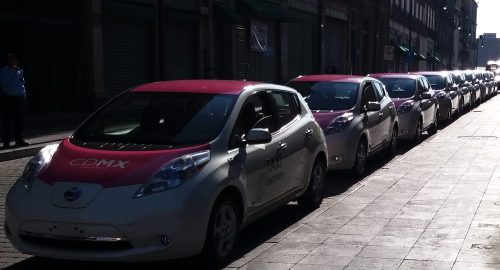
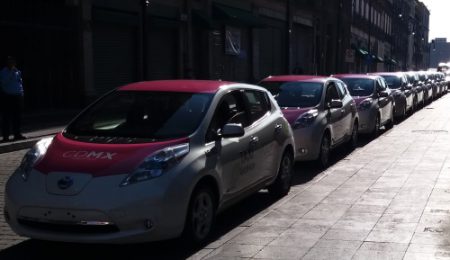
On a trip to Mexico City this week, I have just seen a lovely sight. A long row of all-electric Nissan Leafs lined up in a taxi rank ready to start the day.

Electric Taxi Rank in Mexico City

If you have ever been to Mexico City, then you will know that air pollution is a major issue here, as it is now becoming in all large cities. The taxi rank is not yet a full solution, and the city is still filled with diesels and petrol guzzlers blasting out noxious fumes, but it is a step in the right direction. I hope for many more.

Blades Being Installed on Turbine 5, Yelvertoft Wind Farm (Image: T. Larkum)

Low carbon drive ‘cuts household bills’

Britain’s low carbon energy revolution is actually saving money for households, a report says.

Blades Being Installed on Turbine 5, Yelvertoft Wind Farm (Image: T. Larkum)
Blades Being Installed on a Wind Turbine at Yelvertoft Wind Farm (Image: T. Larkum)

Households make a net saving of £11 a month, according to analysis from the Committee on Climate Change.

It calculates that subsidies to wind and solar are adding £9 a month to the average bill, but that rules promoting energy efficiency save £20 a month.

Savings

The trend is being driven by government and EU standards for gas boilers and household appliances like fridges and light bulbs. These bring down carbon emissions and bills at the same time.

It means households don’t need to try specially hard to reduce energy usage – it just happens when they replace their old freezer.

The report says bills are about £115 lower in real terms since the Climate Change Act in 2008, having risen around £370 from 2004 to 2008 as international gas prices rose.

Gas and electricity use have been cut by 23% and 17% respectively, saving the average household £290 a year.

Many of the easy savings on highly inefficient devices have already been made, but the committee says it has been assured by manufacturers that more can be done.

The authors predict an annual bill reduction of £150 by 2030, driven by a mass switch to LED lights, and full take-up of more efficient condensing gas boilers.

This, they say, would more than compensate for another £100 a year rise from increased renewables deployment.

“What’s interesting, is that people aren’t having to strive to make these savings. They could save much more energy if they consciously set about it.”

said the committee chair Lord Deben

Read more: BBC News

Electric cars are set to arrive far more speedily than anticipated

Carmakers face short-term pain and long term gain

Electric cars ready for free test drives in Milton Keynes (Image: T. Larkum)

THE high-pitched whirr of an electric car may not stir the soul like the bellow and growl of an internal combustion engine (ICE). But to compensate, electric motors give even the humblest cars explosive acceleration. Electric cars are similarly set for rapid forward thrust.

Improving technology and tightening regulations on emissions from ICEs is about to propel electric vehicles (EVs) from a niche to the mainstream. After more than a century of reliance on fossil fuels, however, the route from petrol power to volts will be a tough one for carmakers to navigate.

The change of gear is recent. One car in a hundred sold today is powered by electricity. The proportion of EVs on the world’s roads is still well below 1%. Most forecasters had reckoned that by 2025 that would rise to around 4%. Those estimates are undergoing a big overhaul as carmakers announce huge expansions in their production of EVs.

Morgan Stanley, a bank, now says that by 2025 EV sales will hit 7m a year and make up 7% of vehicles on the road. Exane BNP Paribas, another bank, reckons that it could be more like 11%. But as carmakers plan for ever more battery power, even these figures could quickly seem too low.

Ford’s boss is bolder still. In January Mark Fields announced that the

“era of the electric vehicle is dawning”

and he reckons that the number of models of EVs will exceed pure ICE-powered cars within 15 years. Ford has promised 13 new electrified cars in the next five years. Others are making bigger commitments. Volkswagen, the world’s biggest carmaker, said last year that it would begin a product blitz in 2020 and launch 30 new battery-powered models by 2025, when EVs will account for up to a quarter of its sales. Daimler, a German rival, also recently set an ambitious target of up to a fifth of sales by the same date.

Read more: The Economist

Electric cars charging in Milton Keynes (Image: T. Larkum)

Mass adoption of electric cars will send diesel extinct in UK, experts predict

Diesel technology is set to be a thing of the past, UK car industry executives believe.

The plan is to invest in the technology needed for battery electric vehicles over the next five years, according to 93% of executives while 62% felt that dieselis losing its importance for manufacturers.

Figures from KPMG’s annual global automotive executive survey also show that 90% of executives expect battery electric vehicles to dominate the marketplace by 2025.

Electric cars charging in Milton Keynes (Image: T. Larkum)

John Leech, of KPMG, said:

“Improvements in the cost and range of battery technology, coupled with growing concern over the emission of both carbon dioxide and nitrogen oxides from diesel engines, means that almost the whole automotive industry believes that the mass adoption of electric cars will happen during the next decade.”

Senior executives working for vehicle manufacturers, suppliers, dealers, financial and mobility service providers plus car users took part in the survey.

Some 74% of executives thought more than half of car owners today would not want to own a vehicle.

Researchers believe there will be fewer cars and therefore less money to be made from building vehicles in the future as people may opt to use, rent or pay for a car service rather than to own a car.

This was not feared as a looming problem because 85% of executives were convinced their company might make more money by providing new digital services than by selling cars alone.

Mr Leech said:

“Carmakers plan to sell a myriad of new digital services to vehicle users. Today car makers already make substantial profits from the sale of consumer finance and annual vehicle insurance but this will grow in the future as innovative services such as remote vehicle monitoring and the integration of the car as a focal point in people’s ever more connected lifestyles are demanded by consumers.”

Source: The Independent Online

Nissan Leaf

Car Tax, the new VED rules explained

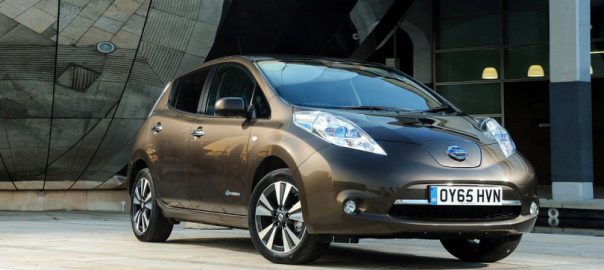
An overhaul of UK car tax rules will increase the cost of motoring – but not if you’re buying a Nissan LEAF

On April 1, the system for taxing new cars in the UK, known as Vehicle Excise Duty (VED), is being radically overhauled (click here for details). The revamp will make it more expensive to run certain types of low-emissions cars – but the Nissan LEAF, the world’s best-selling electric car, will remain exempt from tax.

Nissan Leaf

If you’re confused by the changes, or uncertain of what they mean if you’re considering buying a new car, here’s a quick guide.

How car tax works now

The amount of VED you currently pay is based on your car’s CO2 emissions. There are 13 VED bands: vehicles that emit between 0 and 130g/km of CO2 (think electric vehicles and certain hybrids) don’t pay any VED in their first year. After that, vehicles that emit 101-120g/km of CO2 have to pay between £10 and £30. The duty jumps from there, to at least £100 for cars that emit 121g/km of CO2 or more.

What’s changing

From April 1, only vehicles that produce no emissions while driving, such as the Nissan LEAF, will be exempt from VED in year one. Vehicles that produce 1-50 g/km of CO2 pay £10; those that emit 51-75 g/km pay £25. VED then leaps to £100 for vehicles that emit 76-90 g/km. From year two on, CO2-producing vehicles costing less than £40,000 pay an annual rate of £140 – with a £310 premium for cars that cost more than £40,000.

Zero emissions, zero tax

Cars that produce 0g/km of CO2 and cost less than £40,000 will remain exempt from VED for their lifetime. The fully-equipped, five-seat electric Nissan LEAF falls into that category – and it’s also exempt from congestion charges. So as well as fuel costs of as little as 2p a mile, buying a safe and reliable LEAF could save you hundreds of pounds in tax.

When it comes to fuel efficiency, the British-built Nissan LEAF remains ahead of the pack – because it uses no combustible fuel at all.

Read more: What Car?


Windfarm (Image:UNK)

Google set to reach 100% renewable energy in 2017

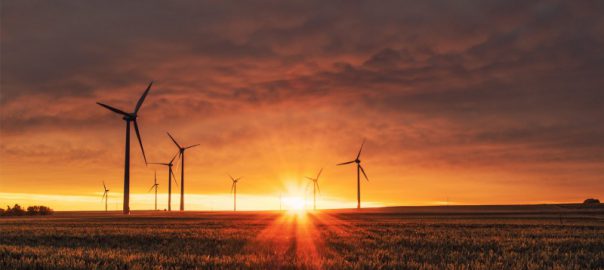
In December 2016, Google announced that they are set to reach 100% renewable energy to power everything such as their offices and server farms. 

Every year people search Google trillions of times and upload over 400 hours of YouTube every minute! All of that takes a very large amount of processing power which means a lot of electricity is needed.

Windfarm (Image:UNK)

“I’m thrilled to announce that in 2017 Google will reach 100% renewable energy for our global operations — including both our data centers and offices. We were one of the first corporations to create large-scale, long-term contracts to buy renewable energy directly; we signed our first agreement to purchase all the electricity from a 114-megawatt wind farm in Iowa, in 2010. Today, we are the world’s largest corporate buyer of renewable power, with commitments reaching 2.6 gigawatts (2,600 megawatts) of wind and solar energy. That’s bigger than many large utilities and more than twice as much as the 1.21 gigawatts it took to send Marty McFly back to the future.”

Urs Hölze, Google’s Senior Vice President of Technical Infrastructure.

Google operates in an environmentally sustainable way which is one of its core values since its founding. This is a very good value and one we should all follow. Whatever your thoughts are on global warming, we all know that pollution is a bad thing for us and the environment.

Science tells us that tackling climate change is an urgent worldwide issue and that we must take steps in doing our own individual bit for the environment.

Read more: Medium. Phil Leach