To help fight climate change, France’s Total commits to leaving some fossil fuels in the ground.
The sun sets on drilling (Image: Pexels)
One of the world’s biggest oil companies is factoring global goals for combating climate change into its multi-decade business plan.
French oil giant Total acknowledged in a report released Tuesday that “a part of the world’s fossil fuel resources cannot be developed” if nations are to fulfill the Paris climate accord agreement to hold global temperature increases to 3.6 degrees Fahrenheit.
The company stood by a 2015 decision to reduce investments in oil production from Canadian tar sands, adding that it confirmed at that time “that we do not conduct oil exploration or production operations in the Arctic ice pack.” Total first announced its position on Arctic drilling in 2012, according to Reuters.
Total’s leaders are “trying to link their strategies and investments to climate decisions,” said Alexander Shestakov, the director of the World Wildlife Fund’s global Arctic program.
“That’s a positive sign coming from one of the world’s oil majors.”
ADDRESSING a high-profile audience of the Thai energy sector last week, Stanford University lecturer and Silicon Valley investor Tony Seba minced no words in warning them that petroleum, which had been a source of livelihood to many of them, would become obsolete by 2030 or sooner.
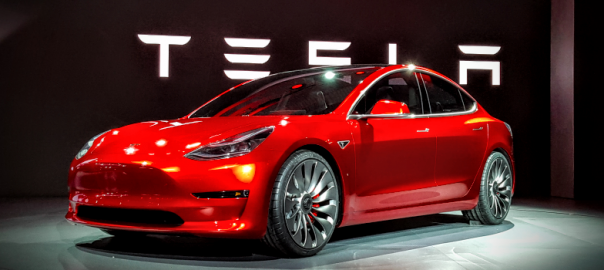
Tesla Model 3 at launch (Image: K. Field/CC)
Citing four key technologies – energy storage, electric vehicles, self-driving cars, and solar – the author of the amazon.com best seller “Clean Disruption of Energy and Transportation” said the energy and transport industries were on the cusp of either being transformed or destroyed.
“The energy and transport industries will become high-tech industries” he told the Petroleum Institute of Thailand’s 30th anniversary event that was attended by energy and science ministers, privy councillor, director of the Crown Property Bureau Snoh Unakul, and other top energy officials and executives. Speaking at a press conference held at the conference, Seba said since consumers would switch “en masse” to electric vehicles by 2020, petroleum – 60 per cent of which is used for transport – was going to become obsolete.
The driving force will be the four key technologies that will improve exponentially, not because of climate change, he said.
Besides “exponential” technological development in key areas such as in lithium-on batteries, solar photovoltaic installations and generating costs, electric and autonomous cars, and LIDAR sensors, Seba pointed out business model innovations that could accelerate the changes such as storage-as-a-service, electric vehicles’ (EVs) free charging network, car-as-a-service, and “zero money down solar” leasing.
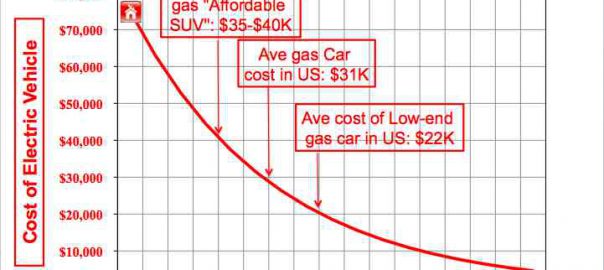
EVs will hit the low-end automobile segments by 2020 when their prices drop to $20,000 (Bt700,000) and will put an end to internal combustion engine cars when EV prices fall to $5,000 in 2030, he predicted. Tesla recently introduced its Model 3 at an unsubsidised retail price tag of $35,000. Within 24 hours, it received 180,000 bookings – a record for the car industry.
The bigger they are, the harder they fall. But the oil industry will prove a slippery target for ambitious tech disrupters
In the slick, disruptive world of 21st century business, where we are frequently told change is the only constant, the oil majors are starting to look like they belong in a museum. Indeed, like the crude tehy extract from the ground, there is something Jurassic about their staggering size and great antiquity. Shell, BP, Exxon – these giants have bestrode the industrial landscape for up to a century, seemingly invulnerable to the dramatic turns in technology or the cyclical downturns that occasionally starve them of profits.
We are in one such downturn now – and it’s a bad one – yet still the oil majors dominate lists of the world’s biggest companies, challenged only by the tech giants. If Saudi Aramco floats, as appears likely in a few years’ time, it could be two or three times bigger than Apple.
But can they really be free from the law of business atrophy, that success breeds complacency, which makes it vulnerable to dreaded but much-needed disruptive innovation? Indeed, the oil majors perfectly fit the traditional archetype of a company prone to disruption – vast, ancient and incredibly slow to move.
It’s no secret where the threat will come from. Electric cars threaten the lifeblood of the oil industry, the world’s reliance on petrol and diesel. According to data from Statistica, road transportation accounted for 43% of oil consumption. Though electric cars would still need charging, oil has also lost its place in electricity generation, with only 4.4% of the world’s wattage coming from the black stuff in 2013.
This isn’t just a pipe dream, either. The car giants are without exception investing heavily in electric vehicles, themselves trying to avoid disruption from Tesla. With favourable tax arrangements for clean cars and an ever expanding network of charging points, electric cars will only become more commonplace.
The average price of a barrel of oil has plummeted from over 120 USD / barrel to about 30 USD /barrel in the last three years. There may be a lot of geopolitical reasons why this has happened. There is also an analysis of how long this will persist. Relations between Saudi-Arabia and Iran, the situation in Iraq, OPEC relations and shale-oil boom in the US all play a part in this. But there may be another aspect of this situation which may be more relevant and inevitable than most of us may believe at the moment.
There have been many “industrial disruptions” in the last few decades that most of us never really saw it coming. Products and companies which were household names have disappeared into the oblivion. For example Kodak was a company that was synonymous with photography. The brand was so well know that fifteen years ago when a family got together or there was a good photo opportunity it was popularly referred to as a “Kodak” moment. The company does not even exist now. Not because they were not performing well, but because the product that they were making suddenly became irrelevant. Similarly cassettes and VCRs are gone and children growing up today will only know them as novelties from the past.
An industry disruption, according to an expert in this field from Stanford University in the United States, Tony Seba, is when a new industry or product “disrupts” a previously well-established product or industry. If you look at what happened to Kodak, people did not stop taking pictures, but the way it was being done completely changed. Similarly, music is still popular, but the cassettes and VCRs have been replaced with new and more convenient devices.
A similar disruption is possibly taking place in the automobile industry, at this very moment. Automobiles need petrol or diesel as fuel to function. In fact, more than 50% of crude oil produced gets converted to fuels used by automobiles. But the new generation of cars may not need petrol or diesel at all to function. These may not contain the traditional internal combustion petrol or diesel engine.
A few years ago, nobody had heard of a car company called Tesla Motors. The company was founded by a charismatic US based entrepreneur named Elon Musk, in 2003. The cars made by this company are fundamentally different from cars being produced by other large automobile companies like Toyota, Volkswagen and GM. Tesla cars don’t have a petrol or diesel engine but contain electric motors and batteries. The basic concept is simple. The battery is charged like how one charges a mobile phone or a laptop and the power stored in these batteries is then delivered by electric motors to the wheels. The most amazing thing is that the final product is not an experimental or a concept vehicle anymore, but is a thoroughly acclaimed luxury car which is now being compared to the likes of best traditional cars in the business such as Mercedes Benz S class.
Last week, I explained a dismaying reality for planet-savers everywhere: Not even mega-blowout sales for Tesla’s new Model 3 sedan are enough to substantially green and decarbonize our global transportation system. There are simply too many cars on the road and too many new cars sold each year — the vast majority of which run on gasoline, not electricity, and will for some time.
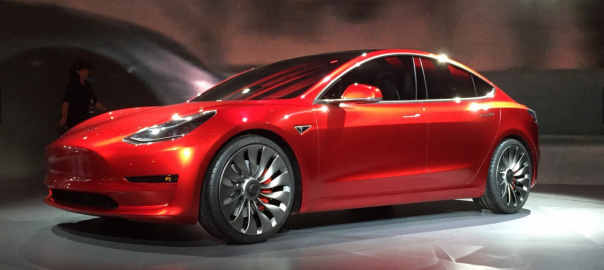
Tesla Model 3 Unveil (Image: Tesla)
What this means is that we’re probably now at the beginning of a gradual, rather than rapid, electrification of the transportation sector. Yeah, it’ll help out when it comes to greenhouse gas emissions — especially as the electricity that powers Teslas and other electric cars also becomes greener — but it probably won’t do so fast enough to save us in the critical two decades or more when all the big decisions about the planet’s future need to be made.
So how is it possible to scale up faster? Well, one answer may come by looking at the example of a country that has already done just that: Norway, where electric vehicles were fully 18 percent of new cars sold last year.
In a new paper in Applied Energy, Måns Nilsson of the Stockholm Environment Institute and Björn Nykvist of the KTH Royal Institute of Technology in Stockholm examine the policy moves that made this kind of high growth possible, using Norway and several other examples from around the world to drive their analysis.
The gist? You essentially need two things — public policies that address the current higher cost of these vehicles (through tax breaks or rebates) until those costs decline, and then other public policies that do something else: Get past people’s psychological blocks when it comes to driving electric vehicles. That’s a very big issue when people are used to pumping gas rather than charging, and so develop ‘range anxiety’ — the fear that their EV will run out of juice far from a recharging station.
“When you start to change some of the economic incentives, you get the first movers,” says Nilsson. “But then what we have seen is this norm change, that it’s like a cultural shift in certain pockets, typically certain communities, it could be certain suburbs, certain cities, where the electric car becomes the norm.”
Patterns show that the move to cleaner energy would be quick if there was a concerted effort.
The quest to end the use of fossil fuels might not be as daunting as you think. A University of Sussex study claims that humanity could drop coal and oil within a decade, based largely on historical evidence that many tend to overlook. Professor Benjamin Sovacool notes that energy transitions have happened quickly whenever there was a combination of “strong government intervention” with economic or environmental incentives to switch. It only took 11 years for the Canadian province of Ontario to abandon coal energy, for example, while nuclear power surged to 40 percent of France’s electricity supply within 12 years. In the case of fossil fuels, it’s a combination of climate change worries, dwindling resources and advanced technology that could step up the pace.
The researcher admits that these handovers tend to move slowly if left to their own devices, such as the decades it took for electricity to see widespread adoption. However, Professor Sovacool argues that the mainstream notion that these transitions must happen slowly doesn’t really hold water. They just need a concerted, collaborative effort, he says.
Of course, actually creating that effort is another matter. While electric cars and renewable energy are quickly hitting their stride, there’s also stiff opposition from the fossil fuel industry (and the politicians that protect it) to the sort of regulation that would speed up the use of cleaner power sources. Also, developing countries seldom have the luxury of dropping fossil fuels — it’d cost too much, or leave too many people without reliable electricity. An accelerated transition might not happen until the political and economic advantages are so overwhelming that even the staunchest opponents concede defeat.
[7 April] Last week Tesla unveiled the Model 3, a mass market, affordable electric vehicle with a starting price of $35,000 and a two hundred mile range.
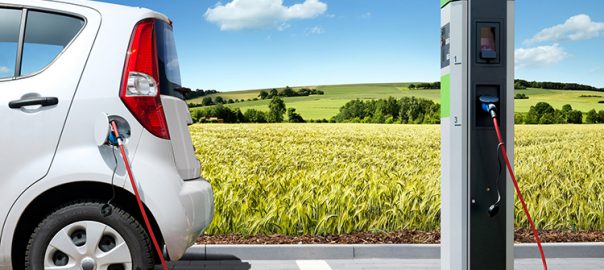
Electric Vehicle at charging station
In just over five days, more than 276,000 people put down $1,000 to reserve their own Model 3, signaling that American appetite for electric vehicles (EVs) is on the rise.
That’s good news because greenhouse gas emissions from transportation are growing faster than in any other sector in the U.S. and account for about 30 percent of the total. A major shift to electrified vehicles in the transportation sector is necessary to give us a fighting chance to meet our climate goals.
Yet, just as EVs are poised for growth, oil industry interests are sharpening their knives. Energy companies, including Koch Industries, are increasing their public opposition to electric vehicles because they are realizing the significant potential impacts of EVs on oil demand.
Recently, for example, Jim Mahoney, board member of Koch Industries, penned an oped in Fortune about opposing government subsidies that favor one form of energy over another.
“Koch opposes all market-distorting policies, including subsidies and mandates—even if they may benefit the company,” he wrote.
What Mahoney was really taking aim at were incentives offered to the small but growing electric vehicle market in the U.S.
His op-ed was mum on fossil fuel subsidies—which the International Monetary Fund pegs at $5.3 trillion. And he certainly didn’t mention the 11 fossil fuel federal tax subsidies identified by the Department of Treasury that cost U.S. taxpayers $4.7 billion per year—some of which have been in place for more than 100 years. Or the numerous public lands leasing and royalty breaks for oil and gas production.
Mahoney singles out the electric vehicle tax credit because electric vehicles are a threat to oil, which is mainly used for transportation and his op-ed is part of a broader attempt to roll back tax credits that support advanced vehicles.
If you doubt that the tiny but growing electric vehicle market could threaten big oil, consider this: Bloomberg New Energy Finance (BNEF) projects that oil displacement as a result of increased electric vehicle deployment could lead to an oil crash by 2023. BNEF flags battery prices and strong policies as important drivers of EV growth. In fact, battery costs have dropped dramatically—falling by 65 percent since 2010. By 2030 they are estimated to fall from $350 per kilowatt-hour (kWh) to below $120 per kWh.
To-date, oil producers have underestimated the competitiveness of electric vehicles, but they are seeing the threat to their market share and are taking aim at the EV industry. Because they can’t do much to improve the environmental profile of their own core products, we can expect a growing effort by the oil industry to undermine the electric vehicle sector. It’s no surprise that Koch Industries is leading the way.
RAC says prices have risen 3.4p a litre on average – the first increase on the forecourts since July 2015
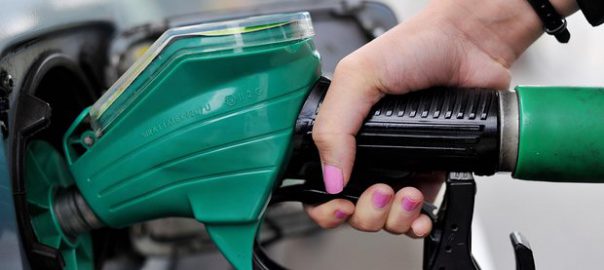
Fuel prices have risen as oil recovers to $40 per barrel (Image: N. Ansell/PA)
Motorists have been warned that the period of lower fuel prices is over after the cost of petrol rose last month for the first time since July 2015.
Experts said the 3.4p a litre rise in average pump prices to 105p was a result of oil reaching $40 (£28) a barrel for the first time since early December.
The report by the RAC found that around £1.84 was added to the cost of filling up an average 55-litre car with unleaded.
Diesel forecourt prices increased by 3.7p a litre to 105p despite the wholesale price only rising by 1.5p, according to the RAC’s analysis.
The RAC claimed this indicates that retailers are either using the lower diesel wholesale cost to subsidise the price of petrol or using it as a means of increasing their profit margin.
Simon Williams, the RAC’s fuel spokesman, said:
“The good times for motorists enjoying lower fuel prices had to come to an end at some point, but unfortunately it’s happened with a bit more of a bump than motorists were probably expecting.”
He warned that there could be further bad news for motorists when oil producers meet later this month to discuss limiting their output, although he does not believe prices will reach $60 a barrel in the short-term.
“It looks as though we are heading towards a new norm of the oil price fluctuating between lower and upper limits of $35 and $55 a barrel,” he said.
“This means that motorists should hopefully not see the eye-watering prices they were paying at the pumps in April 2012 when the average price of petrol was 142p and diesel was close to 150p per litre.”
The response to our article on Monday “Tesla Motor’s Elon Musk just killed the petrol car” was as fascinating as it was overwhelming. It is on track to be the most read story on our web-site to date.
The response was fascinating because it came from a mixture of those prepared to imagine the future, and read the signs of change, and those focused on short-term issues – be it meeting production schedules, reducing battery costs, or the immediate future of the Tesla share price.
Then there were those who simply didn’t want to know. The oil industry is one of them. It is making predictions, and seeking capital, as though the EV didn’t exist. The nuclear industry also wishes it wasn’t so. “This is bullish*t”, tweeted one of the most prominent nuclear advocates, still clinging to the old centralised energy model.
So we thought it would be useful to explain more about how it is that Musk has killed the petrol car. And for that we went back to Stanford University’s Tony Seba, the academic who predicts that fossil fuels, coal and oil in particular, will be redundant by 2030.
Seba tells RenewEconomy that the latest developments at Tesla, with the huge response to the sneak preview of its new Model 3, and the rollout over at General Motors of the Chevy Bolt, confirm his predictions. They may in fact accelerate them.
Seba’s message is not one that sits comfortably with incumbent industries, the auto and oil sectors in particular. He thinks that new internal combustion engine cars will not be on sale by 2025. Anywhere in the world. And there may not be many internal combustion engine buses, trucks, and tractors either.
Richard Heinberg, senior fellow at the Post Carbon Institute, says a truly green transportation system would stop relying on cars and discusses the Tesla Model 3 as a mass-market electric vehicle