All posts by Trevor Larkum

Electric Cars Fast Charging (Image: BusinessCarManager.co.uk)

On the brink of an electric car revolution?

Electric car sales have fallen short of predictions, but the global push to cut carbon emissions and improved techology could see them poised to hit the mainstream, says Renault-Nissan’s head, Carlos Ghosn

Carlos Ghosn, the fast-talking head of the Renault-Nissan alliance, is not keen to be drawn on targets for electric car sales. A 2011 prediction of 1.5m Renault-Nissan electric vehicles by 2016 turned out to be wildly optimistic. The group just passed the 250,000 mark.

Ghosn was not alone. President Barack Obama predicted 1m electric cars in the US by 2015: in January the total was 280,000. Virgin boss Richard Branson, adept as ever at grabbing headlines, said this week that “no new road cars will be petrol driven” within 20 years, calling combustion engines “complicated and antiquated”.

Unlike Branson, Ghosn does not want to stick his neck out. But as head of the companies which sell more than half the electric cars in the world, what Ghosn thinks about how fast the market will grow matters.

Transport contributes 23% of global greenhouse gas emissions, so the fundamental driver will be the ambition of the world in tackling climate change, Ghosn told the Guardian in an interview. “When we know exactly where the EU, US, China will be heading in 2030, I can tell you exactly how much electric cars will be needed,” he says, referring to a crunch UN summit in Paris in November.

Read more: The Guardian

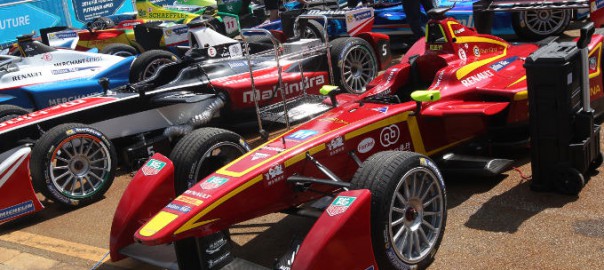
Eight manufacturers to enter Formula E next season

Formula 1 overtaken by Formula E?

Richard Branson, feels that the FIA approved Formula E electric car series will replace Formula 1 as the world’s most watched racing format.

Branson, who owns the Virgin Racing team, was speaking at the final round of the 2015 Formula E season run at Battesea Park in London. The last race of the series, run on Sunday, was won by Sam Bird, who currently races for the billionaire.

Unlike Formula 1, dominated by Mercedes at present, the Formula E championship has seen six different teams winning over the course of 11 rounds. Virgin Racing managed to pick up two victories during the season and ended fifth on the constructors standings.

The Briton believes the product is in a very strong position and will continue to improve, placing Formula 1 under pressure and eventually surpassing it in terms of a global audience, among other factors.

“I think four or five years from now you’ll find Formula E overtaking Formula One in terms of number of people [watching] and more and more, as time goes on, clean energy businesses are going to power ahead of other businesses,” he said.

“There’s still going to be room for Formula One for a few more years but I would say there will come a time when Formula E will overtake it.”

Branson thinks the electric car series has a number of aspects in its favour, not only the close racing it dishes up. Strangely, the fact that the cars are quiet, he believes, make the sport appealing, especially for spectators at the circuit.

“With Formula E, you can still hear the roar of the cars from the tarmac as they come through a corner, but at least you can have a conversation and a drink when you’re watching which you can’t do with Formula One.”

Source: Planet F1

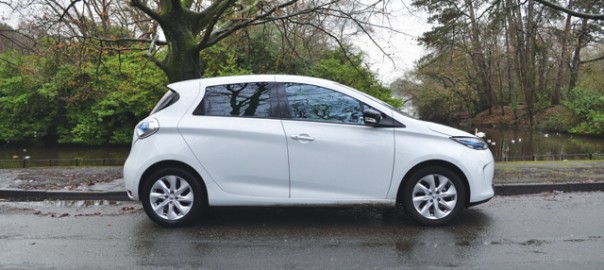
Next Green Car test the Renault ZOE

Next Green Car carry out an indepedent range test

The Renault ZOE has earned a name for itself as the most affordable electric car and you do get a lot of bang for your buck with this all-electric supermini. Innovative purchase options allow you to either buy the car outright or part-purchase the car and rent the battery, an attractive proposition for low mileage drivers or those concerned about battery degradation.

On an independent range test designed by Next Green Car to reflect realistic driving styles on typical roads the ZOE managed to cover 103 miles on a single charge making it suitable for the vast majority of car journeys. The network of rapid AC chargers suitable for use with the ZOE is smaller than for the LEAF (which use rapid DC units) but growing quickly.

Styled to fit in as a ‘normal’ car, the minimalist style inside and out makes the ZOE an attractive city runabout. Five doors, five seats and a big boot for its class make it an ideal second car for the school run, weekly shop and commuting to work and even a great first car for those who don’t need to travel long distances regularly.

Read more: Next Green Car

250k electric vehicles sold by Renault-Nissan Alliance

  • Historic EV milestone reached in early June
  • Alliance sells half of all EVs globally
  • EV sales up nearly 15 per cent through May vs. same period last year
  • Nissan LEAF remains world’s best-selling EV
  • Frenchman from Bordeaux bought 250,000th Alliance EV: a Renault ZOE

PARIS/YOKOHAMA (June 24th, 2015)—The Renault-Nissan Alliance, the world’s leader in zero-emission mobility, has sold its 250,000th electric vehicle: a white Renault ZOE sold to a French engineer.

The Alliance reached the historic milestone in early June, four-and-a-half years after the launch of the Nissan LEAF, the world’s first mass-market zero-emission vehicle. The Alliance today accounts for half of the electric vehicles sold worldwide. Nissan LEAF remains the best-selling electric vehicle of all time, with more than 180,000 units sold.

From January through May, the Alliance sold about 31,700 EVs — up nearly 15 per cent over the same period of last year.

“Demand for our electric vehicles continues to grow thanks to government incentives and the expanding charging infrastructure,”

said Carlos Ghosn, Chairman and CEO of the Renault-Nissan Alliance.

“The positive response of our customers is also driving demand.These vehicles enjoy some of the highest levels of satisfaction rates from our customers around the world.”

Frenchman from Bordeaux takes delivery of 250,000th EV

The 250,000th owner is Yves Nivelle, a computer engineer, who traded in his 21-year-old diesel car for the subcompact Renault ZOE. Nivelle bought his EV after the French government introduced an environmental bonus in April to allow owners of older, polluting diesel cars to trade them in and get a rebate of €10,000 on a new EV.

“The government’s environmental bonus was a big factor in my decision to get an EV,” Nivelle said. “But I have to say, I was convinced the first time I drove the car. It’s a real pleasure to drive and it feels good to do my part for the environment.”

Alliance has full range of six 100% EVs; Renault leads in Europe

With six models on the road, the Renault-Nissan Alliance is the only global car group with a full range of 100% electric vehicles. In addition to the LEAF, Nissan also sells the e-NV200 van, which has been on sale in Europe and Japan since last year. In addition to the ZOE, Renault also sells the RenaultKangoo Z.E van, the SM3 Z.E. sedan and the Twizy, a two-seater urban commuter vehicle.

Yokohama, Japan-based Nissan has sold 185,000 electric vehicles worldwide since December 2010, when the Nissan LEAF went on sale. LEAF has collected numerous industry honors, including the 2011 World Car of the Year, European Car of the Year 2011, and Car of the Year Japan 2011-2012. The LEAF is sold in 46 markets. Nissan’s top EV markets are the United States, with about 80,000 sales since LEAF’s launch, Japan with about 53,500 units, and Europe with about 41,500.

Renault, based in Boulogne-Billancourt, France, has sold 65,000 electric vehicles worldwidesince its first model, the Kangoo Z.E., went on sale in October 2011. Kangoo Z.E. was voted International Van of the Year 2012.

Renault was the No.1 EV brand in Europe for the last two months, with a market share of 26 percent. Renault’s top markets are France, the United Kingdom, Germany and Norway. In France, where ZOE is the most popular EV with almost half the market, the government’s environmental bonus allows drivers to lease the ZOE, including the battery, for as little as €99 a month.

The Renault-Nissan Alliance was recently chosen as the official passenger-car provider for the United Nation’s COP21 climate conference in Paris from November 30th to December 11th. The Alliance will provide a fleet of 200 EVs to shuttle delegates to the annual conference.It will be the first time the U.N. will use a zero-emission fleet for its entire passenger car shuttle at a COP event.

Latest electric vehicle developments introduced by Renault

The R240 motor extends ZOE’s range, while the Cargo version of the Twizy facilitates city deliveries

A pioneer of the affordable all-electric vehicle, Groupe Renault is the only manufacturer to offer a comprehensive range of electric cars, which it has just extended with two new innovations.

Courtesy of the R240 motor, customers who use the ZOE for everyday motoring will benefit from improved range. Combined with a battery featuring an electronic management system, the R240 motor increases the ZOE’s range by 30 kilometres to 240 kilometres (NEDC). It also cuts the car’s charging times by an average 10% at public charging stations, thanks to the upgraded Caméléon charger.

The Twizy Cargo is the version of the Twizy designed for transporting goods. Its rear seat has been replaced by a waterproof boot with a 180-litre load-carrying capacity, accessible via a rear door. Just as compact as the Twizy, the Twizy Cargo is the ideal solution for city delivery or rapid intervention companies. It is fully customisable with decals to advertise your business, and cost-effective to use.

The new R240 motor extends ZOE’s range

The ZOE’s new R240 motor is combined with a battery featuring an optimised electronic management system to offer a longer driving range and improved charging performance. Unveiled at the 2015 Geneva Motor Show, the R240 motor went on sale on in the spring (dates varied depending on the country).

More than 25,000 ZOE models are currently on the roads in some 20 countries.

30 kilometres(1) of extra range and 10% faster charging times(2)

The R240 motor’s range, unmatched in the segment, is 240 kilometres (NEDC) – that’s 30 kilometres more than the Q210 motor.

Renault’s engineers improved the motor’s efficiency by optimising its electronic management system.
Improved efficiency helps to cut the ZOE’s electric energy consumption when in use, while delivering the same level of performance. A motor which consumes less energy provides a longer driving range.

Courtesy of the R240 motor, the ZOE’s charging times have been cut by 10% on average compared with the Q210 motor for everyday driving situations.

Renault’s engineers have also upgraded the Caméléon(3) charger in order to shorten charging times at low power levels and increase the ZOE’s range. For each minute the battery is charged, users get extra kilometres of range.

The ZOE’s new motor helps meet a wider range of needs.

The release of the R240 motor underpins Renault’s policy to bring electric motoring to as many people as possible. The motor’s 240-kilometre range (NEDC) ensures greater flexibility for customers who use their ZOE for everyday driving situations. The upgraded Caméléon charger, which is available with the R240 motor, is particularly effective when connected to 3 to 22kW charging points, which make up more than 95% of the charging infrastructure currently installed.
In addition, the Q210 motor will remain on sale in the Renault network, so the ZOE can be charged at 43kW fast charging points, particularly by customers who use motorway corridors.

(1) NEDC. (2) At low power levels. (3) The CaméléonTM charger patented by Renault adapts to the different power levels available at charging points. It is also compatible with all public charging stations.

High-tech, 100% Renault design

The R240, a motor designed and manufactured by Renault, in France.

The R240 motor was designed and developed by Renault’s engineers at the company’s Technocentre southwest of Paris and at the Cléon plant west of Paris, where it is manufactured. This plant is located near Renault’s Flins plant, where the ZOE is built.
(The ZOE was previously available with only one motor, the Q210, built by a supplier in Spain.)

Renault has filed for 95 patents for the motor’s innovative design.

The R240 motor is a synchronous electric motor with rotor coil. It features a power output of 65kW, torque of 220Nm and a built-in Caméléon charger. The R240 motor boasts improved range and charging performance thanks to the optimised electronic management of each component, and its size has been reduced. Renault filed for 95 patents for the motor’s innovative design and architecture.

Renault’s engineers succeeded in cutting the motor’s size by 10% without sacrificing performance.

Although the R240 motor is more compact than the Q210, it boasts the same level of performance (power, torque, etc.) thanks to the engineers’ focus on three main areas:

– Integration: modules are no longer stacked, having been replaced by fully integrated modules.

– Downsizing: smaller modules have been designed and assembled to meet precise requirements (gaps reduced between modules, external power cables removed).

– Simplification: an air cooling system is now used for the assembly (ducts between modules have been removed).

The junction box, the power electronics unit and the Caméléon charger are now in a single unit called the Power Electronic Controller. The unit is 25% smaller.

The R240 underscores Renault’s expertise as an engine and electric motor manufacturer.

To design, develop and manufacture this high-tech motor, Renault Groupe has drawn on its expertise in the development of both internal combustion engines and electric vehicles.
Renault is involved in in the FIA Formula E Championship. Because of its electric vehicle expertise, the Group was chosen as a technical partner to the series. Renault tests EV technology in racing with a view to continually improving the performance of road-going EVs.

Renault’s Cléon plant is a flagship production facility specialising in high value-added engines and gearboxes (Energy engines, Renault Sport engines, etc.). For the past two years, it has been manufacturing the ZOE’s junction box, which was developed by the Technocentre’s engineering centre. The Cléon plant has built on its vast experience to produce the R240 motor’s Power Electronic Controller. The plant has also gained expertise
in coil technology, thanks to upskilling developed within the Alliance.

Source: Renault Media
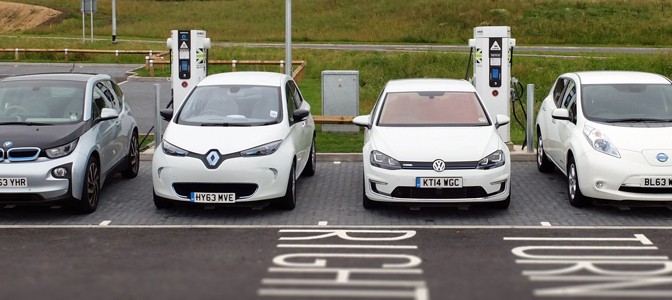
The Electric Highway offers an 80% charge in half an hour for compatible vehicles

Lands End and John O’Groats to be connected by Electric Highway

Good news on the roll-out of currently the best charging network

Ecotricity is to install a rapid charging point at John O’Groats in Scotland within weeks, completing coverage on the iconic route from the northernmost point of the UK to Lands End in Cornwall.

The point will become part of the Electric Highway, which includes almost 250 charging points at 150 locations across the UK, in most cases offering an 80% charge for compatible electric vehicles within half an hour.

With sites at 95% of Britain’s motorway service areas, as well as Ikea stores in city centres, the Electric Highway is now delivery enough energy to power a million miles of electric driving every month. The electricity used is supplied using renewable sources.

Dale Vince, founder of the Electric Highway, said:

“The idea of being able to complete that iconic journey from Land’s End to John O’Groats in any electric car you can buy from a showroom is something quite special – if you’d have said that was possible five years ago, people would have laughed at you.

“Our Electric Highway already covers over 95% of the motorway network, and we’ve begun the installation of electricity pumps on A-roads and strategic locations such as airports and ports – with significant new funding just secured, we’ll be stepping on the gas in the coming months to keep pace with demand.”

Source: EV Fleet World

G7 leaders in Krun, Germany (Image: White House/P. Souza)

End of fossil fuel use on horizon

Finally the G7 world leaders are waking up to what needs to be done

(From 13 June) This past week, the Group of Seven (G7) world leaders met in Germany for the group’s 41st annual summit.

Needless to say, much was discussed, from the threat of international terrorism to the stability of national economies and, of course, climate change.

G7 leaders in Krun, Germany (Image: White House/P. Souza)

In relation to that final point, the leaders made an ambitious declaration.

The group’s members will use their collective influence to try to stop fossil-fuel consumption by the end of this century.

A goal of reducing consumption by 40 to 70 percent from 2010 levels by 2050, and eliminating it completely by 2100, was set in the summit declaration.

The G7 comprises the world’s seven largest economies–including Canada, France, Germany, Italy, Japan, the U.S., and U.K.–as well as representatives from the European Council, EU Commission, and the International Monetary Fund (IMF).

Read more: Green Car Reports

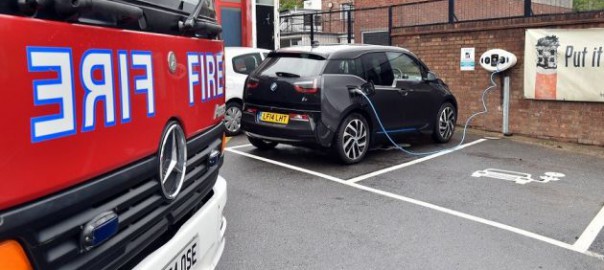
New London Fire Brigade electric car charge points

An interesting development – public charging points at fire stations. Presumably intended for visitors rather than passing members of the public?

Chargemaster, one of the UK’s largest suppliers of electric vehicle charging equipment, has completed the installation of 156 charging points at 71 fire stations and five other Brigade sites across London.

The charging points have been installed to support the London Fire Brigade’s growing fleet of electric support vehicles and 18 of the points in 9 locations are also available for public use.

As part of the Brigade’s commitment to reducing carbon emissions, the organisation selected Chargemaster’s popular twin socket fast charging units that can supply charge at a rate of up to 22kW.

Members of the public can use the charge points at Croydon, East Ham, Edmonton, Finchley, Hainault, Harold Hill, Hornsey, Ilford and New Malden fire stations, and can register for access and unlock the charging points on the spot via their smartphone.

The charging points are part of Chargemaster’s POLAR network, one of the largest in the country with over 4,000 publicly available charging points, which have a reliability and availability record of more than 99% according to Chargemaster.

Government funding contributed 75 per cent to the total cost of installing the charging points, while the remaining cost was covered by Chargemaster, which was appointed following a competitive tender to install and manage the charging point sockets.

Speaking about the co-funding deal between Chargemaster and the Department for Transport, Transport Minister Andrew Jones, commented:

“I want cleaner, greener cars across the capital and this money will make a real difference.

“The Department for Transport’s funding for the 156 new charge points will make it easier for people to use these increasingly popular low emission vehicles. It is an example of Britain leading the way in developing sustainable transport options that are accessible to everyone.”

Chargemaster CEO, David Martell, said:

“We are pleased to have worked with London Fire Brigade and to have invested in partnership with Government to expand the charging network available to electric vehicle users in the city.

“All charge points were installed on schedule and are now part of the UK’s most reliable charging network. We are committed to increasing the uptake of electric motoring in the UK and to make it as convenient as possible for motorists.”

London Fire Commissioner Ron Dobson, said:

“I am delighted the Brigade’s electric vehicle charge points have been installed across London and are now ready for use by both Brigade staff and members of the public.

“Electric cars offer big environmental benefits and play an important part in keeping London clean. The new charging network not only makes it easy and convenient to charge up a car’s battery making electric cars easier to use, but also reaffirms London Fire Brigade’s commitment to lead on sustainability in the fire service and reducing our impact on the environment.”

The Brigade currently uses five electric cars through its lease car scheme and hopes to have a further five in its fleet towards the end of year, as a result of additional government funding secured from the Office for Low Emission Vehicles.

To view all the EV charging infrastructure available to the public in the UK, including the 9 installed at London Fire Brigade sites, go to Zap-Map.com.

Source: Next Green Car

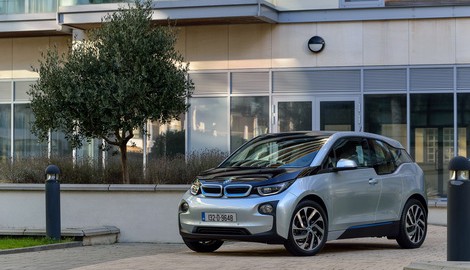
Tesla and i3 are Top Two Cars of 2015

CNET has recognised the Tesla Model S and the BMW i3, giving them the top two spots in its Top 5 Cars of 2015.

Both vehicles are deserving of their rank. The Tesla Model S P85D redefines the electric car segment due to its sheer power and speed, while the i3 makes its mark by being the world’s most efficient electric car and perhaps the most exotic electric car out there today with its use of carbon fiber, available REx and more.

Source: Inside EVs