A demonstration of how to use the new Ecotricity electric highway app followed by a chat with Ecotricity founder Dale Vince.
All posts by Trevor Larkum
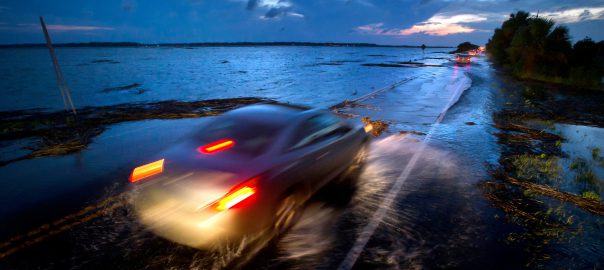
Flooding of Coast, Caused by Global Warming, Has Already Begun
Scientists’ warnings that the rise of the sea would eventually imperil the United States’ coastline are no longer theoretical
NORFOLK, Va. — Huge vertical rulers are sprouting beside low spots in the streets here, so people can judge if the tidal floods that increasingly inundate their roads are too deep to drive through.

Five hundred miles down the Atlantic Coast, the only road to Tybee Island, Ga., is disappearing beneath the sea several times a year, cutting the town off from the mainland.
And another 500 miles on, in Fort Lauderdale, Fla., increased tidal flooding is forcing the city to spend millions fixing battered roads and drains — and, at times, to send out giant vacuum trucks to suck saltwater off the streets.
For decades, as the global warming created by human emissions caused land ice to melt and ocean water to expand, scientists warned that the accelerating rise of the sea would eventually imperil the United States’ coastline.
Now, those warnings are no longer theoretical: The inundation of the coast has begun. The sea has crept up to the point that a high tide and a brisk wind are all it takes to send water pouring into streets and homes.
Federal scientists have documented a sharp jump in this nuisance flooding — often called “sunny-day flooding” — along both the East Coast and the Gulf Coast in recent years. The sea is now so near the brim in many places that they believe the problem is likely to worsen quickly. Shifts in the Pacific Ocean mean that the West Coast, partly spared over the past two decades, may be hit hard, too.
These tidal floods are often just a foot or two deep, but they can stop traffic, swamp basements, damage cars, kill lawns and forests, and poison wells with salt. Moreover, the high seas interfere with the drainage of storm water.
In coastal regions, that compounds the damage from the increasingly heavy rains plaguing the country, like those that recently caused extensive flooding in Louisiana. Scientists say these rains are also a consequence of human greenhouse emissions.
“Once impacts become noticeable, they’re going to be upon you quickly,”
said William V. Sweet, a scientist with the National Oceanic and Atmospheric Administration in Silver Spring, Md., who is among the leaders in research on coastal inundation.
“It’s not a hundred years off — it’s now.”
Read more: NY Times
UK government ‘falling behind’ on electric car pledge
MPs warn that the uptake of ultra-low emission vehicles is too low to meet national climate change targets

The government is falling behind on its commitments to switch a proportion of Britain’s car fleet to electric vehicles, an influential committee of MPs said on Thursday.
Take-up of electric vehicles has been slower than hoped in the UK, but the technology is essential to reducing greenhouse gas emissions from transport, and tackling the air pollution produced by the increased number of diesel cars on the road.
According to the guideline target recommended by the government’s climate advisors, ultra-low emission vehicles such as electric cars should make up 9% of the fleet by 2020, but current forecasts by the Department for Transport (DfT) show the figure by the end of the decade is likely to be about half that. Ministers have not said what should happen if the target is not met, nor produced a plan for beyond 2020.
Parliament’s environmental audit committee said ministers were failing to put forward the incentives and infrastructure needed to encourage drivers into electric cars, while air pollution was breaching regulations, with 38 of 43 clean air zones exceeding acceptable levels of nitrogen oxides.
In addition, the committee said the lessons of the Volkswagen emissions scandal, in which the manufacturer was found to have cheated on tests to make vehicles seem greener than they really were, had not been learned. Affected models were only starting to be withdrawn from the market, the MPs were told.
Mary Creagh, chairwoman of the committee, said:
“The uptake of ultra-low emission vehicles is too low to meet the UK’s climate change targets at the lowest cost to the public. Air quality targets that were supposed to be met in 2010 won’t be hit until 2020 at the earliest. And it’s been almost a year since we discovered VW had fitted cars with cheat devices, but the government has still to decide what action to take against the company.”
Read more: The Guardian
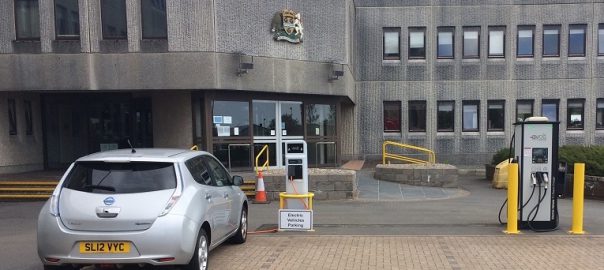
Evolt connects Isles to the mains
Evolt, the Electric Vehicle (EV) charge point supplier, has assisted Comhairle nan Eilean Siar (Western Isles Council) in creating a north-south EV charging network throughout the islands of the Outer Hebrides.

A total of 11 charge points have been strategically positioned on the Isles of Lewis and Harris, North Uist, South Uist and Barra, which make up the majority of the Council’s remit. The new network adds to the existing Evolt charge points procured and installed at the ferry ports throughout the Western Isles.
The news also follows Evolt’s selection as one of the Energy Saving Trust’s EV charge point suppliers on a Scotland-wide framework agreement.
A Spokesperson at Comhairle nan Eilean Siar explains the charge point infrastructure project was completed in three phases, and Evolt were appointed the successful tenderer to supply its equipment:
“It has proven to be an good and reliable supplier, and we have had minimal operational issues with the equipment, which bearing in mind our extreme weather conditions and harsh environment, is impressive.”
Three top-of-the-range Rapid chargers that can efficiently charge two EVs to 80% of their battery life within 30 minutes through a 50Kw AC and 43Kw DC outlet have been installed at key locations throughout the region. These are supplemented by three 22kW Fast chargers that are ideal for quick ‘top ups’, have AC and DC capability, and take one hour to simultaneously charge two EVs; and five 7kW Street chargers that complete the Islands’ north-south network.
“The charging infrastructure has contributed to our environmental agenda and is an enabler of sustainable tourism,” the Spokesperson adds. “A car club is also being set up by an independent enterprise for residents and businesses to hire EVs.
“Further strategically placed charging units are proposed for the future to increase accessibility to some of our prime tourist locations, however there can be limitations to installations based on the capacity of the electricity network in the area,” the Spokesperson concludes.
Justin Meyer, General Manager for Evolt, emphasises EVs and charge points appeal to both rural and urban environments:
“It’s a testament to the reliability and durability of our systems that they continue to effectively charge EVs even in the most testing conditions.”
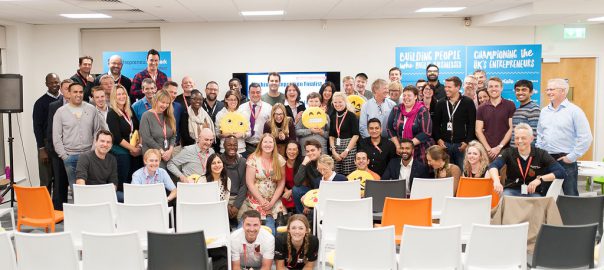
Halfway through Start-up Program
We are now halfway through the Entrepreneurial Spark programme for start-ups that we embarked on in August. Fuel Included is in the ‘Hatchery’ in Milton Keynes.

This week saw the halfway point marked by a series of programs known as #GoDoAcceler8. We had presentations during the day on skills for start-up entrepreneurs, followed by an awards evening. A good time was had by all!
Hyundai IONIQ electric | Fully Charged
Hard not to put this at the top of the list for new elecrtric cars. An excellent machine, very sophisticated and cheaper than a 30kWh Nissan Leaf.
Hopefully this time I’ve put a lot of information in the episode. Enjoy.
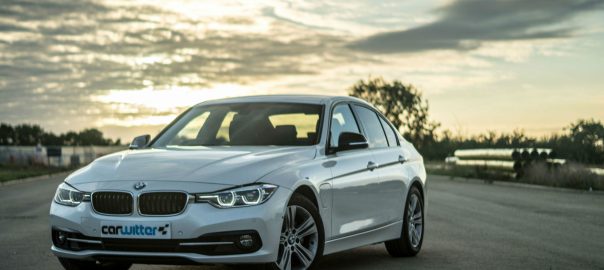
BMW 330e Review – The Future Of Motoring
When I first received the 330e to test for a week I was pondering the purpose of a plug in hybrid. Why would you plug your car into the mains when it has a perfectly good 2 litre turbo charged petrol engine up front?!

I had thought to myself that I wouldn’t bother plugging it in at all. But the novelty factor won me over.
Plugging the fossil fuelled beemer into the mains felt strange, but after 3 hours the thing was pretty much charged.
The next day I drove to and from work using no fuel at all. I was sold.
Read more: CarWitter
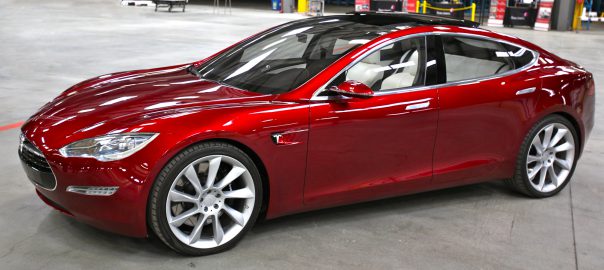
Mass adoption of electric vehicles is “much sooner than most people realize”
Blink and you missed the announcement. But last Friday, the UK’s much criticised energy supply grid system entered what is being seen as a “new era” with the announcement that eight large battery systems are being built to cope with the growing influx of wind and solar power.

The deal – the largest of its kind in Europe – will see seven companies, including Sweden’s Vattenfall and UK-based Renewable Energy Systems, install eight lithium-ion battery systems around Britain.
“This is the single largest contract in Europe we’ve ever seen for storage and the largest of its kind globally since August last year,”
said Logan Goldie-Scot, head of energy storage at the Bloomberg New Energy Finance research group told the Financial Times.
Storing electricity in batteries has long seen as the “holy grail” for renewables as battery storage of electricity helps to supply power on the days that the wind is not blowing or the sun is not shining.
And the move is aimed at helping the UK cope with the growing prevalence of renewables, which now account for a quarter of UK electricity generation, up from 9 per cent in just five years.
If renewables can provide electricity to the grid which can be stored when demand is needed it will help the electric car revolution that is taking place. Just as the electricity supply network needs storage in batteries so do electric cars, and it is a shortage of batteries which is threatening to keep the price of electric vehicles high for the time being.
But Tesla is changing the game on electric vehicles, a subject explored in today’s Financial Times, which asks what it calls a profound question: “Could electric cars ever cut the world’s thirst for oil enough to depress crude prices significantly?”
And the short answer is: Yes.
Read more: Price Of Oil

Fuel Subsidies Are the World’s Dumbest Policy
Many things have gotten harder as the world settles into a protracted spell of low oil prices and sluggish growth — from avoiding deflation to creating jobs. One thing has gotten easier, as well as more urgent: eliminating fossil-fuel subsidies.

Governments have long paid lip service to this idea. The G-20 has been promising to phase out fuel subsidies since 2009, but the measures remain widespread and resilient.
Nations from the U.S. to the U.K. to Russia continue to spend billions on tax breaks and other subsidies for the production of oil, gas and coal. Japan, South Korea and China support massive fossil-fuel projects outside their borders. For years, many countries — including some of the world’s biggest energy producers — have also used subsidies to lower gasoline and diesel prices, supposedly to help the poor.
The sums involved are huge. The International Energy Agency estimates that countries spent $493 billion on consumption subsidies for fossil fuels in 2014. The U.K.’s Overseas Development Institute suggests G-20 countries alone devoted an additional $450 billion to producer supports that year.
These ridiculous outlays would be economically wasteful even if they didn’t also harm the environment. They fuel corruption, discourage efficient use of energy and promote needlessly capital-intensive industries. They sustain unviable fossil-fuel producers, hold back innovation, and encourage countries to build uneconomic pipelines and coal-fired power plants. Last and most important, if governments are to have any hope of meeting their ambitious climate targets, they need to stop paying people to use and produce fossil fuels.
Read more: Bloomberg

I Went Camping in a Tesla
Elon Musk inadvertently spawned a subculture that’s hacking the Model S into a 21st century tent.

As the sun set beyond the long-needle pines and emerald waters of Lake Tahoe, I looked across the campfire and laughed out loud. I was about to go “camping” in the back of a $145,000 electric car because, well, it’s become a thing.
Tesla “Camper Mode,” as it’s often called, may not be sanctioned by the company, but a community of drivers is devoted to the practice. There are forums and YouTube videos that praise the virtues of Tesla camping and explore the hacks you’ll need to make it work. There’s even a third-party Tesla car app, with a “Camp Mode” function that will optimize the car’s systems for a good night’s sleep. This is a quirky, little Tesla subculture, and of course I had to try it myself.
I know what you’re thinking (because it was my first thought, too): Why would someone who can afford a Tesla need to bed down inside one? The last time I slept in a car was on a college road trip from Iowa to Florida, and it was a night of eternal torment, with cramped seats, suffocating heat, and mosquitoes that swarmed when we cracked the windows. Who would choose that again?
But Tesla camping promised something different. The sapphire blue Model S I was driving for the week has a 90 kilowatt hour battery—the largest you can find in a car on the road today. In theory, it should be able to handle a night of climate control and HEPA-level air filtration without much limiting of the vehicle’s range. Also, electric cars are virtually silent and release no tailpipe emissions (they don’t have tailpipes) so they won’t suffocate the camper or disturb the local fauna. As for the Model S’s panoramic glass roof, well, no tent can compete with that.
Read more: Bloomberg