All posts by Trevor Larkum

Nissan LEAF hails new opportunity for The Taxi Centre

THE Taxi Centre – one of the UK’s leading suppliers of cars to the taxi industry – has taken delivery of its first batch of 100 percent electric Nissan LEAFs as it predicts a major surge in demand for the market-leading model during 2017.

The Glasgow-based company – part of Vertu Motors plc – has taken an initial batch of 15 LEAFs but forecasts making more than 100 sales in the next 12 months and more than 300 the year after.

Allan McGinness, General Manager at The Taxi Centre, said:

“The LEAF has a proven track record in service with taxi operators large and small across the UK and can really help them achieve massive savings.

“We’ve been waiting for the right electric vehicle for the taxi industry and we’re convinced the LEAF is that vehicle.”

There are currently more than 200 Nissan EV taxis in operation across Britain, with dozens more on order and many taxi companies and local authorities taking steps to replace diesel and petrol equivalents with cleaner and cheaper EV alternatives.

Last year it was revealed that more than three million UK taxi miles had been clocked up in all-electric Nissan taxis. Had the same distance – equivalent to six journeys to the moon and back or 120 times around the world – been covered in the diesel vehicles the Nissan EVs replaced, it would have cost an estimated £350,000 in fuel.

However, with average running costs of just two pence per mile, covering three million miles in the LEAF would have cost around £60,000 – a massive saving of £290,000.

With zero tailpipe emissions, the model would also contribute to improving air quality in the towns and cities in which they operate.

Source: Nissan Insider

MINI Countryman PHEV (Image: T. Larkum)

BMW considers making electric Mini outside UK due to Brexit worries

Suggestion that carmaker could produce vehicle in Germany instead of Oxford comes amid fears over Vauxhall’s future

The new electric Mini could be made in Germany rather than the UK because of the uncertainty caused by Brexit.

Most Minis are manufactured at its plant in Oxford, one of the biggest factories in the country, but BMW, the owner of the brand, is considering making the electric version of the car in Germany.

MINI Countryman PHEV (Image: T. Larkum)

If BMW decides to make the Mini outside of Britain then it would be a major blow to the government. Greg Clark, the business secretary, wants to put electric vehicles and battery technology at the heart of the UK’s industrial strategy, describing the sector as an “emblematic area of focus”.

The doubts about where the electric Mini will be built is one of a number of issues threatening to derail the revival of Britain’s car industry. The government persuaded Nissan to commit more investment for its plant in Sunderland but there are fears that jobs could be lost at Vauxhall’s factories in Ellesmere Port and Luton if PSA Group, the owner of Peugeot, completes a deal to buy General Motors’ European business, which includes Vauxhall and Opel.

BMW announced the launch of the battery-powered Mini last year and it is scheduled to go on sale in 2019. The German company says it will make a decision this year about where to produce the car. However, the German newspaper Handelsblatt has reported that BMW is considering building the Mini at its plants in Regensburg and Leipzig rather than Oxford. Another option for BMW is to produce the car in the Netherlands, where roughly one in three Minis are already made.

The German carmaker is likely to hold talks with the British government before making a decision but is concerned about the prospect of the UK leaving the single market and being charged tariffs on imports and exports.

The company insisted it was business as usual at its four sites in the UK. In a statement, it said:

“The decision on where to build the full-electric Mini will be taken this year.

“As formal negotiations between the UK and the EU have not even begun yet it is too early to comment on what Brexit will mean for our business.

“The BMW group has always made clear that we believe integration of the UK into the EU single market, maintaining free movement of goods, services, capital and talent, would be best for business. What’s important for us is that the UK’s negotiations with the EU result in uncomplicated, tariff-free access to the EU single market in future.

“As a major investor and employer in the UK, the BMW group urges the government to take the concerns of international business into account. Not only free trade but also cross-border employment opportunities and unified, internationally applied regulations are of proven benefit to business, the economy and individuals.”

Source: The Guardian

Milton Keynes EV Experience Centre

Country’s first electric car showroom to open in Milton Keynes

Chargemaster has won the contract to set up and operate a new EV Experience Centre in Milton Keynes.

This will be the UKs first-ever shopping centre multi-brand showroom. Milton Keynes was awarded £9 million Go Ultra Low Cities funding in January 2016 to encourage the uptake of low emission vehicles and hit the target of 23 per cent of all car sales being electric or plug-in by 2021.

The project is due to launch in spring and will be situated within the city’s premier shopping centre. The ground-breaking new project will help residents understand the true potential of EV ownership.

As well as showcasing the latest EVs and exciting technology, highly trained independent professionals will be on hand to answer visitors’ questions and refer them to relevant local dealerships or partner leasing companies. As an added bonus, Milton Keynes residents and businesses will also be able to test drive a range of vehicles on a short or long-term basis.

Milton Keynes EV Experience Centre

Brian Matthews, head of Transport Innovation at Milton Keynes, said:

“Our commitment to making Milton Keynes a go-to destination and flagship Go Ultra Low city starts with our residents.

“We’re delighted to be working with Chargemaster on this project, and are confident that the team is best placed to champion the EV sector, considering their knowledge and experience of the industry.”

David Martell, Chargemaster CEO, said:

“Being part of such a high-profile and diverse project is very exciting for Chargemaster.

“The centre will be the first of its kind and we are sure it will pave the way for other cities to follow.

“We are looking forward to welcoming Milton Keynes shoppers and showing them everything that going green has to offer.”

Read more: MiltonKeynes.co.uk

f

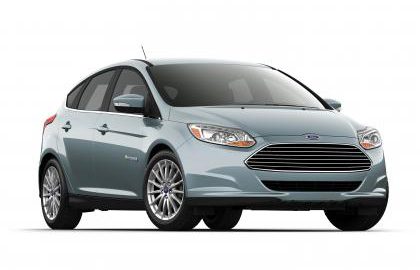
Ford Focus Electric (Image: Ford)

Ford Focus Electric gets 140-mile range and new charging tech

Ford puts European spec Focus Electric on par with US market counterpart, with additional range and fast-charging technology

Ford has quietly issued an update to the electrified version of its popular family hatchback, the Focus Electric, boosting the range European buyers can expect and fitting fast-charge technology.

The updates bring the European spec Focus Electric on par with the US market version, with a larger, denser battery pack at the heart of the package. The 23kWh capacity cell has been replaced by a 33.5kWh version, though it’s still mated to a 107kW electric motor – the equivalent of 143bhp.

Ford Focus Electric (Image: Ford)

As such, performance remains the same as before, with 0-62mph dealt with in 11.4 seconds. The jump in quoted range is noticeable though and Ford claims the Focus Electric can do 140 miles on a single charge – up from 100 miles previously.

Alongside the denser battery pack, Ford has introduced new charging technology. The Focus Electric uses the industry-standard Combined Charging System (CCS), compatible with roadside and service station fast charging points and can now be topped up to 80 per cent in 30 minutes.

Charging technology and battery packs aside, the Focus Electric gains updates in the cabin too. It’s now fitted with Ford’s SYNC 3 infotainment and connectivity setup with voice commands, plus Android Auto and Apple CarPlay.

Order books for the updated Focus Electric are open across Europe now.

Source: AutoExpress

Air pollution causes 40,000 early deaths in the UK and costs the country £27.5bn a year, according to a government estimate

End UK tax incentives for diesel vehicles, ministers are urged

Ministers are coming under growing pressure to remove tax incentives for diesel cars and offer compensation to motorists so they can swap to more environmentally friendly vehicles

A group of medical professionals, environmental campaigners and lawyers has written to the chancellor ahead of the budget to demand a change to the vehicle excise duty that they say subsidises diesel cars.

Separately, senior Labour and Tory politicians have called for a comprehensive vehicle scrappage scheme to help people with diesel cars change to greener alternatives.

Air pollution causes 40,000 early deaths in the UK and costs the country £27.5bn a year, according to a government estimate

The letter from campaigners, including the British Lung Foundation, Greenpeace and doctors’ groups, says toxic air poses a daily risk to people’s health – particularly the young and those suffering from lung problems.

“Air pollution has … been shown to stunt children’s lung growth, which could leave them with health problems in later life,” it states. “We all deserve to breathe clean air.”

On Saturday the Guardian revealed that thousands of children and young people at more than 800 nurseries, schools and colleges in London faced dangerous and illegal levels of toxic air, much of it from diesel cars.

The transport secretary, Chris Grayling, indicated the government may bow to pressure, saying motorists should be wary of buying diesel cars, adding: “We’re going to have to really migrate our car fleet, and our vehicle fleet more generally, to cleaner technology.” However, he said that diesel “was not going to disappear”.

Air pollution causes 40,000 early deaths in the UK and costs the country £27.5bn a year, according to a government estimate. MPs have called it a public health emergency.

The letter adds:

“We know diesel vehicles, in particular diesel cars, are a major source of pollution in towns and cities … yet vehicle excise duty (VED) not only fails to recognise this, but is still incentivising them. We are therefore asking for a revision of the VED first-year rate in your upcoming budget statement.”

Read more: Edie.net

Renault ZOE Z.E. 40 (41 kWh) Battery Visualized

The new Renault ZOE Z.E. 40 proves that it’s possible to double battery capacity, without redesigning an entire car.

The key is to originally develop a battery pack that could handle future modules with more energy dense cells (see video below).

In the case of ZOE Z.E. 40, available energy went up from about 22 kWh to 41 kWh, while the dimensions of the battery remained unchanged, with the weight increasing by only 15 kg (33 lbs) – from 290 kg to 305 kg (5%).

Physically, Renault still uses a 192 cells (LG Chem) in 12 modules (16 cells per module) configuration.

With 41 kWh of energy in the sub-compact model, a real world range of 300 km (186 miles) is possible (officially in Europe the ZOE is rated at 400 km on the NEDC scale).

Source: Inside EVs

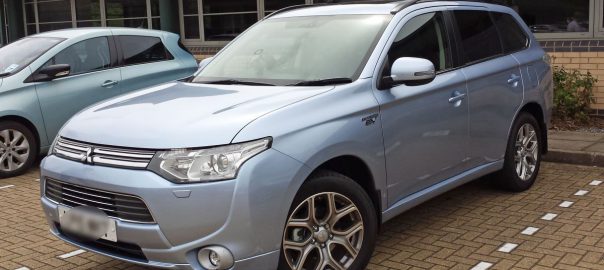
Mitsubishi Outlander PHEV (Image: T. Larkum)

Mitsubishi Outlander PHEV Photo Gallery

Mitsubishi Outlander PHEV (Image: T. Larkum)

This is a quick walkaround of the Mitsubishi Outlander PHEV (Plugin Hybrid Electric Vehicle), actually showing the first one we sold.

The Outlander is a good size vehicle, providing plenty of space inside for five people.

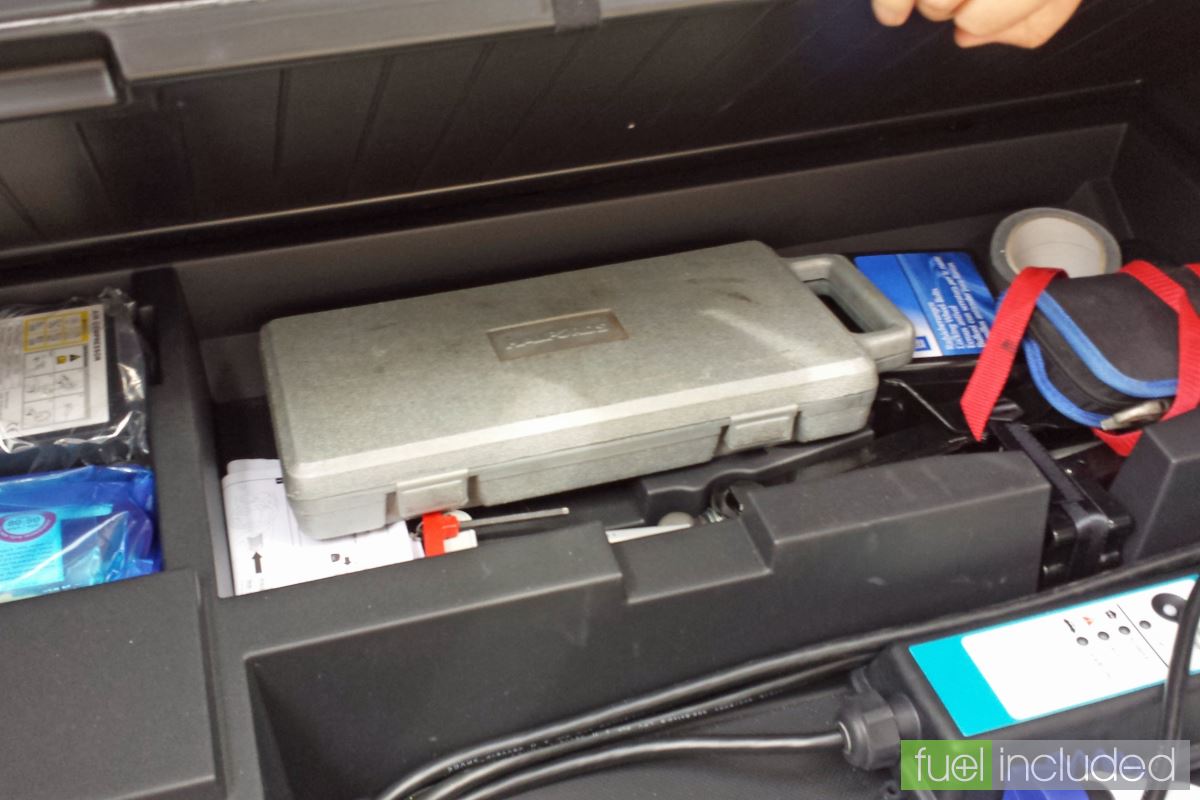
It has a large boot, though this loses some height to provide storage for the home charge 13A cable and for the usual car items (tools, first aid kit, etc.).

The PHEV has a Type 1 socket for home charging, same as a Nissan Leaf. However, it also has a Chademo rapid charger socket which arguably is a bit out of place since the PHEV battery isn’t really big enough to justify rapid charging; a full charge at one motorway services would only just give you enough charge to get to the next services before you would have to charge again.

Instead for any long journey you would almost certainly just use the 2.0l petrol engine – the obvious benefit of having a PHEV in the first place.

For news and reviews of the Outlander PHEV see here.

‘The shelves looked wonderful, perfect, almost clinical, as though invented in a lab in my absence; but there was no smell.’ (Image: A. Britton/PA)

The Supermarket Food Gamble May Be Up

Brexit, migration and climate pressures mean our ‘too big to fail’ global food chain could unravel

The UK’s clock has been set to Permanent Global Summer Time once more after a temporary blip. Courgettes, spinach and iceberg lettuce are back on the shelves, and the panic over the lack of imported fruit and vegetables has been contained. “As you were, everyone,” appears to be the message.

But why would supermarkets – which are said to have lost sales worth as much as £8m in January thanks to record-breaking, crop-wrecking snow and rainfall in the usually mild winter regions of Spain and Italy – be so keen to fly in substitutes from the US at exorbitant cost?

Why would they sell at a loss rather than let us go without, or put up prices to reflect the changing market? Why indeed would anyone air-freight watery lettuce across the whole of the American continent and the Atlantic when it takes 127 calories of fuel energy to fly just 1 food calorie of that lettuce to the UK from California?

‘The shelves looked wonderful, perfect, almost clinical, as though invented in a lab in my absence; but there was no smell.’ (Image: A. Britton/PA)

The answer is that, in the past 40 years, a whole supermarket system has been built on the seductive illusion of this Permanent Global Summer Time. As a result, a cornucopia of perpetual harvest is one of the key selling points that big stores have over rival retailers. If the enticing fresh produce section placed near the front of each store to draw you in starts looking a bit empty, we might not bother to shop there at all.

But when you take into account climate change, the shortages of early 2017 look more like a taste of things to come than just a blip, and that is almost impossible for supermarkets to admit.

Add the impact of this winter’s weather on Mediterranean production, the inflationary pressures from a post-Brexit fall in the value of sterling against the euro, and the threat of tariffs as we exit the single market, and suddenly the model begins to look extraordinarily vulnerable.

Read more: The Guardian

Selfridges Green Free all-electric BMW i3 Chauffeur Service

Selfridges boosts it’s green credentials with free all-electric BMW i3 chauffeur service

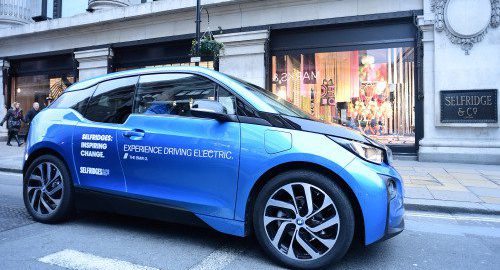
BMW has loaned a fleet of all-electric BMW i3s to Selfridges in Manchester for the next three months as part of the department store’s Material World initiative to encourage consumers to think more sustainably when shopping. Customers can choose to be chauffeured with their shopping free of charge by a BMWi Genius or get behind the wheel themselves.

The store is also celebrating the permanent installation of charging points within their car park as London looks to improve the charging infrastructure in high footfall locations plagued by poor air quality across the city.

As air pollution continues to rise at an alarming rate around the world and cities like Paris, Milan and Rome impose driving bans during the worst periods, Manchester is now also being urged by officials to implement similar rules with the possibility of introducing a congestion charge.

Big brands are now taking steps for change including the likes of leaders in sustainable innovation, BMWi and Selfridges. In recent months BMW’s all-electric i range has been used in a range of initiatives across the city to encourage sustainable driving solutions with the likes of DriveNow – the brand’s car sharing service, London’s police force and now as part of a complementary chauffeur service to Selfridges in London and Manchester.

Read more: Female First

EV Charging Station (Image: Foter)

Vattenfall To Switch Its Entire 3,500 Vehicle Fleet To Electric Vehicles

Vattenfall is one of the largest utility companies in Europe, with operations in Sweden, Denmark, Finland, Germany, the Netherlands, Poland, and the United Kingdom.

It is a wholly owned subsidiary of the Swedish government. Not surprisingly, it has a lot of vehicles in its fleet, including 3,500 cars and light trucks. The company has just announced it plans to switch all of those vehicles to electric cars and trucks within the next 5 years.

EV Charging Station (Image: Foter)

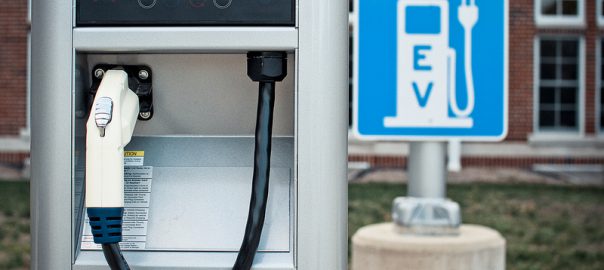
Vattenall has been a leader in renewable energy and sustainable mobility solutions since 2009. It operates nearly 6,000 EV Level 2 and DC fast charging charging points in Sweden, Germany, and the Netherlands. Those facilities supplied enough electricity in 2016 to circumnavigate the world almost 1,000 times. It is also a front runner in developing wireless and smart charging technology as well as systems for charging public transit vehicles.

“We already help our customers drive electric by supplying charging points. With the decision to switch our own fleet we do not only contribute to reducing CO2-emissions in Europe, but we also want to set an example for other companies,”

says Martijn Hagens, head of E-mobility for Vattenfall.

Read more: G2