All posts by Trevor Larkum

Home charging a Nissan Leaf (Image: Nissan)

Charging an Electric Car: How it is Nothing Like Refuelling a Petrol or Diesel Car

People who have never owned an electric car don’t understand how different charging one is compared to fuelling a petrol or diesel car. Therefore I’m going to explain what charging an electric car is like so that potential owners can understand it better.

Home charging a Nissan Leaf (Image: Nissan)

The point I want to get across is that charging an electric car is much easier and more convenient than filling a fossil-fuelled car. That’s an idea that can be difficult to grasp. Now that I’ve upgraded to electric (I’m on my second all-electric car) I could never go back, any more than I’d give up my smartphone and make do with a landline.

Here I’ll concentrate on the ins and outs of home refuelling, and cover charging away from home another time.

Charging System

Most electric cars come with a charging cable (fitted with a 13 Amp plug) that can be used to charge the car; such cables can be bought separately where they are not supplied with the car. One name given to these items is ‘granny cable’ as they can also be used to charge up while visiting relatives.

BMW i3 ‘occasional use’ charging cable (Image: BMW)

Another name they are given is ‘occasional use cable’ as they are not intended to be used frequently. They will also be slow to charge the car (12 hours or more) as a standard home socket is not capable of providing as much power as the car can potentially take.

Instead most car owners will have a special charge point installed at home to charge their car. This often comes free with a new car. It is typically wired straight into the main house consumer unit. It will be capable of passing higher power than a standard socket – usually either 16 or 32 Amps – and will be designed for frequent use.

Using a third-party ZOE granny cable while visiting my brother (Image: T. Larkum)

These charge points can be installed either inside a garage, or on a garage or other outside wall. Sometimes they’re just put on a post beside the driveway. They are all waterproofed and can be used in all weathers (including heavy rain). They usually come fitted with a tethered cable to match the car but sometimes just have a socket to which the owner can connect different cables, for example if the unit has to charge electric cars with different types of connector. The pros and cons of having a tethered versus untethered charge point are covered elsewhere.

Charging an Electric Car: Frequency

How often does an electric car need to be charged? This is an important question, and is key to why charging is more convenient than conventional refuelling.

The obvious answer, at least to someone used to a conventional car, would be “when it’s empty”. That’s because most people let their cars run low on fuel before refilling. There is no good reason for this; it simply reflects the fact that conventional refuelling is so inconvenient that it is to be avoided whenever possible. It takes time, and usually also involves a diversion from where you actually want to go.

With an electric car you could choose to do the same thing, relying on public charge points, and that can work if you can’t do home charging. However for the majority of electric car owners with a home charge point the easiest thing is simply to charge at home overnight every night.

Charging a Renault ZOE on the drive (Image: Fraunhofer ISE)

Electric cars use Lithium-Ion batteries, similar to those found in mobile phones (though they have significantly more sophisticated charge management systems than phones and so last longer). Lithium-Ion likes to be kept charged unlike previous technologies (e.g. Nickel-Cadmium batteries) that you were supposed to run down before recharging. Therefore it does no harm to plug in every night and so have the car battery fully charged every morning ready to go.

Using a dedicated high power charge point allows a typical electric car to be charged in about 4 hours. It’s also fine to only partly refill it. Therefore it can be perfectly practical to drive, say 100 miles during the day for work, then go home and – those evenings when it’s useful – top it up for an hour or two and go out again for, say, another 50 miles.

Charging an Electric Car: Process

It’s very easy to charge an electric car once you have a dedicated charge point. If you are lazy, like me, then you have a tethered one with its cable permanently attached so you don’t have to unpack a cable each time. Similarly, I choose to leave mine switched on permanently for convenience.

In this case, charging is as simple as the following:

  • Open the charge point door on the car
  • Uncurl just enough of the charge cable to insert its connector into the car’s charge socket

The car will automatically start to charge when it sees the electrical connection made. It will control the charge and finish it automatically.

On my original Renault ZOE the charge point door was unlocked using a button on the key fob or a switch inside the car. The charge socket was in the nose and so required walking around to it to insert the connector. The total time taken was about 15 seconds; this would also be typical for the Nissan Leaf.

Charging a Nissan Leaf in the garage (Image: Chargemasterplc.com)

On my current BMW i3 the charge point door is always unlocked if the car is unlocked, and the charge socket is on the driver’s side. Therefore I can insert the connector after I have parked the car and as I walk out of the garage; there is literally no additional time taken to set the car for charging. The Hyundai IONIQ Electric also has the socket on the rear quarter, though on the passenger side.

Charging a BMW i3 on the drive (Image: BMW)

People sometimes ask me how long it takes to charge my car. They probably expect to hear me say ‘4 hours’ or whatever, but actually it takes me personally no time at all, not a single minute. That’s because I don’t care how long it takes for the battery to fill up while I’m in the house (and probably asleep).

Charging a Hyundai IONIQ Electric on the drive (Image: T. Heale)

With my i3 having a range of about 120 miles, and my commute being 45 miles, it’s not even a problem if I forget to charge for a day or two. However, like with your smartphone, making charging it a daily routine is generally the best option.

Summary

One of the great things I love about a car that’s electric is no longer having to spend time fuelling it. It’s just 100% full every morning when I get in, as if by magic. I certainly don’t miss having to travel to petrol stations, often standing in the dark and rain, to hand over large amounts of money.

Now instead I fuel the car myself using renewable energy. During the week I charge it from wind (courtesy of our renewable electricity supplier) and a fill-up costs about £2.50. At the weekend I can charge it from our solar panels for free.

cheapest electric car UK

Cheapest Electric Car UK

Cheapest Electric Car in the UK

A lot of people are searching for ‘cheapest electric car UK’ at the moment. We can help with that, though it can be difficult to say what’s the cheapest electric car in the UK because it depends on what you mean by ‘cheapest’. Let’s dig a bit deeper.

cheapest electric car UK

The most popular electric cars, are as follows:

Cheapest Electric Car UK (Image: Fuel Included)
Cheapest Electric Car in the UK (Image: Fuel Included)

Cheapest Electric Car UK: Monthly Cost

Of these the cheapest on a monthly basis are consistently the Nissan Leaf and the Renault ZOE. Typical starting prices are as follows (June 2017):

Those are great prices considering they include fuel (charging) plus with an electric car road tax is free, congestion charging is free, parking is often free, and servicing is cheap.

Clearly, though, this provides an answer to the original question. The Cheapest Electric Car UK (on monthly cost) is the Nissan Leaf.

Cheapest Electric Car UK: Cost Per Mile of Range

However, that’s not the end of the story. Electric cars are better than conventional cars in virtually every respect (performance, noise, smoothness, pollution, etc.). They do, however, typically have shorter ranges. Therefore it is usual to pay a premium for longer range electric cars (the Tesla being a well-known example, though it’s out of the reach of most people).

Let’s consider the question of range then. We’ll use the official NEDC (New European Driving Cycle) ranges, though we’d be the first to say these should be taken with a pinch of salt. In the real world you’ll only get about 75% of the NEDC range. However, they do give us a consistent metric for comparison purposes.

The NEDC ranges are as follows:

  • Nissan Leaf (30kWh battery): 155 miles
  • Renault ZOE (44kWh battery): 250 miles

If we take these into account we can work out the monthly cost per mile of range:

  • Nissan Leaf (30kWh battery): 155 miles for £255 = £1.65 per month per mile of range
  • Renault ZOE (44kWh battery): 250 miles for £309 = £1.24 per month mile of range

And so we have a new answer to the original question. The Cheapest Electric Car UK (cost per mile of range) is the Renault ZOE. And it’s that unprecedented range in a small, affordable and stylish electric car that explains why it’s so popular. See our Renault ZOE prices here.

Cheapest electric car uk

To see how much an electric car could save you, use our total cost of ownership calculator.

To find out which electric car would suit you best, just ask.

Electric car lease UK

Electric Car Lease UK

Lease an Electric Car

We can help you if you are looking for the cheapest electric car lease UK. We specialise in providing electric cars in the UK on lease and PCP contracts.

Electric car lease UKElectric Car Lease UK

So how does electric car leasing differ from a PCP?

  • With a UK electric car lease you pay a fixed price per month for a fixed term (typically 3 years). There is also an upfront payment (usually worth 3 or 6 times the monthly payment). At the end of the term you give the car back. A private lease is technically known as Personal Contract Purchase (PCH).
  • A PCP (personal contract purchase) is similar to a lease in that you can give the car back and walk away at the end of the term. However it differs in that you can choose to keep the car instead by paying a final or ‘balloon’ payment. Also, the upfront payment is usually a fixed amount (e.g. £499) rather than a multiple of the monthly amount. It is effectively a deposit if you decide to keep the car.

We recommend that you take an electric car on the assumption that you’ll give it back at the end of the term. That’s because the technology is advancing so fast that there will be new ones coming available with greater range and performance. Therefore we don’t think it makes sense to buy outright at the moment.

For most people it doesn’t make any real difference if you get your new electric car on lease or PCP – you really just want the cheapest overall cost (considering the upfront payment plus monthly payments).

Benefits of Electric Cars

Electric cars are the most technologically advanced cars available. Therefore they tend to be more expensive to buy outright than fossil-fuelled cars. However:

  • electric cars are cheap to run. Fuel (electricity) costs are very low: a ‘fill-up’ costs as little as £1.50.
  • they often get free parking (e.g. in Westminster, Milton Keynes, Leeds, some railway stations, etc.).
  • they get exemption from congestion charging.
  • electric cars are nicer to drive as they are quiet, smooth and don’t pollute.
  • they typically have greater performance (acceleration) than equivalent fossil cars.
  • all-electric cars pay no road tax.
  • they are usually cheaper to service and maintain.

The result of all this is that an electric car can provide very cheap motoring. It’s important, though, to consider all the costs of a car (fuel, tax, parking, etc.) and don’t just look at the monthly payment. With many of our cars we even include free charging.

Electric Car Lease UK: How We Can Help

If you’re not sure whether an electric car lease would work for you and save you money, try out our Total Cost of Ownership service.

Top electric cars available on electric car lease UK (Image: Fuel Included)

If you already know what you want then take a look at our most popular deals:

Renault ZOE Car Sharing poster in Padua (Image: T. Larkum)

Renault ZOE Car Sharing in Padua

During my recent trip to the Veneto region of Italy (Venice/Padua/Verona) I stayed in a hotel near Venice, in Mestre on the mainland. Most of Venice, of course, has no cars – just a lot of polluting boats.

Renault ZOE Car Sharing poster in Padua (Image: T. Larkum)

The mainland, however, is packed with cars like any European region. It was very disappointing, therefore, not to see a single electric car in the time we were there.

There was a single bright spot, during a day trip to Padua (Padova). I have previously reported on the Car Sharing Padova organisation there and its use of Renault ZOE electric cars.

I’m pleased to say that it’s still up and running. I saw an encouraging poster in Padua for Car Sharing Padova at an upcoming trade fair.

It did seem, however, like a small oasis in an electric car desert.

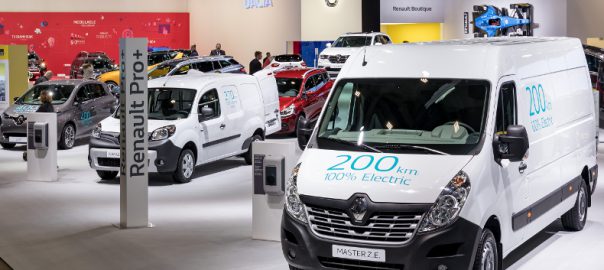
New Renault Master ZE Electric Van with Kangoo ZE Electric Van behind (Image: Renault)

Electric Van


Warning: preg_match(): Compilation failed: invalid range in character class at offset 4 in C:\inetpub\vhosts\fuelincluded.com\httpdocs\wp-content\plugins\maxbuttons\assets\libraries\simplehtmldom\simple_html_dom.php on line 1389

Warning: preg_match_all(): Compilation failed: invalid range in character class at offset 4 in C:\inetpub\vhosts\fuelincluded.com\httpdocs\wp-content\plugins\maxbuttons\assets\libraries\simplehtmldom\simple_html_dom.php on line 694

Warning: foreach() argument must be of type array|object, null given in C:\inetpub\vhosts\fuelincluded.com\httpdocs\wp-content\plugins\maxbuttons\assets\libraries\simplehtmldom\simple_html_dom.php on line 701

Warning: preg_match_all(): Compilation failed: invalid range in character class at offset 4 in C:\inetpub\vhosts\fuelincluded.com\httpdocs\wp-content\plugins\maxbuttons\assets\libraries\simplehtmldom\simple_html_dom.php on line 694

Warning: foreach() argument must be of type array|object, null given in C:\inetpub\vhosts\fuelincluded.com\httpdocs\wp-content\plugins\maxbuttons\assets\libraries\simplehtmldom\simple_html_dom.php on line 701

Fatal error: Uncaught Error: Attempt to assign property "href" on array in C:\inetpub\vhosts\fuelincluded.com\httpdocs\wp-content\plugins\maxbuttons\blocks\basic.php:171 Stack trace: #0 C:\inetpub\vhosts\fuelincluded.com\httpdocs\wp-content\plugins\maxbuttons\classes\button.php(382): MaxButtons\basicBlock->parse_button() #1 C:\inetpub\vhosts\fuelincluded.com\httpdocs\wp-content\plugins\maxbuttons\classes\button.php(476): MaxButtons\maxButton->parse_button() #2 C:\inetpub\vhosts\fuelincluded.com\httpdocs\wp-content\plugins\maxbuttons\classes\button.php(903): MaxButtons\maxButton->display() #3 C:\inetpub\vhosts\fuelincluded.com\httpdocs\wp-content\plugins\maxbuttons\classes\maxbuttons-class.php(525): MaxButtons\maxButton->shortcode() #4 C:\inetpub\vhosts\fuelincluded.com\httpdocs\wp-includes\shortcodes.php(434): MaxButtons\maxButtonsPlugin->shortcode() #5 [internal function]: do_shortcode_tag() #6 C:\inetpub\vhosts\fuelincluded.com\httpdocs\wp-includes\shortcodes.php(273): preg_replace_callback() #7 C:\inetpub\vhosts\fuelincluded.com\httpdocs\wp-includes\class-wp-hook.php(324): do_shortcode() #8 C:\inetpub\vhosts\fuelincluded.com\httpdocs\wp-includes\plugin.php(205): WP_Hook->apply_filters() #9 C:\inetpub\vhosts\fuelincluded.com\httpdocs\wp-includes\post-template.php(256): apply_filters() #10 C:\inetpub\vhosts\fuelincluded.com\httpdocs\wp-content\themes\twentythirteen\content.php(43): the_content() #11 C:\inetpub\vhosts\fuelincluded.com\httpdocs\wp-includes\template.php(812): require('...') #12 C:\inetpub\vhosts\fuelincluded.com\httpdocs\wp-includes\template.php(745): load_template() #13 C:\inetpub\vhosts\fuelincluded.com\httpdocs\wp-includes\general-template.php(206): locate_template() #14 C:\inetpub\vhosts\fuelincluded.com\httpdocs\wp-content\themes\twentythirteen\author.php(49): get_template_part() #15 C:\inetpub\vhosts\fuelincluded.com\httpdocs\wp-includes\template-loader.php(106): include('...') #16 C:\inetpub\vhosts\fuelincluded.com\httpdocs\wp-blog-header.php(19): require_once('...') #17 C:\inetpub\vhosts\fuelincluded.com\httpdocs\index.php(17): require('...') #18 {main} thrown in C:\inetpub\vhosts\fuelincluded.com\httpdocs\wp-content\plugins\maxbuttons\blocks\basic.php on line 171