All posts by Trevor Larkum

Global Mean Sea Level Rise (Image: Business Insider)

Why You Should Be Afraid Of Climate Change In 10 Charts

It’s almost universally agreed now that climate change is caused by humans and it’s on track to wreak havoc on the planet.

Scientists release new studies every year (if not every month) demonstrating the effects climate change has already had on the Earth and projecting the damage it will cause in the future. Storms, droughts, floods, famines, and mass extinctions are just a few of the consequences in store for our home if humans don’t do something about the problem – and fast.

We’ve put together these charts, taken from some of these studies, to help you visualize just how real the effects of climate change are. These are just a few of the reasons you should be very, very afraid.

Nothing is left unscathed.

As this chart from the Intergovernmental Panel on Climate Change’s (IPCC’s) March 2014 working group report shows, climate change will hit everything from the polar ice caps to our bank accounts.

The colorful icons show what kinds of effects have been observed so far around the world, and the little bars next to the icons show how much confidence scientists have that the effects were caused by climate change. In the Arctic and other parts of North America, for example, scientists have high confidence that glaciers, snow, ice, and permafrost are melting due to global warming.

But warming doesn’t just impact weather: It changes the environments in which we grow our foods, changes the ecosystems in which the fish we eat live, increases the likelihood of wildfire, erodes the coastlines, and causes drought that robs populations of their water sources.

Climate Change Impacts (Image: Business Insider)

Sea levels will rise.

As sea ice continues to melt, all that excess water will cause sea levels to rise. This spells disaster for coastal areas, which will inevitably flood as the water level creeps up.

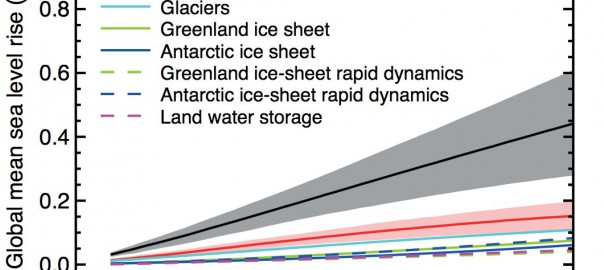
This IPCC Fifth Assessment chart shows how much sea level rise scientists expect will be caused by a variety of different factors, including the melting of large ice chunks like the Greenland and Antarctic ice sheets. The chart also factors in thermal expansion – water’s tendency to increase in volume as it gets warmer.

The gray section on the chart shows how much sea levels will rise when all of these factors are lumped together. This projection shows sea levels rising by nearly half a meter (that’s 1.5 feet) or more by 2100.

Global Mean Sea Level Rise (Image: Business Insider)

Read more: Business Insider

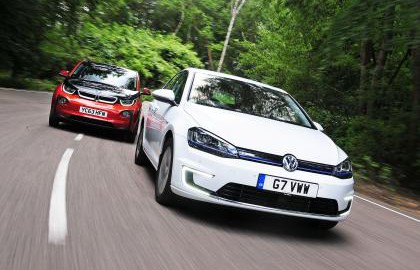
BMW i3 Goes Head-to-Head with VW e-Golf (Image: AutoExpress)

Volkswagen e-Golf vs BMW i3

Can the new VW e-Golf put battery-powered cars on the road to mainstream success? We find out as it meets the brilliant BMW i3

Electric cars have yet to spark a wholesale switch away from the combustion engine, but sales are rising and the launch of an electric version of Europe’s biggest-selling car is another example of the growing surge towards the mainstream.

The new VW e-Golf is available to order now and follows hot on the heels of the e-up! city car. Plus, once you factor in the Government Plug-in Car Grant, the newcomer costs £25,845 – which places it squarely in the path of BMW’s new i3.

The £25,680 i3 has already impressed us with its head-turning image, cleverly packaged interior and advanced composite structure. So if you’re ready to make the switch to electric motoring, is the cutting-edge, futuristic BMW or the electrified Golf the better choice?

Read more: AutoExpress

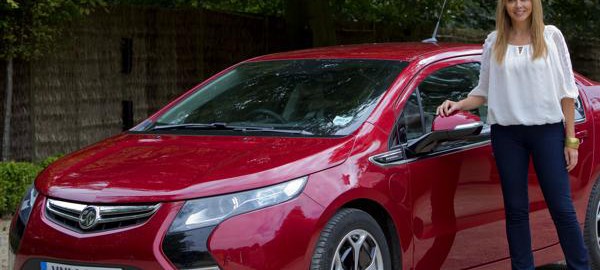
Carol Vorderman trials Vauxhall Ampera (Image: Vauxhall)

Carol Vorderman trials Vauxhall Ampera

Carol Vorderman has become the latest ambassador to test the Vauxhall Ampera extended-range electric car in support of the Go Ultra Low campaign.

Carol Vorderman trials Vauxhall Ampera (Image: Vauxhall)

Go Ultra Low, a partnership between the UK automotive industry and Government, is designed to encourage more drivers to consider ultra low emission vehicles (ULEVs). Vorderman was keen to get involved with the project, commenting:

“I’m obsessed with engines, cars and aeroplanes, and with a degree in Engineering, I’ve always been fascinated by how things work.”

As a busy working mum, the TV star was initially wary that driving a ULEV would just add to her to do list. However, after a couple of months trialling the Vauxhall Ampera she said:

“Actually quite the opposite is true, it’s easy. You come home, plug it in, you go away and come back in the morning and it’s fully charged. It gets me through the day and I don’t have to go to the petrol station which long-term, saves me a considerable amount of money.”

Read more: New Car Net

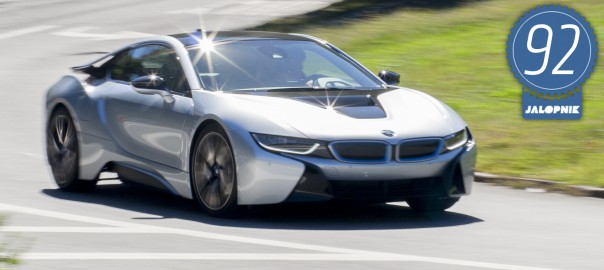
2015 BMW i8: Jalopnik Review (Imaged: Jalopnik)

2015 BMW i8: The Jalopnik Review

The BMW i8 is the most significant and forward thinking car on the road today. This is BMW’s vision of the future, and, for once, the future is no longer doom and gloom. The future is a positive, thrilling place. A place that we want to be. Don’t be scared, gearheads, we’re going to be ok.

(Full Disclosure: BMW loaned us the i8 for five days. Five days where we couldn’t go anywhere without having someone’s jaw drop with a look like the future just drove by them. And that’s because it did.)

BMW’s i division is a huge gamble by the automaker. A company that has always been known for making “The Ultimate Driving Machine” was making a move into what are called “personal mobility products.”

Sounds sexy, right?

The i3 and i8 are meant to represent the future of motoring as BMW sees it. And thankfully that doesn’t mean soul sucking boredom. In the case of the i8, we have the 1.5 liter three cylinder from the Mini — which has been turboed to hell to make 228 horsepower and 236 pound feet of torque — sitting behind the driver. That charges the battery but also powers the rear wheels. Up front there is an electric motor producing 129 horsepower and 184 pound feet of torque.

Under normal conditions, the electric motor powers the i8. It can get up to 75 MPH under electricity alone and can go for about 20 miles on a full charge with no interaction from the engine.

But that’s not all. The electric and gas can work together to change efficiency to performance. Put the i8 in sport mode or slam the pedal down, and you get pure torque from the electric motor and revvy turbo goodness from the engine. Like the McLaren P1, LaFerrari, and Porsche 918, the i8 uses its electric motor to increase performance.

Read more: Jalopnik

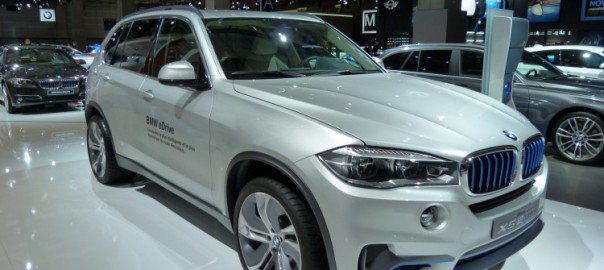
BMW X5 eDrive at Paris Motor Show (Image: BimmerToday)

2014 Paris Motor Show: BMW X5 eDrive Hybrid

BMW’s “green fleet” was represented at the 2014 Paris Motor Show not only by the BMW i3 and i8, but also by the BMW X5 eDrive Hybrid. With just a few months before its market debut, the plug-in hybrid X5 continues its auto show circuit and lands in Paris.

The X5 xDrive40e is the first hybrid X5 to be offered and it was previewed last year at the Frankfurt Auto Show.

The plugin hybrid will featured a four-cylinder petrol engine with turbocharging technology which generates, along with an electric motor, an output of 200 kW (272 hp). The standard sprint to 100 km/h is achieved by the BMW X5 xDrive40e in less than 7.0 seconds. Up to 120 km/h of pure electric drive is possible thanks to the 70 kW electric motor.

The seamless transition between electric, combined electric-petrol and pure petrol is remarkably smooth.

Visually, the plugin hybrid differs from the “regular X5″ mainly through an additional opening at the front left fender where the engineers placed a power connector for charging the high-voltage battery, which is housed in the rear of the vehicle.

To manage battery capacity BMW has created three drive modes for the X5 eDrive, Intelligent Hybrid, Pure Electric, and Save Battery. It is the Save Battery mode that highlights how BMW expects the vehicle to be used. Going into Save Battery mode restricts the use of battery capacity – allowing for a reserve to complete a journey in pure electric mode inside a city core for example.

Source: BMW Blog

Vauxhall Ampera Charging (Image: OLEV)

Electric surge as record numbers of drivers switch to plug-in cars

Over a quarter of the UK’s plug-in cars sold in last 3 months.

Sales of electric cars and other plug-in vehicles continue to rapidly increase, with a record number of people taking advantage of government grants.

The Plug-in Car Grant reduces the price of ultra low emission vehicles (ULEVs) by up to £5,000 for cars and £8,000 for vans, making them more affordable for the public and businesses.

Between July and September 2014, over 5,000 grants were provided, more than double the number than in the previous 3 months and almost a third of all grants since the scheme was launched in 2010. There are now over 17,000 grant funded ULEVs on the UK’s roads.

Transport Minister Baroness Kramer said:

“It is not surprising that people want these vehicles – they are a pleasure to drive and incredibly cheap to run, as well as beneficial to the environment. The government is breaking down barriers that may have put people off in the past.

“This growing confidence helps the UK strengthen its position as a global leader in developing green technology. Expanding this sector is also creating thousands of jobs and contributing to Britain’s thriving £11 billion automotive industry, and encouraging more investment in the UK – a key part of this government’s long-term economic plan.”

All new vehicles will have some kind of ULEV element by 2040. There has been a steady rise in the number of people taking up low emission vehicles, as more models become available and the nationwide network of charging points continues to expand. Driving costs are as low as 2p per mile.

The plug-in car grant is one of a range of Department for Transport measures in place to encourage uptake with a further £500 million to be invested by government in the industry between 2015 and 2020.

The Go Ultra Low campaign website, which is supported by government and industry, provides advice and information on ULEVs, including a guide that matches those using the site with the vehicle that most closely matches their needs.

Source: OLEV

Fleet World MPG Marathon - Nissan Leaf

EVs successfully complete MPG Marathon with less energy & no pollution

The electric vehicles taking part in this year’s MPG Marathon demonstrated how cost effective and reliable they were by completing the course in virtually the same time as their competitors – but by using less energy and with no pollution.

Three electric vehicles took part for the first time in the 23-team eco-driving event, which was again sponsored by ALD Automotive and TRACKER and was won by Honda engineers Fergal McGrath and James Warren, driving a Honda Civic Tourer and recording an outstanding 97.92mpg.

The electric vehicles taking part, two Nissan LEAFs and a Renault ZOE, attempted the same two-day course as the line-up of conventionally powered diesel and petrol cars and light commercial vehicles.

Like their competitors, they had to stop at set checkpoints en route, but were allowed to take scheduled rest time at recharging stops. This meant that careful route planning was essential to avoid range anxiety and ensure they had enough power to complete the course.

Ultimately it was a very close run thing and there was a photo-finish for first place with all three electric vehicles producing very similar results in terms of overall energy usage.

Read more: Fleet World

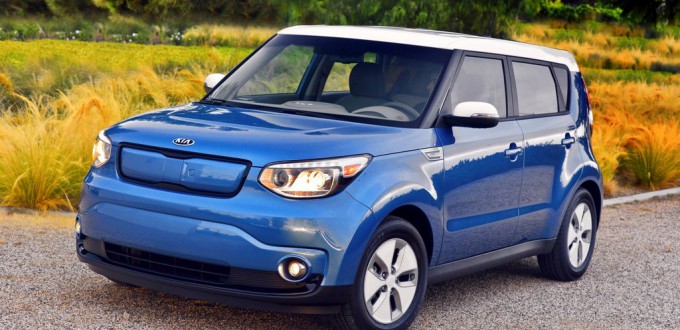
Kia Soul EV (Image: Kiam Motors America)

Late, but Fashionably So, to the Electric Ball: Kia Soul EV Review

BERKELEY, CALIF. — Laggards rarely garner praise. But the foot-dragging way that Kia went about producing the 2015 Soul EV, the company’s first all-electric model in the United States, was a stroke of slacker genius.

The battery-powered Soul went on sale in California last week, its arrival trailing more than 20 other electric and plug-in hybrid cars that have been offered to American customers.

Unlike Nissan, for example, which made a multibillion-dollar all-in gamble on E.V.s, Kia held back, watching and carefully tallying the progress. More important, perhaps, Kia took note of the missteps of major automakers and the many stumbling E.V. start-ups as it readied battery-powered cars for the road.

Kia’s good decisions started with the choice of the Soul as a platform. It’s not only that the trademark groovy design of the gas-powered Soul is a proven success, on track for some 150,000 sales in 2014. And it’s not just that the hamsters in the ads are so cute, or that the Soul served as an appropriately modest limo for Pope Francis on his visit to South Korea in August.

What’s important is that for a relatively small car, the Soul can carry a hefty 27 kilowatt-hour load of batteries.

“We actually would have preferred a little bit more,” said Steve Kosowski, manager for long-range strategy at Kia Motors America. “But there’s no more room under there.”

Read more: NY Times