All posts by Trevor Larkum

Kia Soul EV

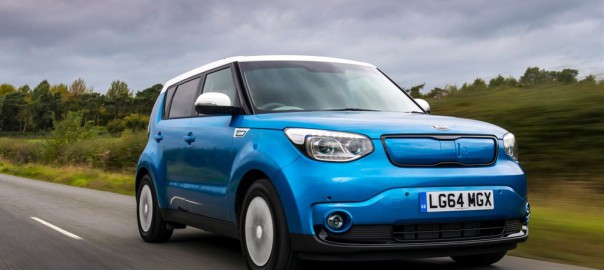
Kia Soul EV UK first drive review

Smooth, refined and responsive, but some way behind the new EV models from Mercedes-Benz and Volkswagen in nearly all areas

What is it?

This is Kia’s first production electric vehicle, based on the familiar high-roofed Soul hatchback. Like all other Kia models, the Soul EV will get the same seven-year warranty which is a market first for battery-powered vehicles and should help reassure potential purchasers.

In the conversion to battery power, the core of the Soul – the conventional internal combustion engines, transmission and heating system – have all been dumped, the front and rear styling revamped and the structure reworked.

While the upper body structure is carried over, it has been further beefed up with extra strengthening in the B-pillars and sills. Five extra crossmembers have also been bolted across the floorpan to increasing the rigidity of the bodyshell by 27 per cent.

The Soul EV also gets a restyled front end and a plastic insert in the grille space, which opens up to revealed the twin charging sockets. The rear bumper and tailgate have also been restyled and LED rear lights have been added.

Inside, the dash is all new and built of higher-quality materials than the conventional models. The EV version gets OLED digital instruments, a large centre touch screen, a rather shapely steering wheel and a new shift lever and surround.

The 27kWh lithium ion polymer battery pack is packaged under the floorpan. Charging from a UK domestic socket could take up to 13 hours. Kia UK is, however, suppling owners with a wallbox charger, which should reduce charging time to around five hours. It is also fitted with a Japanese-standard Chademo fast-charging socket, which can deliver an 80 per cent charge in 33 minutes.

Kia engineers created a new low-energy heating and ventilations system based on the heat pump principle which also allows heating and ventilation to be restricted to just the driver, saving energy.

The 109bhp, 210lb ft electric motor drives a single-speed transmission and Kia claims a 0-60mph time of 10.8sec and a top speed of 90mph. The combination of the polymer battery cells and the new heating system will stretch the potential driving range out to 132 miles.

What is it like?

While the Soul EV delivers the typically compelling electric car dynamic of smooth and torquey performance and a quiet cabin, the whole package feels somewhat dated.

Had this car been launched three years ago, it would have been easily class-competitive with the Nissan Leaf. But the world of the EV has moved on rapidly and the new Volkswagen e-Golf and Mercedes-Benz B-Class Electric Drive are better cars than the Soul EV.

The two German models feel more refined both in terms of cabin ambience and ride quality, the drivetrains perform better and both cars have far superior handling.

The cartoonish looks might, of course, not matter to many potential buyers, but the clinching argument is that the entry-level VW e-Golf is only just over £1000 more than the Soul EV; the B-Class Electric Drive costs around £2000 more, and the excellent BMW i3 only a few hundred pounds more.

That’s not to say the Soul EV has nothing going for it; quite the opposite, in fact. In addition to its EV driving and performance traits, the lofty driving position and boxy styling make it easy to position in busy city-centre traffic.

Should I buy one?

If you are going to buy an electric car, it would be hard to find a compelling argument for the Soul over rival models. It does everything pretty well, aside from suffering a somewhat disturbed ride on poor roads, but is short of EV class leadership.

Kia has modest sales targets for the Soul EV, with next year’s sales tipped to be 100-200 units, the cars only being sold through a select 13 dealers who applied. Despite the £24,995 price (including government grant, battery pack, wall charger, Chargemaster account and generous standard spec), Renault’s Zoe and the Nissan Leaf also benefit from buying packages that make EV ownership even more affordable.

As it stands, the Soul EV, as competent as it is, is neither the best to drive nor the best value.

Source: Autocar

Inconveniences of Gasoline 1: Gas Station (Image: Clean Technica)

The Inconveniences of Buying Gasoline

Thanksgiving weekend has historically been the biggest driving weekend of the year. What better time to discuss buying gasoline?

This article is intended to be a little bit of a light article, but with some food for thought included for consumption. It is not intended to be a full review of the pros and cons of buying an electric vehicle (EV) article. In short, some insights are being put forth here to contribute to the conversation about EVs. This article is a result of my own inner dialogue that has moved me in the direction of buying an EV. An EV will be my next car, but I’m still currently driving an anachronistic internal combustion engine (ICE).

Finding a Gas Station

How far out of our route do we have to drive to get to the gas station? For me, this varies from trip to trip. As an environmentalist, I do my best to get gas right on the road on which I’m already traveling, but that isn’t always possible. How many stop lights do we go through to get to a gas station while paying good money to burn gasoline, and polluting with CO2s, at those stoplights? How much gasoline do we pay for to get us to and from those gas stations? With EVs that charge at home and/or work, this issue is eliminated.

The Cost

The cost savings of using electricity instead of buying gasoline is commonly quoted as between $1,000 and $1,500 per year. This will vary based on one’s electricity rates, the cost of gasoline, and the number of kilometers (miles) someone drives per year.

Premium Gasoline

When we hear the price of gasoline on the news or radio, they are always quoting the price of regular gas as though that’s the only price of gasoline. Many cars such as all ICE Mercedes vehicles require premium petrol. The cost of premium gas varies, but is roughly 8% more costly currently and has cost as much as 20% more than regular in the past (in 1998). With EVs, this issue is eliminated.

Read more: Clean Technica

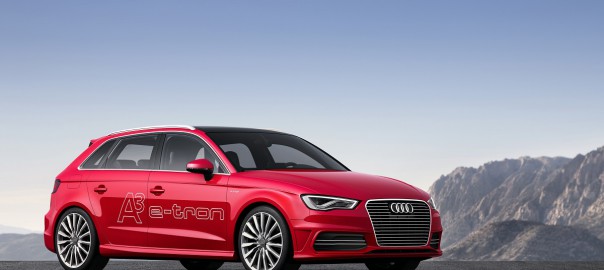
Audi A3 e-tron (Image: Audi)

Increased Production of the Audi A3 Sportback e-tron

  • First plug-in hybrid model drives off the assembly line in Ingolstadt
  • Assembly processes integrated into the A3 line
  • Maximum safety for employees, top quality for customers

Ingolstadt, November 21, 2014 –Approximately 50 cars every day, with the same timing and on the same assembly line as the other models: Audi is now ramping up production of the Audi A3 Sportback e-tron*. The premium manufacturer is producing its first plug-in hybrid model at the brand’s main plant in Ingolstadt.

Dr. Hubert Waltl, Board of Management Member for Production at AUDI AG. said:

“We started series production of the Audi A3 Sportback e-tron in the summer. Most of the assembly work is integrated into the A3 line; no separate manufacturing is necessary. That demonstrates the flexibility and efficiency of our production planners and employees.”

With the Audi A3 Sportback e-tron, Audi is launching the mobility of the future. The compact five-door combines a 1.4 TFSI combustion engine with a 75 kW electric motor, resulting in a total system output of 150 kW (204 horsepower). Despite the sporty driving performance, fuel consumption in the NEDC is just 1.5 liters per 100 kilometers (35 grams of CO2 per kilometer). The A3 Sportback e-tron can travel up to 50 kilometers in purely electric mode and up to 890 kilometers more with the gasoline engine.

“We first of all ramped up production of the A3 Sportback e-tron to about 30 cars a day in September,”

explained Board of Management member for Production Waltl.

“Our peak is approximately 50 units each day now. In any case, we are keeping additional capacity available.”

Peter Kössler, head of the Ingolstadt plant, stated:

“Working with high-voltage systems in series production was a new challenge for us, but we mastered it well. At all stages of assembly, we achieve maximum levels of safety for our employees and quality for our customers.”

Safety is given top priority during the entire assembly process. All the employees who come into contact with the A3 Sportback e-tron have received technical safety instructions for the new technology; some employee who are directly involved are qualified as specialist electricians for automotive technology.

*Fuel consumption of the models named above:

Audi A3 Sportback e-tron:
Combined fuel consumption in l/100 km: 1.7 – 1.5;
Combined electricity consumption in kWh/100 km: 12.4 – 11.4;
Combined CO2 emissions in g/km: 39 – 35

Audi A3 Sportback e-tron 16″:
Combined fuel consumption in l/100 km: 1.5;
Combined electricity consumption in kWh/100 km: 11.4;
Combined CO2 emissions in g/km: 35

First Drive: 2015 Volkswagen eGolf

There’s officially a Volkswagen Golf for everyone. The standard Golf is a go-to choice in the compact hatchback market. Enthusiasts love the GTI, and diesel-drinking enthusiasts can’t wait for the GTD to get here (seriously… hurry your asses up on that one VW).

Now Volkswagen has a Golf for the ultra-green set. It’s the 2015 eGolf, and it’s the automaker’s first shot at a fully electric machine here in the United States.

What makes it special beyond its propulsion system? Nothing… and that’s why people will like it.

[Skip to 0:50 seconds to avoid advert]

What does the UK public think about climate change? (Image: Crown Copyright)

Poll — Majority Of British Want Global Action On Climate Change

A new Populus survey conducted in the UK has found that 73% of people want world leaders to agree on a global deal to tackle climate change, while 66% want action now.

What does the UK public think about climate change? (Image: Crown Copyright)

The DECC’s Edward Davey and Amber Rudd said:

“The survey reveals an appetite for action on climate change by the UK public, with only 20% agreeing that it can wait a few years.”

Unsurprisingly, however, only 40% of respondents recognise the possible implications climate change will have on their own lifestyles.

The Populus poll, conducted in early November and covering 2000 people, sought answers on a number of climate change–related questions. The highlighted question asked respondents to agree or disagree with the statement, “World leaders must urgently agree a global deal to tackle climate change.” The net response of those agreeing came to 73%, combining 39% who agreed strongly and 35% who agreed slightly (which is better than a slight disagreement, I guess).

Ed Davey said:

“The science is clear. Climate change poses great risks to health, global food security and economic development – and unchecked will change every part of our lives. Without urgent action nowhere on earth will be left untouched.

“We are at a global turning point – never before have so many countries made clear their determination to act to tackle climate change. Those governments are backed by a groundswell of people who want to see action in their own countries and around the world.”

To tackle the issue in a different way, the DECC is taking to Twitter with other organisations such as the UN, Microsoft, and the Natural History Museum to answer a series of questions about the impact of climate change and what actions can be taken.

Amber Rudd said:

“In creating this global twitter relay we will help people to understand the possible impacts of climate change on day to day life as well demonstrate the level of government commitment for action.”

Source: Clean Technica

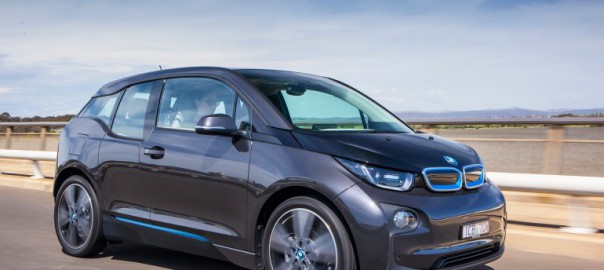
BMW i3: It zips off the mark, turns on a dime, provides good visibility and it's whisper quiet (Image: Gizmag)

Test drive: Behind the wheel of the BMW i3

After a long incubation period, the first cars released under BMW’s sustainability-focused “i” sub-brand – the i3 city car and i8 sportscar – have been hitting roads around the globe throughout 2014. We climbed aboard the i3 to find out how it performs.

BMW i3: It zips off the mark, turns on a dime, provides good visibility and it's whisper quiet (Image: Gizmag)
BMW i3: It zips off the mark, turns on a dime, provides good visibility and it’s whisper quiet (Image: Gizmag)

We’ve previously looked at the make-up of the i3 in detail, but here’s a quick refresher. It’s a compact four seat, five door that’s a touch under 4 m (13 ft) long with short overhangs at both ends and an exceptionally tight turning circle of 9.8 m (32 ft – that’s 10 percent less than a Mini) and 2.5 turns lock to lock.

The BMW-developed electric motor is located at the back, providing 125 kW and 250 Nm (184 lb-ft ) of torque to the rear wheels through a single speed automatic transmission. In addition to the battery electric vehicle (BEV) model there’s a range extender version in which a 34-hp, 650 cc two-cylinder petrol engine from BMW Motorrad sits alongside the electric motor and acts as a generator (i.e. it charges the battery but, unlike hybrid cars, it doesn’t drive the wheels).

The modular 360 V, 21.8 kWh (18.8 kWh useable), 96 cell, liquid-cooled lithium-ion battery pack is spread across the underbody and can be charged in 11 hours using a domestic wall plug or six hours using BMW’s i Wallbox. BMW says DC fast charging can deliver 80 percent charge in just 30 minutes.

On a single charge the i3 has an “everyday range” of 160 km (100 mi). Using ECO mode can bump that closer to 200 km (124 mi), while the range extender version can travel around 300 km (186 mi). Acceleration is put at 0-100 km/h (0-62 mph) in 7.2 seconds and importantly it still has plenty of zip for overtaking at higher speeds, with a 80-120 km/h (50-75 mph) time of 4.9 seconds, putting it on par with a BMW 435i. Top speed is electronically limited to 150 km/h (93 mph).

The i-series cars are based on an architecture that’s been created “from the ground up” for electric vehicles. The passenger cell is the first mass-produced using carbon fiber-reinforced plastic (CFRP) and the chassis is made of aluminum and other lightweight materials. This adds up to a car that weighs just 1,195 kg (2,634 lb) – the range extender adds around 120 kg (265 lb) to that figure.

Read more: Giz Mag

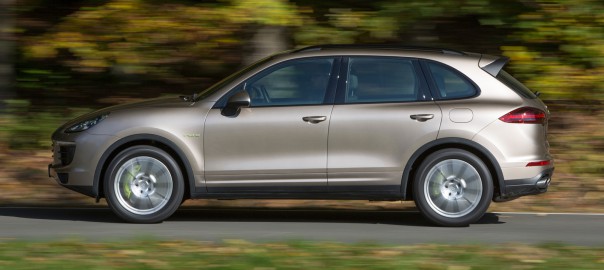
Porsche Cayenne S e-Hybrid (Image: Autocar)

2014 Porsche Cayenne S E-Hybrid first drive review

A Cayenne hybrid of heightened economy potential, and quite attractively priced given its complexity and capabilities

What is it?

Porsche is keen to sell us plug-in hybrids. It now makes three, although one is rather unaffordable, it being the £652,849 918 Spyder. The other two are the Panamera and the new Porsche Cayenne e-Hybrid, which replaces the plain hybrid version.

This upgraded petrol-electric Cayenne is part of the revised range presenting a freshened styling and new features that include the economy-promoting coasting mode provided by the previous hybrid alone, stop-start that kills the engine a few mph before halting and a launch-control system with the optional Sport Chrono pack.

It also has more precise suspension geometry and a greater dynamic range between the Comfort and Sport modes for both steel-sprung and air-suspended versions. Improved rear seat comfort and a heated screen option are among the detail improvements.

But the upgrades to the Cayenne hybrid are a lot more substantial. Aside from the facility to plug it into a cheaper mains energy supply, a lithium-ion battery pack of almost six times the kilowatt-hour capacity replaces the previous nickel-metal hydride pack.

That allows the electric motor’s output to jump from 46bhp to 94bhp, while the electric-only range lengthens from 1.6 miles to between 11 and 22 miles, although Porsche’s development engineers say they’ve gone further.

It now cruises at up to 78mph rather than 40mph on amperes alone, and its 410bhp system output allows it a 5.9sec sprint to 62mph rather than the 6.5sec of the previous 380bhp hybrid. Its CO2 emissions reduce spectacularly from 193g/km to 79g/km, although the EU’s methods for measuring plug-in hybrid economy and carbon emissions are seriously misleading.

That said, this hybrid Cayenne will be genuinely cheaper to run than the last, tax-wise and when maximising travel on electricity alone. Of which there’s a good chance.

What is it like?

The Cayenne plug-in’s powerpack is near-identical to the plug-in Panamera’s (a more energy-dense battery pack and all-wheel drive are the main differences) the pair proving surprisingly reluctant to engage their petrol engines to achieve decent progress.

In the E-Power mode the Cayenne will keep up with most traffic; press the accelerator more firmly and the supercharged V6 leaps into life, its torque faultlessly synchronising with the electric motor’s.

At which point you can access truly substantial acceleration, the V6’s revs rising with a slightly industrial and not unappealing rortiness.

Despite its substantial weight, the Cayenne handles with some panache. It rolls a bit, even in the firmest of its air springs’ settings, but that doesn’t prevent it from tracing curves with pleasingly assured confidence, your enjoyment heightened by the steering’s precision.

With both motors working hard, a decently sporting pace is easily achieved. There’s further entertainment to be had from trying to maximise your electric range through brake recuperation.

Should I buy one?

It all makes this Cayenne a particularly interesting example of the breed, and if you successfully harness its powers, a pretty economical one too.

The price of this revised hybrid is exactly the same as the V8 diesel’s despite the fact that this is a vastly more complex machine, and though the hybrid is slower, that makes this plug-in impressive value among full-size, premium SUVs.

Source: Autocar