All posts by Trevor Larkum

Will 2015 Be a Breakthrough Year for Storage in the UK?

Despite an unpromising legislative landscape, storage is gaining momentum in the U.K.

The United Kingdom has no clear government policy on energy storage and offers no major incentives to companies and no subsidies at all to households to install energy storage. To date, only paltry sums have been invested in energy storage projects there.

And yet, many are feeling optimistic about where the storage industry is headed.

Several major manufacturers have either launched domestic solar-storage products in the U.K. in the last six months, or are planning to do so sometime this year. In the last week, the U.K. Renewable Energy Association has launched a new trade body dedicated to commercializing energy storage. The U.K. Electricity Storage Network is expecting a Minister from the Department of Energy and Climate Change (DECC) to participate in its annual meeting.

And to crown it all, the U.K. currently has the biggest battery in Europe.

So is storage really taking off? To date, according to the U.S. Department of Energy’s Global Energy Storage Database, the Brits currently have a grand total of 32 projects, providing 3,300 megawatts of storage, of which the vast majority comes from pumped hydro. Around 62 megawatts are (or soon will be) provided by batteries and 5 megawatts by mainly uninterruptible power supply flywheel systems. There are also experimental compressed air, cryogenic thermal and flow battery projects ongoing.

That 3,300-megawatt total compares quite favorably with 7,600 megawatts in Germany and 6,560 megawatts in California, a state with similar energy requirements to the U.K. But there’s a push for much more.

“Storing energy will become increasingly important in the move toward a low-carbon economy, and has the potential to save the energy system over £4 billion [$6 billion] by 2050,” said DECC Minister Greg Barker last year.

The DECC has also stated that the energy storage market is forecast to reach $17 billion in 2020, and to be nearly $30 billion in 2030.

Some argue that energy storage can help save consumers money by possibly reducing new grid buildout.

Anthony Price, director of the Electricity Storage Network, explains: “[The UK electricity and natural gas regulator] Ofgem has calculated that it will cost £50 billion [$76 billion] to rewire Britain. This will be to provide flexibility in the grid and allow the integration of more renewables, add resilience to the grid, and to improve energy efficiency across the grid. If you look at energy storage, it can help meet all three of those requirements. So we can spend £50 billion on rewiring the country, or we can have more energy storage.”

Price’s organization is lobbying for a minimum 2,000 megawatts of new network-connected electricity storage by the year 2020. A fairly modest figure, this represents less than 10 percent of the predicted increase in renewable generation capacity over the same time period. The question still remains whether the U.K. government will take investment in energy storage seriously. Price notes that while the current administration is happy to “pick winners” by promoting solar and wind, it refuses to do so in the case of storage.

On the other hand, it has provided a modest £50 million ($76 billion) in backing for research projects around the country. The most prominent of these is the Smarter Network Storage project, better known as the biggest battery in Europe. A 6-megawatt/10-megawatt-hour system, the battery is designed to explore alternative revenue streams for storage, while deferring traditional network reinforcement.

Numerous early-stage projects have emerged. Highview Power won funding for a demonstration of its liquid air storage technology. REDT is developing a vanadium redox flow battery for storing wind and wave power in Scotland. And Isentropic is building a demonstration project for its cryogenic energy storage technology.

Domestic solar-plus-storage is also taking off in the U.K. Last September, SMA launched its Sunny Boy Smart Energy PV inverter and battery system. Sharp followed suit at the end of last year by offering a solar-and-storage device that uses Samsung batteries. Bosch is hoping for certification of a solar-storage inverter next month, and various other solar players, such as ReneSola of China, seem to be clamoring to enter the U.K. market.

These companies could be looking to cash in on growth in U.K. solar installations. While much of the European solar market has suffered from a slowdown last year, Britain helped keep the overall picture a little rosier, with an estimated 3.2 gigawatts of PV installed in 2014.

One solution for boosting domestic supply of residential storage systems is to leverage vehicle battery manufacturers, said Frank Gordon of the newly launched energy storage section of the U.K.’s Renewable Energy Association.

“The U.K. is home to one of the only electric-vehicle battery plants in the world, the Nissan plant in Tyneside. These car batteries could offer good potential for small-scale energy storage applications,”

said Gordon.

In the meantime, storage supporters like Gordon are looking for clearer support signals from the government.

“As solar storage is still a developing technology, the need to establish a policy and technical framework for it to operate within is paramount,”

he said.

Source: Greentech Media
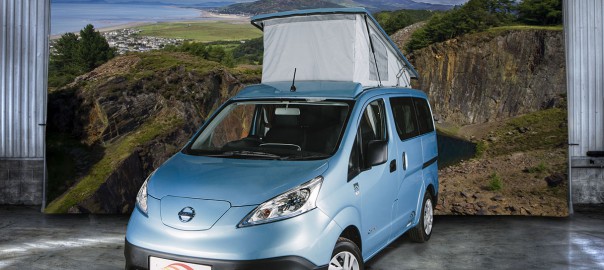
Dalbury E Electric campervan (Image: Hillside)

The Dalbury E – Electric Campervan Review

Introduction

I own a T5 campervan and use it as my daily driver for getting to work and back, but the main reason for owning a campervan is for family holidays and short breaks. I have two children under 10 and my family have enjoyed touring the South of France as well as many spontaneous long weekends away in the UK. When Hillside Leisure first told me they were launching The World’s First Electric Campervan at the Motorhome and Caravan show in Birmingham I was excited. Not only do I love everything campervan and camping but I also have a great interest in all things gadget and electric – especially when they can transport you from A to B with zero emissions! Hillside Leisure invited me to the launch to take a few photos but when they asked if I would like to take it out, I jumped at the chance!

First Impressions

Coming from a background of owning a Volkswagen Transporter, my first thoughts turned to the base vehicle – a Nissan e-NV200. It doesn’t have as much history as the VW, but if anyone was going to take a campervan into the all electric age it would have to be a high tech Japanese manufacturer and I think it’s apt that Nissan brought out an electric base van. Nissan already manufacture the popular Nissan Leaf which has gained a huge EV following and this means they already know a thing or two about designing efficient electric vehicles.

Dalbury E Electric campervan (Image: Hillside)

On first inspection of the outside I thought the Nissan had a futuristic face with the nose showing an indication of a secret compartment and the colour choice of ‘electric’ blue was spot on. Although this was a base specification, the vehicle will benefit further from colour coded bumpers and alloy wheels as options available from Hillside Leisure. There’s not much on the outside to give the “all electric” game away apart from a few chrome badges showing “Zero Emission” and part of me felt it should have a few snazzy graphics hinting at electricity to stand out and be noticed as a pioneer and trend setter – another part of me realised that most owners would probably prefer a low profile.

Read more: Hillside Leisure Blog

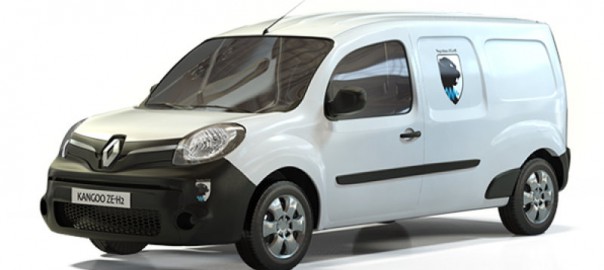
Symbio FCell fuel cell Kangoo ZE (Image: Symbio)

Symbio delivers first hydrogen range-extender Kangoo EVs

French company Symbio FCell thinks that electric vehicle technology and hydrogen fuel cells should get along. In the same delivery vehicle, in fact.

Last year, Symbio started testing a hydrogen fuel-cell range extender that was built into a Renault Kangoo electric vehicle. Today, Symbio announced it has delivered the first five of a planned 40-vehicle fleet of Renault Kangoo ZE Light commercial vehicles (LCVs) with a bespoke hydrogen fuel cell range extender. This system carries 1.8 kilograms (almost four pounds) of H2 on board and each kilogram extends the range by about 100 kilometers (62 miles). So, the Symbio system doubles the range of the Kangoo ZE, which “makes hydrogen-powered electric vehicles more competitive in the automotive markets,” Symbio says.

The vehicles were ordered as part of a project led by the Conseil Général de la Manche, which already has a hydrogen refueling station available and has what Symbio says is an “important potential” for making low-carbon electricity, like hydrokinetic, offshore wind and nuclear.

Read more: AutoBlog

UK electric fleet passes 24,500 mark

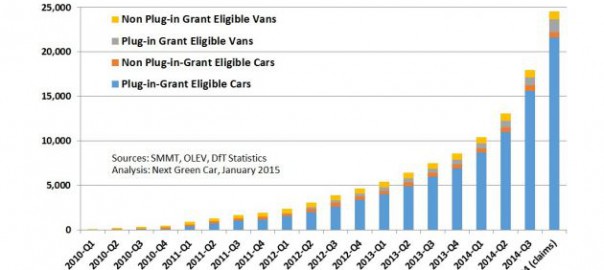
With the recent announcement from Office for Low Emission Vehicles (OLEV) that 23,083 claims have been made through the Plug-in Car Grant scheme, the total number of electric cars and vans in the UK is about to exceed 24,500 vehicles for the first time.

uk-registered_ulevs_2010-2014-3_NGC

These figures are supported by the Society of Motor Manufacturers and Traders (SMMT) which reports that 19,972 plug-in cars were registered in the UK by the end of 2014.

Taken together with the fact that at least 1,467 electric cars and vans which are not eligible for the Plug-in Grant scheme have also been registered, the total UK light-duty electric fleet will number at least 24,550 in the coming weeks as vehicles are delivered and formally registered for use on UK roads.

Given that the figure for the number of non-OLEV eligible registered EVs takes longer to become publicly known, it is highly likely that the total number of registered ULEVs in the UK now surpasses 25,000 vehicles in total (cars and vans).

Another indicator that the electric market is growing in strength is the number of fully electric and plug-in hybrid models available in the UK. While only 9 EVs were available for the major manufacturers in 2011, this increased to 18 models in 2013, and now stands at 29 high-quality, fully crash tested cars and vans with more models due for launch in 2015.

Dr Ben Lane, Director of Next Green Car said:

“The number of EVs registered in the UK continues to grow exponentially demonstrating that UK car buyers are continuing to embrace the EV revolution.

“Reports from new EV owners suggest that, rather than economic or environmental arguments, it is the dramatic improvement in driving experience that it really starting to change perceptions about electric power-trains.

“Recent research from Nissan also shows that driving range is much less of an issue than previously thought with European owners of Nissan LEAFs travelling more than 50% further per year (10,307 miles) than the European average for a petrol/diesel vehicle (6,721 miles).”

The latest EV model entrants include the Tesla Model S and Mitsubishi Outlander PHEV which have already made their mark in the UK market. Other high-quality models now available include the Kia Soul EV (which NGC range-tested in December 2014) and the Nissan e-NV200, the latter bringing all the benefits of electric to the small van market.

Source: Next Green Car

(Image: D. Bacon/Shutterstock/Economist)

The Mariner’s Rule (The Party’s Over)

One of the things my readers ask me most often, in response to this blog’s exploration of the ongoing decline and impending fall of modern industrial civilization, is what I suggest people ought to do about it all. It’s a valid question, and it deserves a serious answer.

Now of course not everyone who asks the question is interested in the answers I have to offer. A great many people, for example, are only interested in answers that will allow them to keep on enjoying the absurd extravagance that passed, not too long ago, for an ordinary lifestyle among the industrial world’s privileged classes, and is becoming just a little bit less ordinary with every year that slips by. To such people I have nothing to say.

Those lifestyles were only possible because the world’s industrial nations burnt through half a billion years of stored sunlight in a few short centuries, and gave most of the benefits of that orgy of consumption to a relatively small fraction of their population; now that easily accessible reserves of fossil fuels are running short, the party’s over.

Yes, I’m quite aware that that’s a controversial statement. I field heated denunciations on a regular basis insisting that it just ain’t so, that solar energy or fission or perpetual motion or something will allow the industrial world’s privileged classes to have their planet and eat it too. Printer’s ink being unfashionable these days, a great many electrons have been inconvenienced on the internet to proclaim that this or that technology must surely allow the comfortable to remain comfortable, no matter what the laws of physics, geology, or economics have to say. Now of course the only alternative energy sources that have been able to stay in business even in a time of sky-high oil prices are those that can count on gargantuan government subsidies to pay their operating expenses; equally, the alternatives receive an even more gigantic “energy subsidy” from fossil fuels, which make them look much more economical than they otherwise would. Such reflections carry no weight with those whose sense of entitlement makes living with less unthinkable.

I’m glad to say that there are fair number of people who’ve gotten past that unproductive attitude, who have grasped the severity of the crisis of our time and are ready to accept unwelcome change in order to secure a livable future for our descendants. They want to know how we can pull modern civilization out of its current power dive and perpetuate it into the centuries ahead. I have no answers for them, either, because that’s not an option at this stage of the game; we’re long past the point at which decline and fall can be avoided, or even ameliorated on any large scale.

Read more: The Arch Druid Report

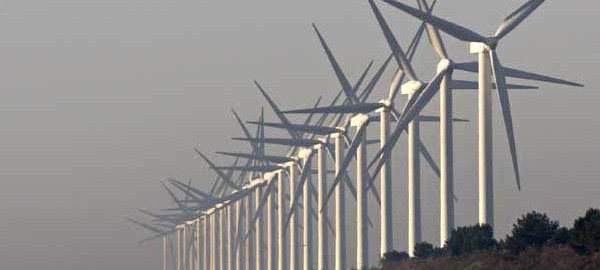
Wind farm in Europe (Image: EV World)

Our Renewable Future

Folks who pay attention to energy and climate issues are regularly treated to two competing depictions of society’s energy options. On one hand, the fossil fuel industry claims that its products deliver unique economic benefits, and that giving up coal, oil, and natural gas in favor of renewable energy sources like solar and wind will entail sacrifice and suffering (this gives a flavor of their argument). Saving the climate may not be worth the trouble, they say, unless we can find affordable ways to capture and sequester carbon as we continue burning fossil fuels.

On the other hand, at least some renewable energy proponents tell us there is plenty of wind and sun, the fuel is free, and the only thing standing between us and a climate-protected world of plentiful, sustainable, “green” energy, jobs, and economic growth is the political clout of the coal, oil, and gas industries (here is a taste of that line of thought).

Which message is right? Will our energy future be fueled by fossils (with or without carbon capture technology), or powered by abundant, renewable wind and sunlight? Does the truth lie somewhere between these extremes—that is, does an “all of the above” energy future await us? Or is our energy destiny located in a Terra Incognita that neither fossil fuel promoters nor renewable energy advocates talk much about? As maddening as it may be, the latter conclusion may be the one best supported by the facts.

If that uncharted land had a motto, it might be, “How we use energy is as important as how we get it.”

1. Unburnable Fossils and Intermittent Electricity

Let’s start with the claim that giving up coal, oil, and gas will hurl us back to the Stone Age. It’s true that fossil fuels have offered extraordinary economic benefits. The cheap, concentrated, and portable energy stored in these remarkable substances opened the way, during the past couple of centuries, for industrial expansion on a scale previously inconceivable. Why not just continue burning fossil fuels, then? Over the long term that is simply not an option, for two decisive reasons.

First, burning fossil fuels is changing the climate to such a degree, and at such a pace, that economic as well as ecological ruin may ensue within the lifetimes of today’s schoolchildren. The science is in: either we go cold turkey on our coal, oil, and gas addictions, or we risk raising the planet’s temperature to a level incompatible with the continued existence of civilization.

Second, these are depleting, non-renewable sources of energy. We have harvested them using the low-hanging fruit principle, which means that further increments of extraction will entail rising costs (for example, the oil industry’s costs for exploration and production have recently been soaring at nearly 11 percent per year) as well as worsening environmental risks. This problem has been sneaking up on us over the last ten years, as sputtering conventional oil and natural gas production set the stage for the Great Recession and the expensive (and environmentally destructive) practices of “fracking” and tar sands mining. Despite the recent plunge in oil prices the fossil fuel party is indeed over. Sooner or later the stark reality of declining fossil energy availability will rivet everyone’s attention: we are overwhelmingly dependent on these fuels for nearly everything we eat, consume, use, and trade, and—as Americans started to learn in the 1970s as a result of a couple nasty oil shocks—the withdrawal symptoms are killer.

So while fossil fuel promoters are right in saying that coal, oil, and gas are essential to our current economy, what they omit mentioning is actually more crucial if we care how our world will look more than a few years into the future.

Well then, are the most enthusiastic of the solar and wind boosters correct in claiming that renewable energy sources are ready to substitute for coal, oil, and gas quickly enough and in sufficient quantity to keep the global economy growing? There’s a hitch here, which critics are only too quick to point out. We’ve designed our energy consumption patterns to take advantage of controllable inputs. Need more power? If you’re relying on coal for energy, just shovel more fuel into the boiler. But solar and wind are different: they are available on Nature’s terms, not ours. Sometimes the sun is shining or the wind is blowing, sometimes not. Energy geeks have a vocabulary to describe this—they say solar and wind power are intermittent, variable, stochastic, or chaotic.

Read more: Post Carbon Institute

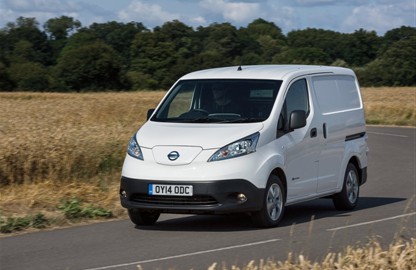
Nissan e-NV200 electric van (Image: Nissan)

Six of the Best for Pioneering Nissan e-NV200

The all-electric Nissan e-NV200 today scooped its sixth prestigious industry award in as many months, winning the Best Green Van honour at the Business Van of the Year awards in London.

The pioneering model triumphed at the independent awards after being put through its paces by an outside panel of expert judges, specialising in their own field and in the SME sector.

Their verdict supports that of the wider motoring media, which has bestowed a string of highly regarded awards on the van since its launch in the summer.

In December, the e-NV200 won What Van? magazine’s Green Award. It has also been named Industry Innovation of the Year by GreenFleet, LCV of the Year by Next Green Car and has helped Nissan to the ULEV Manufacturer of the Year title at the Energy Saving Trust’s Fleet Hero awards and the Green Van Manufacturer of the Year title at the Fleet Van Awards.

Congratulating Nissan, Ralph Morton, Editorial Director at Business Van, said: “Going green has never been so easy. The electric e-NV200 is just like the standard NV200 except it costs just two pence per mile to run, has a range in excess of 100 miles, is emission free, and still manages to provide an uncompromising flat load-space floor that takes two Europallets and a 703kg payload.

“It’s a brilliant achievement and the van to change the perception of the electric van – it’s practical, green, cost effective all in one.”

Barry Beeston, Corporate Sales Director at Nissan Motor (GB), said:

“The fleet and LCV media has been unanimous in its praise for the e-NV200 and the potential this incredible van has to help fleets simultaneously bring down costs and emissions.

“I would encourage fleet operators to try the vehicle for themselves to see just how easily and it could help them make a real impact on both their carbon footprint and their bottom line.”

Source: Nissan Newsroom

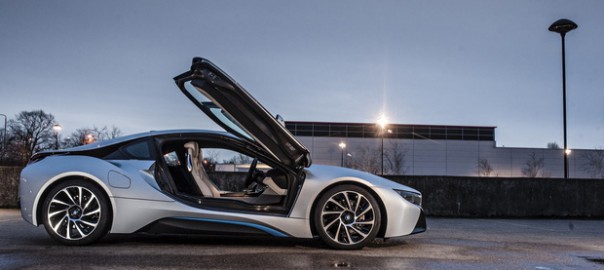
On the road: BMW i8 (Image: The Guardian)

2014 Tech Car of the Year: i8 – A carbon fiber hyper hybrid

We narrowed the field down to five nominees for the 2014 Tech Car of the Year award at the beginning of December, and now CNET’s judges have weighed in on our final choices. There were some strong contenders, making a unanimous choice difficult, but there can only be one…

Winner: BMW i8

This car represents a marvel of innovative engineering. Carbon fiber in its construction not only keeps the weight down, but cheaper production of this material could make it a standard for cars of the future. BMW took a risk with the design, putting something on the road that looks like it should still bear a concept label. LED headlights make for another important touch, along with a head-up display and driver assistance features. Judge Tim Stevens noted that “it’s undoubtedly one of the most interesting new cars on the road.”

With an electric motor driving the front wheels and a compact gasoline engine at the rear, the i8 combines all-wheel drive with plug-in hybrid fuel efficiency. However, in the same car you can experience a thrilling driving experience, eating up corners with this nimble ultimate driving machine. Judge Wayne Cunningham notes that the i8 “is an extraordinary technical achievement.”

Finally, BMW’s iDrive cabin electronics system sneaks in an impressive roster of connected features. The car comes with its own data connection powering online destination search and built-in apps. iDrive gets expanded features through the ConnectedDrive app on a driver’s smartphone, bringing in everything from social media to online music.

The Audi A3 came in as our favorite runner-up, embodying near-perfect connected cabin tech, but its drivetrain didn’t represent a significant advance. Also up for serious consideration was the Infiniti Q50S Hybrid, an amazing technical achievement with its drive-by-wire steering and efficient gasoline-electric drivetrain. Fan favorite the Tesla Model S made the nominees list for its impressive drivetrain, but when we reviewed the 2014 P85 Plus model earlier this year we didn’t find much advancement in its cabin electronics, and it still lacked any driver assistance features. Tesla’s recent update of the Model S addresses some of those issues, so we will likely be reconsidering it for next year. The Ford Fusion Energi made our nominee list for its excellent driver assistance features and economical plug-in hybrid drivetrain, but its cabin tech couldn’t carry it over the top.

Read more: CNET

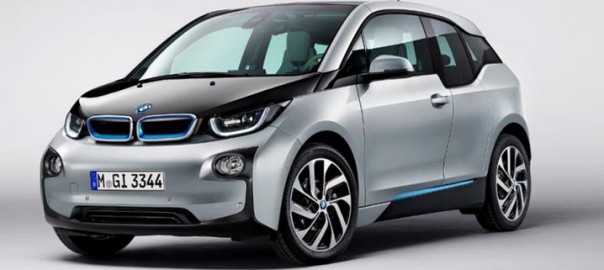
Bmw i3 (Image: BMW)

All-electric BMW i3 wins Wheels magazine’s car of the year award

The BMW i3 has overcome strong resistance to become the first all-electric car to take out the Wheels magazine car of the year award.

German manufacturer BMW bettered fossil-fuelled rivals including last year’s winners Volkswagen, who have taken out the honour three times in the last six years, to be crowned for the first time in the award’s 52-year history.

Wheels editor Glenn Butler said the i3’s victory serves notice to its combustion-engined competitors that the electric cars are here to stay.

“This year the future has arrived in the form of a seriously good motor vehicle … that just happens to run on electricity,”

he said.

“There is no novelty factor involved here either.

“It ushers in a new era of eco-performance for millions of families and urban commuters around the world, and in Australia.”

Judges described the i3 as innovative and praised BMW’s “bravery” to produce the electric-engined car.

“Other brands surely possess the know-how to have created something equally visionary; all they lacked was BMW’s bravery,” they said in a statement.

“This innovative and compact electric car combines expressive design, impressive engineering, exceptional efficiency and persuasive practicality with a good deal of driver appeal.”

“It is both admirable and desirable.”

The Wheels award has been running since 1963, when the Renault R8 took out the prize.

The last Australian-built car to win the award was the Holden VE Commodore in 2006.

Read more: 9 News

BP logo (Image: Press Association)

BP urged to manage climate risk

More than 150 investors including local authorities and the Church of England have filed a resolution calling on oil giant BP to assess and manage climate change risks.

The shareholders, which include multibillion-pound pension funds, investors and insurers, have already filed an identical resolution to Shell.

They are calling on the oil companies to transparently “stress-test” their business model against the commitment made by governments not to let global temperatures rise more than 2C above pre-industrial levels – the threshold above which “dangerous” climate change is expected.

BP and Shell must also commit to reducing emissions and investing in renewable energy, and reform their bonus systems so they no longer reward activities which drive climate change, the resolutions urge.

The group, which includes the pension funds for local authorities such as Greater Manchester, Merseyside and Lambeth, as well as the Environment Agency, UK churches including the Church of England and the Methodist Church and charities and foundations, owns around 1% of the companies.

Overseas insurers, church investors and pension funds are also part of the group that has filed the resolutions, which can be voted on by shareholders at BP and Shell’s annual general meetings in April and May.

The group warns that climate change is a major business risk, already hitting physical assets through increasingly extreme weather, while stronger regulation of emissions as the world tries to curb rising temperatures will affect outdated business models.

It is the latest move by investors to put pressure on fossil fuel companies to face up to climate change. A number of institutions including charities and universities have chosen to “divest” their assets from fossil fuels.

Environmental lawyers ClientEarth and responsible investment movement ShareAction worked with the Aiming for A coalition, an investor group with a combined worth of £160 billion, to co-ordinate the resolutions.

James Thornton, ClientEarth’s chief executive, said:

“Climate change is a major business risk. BP and Shell hold our financial and environmental future in their hands.

“They must do more to face the risks of climate change. Investors can help them by voting for these shareholder resolutions.”

Howard Covington, former chief executive of New Star Asset Management and a trustee at ClientEarth, said:

“The financial risks of climate change are greater in scale and closer in time than most investors realise.

“These resolutions help contain those risks at minimal cost. Investors have every reason to support them.”

Source: The Courier