All posts by Trevor Larkum

Source London repair deal reached

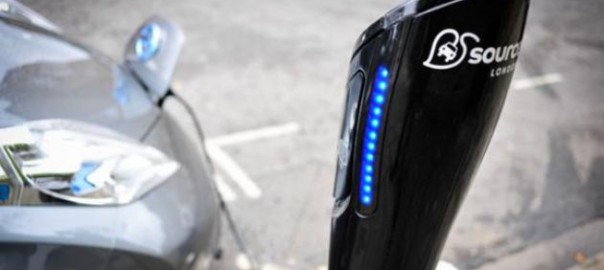
Bluepoint London, the operator of Source London since September 2014, has announced that it has finalised an agreement with Transport for London (“TfL”), the London Borough of Sutton and the London Borough of Southwark.

The agreement makes Bluepoint London responsible for the management of an initial 60 electric vehicle (EV) charge points, which represents 13% out of the 460 charge points in London boroughs as part of the scheme.

Next Green Car’s sister site, Zap-Map reported in September 2014 that almost a third of Source London points were offline. The new agreement will ensure these points are fully functional and compliant with EU standards as well as overseeing any necessary repairs for the benefit of the growing number of EV users across London.

Since taking over from TfL, Bluepoint London has undertaken an in-depth audit and will start implementing a live monitoring solution for all charge points which were part of the scheme. This agreement will start the deployment of a mobile maintenance team to assess the faults and start the necessary works. In the future, the points in the London Boroughs of Sutton and Southwark, as well as the TfL charge points, will now be serviced regularly to minimise faults and downtime.

In due course, other boroughs will be announced and, in consultation with local authorities, new charge points will supplement the network to ensure greater coverage and availability. By 2018, Bluepoint London’s target, via the Source London scheme, is to have 6,000 charge points under management across London to oversee the growth of electric cars in London.

Christophe Arnaud, Director of Bluepoint London, said:

“We are delighted to be responsible for these 60 EV charge points in London. This means we are finally in a position to offer electric vehicle users in the London Borough of Southwark and the London Borough of Sutton a better charging infrastructure and experience. This agreement is a key step in providing all Londoners with a sustainable alternative to traditional transport means.

“A better maintained and more extensive charging infrastructure will mean more drivers are able to use electric vehicles and join the early-adopters who are already helping London reach lower emissions level. We are very excited to be playing our part.”

Councillor Mark Williams, Cabinet member for regeneration, planning and transport, London Borough of Southwark, said:

“We fully support sustainable transport so welcome the opportunity to work with Bluepoint London to improve the management of electrical vehicle charge points locally. With better maintenance, we want more people to switch from petrol and diesel to electric cars.

“This will help reduce harmful emissions and improve air quality not just in Southwark but across the capital. Over 120 people die prematurely each year in our borough due to air pollution and we must do all we can to eliminate this silent killer.”

Source: Next Green Car

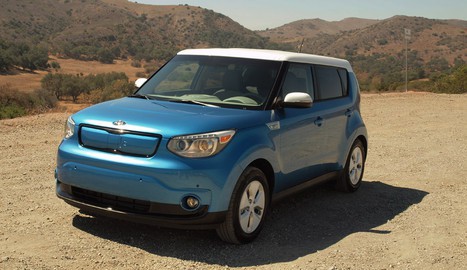
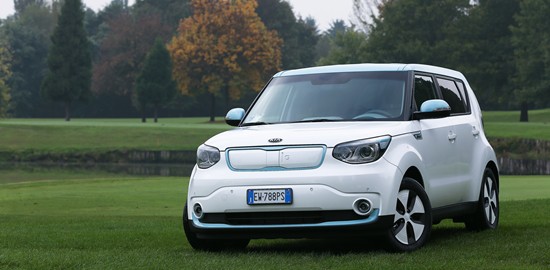
2015 Kia Soul EV Plus (Image: John Matras Media LLC)

Kia Soul EV wins Motoring TV 2015 ‘Best Electric Car’

  • Kia Soul EV claims Motoring TV 2013 ‘Best Electric Car’
  • Soul EV wins second Canadian award to date

MISSISSAUGA, ON, March 2, 2015 /CNW/ – Kia’s first all-electric vehicle launched in Canada has been awarded Motoring TV’s 2015 ‘Best Electric Car’. The 2015 Soul EV secured this win by finishing ahead of challengers like the Nissan Leaf and the Smart Fortwo Electric DriveElectric respectively.

“Receiving this prestigious award from such a distinguished group of automotive journalists at Motoring TV reaffirms how well this vehicle has been received by Canadians”

said Maria Soklis, Vice President and Chief Operating Officer (COO), Kia Canada Inc.

“Class leading range and complete utility without compromise similar to its gasoline sibling is an advantage that the Soul EV has to offer to Canadians in an urban environment.”

“The Kia Soul EV redefines what is to be expected of the next-gen electric car. It has more than acceptable range and does not sacrifice flexibility to be green” said Graeme Fletcher, “Unlike so many electric cars the Soul EV’s range is real and not something based on theory. I drove a Soul EV for 162 kilometres and it still had 25% left in the battery at the end of the drive.”

This is the second Canadian award that the Soul EV has won since its launch late last year. In December, Kia Canada was presented an Automobile Journalists Association of Canada (AJAC) Car of the Year category award winner of the “Best New City Car” award by AJAC. This award from Motoring TV marks the 9th award that Kia has received over the last five years to include back to back wins with Motoring Car of the Year in 2011 and 2012 with the Kia Sportage SUV and the Kia Optima mid-size sedan winning respectively.

SOURCE KIA Canada Inc.

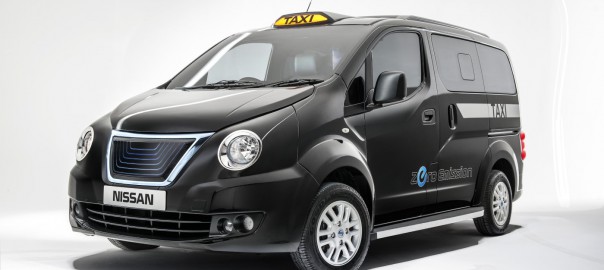
Nissan e-NV200 Black Taxi Cab for London (Image: Nissan)

Nissan e-NV200 Electric London Taxi Revealed

[From January 2014]

You might be unfamiliar with the name LTI TXII, but if you’ve ever visited London you’ve probably traveled in one at some point.

It’s best known as London’s black cab or ‘Hackney Carriage’, and it’s known the world over for its iconic shape. Nissan has incorporated the black cab’s famous face onto its new London taxi–with limited success. But the real story is the electric version, which makes its debut in 2015.

Current London cabs already have a strong connection to Nissan. Towards the end of its life, the old Austin FX4 cabs used 2.7-liter Nissan diesel engines to power them around the city, and until recently a Nissan unit also powered the existing TXII. But all have been diesel, and in its crackdown against inner-city emissions–London is one of the most polluted in Europe–diesel taxis are falling out of favor.

The NV200 van, also used in New York as the ‘Taxi of Tomorrow’, will debut in London with a 1.6-liter gasoline engine and automatic gearbox to reduce oxides of nitrogen and particulates. The cab also includes some of the features found in the New York version, such as a panoramic glass roof to let fares admire the scenery.

It should be more pleasant to drive, too–current London cabs aren’t designed for a comfortable driving environment. London versions are unique among NV200s, getting an extra-tight 25-foot turning circle. This is required for all Hackney Carriages and is based off the tight entrance roundabout at the Savoy Hotel.

In 2015, an electric version of the cab will appear, based on the e-NV200 Nissan has showcased over recent years. Using a Leaf-derived drivetrain, it’ll cut those local emissions down to zero, and reduce running costs. The electric taxi will hit the streets five years before the London Mayor’s target of 2020.

Nissan e-NV200 Black Taxi Cab for London (Image: Nissan)

Whether residents will get used to the new taxi’s face though is another matter. The NV200 is already an acquired taste–one New Yorkers will have to get used to replacing the iconic Crown Vic taxis. But equipped with a chrome grille and round headlights, designed to echo the existing cabs, we aren’t sure London’s streets will be easier on the eye…

Source: Green Car Reports

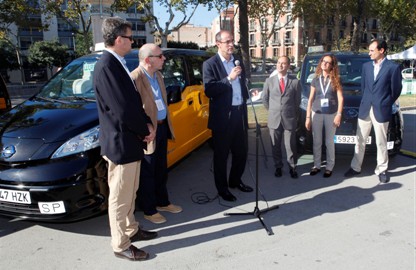
Nissan delivers first all-electric taxi to Barcelona (Image: Nissan)

Nissan delivers first all-electric taxis to Barcelona and Madrid

[From October 2014]

NISSAN DELIVERS FIRST ALL-ELECTRIC TAXIS TO BARCELONA AND MADRID

  • Delivery marks significant milestone in the expansion of zero-emission transportation to Europe’s city centres

Madrid and Barcelona (Tuesday 21st October) – The era of the 100% electric taxi has arrived to Spain’s two largest cities, as Nissan delivered its first 100% electric taxis to Madrid and Barcelona. The introduction the Nissan electric vehicles – the Nissan LEAF to Madrid’s taxi fleet, and the e-NV200 taxi for Barcelona – brings the option of quiet, zero-emission travel to these bustling city centres.

The Barcelona deliveries served as an important step in the execution of an agreement between Nissan, the City of Barcelona, and the Barcelona Metropolitan area which brings the Barcelona-built e-NV200 to the streets of the city where the revolutionary electric van is produced.

Jean-Pierre Diernaz, Director of Electric Vehicles for Nissan Europe, welcomed the news, commenting:

“Declining air quality levels are a top concern across Europe and it’s great to see Madrid and Barcelona taking such positive steps in improving air quality through the incorporate of Nissan’s all-electric cars into their taxi fleets. These taxi bring a huge benefit not only residents but also for the drivers – thanks to the ultra-low running costs only an electric car can offer. This scheme demonstrates that sustainable transportation is easy and affordable for everyone.”

These initiatives reinforce Nissan’s continued commitment to electric vehicles as the market continues to develop. September was also the month in which 2014 sales of the pioneering family hatchback passed the 2013 total, with three months still to go.

Madrid:

Madrid has now its first 100% electric Nissan LEAF taxi, the best-selling electric vehicle in the world with more than 142,000 units sold globally. The event was held at Puerta del Sol in Madrid, where the “Zero KM” the measuring starting point of all the Spanish roads is located.

Antonio Berzal Prieto, the first 100% electric taxi driver in Madrid to choose electric technology for his business, declared

“When I heard that the Nissan LEAF had been approved as a taxi for the city, I quickly looked into all the options it offered me. In addition to the environmental benefits, the costs of ownership are highly competitive and the car’s performance is excellent.”

Barcelona:

The delivery of the first three Nissan e-NV200 Taxis took placed during the Expo-electric Formula-e event, one of the most important meetings on sustainable mobility in Europe. Marco Toro, Nissan Iberia Managing Director and Antoni Vives, Deputy Mayor for Urban Habitat at Barcelona City Council, attended the event

The development and introduction of these first three e-NV200 Taxis units is part of the Memorandum of Understanding signed last year between Nissan, the Barcelona City Council and the Barcelona Metropolitan Area, which set out a number of different and significant measures to promote and to sustain the rollout of sustainable mobility in Catalonia Region. The e-NV200 began production in Barcelona in May, with the Catalan city building the electric commercial vehicle for the global market.

Source: Nissan Newsroom

Nissan e-NV200 Electric Van (Image: Nissan)

Taxi Electric is first to use Nissan’s e-NV200 taxi in Amsterdam

[From May 2014]

  • This summer Taxi Electric becomes the first taxi company in Amsterdam to adopt the zero-emission Nissan e-NV200
  • Taxi Electric first 100% Nissan LEAF fleet since November 2011
  • Pioneering Amsterdam-based company have covered 1.5 million km demonstrating Nissan EVs’ quality and reliability

AMSTERDAM, Netherlands – Taxi Electric will be the first private taxi company to add the new 100-percent electric Nissan e-NV200 taxi to its green-energy zero-emission fleet.

The combination of Nissan’s innovative zero-emission technology, in the form of the 100-percent electric Nissan LEAF, and Taxi Electric’s ground-breaking city transportation model have been a recipe for success since the start of operation in 2011. Now the two companies have teamed up again to build on this success and take the next step forward by introducing the game-changing all-electric Nissan e-NV200 taxi this summer.

Nissan e-NV200 Electric Van (Image: Nissan)

Amsterdam-based Taxi Electric operates a fleet of 25 Nissan LEAF vehicles. It was the first private taxi service to switch to a fleet of 100% electric taxis in 2011. The Dutch company’s fleet of Nissan LEAFs has now amassed a trouble-free 1.5 million km in taxi operations – proof of the electric vehicle’s high quality and reliability.

Andy Palmer, EVP Nissan said:

“Taxi Electric was one of the first electric taxi companies in the world, and I’ve been impressed with their progress since their launch two years ago. They were the first to prove that zero-emission taxis – in the form of Nissan LEAFs – are a viable alternative. They have covered an astonishing distance in their fleet in such a short time and have shown just how reliable our electric technology is in a demanding environment. Their pioneering spirit closely matches ours, and we are certain they will continue their success with the ground-breaking Nissan e-NV200.”

Ruud Zandvliet, founder of Taxi Electric added:

“Two years ago we started with 10 Nissan LEAFs. Each of these travelled well over 100,000 km and proved to be extremely reliable. Since last summer demand for our taxis is growing rapidly, which allowed us to double our fleet. We are very excited about the e-NV200 as it is designed to be a taxi. This will improve our offering and open new business opportunities for us.”

Taxi Electric will not be alone in making the Nissan e-NV200 part of their taxi fleet, with the city of Barcelona having signed a memorandum of understanding with Nissan to promote it as a taxi for the Spanish region. Global production of the Nissan e-NV200 begins in May this year, with sales starting in the summer.

Source: Nissan News

Kia Soul EV Car of the Year

Kia Soul EV, Car of the Year in Norway

Kia Motors brought home another prestigious award, with the Kia Soul EV winning the Car of the Year title in Norway. The largest consumer information service providing organization in Norway, Dinside, has named the Kia Soul EV the best car for 2015 based on its price, space, handling, technology, and environmental friendliness.

Kia Soul EV Car of the Year

Soul EV gained the highest marks among 10 eligible candidates, thanks to its excellent design, spacious interior, and the best range (212km) on a single charge among the available electric vehicle (EV) models. Unlike some other eco-friendly cars with limited cargo space, Soul EV has been able to maximize the passenger and cargo room thanks to its boxy shape, adding practicality for all consumers.

Read more: Kia Buzz

Nissan ‘Ultimate Smart BBQ’ Electric Van

As electric cars become more common, it’s only a matter of time before more people start thinking of things to do with them besides drive to and from work.

Like, for example, turning one into a barbecue on wheels.

In this case, it’s an electric van, not a car–all the better to power your electric grill, right?

Nissan claims to have created the “Ultimate Smart BBQ Vehicle” using its e-NV200, an all-electric version of the NV200 small van.

As enthusiastically described (in Japanese) in the video (via Electric Cars Report), the modified e-NV200 has everything you’ll need for an outdoor party.

Read more: Green Car Reports

https://www.youtube.com/watch?v=wE1S4hXdA4s

Power to spare - Nissan and Endesa sign pledge to promote Europe's first mass market vehicle-to-grid system (Image: Nissan)

Power to Spare – Nissan and Endesa Sign Vehicle to Grid Pledge

POWER TO SPARE – NISSAN AND ENDESA SIGN PLEDGE TO PROMOTE EUROPE’S FIRST MASS MARKET VEHICLE TO GRID SYSTEM

    • Nissan and Endesa, an Enel Group subsidiary, collaborate on bringing key technologies to market
    • Game-changing technology unlocks the potential of two-way charging and allows customers to reduce costs by selling power from electric vehicle batteries to the grid
    • First step towards integration of electric vehicles with the renewable energy sector
    • Madrid to host real-life demonstration of the system in March 2015

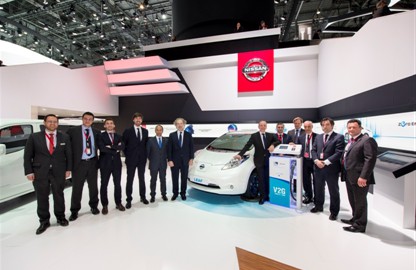
    Nissan and Endesa, an Enel Group subsidiary,  signed a ground-breaking agreement at the 85th Geneva International Motor Show that paves the way for a mass-market vehicle-to-grid (V2G) system.

    The two companies have pledged to work together to deliver a V2G system and an innovative business model designed to leverage this technology.

    Nissan- the world leader in EV sales with over 160,000 Nissan LEAF sold globally- is turning a page in zero emission mobility, and releasing the full potential of electric vehicle (EV) batteries with the Endesa two-way charging technology. It’s all part of Nissan’s commitment to support the entire EV ecosystem, not just the car..

    The two companies have agreed to collaborate on the following activities:

    • – Introduction of V2G services in the European market;
    • – Exploring the use of ‘second life’ EV batteries for stationary applications (including households, buildings, grid);
    • – Designing and evaluating potential affordable energy and mobility pack offers;

    Paul Willcox, Chairman of Nissan Europe, praised the innovative two-way charging system and the step-change towards a further acceleration of the EV market:

    We believe this innovation represents a significant development for Nissan Leaf and e-NV200 customers. Every Nissan electric vehicle battery contains a power storage capability that will prove useful in contributing towards smarter and responsible management of the power demand & supply of local power grids, thus reducing our EV total cost of ownership. Not only does this represent an opportunity for Nissan’s EV private and fleet owners, it could also support grid stability and fully demonstrate that each Nissan EV represents a tangible social asset.’

    Power to spare - Nissan and Endesa sign pledge to promote Europe's first mass market vehicle-to-grid system (Image: Nissan)
    Power to spare – Nissan and Endesa sign pledge to promote Europe’s first mass market vehicle-to-grid system (Image: Nissan)

    Indeed, one of the main challenges for electricity management systems is to assure grid stability. This situation is especially relevant in countries with a high level of renewable energy generation, and this will only increase in the future. The longer term zero-emission vision is for EVs to be at the center of a fully integrated system whereby owners can participate in wholesale energy markets using the power stored in the batteries of their electric vehicles, and thus significantly reduce their cost of operation. In a not-so-distant scenario, the EV user not only decides when and where they want to charge their EV, but how best they spend and re-sell the energy stored in their EV; receiving tangible financial benefits in terms of energy savings, while at the same time maximizing the use of green energy.

    The flexibility offered by V2G implementation in terms of storing and releasing green energy into the grid will further enhance the already significant and tangible benefits of electric mobility. This is why Endesa, together with its parent company Enel and partner Nissan, have decided to join efforts in promoting this technology.” said Javier Uriarte, Head of Market Iberia at Endesa.

    For Information

    This Vehicle to Grid (V2G) system consists of the Endesa two-way charger and an energy management system that can also integrate such off-grid, and renewable, power generation as solar panels and wind turbines. Using this equipment, a Nissan LEAF or e-NV200 owner can connect to charge at low-demand, and cheap tariff periods, with an option to then use the electricity stored in the vehicle’s battery at home when costs are higher, or even feed back to the grid with a net financial benefit. Electricity generated by solar panels or wind turbines can be used to charge a vehicle, to power the home or business, or to feed back to the grid.

    This unprecedented agreement between Nissan and Endesa means that European countries can now review their current energy management policies in order to respond to the technological innovation of the V2G system.

    Endesa has developed the ultimate low-cost V2G technology ready for the mass market after years of real-life testing. The company first showcased its V2G technology in 2008 in Smartcity Malaga, the Enel Group testing ground for smart cities. Later on, in 2012, Endesa presented the evolution of such technology at the ZEM2ALL demonstrator.

    On March 12, 2015, as the culmination of the V2G system development, together with Nissan as automotive partner, Endesa will host a full demonstration of the market-ready and low cost system in Madrid.

    ENDS

    About Nissan in Europe

    Nissan has one of the most comprehensive European presences of any overseas manufacturer, employing more than 17,600 staff across locally-based design, research & development, manufacturing, logistics and sales & marketing operations. Last financial year Nissan plants in the UK, Spain and Russia produced more than 675,000 vehicles including award-winning crossovers, small cars, SUVs, commercial vehicles and electric vehicles, including the Nissan LEAF, the world’s most popular electric vehicle with 96% of customers willing to recommend the car to friends. Nissan now offers a strong line-up of 23 diverse and innovative models in Europe under the Nissan and Datsun brands.

    About Nissan Motor Co.

    Nissan Motor Co., Ltd., Japan’s second-largest automotive company, is headquartered in Yokohama, Japan, and is part of the Renault-Nissan Alliance. Operating with approximately 236,000 employees globally, Nissan sold more than 4.9 million vehicles and generated revenue of 9.6 trillion yen (USD 116.16 b

    illion) in fiscal 2012. Nissan delivers a comprehensive range of over 60 models under the Nissan and Infiniti brands. In 2010, Nissan introduced the Nissan LEAF, and continues to lead in zero-emission mobility. The LEAF, the first mass-market, pure-electric vehicle launched globally, is now the best-selling EV in history.

    Source: Nissan Newsroom

    Figure 3: Composite image of patio door showing cold spot along bottom edge (Image: T. Larkum)

    Using an Infrared Camera to Look for Wasted Energy

    Fuel Included isn’t just about electric cars, but about the transition to a low carbon lifestyle. One of the easiest ways to reduce your carbon footprint is to use less energy, and that can be as simple as wasting less energy around the home. A beneficial side effect is that you save money too.

    A useful technique to investigate where heat is lost from your home is to use an infrared camera to show up areas that are cold and which typically indicate gaps around windows or doors, but which are not as obvious as draughts. The approach is known as Thermography but one of the most important early uses of infrared cameras was mounted on the nose of an aircraft for target location, so-called Forward Looking Infrared (FLIR) cameras. For this reason, and because the leading manufacturer of such cameras is known as FLIR Systems, the term FLIR is often used as a generic term for thermographic cameras.

    Figure 1: FLIR Camera as delivered (Image: T. Larkum)
    Figure 1: FLIR Camera as delivered (Image: T. Larkum)

    FLIR cameras have historically been very expensive to buy (though they are now coming down in price to typically about £1000) so there is a healthy rental market for them. Recently a group of colleagues at work clubbed together to hire one for a week and so I got a chance to try one out for a weekend for about £30.

    Figure 2: FLIR Camera close-up (Image: T. Larkum)
    Figure 2: FLIR Camera close-up (Image: T. Larkum)

    The camera arrives in a big industrial box (see Figure 1) but it is actually quite small, about the size and shape of a radar gun (see Figure 2). It works much like a modern digital camera, with images recorded on internal memory that can be downloaded via a USB lead to a PC. A neat feature is that every image is recorded twice, as a conventional colour image and as an IR image.

    Figure 3: Composite image of patio door showing cold spot along bottom edge (Image: T. Larkum)
    Figure 3: Composite image of patio door showing cold spot along bottom edge (Image: T. Larkum)

    I used the IR camera to do an ‘audit’ of the house, at night and in cold weather for maximum contrast. I imaged all the walls and doors, inside and out. I also checked each of the radiators to make sure they were working correctly. The IR images are coloured to show different relative temperature, from black (the coldest part of the image) through blue, green, yellow, orange, and red then to white (the hottest part of the image). So a gap around a door will show, say, dark blue while the rest of the door and frame are yellow and red. Similarly a cold spot in a radiator will show, say, green amongst mostly red.

    Figure 4: Composite image of back door showing cold spot at cat flap and along right edge (Image: T. Larkum)
    Figure 4: Composite image of back door showing cold spot at cat flap and along right edge (Image: T. Larkum)

    The images clearly showed up problems with our two back doors. The patio door had a very clear dark blue patch along the bottom (see Figure 3); we were already aware of a draught from this area. The main back door had a dark blue patch along the lock side, and another around the cat flap (see Figure 4). These are issues that I have noted to return to on another day to see if I can fix them with some draught proofing.

    The FLIR camera was easy to use and I recommend it to anyone who wants to know more about where their home is leaking energy.

    [Part 2 is here]

    Citi: Battery storage to hasten demise of fossil fuels

    Investment bank says wide deployment of battery storage will hasten the demise of fossil fuels and utilities that remain focused on centralised generation. It tips rapid fall in costs and a $400bn storage market by 2030.

    citi reportInvestment bank Citigroup predicts that the wide deployment of battery storage technologies will hasten the demise of fossil fuels across the globe in the coming decade, including oil, coal and gas.

    And it also warns that the battery phenomenom will be even more profound than the solar revolution currently sweeping the globe, and will sweep aside any traditional utilities that remain focused on centralised generation.

    The predictions of Citigroup analysts are a reprise of predictions it made in August last year, when it predicted that battery storage costs could fall to around $230/kWh by 2020, and eventually be as low as $150/kWh. The global market for battery storage could be worth more than $400 billion by 2030.

    The significance of its latest update is that these forecasts, and their potential impacts, are included as part of its analysis of the 10 major investment themes for 2015.

    The issue is therefor rapidly moving beyond those with a narrow focus on utilities and energy markets, it is now part of mainstream financial thinking, and because of that will have a profound influence on capital flows across the globe.

    Citi says improvements in battery storage both in terms of operational performance and economic terms should expand and accelerate the trend for corporates and households to become self-sufficient in terms of electricity generation.

    It cites six areas where fossil fuels and traditional utilities focused on centralised generation are at risk.

    These are

    1. Renewables: Storage would reduce both the cost of intermittency and the physical grid constraints that prevent deeper renewables penetration. The result would be a boost to the growth of renewables.
    2. Coal: If storage can be competitively used to “firm” intermittent resources, renewables can become a true substitute for baseload generation. In many markets, baseload is dominated by coal-fired power. And because of growing policy pressure to displace coal in markets ranging from the US to China, policy is likely to emphasize the substitution of firm renewables for coal-fired generation.
    3. Oil: Where oil is still used in the global power sector, it is often used in a peaking capacity. If storage is also deployed as a utility-scale peak shaving asset, storage might start to push out the stubborn oil-based generation still holding on as peaking capacity.
    4. Natural gas: In the near to medium term, natural gas’s complementarity with renewables makes gas a winner in any scenario with increased renewables, as gas continues to be the best option to balance intermittency in many places. But it too would pose challenges to the utility model in many countries, as any former base load fuel supply would bring lower returns to the utility based on lost peak/ high priced demand load.
    5. Gasoline: If storage were developed that promoted the growth of electric vehicles, this would significantly erode gasoline demand let alone demand growth, which, along with strong North American production of oil and gas, would put pressure on oil prices.
    6. The structure of power markets: Electricity is one of the few non-storable commodities. Large scale storage could change that, linking spot prices to forward prices in a transformation that would make electricity markets trade more like oil or gas markets. The implications for power forward curves and asset finance would be significant.

    Picking the winners in battery storage is a bit more complicated, because – like the solar industry – battery makers will be squeezed by severe pricing pressure from users on the demand side, and unavoidably high procurement costs on the supply side.

    That means that profits will come from new business models, away from the simple sales of hardware, towards a service model that includes after-market services, in the same way that the biggest profits are being made in the solar leasing business rather than manufacturing.

    Citi says the storage battery market is likely to develop as an infrastructure business that involves the supply of services and solutions, not just hardware and the winners will be those who come up with solutions that increase the convenience for users and make a long-term commitment to infrastructure.

    It says that the rise of distributed solar generation and battery storage does not necessarily mean the death of the utility model.

    It notes, for instance, that energy distributors could be well placed, as SA Power networks recently suggested. But those who rely on the dispatch of power generators in the grid are at risk. This is partly behind the thinking of European utility giant E.ON and NRG in the US in adapting their business models.

    “Our key takeaway is that US utilities will eventually adapt and join the party,” the Citi analysts write.

    “Why? Three main reasons include

    1) it makes economic sense to do so,

    2) it helps diversity the utilities fuel mix to help insulate them from volatility and

    3) it is a good hedge against upcoming EPA environmental legislation.”

    In its report last year, Citigroup suggested that many countries would be at “grid parity” for solar systems with battery storage by 2030, including Australia, parts of the US, Italy, Spain, Germany, and Portugal, while Japan, South Korea and the UK may not be far away.

    Its latest report underlines the main themes that are likely to influence battery storage.

    Chief among these is the potential of a global and binding agreement on greenhouse gas emissions being reach in December at the UN Climate Change Conference in Paris. That would require a bigger push for energy efficiency, demand response, renewables and e-mobility, making battery storage a crucial piece of the energy system puzzle.

    But even if that agreement was not reached, new environmental targets in the US, and battery storage mandates in the US (over and above the 1.3GW plan for California) will drive deployment.

    And on the technology front, the increased penetration of electric vehicles should continue to push down the cost of batteries for cars with parallel effects for energy systems battery costs.

    It cited projects such as Tesla’s Giga-factory in Nevada with plans for 2020 battery production (in GWh) from that plant alone to exceed today’s global production. Over and above this, a number of independent companies all have ambitious commercial plans.

    “The more they grow in customer numbers and partnerships, the more likely it is that battery storage costs will be declining,” the analysts write.

    Source: RenewEconomy.au