All posts by Repost

Kia e-Niro EV (Image: Kia)

Can an electric car be your everyday car?

It’s a measure of how far electric cars have come that, even a decade ago, it would have been hard to justify one as your everyday car.

Electric cars were too expensive, offered limited range, and the charging network was too small to make them a realistic prospect. Things started to improve when the Nissan Leaf arrived in 2010, with the Renault Zoe coming two years later.

Government grants, the rapid expansion of the charging network and the launch of more affordable vehicles all mean that the answer to our original question is, yes, an electric car can be your everyday car.

However, there are several questions you need to ask yourself first.

How long is my daily commute?
The average round-trip commute in the UK is around 21 miles. Even an electric car with the most miserly range estimate will be able to cover that. You don’t even need a Tesla to tackle a longer daily commute.

For example, the Kia e-Niro offers a claimed 282 miles of electric range, which might be enough for an entire week of commuting. Indeed, the e-Niro offers an impressive balance of price and range, costing around £30,000 after the plug-in car grant.

Kia e-Niro EV (Image: Kia)

If you live in a city, you could find the latest breed of smaller and more affordable electric cars works for you. The Seat Mii Electric, for example, costs a fraction over £20,000 and offers a range of 160 miles.

Do I have off-street parking at home?
Without access to a driveway or garage at home, charging your electric car could be a problem. Although you can lobby your local authority to install chargers on your street, home charging is both more convenient and cheaper.

Trailing a charging cable across a pavement is unwise and unlawful. As the Highways Act 1980 states, unless you can prove that you have taken all necessary means to give adequate warning of the danger, you’re committing an offence. It just isn’t worth the risk.

Lamp post charging is an option – and connected kerbs are coming – but for now, home charging is the answer. Or maybe it isn’t…

If you have access to a charger at work, you could charge your car there. That way you’d have full batteries for the journey home and your morning commute. Just make sure you’re guaranteed access to the charger, or you could be set for an unplanned night shift.

Do I live in a city?
If you spend most of your time in a city, an electric car is fast becoming the best choice of vehicle. Indeed, it won’t be long before some cities make them the only choice.

Right now, electric cars are exempt from paying the London Congestion Charge – and they will be until 2025 at the earliest. The introduction of Clean Air Zones across the UK will also work in favour of electric cars.

Read more: msn

It’s Time to Go Green!

If you would like to know more about Solar Panels and the PowerBanx range of home battery systems, and get a free instant quote, please complete our online form:

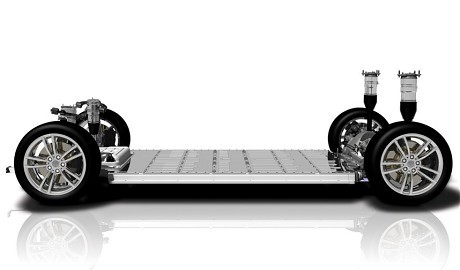
The Tesla ‘skateboard’ chassis including batteries, motor and suspension (Image: Tesla Motors)

The UK start-up saving classic cars from the landfill by converting them to electric

Classic motoring enthusiasts will still be able to keep their cars on the road thanks to a company in the UK that’s giving them a 21st-century makeover.

According to the UK’s Society of Motor Manufacturers and Traders, there are 40 million vehicles on UK roads.

Many of these are now in conflict with the UK government’s green thinking plans. UK Government advisors said that 46 per cent of cars in the UK need to be electric by 2030 to meet the UK’s climate goals. And motorists are already being given up to £2,000 (€2,345) to scrap their older polluting cars.

However, a start-up in the UK has launched to stop classic motors from going to the landfill.

At its headquarters in central London, London Electric Cars has been switching petrol-guzzling engines in Rover Minis, Land Rovers and Morris Minors to clean power.

Launched by founder Matthew Quitter, 44, the innovative start-up is converting vintage cars to zero-emission vehicles with the help of upcycled Nissan Leaf and Tesla batteries.

The Tesla ‘skateboard’ chassis including batteries, motor and suspension (Image: Tesla Motors)

“I saw that companies in California were converting cars and at the time there was no one in the UK doing this,” said Quitter.

3D printers and lithium ion cells
Quitter started in 2017 by converting his own 1953 Morris Minor with the help of nine prismatic lithium-ion cells. He now has a team of 10 who work on the conversions.

As each makeover is bespoke, it can take up to six months to convert a car and the price of a conversion starts at £25,000 (€29,326). However, as electric cars are exempt from congestion fees or road tax in the UK, owners only need to pay for electricity, which means they can drive around the city of London from £1 (€1.17) a week.

While Quitter’s engineers work with 3D printers and lithium-ion cells, they try to keep the majority of the fixtures and fittings of the classic cars intact.

“One of the things we try to do is maintain the cars as much as possible for historical integrity,” said Quitter. “Things like the indicators are a little less consistent than say a modern car. But for most classic car owners that’s the quirkiness that they enjoy”.

The fact that vintage cars don’t come with modern trappings such as power steering or sat navs made the conversion more affordable because there is less labour involved.

Minis and Land Rovers feature largely in the team’s makeovers, although more unique cars have also passed through its garage in Lambeth. The engineers have given a new lease of life to a Lancia B2, Bentley T2 and a converted London Taxi formerly owned by business magnate Nubar Gulbenkian for the Peninsula Hotel Group.

Electronics entrepreneur and classic car enthusiast Roy Campbell, 69, was delighted when he realised he could combine his two passions. He bought a 1970s Bond Bug, which London Electric Cars fitted with a Tesla battery in February 2021.

Read more: euronews.next

It’s Time to Go Green!

If you would like to know more about Solar Panels and the PowerBanx range of home battery systems, and get a free instant quote, please complete our online form:

Charging with an Ohme smart charging cable

Lack of awareness a key barrier to EV energy tariff adoption

A survey from electric vehicle (EV) and energy tariff price comparison site Love my EV has highlighted the savings of EV tariffs despite a prevailing lack of awareness.

A fifth of EV drivers surveyed weren’t aware of EV-friendly energy tariffs, and the majority of those that had heard of the tariffs weren’t signed up to one. The main reasons for this were not knowing enough about them (24%) or how to compare them to find the best option (20%).

Indeed, a third of EV drivers hadn’t changed energy provider or tariff since purchasing their vehicle. However, Love my EV found that EV drivers could save £92 million a year by switching to a dedicated EV energy tariff.

Charging with an Ohme smart charging cable

“There are more and more dedicated EV energy tariffs available, as energy suppliers compete for drivers making the transition away from polluting petrol and diesel engines,” Mat Thomson, co-founder of Love my EV, said.

Read more: CURRENT

It’s Time to Go Green!

If you would like to know more about Solar Panels and the PowerBanx range of home battery systems, and get a free instant quote, please complete our online form:

InstaVolt sets new 10,000 charger target

Electric vehicle (EV) charging network company InstaVolt has announced a significant expansion, pledging to install 10,000 chargers by 2030.

This follows the network experiencing record month-on-month growth since lockdown restrictions in the UK eased earlier this year.

It now has 1,000 chargers either active, in construction or in the advanced stages of development, making it the UK’s largest owner-operated public rapid network. This has been aided by a number of significant partnerships recently, including with McDonalds and Costa Coffee where it has begun to roll out its new 120kW charging units.

Instavolt rapid charger at McDonalds (Image: Instavolt)

Speaking of the commitment, InstaVolt’s chief executive officer, Adrian Keen said the company is already on track to deliver or exceed its earlier pledge of 5,000 rapid chargers by 2025.

Read more: CURRENT

It’s Time to Go Green!

If you would like to know more about Solar Panels and the PowerBanx range of home battery systems, and get a free instant quote, please complete our online form:

IONITY rapid charge points at Leeds Skelton Lake Services (Image: IONITY)

DfT widens Workplace Charging Scheme eligibility as new EV app launched

The Department for Transport (DfT) has today (9 September) announced changes to several electric vehicle (EV) charging schemes alongside the launch of a new app.

Aiming to provide additional support to small businesses and renters to install EV chargepoints, the DfT has opened up the Workplace Charging Scheme and Electric Vehicle Homecharge Scheme to new participants.

The move will see small businesses such as B&Bs gain access to the Workplace Charging Scheme, with an aim of supporting the UK tourism industry and improving access to rural areas.

The Workplace Charging Scheme offers support towards the upfront costs of the purchase and installation of EV chargepoints for eligible businesses, charities and public sector organisations.

IONITY rapid charge points at Leeds Skelton Lake Services (Image: IONITY)

The changes announced today will also see those in leasehold and rented accommodation given access to the Electric Vehicle Homecharge Scheme, which provides grant funding of up to 75% towards the cost of installing EV chargepoints at domestic properties across the UK.

The change has been made to encourage people to make the switch in areas where charging provision is currently more limited and potentially more challenging to secure. 

It comes alongside the launch of new app called EV8 Switch, which is backed by £2.7 million of UK Space Agency Funding and shows drivers how close their nearest chargepoints are and which journeys can be completed without the need to top-up en-route.

It also calculates how much money UK drivers could save by switching to an EV compared to their current petrol or diesel vehicle, along with details on the carbon dioxide savings and air quality improvements they could achieve.

Read more: CURRENT

It’s Time to Go Green!

If you would like to know more about Solar Panels and the PowerBanx range of home battery systems, and get a free instant quote, please complete our online form:

Milton Keynes 'Mushrooms' Charging Hub (Image: T. Larkum)

TfL opens Glass Yard rapid EV charging hub

Transport for London (TfL) has opened a rapid charging hub for electric vehicles (EVs) in Woolwich.

The Glass Yard hub offers eight charging points for EVs, capable of charging vehicles in 20-30 minutes, meaning it is more likely space will be available at the site.

It is the second of five rapid charging facilities being developed by the group across London, following a site at Stratford International. The next – at Baynard House in the City of London – is currently under construction, with more to follow in north and west London.

The Mayor of London, Sadiq Khan, said he was “delighted” the new site had opened.

Milton Keynes 'Mushrooms' Charging Hub (Image: T. Larkum)
Milton Keynes ‘Mushrooms’ Charging Hub (Image: T. Larkum)

“There are now over 7,000 charge points available to support electric vehicle use in the city and it’s great to see London leading the way in the green vehicle revolution,” he continued.

“Petrol and diesel vehicles are major contributors to air pollution in London so it is essential that we make it as easy as possible for people to swap their cars, vans and motorcycles to greener, electric versions. In October, I am expanding the Ultra Low Emission Zone up to the North and South Circular roads, which will bring huge benefits to many more Londoners by helping to improve our filthy air.”

London has around a third of the UK’s charging points, with more than 7,000 charging points within the M25. This increased by more than 2,000 over the last year, as well as TfL hitting its target of delivering 300 rapid charging points across the capital.

Read more: CURRENT

It’s Time to Go Green!

If you would like to know more about Solar Panels and the PowerBanx range of home battery systems, and get a free instant quote, please complete our online form:

Manchester’s first ultra-rapid EV charging forecourt opened

The North West of England’s first dedicated ultra-rapid electric vehicle (EV) power site has now opened in Manchester – also the first rapid-only site in Manchester – at MFG’s Stretford branch on the Chester Road.

The site is strategically placed on the A56 and has eight dedicated ultra-rapid 150kW EV charging bays, which can give 100 miles of range in 10 minutes of charging.

Velautham Ravichandran, contract manager for MFG Stretford said: “It is extremely exciting to be able to offer a dedicated ultra-rapid EV charging option to both our local community and those travelling through. We are now well positioned to serve UK motorists well into the future in this part of Manchester.”

In England, over 60% of dwellings in cities and urban areas do not have garages or other off-road parking provisions, and so must rely on electricity from publicly accessible networks.

MFG’s investment, will increase the infrastructure available to drivers, helping to alleviate range anxiety and increase driver’s confidence in electricity as a fuel source, thereby improving EV adoption.

William Bannister, MFG CEO added: “We are investing heavily in ultra-rapid EV charging hubs alongside our existing fuel and convenience store network throughout the UK, including recent openings in Bristol and Birmingham and planned openings in Scotland and Wales this year. This is on top of a significant investment already by MFG in London which is leading the way in promoting cleaner motoring.”

Read more: CURRENT

It’s Time to Go Green!

If you would like to know more about Solar Panels and the PowerBanx range of home battery systems, and get a free instant quote, please complete our online form:

BMW iX3

Sales Of Electric Cars And Plug-In Hybrids Rise Across Europe

New car registrations across Europe fell dramatically in July but sales of battery-electric vehicles and plug-in hybrids continue to grow.

Data from JATO Dynamics reveals that 967,830 new cars were registered across 26 European markets in July. That was a 24 per cent decline from the 1.27 million units registered in July last year. Despite this, year-to-date sales remain positive with a total of 7,381,735 registrations, 17 per cent higher than the same period in 2020.

The market share for gasoline cars across Europe continues to fall. In July 2019, gas ICE vehicles accounted for 63.4 per cent of the mark. By July 2020, that had fallen to 59.8 per cent and in July 2021, was 59.0 per cent. Diesel registrations also decreased by 166,000 units between July 2020 and July 2021 and almost 207,000 between July 2019 and July 2021. Registrations of new electric vehicles rose by 49,000 between July 2020 and July 2021 and 125,000 units between July 2019 and July 2021.

BMW iX3
BMW iX3

The best-selling new car in Europe during July 2021 was the Dacia Sandero with 20,446 sales, followed closely by the Volkswagen Golf (19,425 units), Toyota Yaris (18,858 units), VW Polo (17,343 units), and the VW T-Roc (16,496 units). Meanwhile, the best-selling plug-in hybrid vehicle was the Ford Kuga with 4,247 registrations, beating out the Peugeot 3008 (3,039 units), and Volvo XC40 (2,931 units).

Read more: CARSCOOPS

It’s Time to Go Green!

If you would like to know more about Solar Panels and the PowerBanx range of home battery systems, and get a free instant quote, please complete our online form:

Hyundai Ioniq 5 (Image: hyundai.co.uk)

New Hyundai Ioniq 5 RWD 2021 review

The new rear-wheel-drive Hyundai Ioniq 5 EV saves you £6k on the AWD version

Verdict
This more affordable rear-drive Ioniq 5 has all of the hi-tech strengths of the dual-motor range-topper, but adds extra value for money into the mix. You lose a little performance, but it’s still more than quick enough, has excellent real-world range and blazingly fast charging, while it mixes polarising looks with decent practicality and a roomy cabin. Factor in fantastic infotainment, enough comfort and strong quality inside, and in this spec at this price, it receives top marks.

Hyundai has really stirred things up with its first electric car on a bespoke platform, the Ioniq 5. Indeed, the oversized hatchback made enough of a splash to earn our coveted Car of the Year title. It did so in range-topping Project 45 specification, though – so we’ve been curious to see whether more modest versions have the same appeal. Now’s our chance to find out.

There are seven versions of the Ioniq 5 on offer to UK customers, with a choice of three powertrains. This 73kWh Premium-spec car features a rear-mounted electric motor with 215bhp and 350Nm of torque, which means that it also offers the longest official range of any Ioniq 5, at 300 miles.

This car’s 7.4-second 0-62mph time isn’t as fast as the dual-motor model’s 5.2 seconds, but it does bring a useful saving of just over £6,000 on list price.

Hyundai Ioniq 5 (Image: hyundai.co.uk)

In a weird way, that drop in price might well shift perception of the Ioniq 5 from “that’s a lot of money for a Hyundai” (unfair though that is) to “that’s a lot of car and battery for that amount of cash”. And the good news is that rear-drive Ioniq 5s – even those with the smaller battery – still have cutting-edge 800v tech.

Find a fast enough public charger and you can replenish the battery at up to 350kW – so you can go from 10 to 80 per cent in less than 18 minutes. Kia’s forthcoming EV6 aside, nothing else at around this price offers that level of tech.

On the road, this Ioniq 5 feels almost as impressive as the full-blown version. Instant electric-motor punch means that it feels quick from rest, and while it’s only brisk at best beyond that point – losing one motor doesn’t save much weight, so it still weighs more than 1,900kg – it’s perfectly acceptable in most situations. The lack of a front motor means that sheer geography places you further away from any electric whine, too, so if anything it’s more refined.

The chassis set-up is fundamentally the same as before – which is to say it feels inherently stiff and heavy, but that it still does a good job of soaking up low-speed bumps and potholes, and there’s a nice tendency to float along once you’re up to speed. There’s a bit of patter from beneath, but in general it’s a comfortable experience.

Read more: AutoExpress

It’s Time to Go Green!

If you would like to know more about Solar Panels and the PowerBanx range of home battery systems, and get a free instant quote, please complete our online form:

Electric cars: Ofgem plans easier way for drivers to sell energy back to grid

Proposal by Great Britain’s regulator is to help make the switch from fossil fuel cars more affordable

Ofgem plans to make it easier for electric vehicle drivers to sell the energy stored in their car batteries back to power grid as part of a move to help make the switch away from fossil fuel cars more affordable.

Under the plan put forward by Great Britain’s energy regulator, electric vehicle drivers could earn money by effectively transforming their cars into mobile power plants by releasing power back to the energy network when demand on the electricity grid reaches a peak.

If enough drivers take up the chance to make money from their car batteries by using vehicle-to-grid technology, the UK could avoid investing in new power plants with the equivalent generation capacity of up to 10 large nuclear power stations.

This could help to keep energy bills lower, even for households in Great Britain that do not own an electric vehicle, according to Ofgem.

The number of electric vehicles on UK roads is expected to accelerate to an estimated 14m by 2030, requiring billions in investment to upgrade the electricity grid, but Ofgem hopes that by changing its grid rules it could unlock big savings for the energy system and consumer bills. There were about 535,000 electric vehicles, including plug-in hybrids, on UK roads at the end of May 2021.

Great Britain’s regulator plans to make it cheaper for charging stations to connect to the electricity grid, which should enable more drivers to have access to charge points where they need them.

Ofgem will also encourage “smart” car charging to make better use of electricity when demand is low and power is cheap before releasing the cheap energy back to the grid using vehicle-to-grid technology when demand rises.

Neil Kenward, a director at Ofgem, said the regulator would take a “three-prong approach” by increasing the use of electric vehicles, “smart” car charging and vehicle-to-grid technology “which together can help drive down costs for all GB bill payers”.

He said: “Electric vehicles will revolutionise the way we use energy and provide consumers with new opportunities, through smart products, to engage in the energy market to keep their costs as low as possible.”

Read more: The Guardian

It’s Time to Go Green!

If you would like to know more about Solar Panels and the PowerBanx range of home battery systems, and get a free instant quote, please complete our online form: