All posts by Repost

Citroen Ami (Source: uk-mediacitroen.com)

How much does it cost to charge an electric car? Charging for EVs explained and how it compares to petrol

There are an estimated 400,000 electric cars on the road in the UK and more than 750,000 plug-in hybrids

Electric vehicles are becoming more and more popular, as petrol prices remain high and people search for more environmentally friendly options.

The UK Government is providing £500m over the next five years to support the roll-out of a fast-charging network for electric vehicles, ensuring that drivers will never be further than 30 miles from a rapid charging station.

There are an estimated 400,000 electric cars on the road in the UK and more than 750,000 plug-in hybrids.

Citroen Ami (Source: uk-mediacitroen.com)

In April 2022, 12,899 new electric vehicles were sold – a 40.9 per cent increase on April 2021. This gives them a 10.8 per cent market share.

As they grow in popularity, here’s what you need to know about charging costs, and how it compares to petrol.

Read more: inews

It’s Time to Go Green!

If you would like to know more about Solar Panels and the PowerBanx range of home battery systems, and get a free instant quote, please complete our online form:

Hyundai Ioniq 5 (Image: hyundai.co.uk)

Tell your friends about EVs: Study suggests automakers still aren’t getting the word out

Electric vehicles make a lot of sense for the pragmatic aspects: their ownership costs and environmental advantages. But once you’re in one, everything changes.

As results from J.D. Power’s U.S. Electric Vehicle Consideration Study indicate, a lot of American consumers still need to simply get a ride in an EV.

Hyundai Ioniq 5 (Image: hyundai.co.uk)

The firm, in the study released Thursday, found that among those who had no personal experience with EVs, just 11% said they were “very likely” to consider one. For those who had merely been a passenger in an EV, the portion “very likely” doubled to 24%; and for those who had driven an EV, it rose to 34%.

Automakers still aren’t effectively getting the word out about EVs to all would-be buyers. Power notes that nearly one-third of those who reject EVs simply cite a lack of information about them.

Across the survey, the “very likely” portion of shoppers rose to 24%, up from 20% a year ago.

The study is based on 10,300 responses from consumers from February through April 2022, and it looks at EV consideration “by geography; demographics; vehicle experience and use; lifestyle; and psychographics.”

There are also potential inroads for automakers in appealing to mass-market shoppers. J.D. Power found that 37% of those who own premium vehicles said that they’re “very likely” to consider an EV for their next vehicle, versus 21% for those who currently own mass-market models.

Read more: GreenCarReports


It’s Time to Go Green!

If you would like to know more about Solar Panels and the PowerBanx range of home battery systems, and get a free instant quote, please complete our online form:
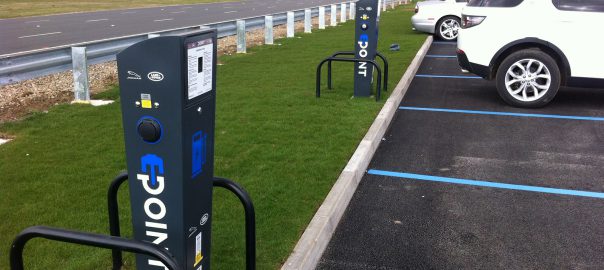
Jaguar LandRover GroupManager Install (Image: Rolec)

UK’s automotive industry, out of the world’s top 15, takes another hit as Jaguar Land Rover looks to Slovakia for electric vehicle batteries


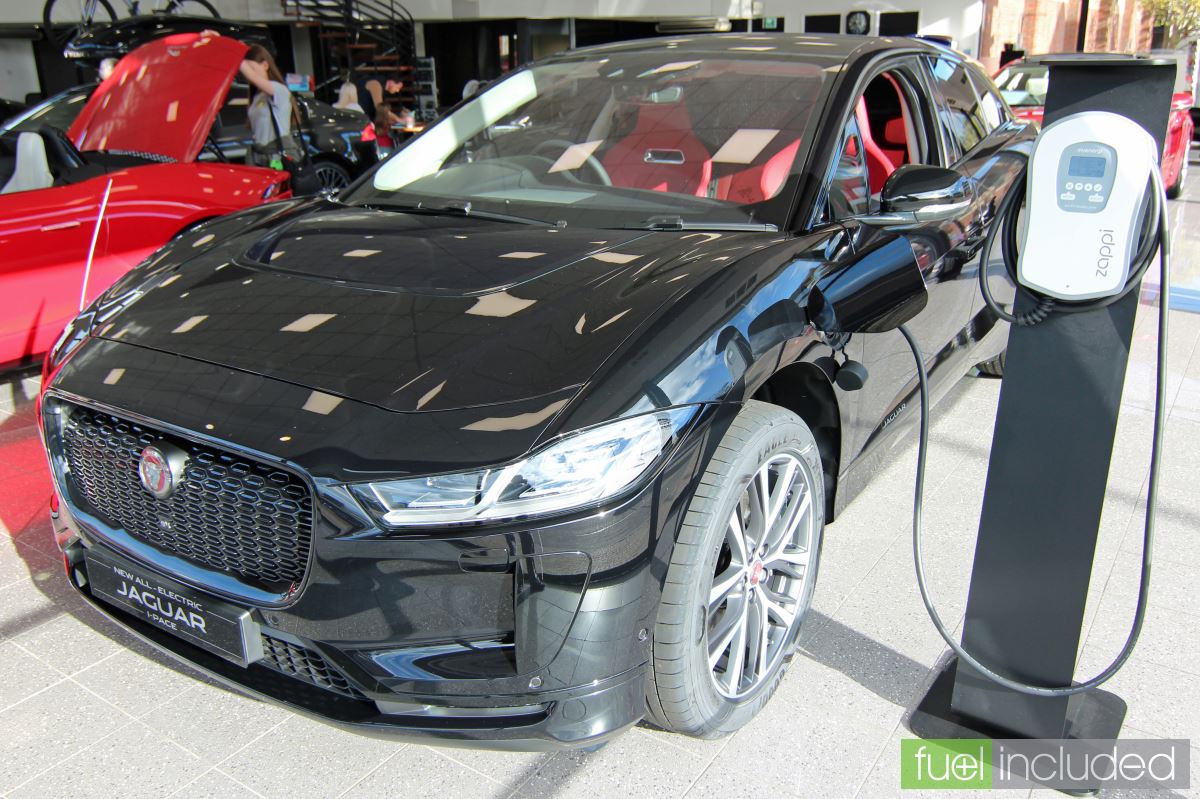
Jaguar I-PACE Electric Car (Image: T. Larkum)
  • Jaguar Land Rover is in talks with Northvolt and SVolt Energy Technology about supplying batteries for a range of EVs it may assemble in Slovakia
  • Unless battery investment picks up, carmakers may only accelerate their exodus from what was once the world’s second-biggest auto manufacturing base

Almost a decade after playing home to Europe’s first mass-produced electric car, the UK is at risk of becoming a footnote in the global auto industry’s shift to battery-powered vehicles.

The UK lacks the cell and pack factories automakers will need to support their transition away from the internal combustion engine. In what could be a fresh blow to British carmaking, the country’s top auto manufacturer, Jaguar Land Rover, is in talks with Northvolt and SVolt Energy Technology about supplying batteries for a range of EVs it may assemble in Slovakia, according to people familiar with the matter.

Unless battery investment picks up, carmakers may only accelerate their exodus from what was once the world’s second-biggest auto manufacturing base. The last few years, the UK fell outside the top 15.

Read more: SCMP

It’s Time to Go Green!

If you would like to know more about Solar Panels and the PowerBanx range of home battery systems, and get a free instant quote, please complete our online form:
EVs are avoiding about 3% of global oil demand—a fifth of Russia’s total exports

Russia’s ongoing invasion of Ukraine has triggered international sanctions throttling the country’s oil exports, leading to fears of even higher gas prices. But electric vehicle adoption has been helping make the situation less grim.

Plug-in vehicles avoided roughly 1.5 million barrels of oil per day last year, according to new analysis from Bloomberg New Energy Finance. That’s about one-fifth of Russia’s pre-invasion oil exports, Bloomberg NEF said.

 The oil use avoided by EVs has also doubled since 2015, to about 3% of global demand, according to the analysis.

While electric cars tend to get most of the attention, the analysis found that other vehicle types accounted for the most oil avoidance. Electric two- and three-wheeled vehicles—which tend to be popular in Asia—accounted for 67% of the oil demand avoided in 2021, according to Bloomberg NEF.

Those vehicles had an outsized impact on oil demand. Next in rank were electric buses, which accounted for 16% of avoided oil demand, followed by passenger vehicles at 13%. The latter were the fastest-growing segment, Bloomberg NEF noted.

Read more: GreenCarReports

It’s Time to Go Green!

If you would like to know more about Solar Panels and the PowerBanx range of home battery systems, and get a free instant quote, please complete our online form:

One-Pedal Driving 101: What Is It? Is It Safe? Which New EVs Have It?

On the driver’s side of nearly every car driving on the road today, there are two or three pedals that the driver operates with their feet. The new wave of hybrids, plug-in hybrid electric vehicles, and electric vehicles (EVs) still have two pedals. So what is “one-pedal driving,” and how does it work?

What is one-pedal driving?

Electric motor drive systems, designed to provide propulsion in EVs, also reclaim some of that electric power through regenerative braking, also known as regen. A little-known fact is that the major internal components of electric motors and generators are very similar. However, electric motors and generators work precisely opposite each other.

In 1831, Michael Faraday’s work explained the phenomenon of electromagnetism according to Plant Engineering. Inside an electric motor, electricity flows through wire windings and a magnetic field to create a rotary force. In contrast, a generator uses a rotary force to generate electricity as the wire windings spin past magnets.


This conversion of energy, electrical to mechanical and back to electrical, makes regen beneficial and one-pedal driving so popular in EVs. In most electric vehicles, regen happens automatically when the driver releases the accelerator pedal. As the EV stops sending electricity to power its motor, it uses the car’s momentum to spin the electric motor and generate electricity. Friction from spinning the electric motor causes the EV to slow, like applying the brakes.

Read more: MotorBiscuit

It’s Time to Go Green!

If you would like to know more about Solar Panels and the PowerBanx range of home battery systems, and get a free instant quote, please complete our online form:

Electric cars: Fuel price chaos ‘eroding loyalty’ to ICE vehicles – Brits tipped to switch

RISING fuel prices are “eroding” consumer loyalty to ICE (internal combustion engine) vehicles, according to a clean energy expert, who argues that electric vehicles will soon be the most economic option for drivers.

Aiden McClean, founder of UFODRIVE, the world’s first electric car rental company told Express.co.uk that there is a perception that electric cars are more expensive than their ICE counterparts. However, with rising fuel prices and the falling price of electric car technology, he argues that this is fast becoming untrue. On average electric cars are 10 percent more expensive to buy than traditional ICE vehicles. However, they are much cheaper to run.

The UK’s electric vehicle drive has put the energy sector on the road to change

Research from Compare the Market has revealed that electric cars are £600 cheaper to run than an equivalent petrol car with average annual costs at £1,264 and £1,834 respectively.
With Russia’s invasion of Ukraine causing fuel prices to skyrocket at a higher rate than electricity, this gap is set to widen even further.

Mr McClean also argues that electric car technology is in its infancy “and as the innovations keep coming, prices will only get lower.”

Analysis from BloombergNEF predicts lithium-ion battery costs will fall to the extent that electric cars will match the price of petrol and diesel cars by 2023 and McKinsey’s Global Energy Perspective 2021 forecasts that “electric vehicles are likely to become the most economic choice in the next five years in many parts of the world”.

Read more: Express

It’s Time to Go Green!

If you would like to know more about Solar Panels and the PowerBanx range of home battery systems, and get a free instant quote, please complete our online form:

Cars swapping vroom for volts in London garage

Tucked away in a workshop under a London Underground line, cars are undergoing a green metamorphosis as they shed their cylinders, spark plugs and pistons for electric engines.

“We don’t create the associated CO2 that comes from creating a new car and we’re not scrapping a perfectly valid old car. It’s win-win,” said Matthew Quitter, founder of London Electric Cars.

London Electric Cars is one of the companies capitalising on the UK’s flexible regulatory environment and special affection for cars to help grow the fledgling sector.

In the workshop, all kinds of cars have come to be reborn: Minis, Bentleys, old ones — such as a 20-year-old Volvo station wagon — and some not so old, including a platypus-like Fiat Multipla.


Some families are turning to Quitter to save their beloved vehicles from the crusher, with places such as London expanding road charges for older and more polluting vehicles.

“They’re just keen that they don’t scrap this car because they have an emotional attachment,” he said.

“The kids grew up in it and instead want to see it reborn as an electric vehicle.”

The cost of a conversion starts at £30,000 ($37,500, 35,000 euros) — the equivalent of a new entry-level electric car.

Read more: France24

It’s Time to Go Green!

If you would like to know more about Solar Panels and the PowerBanx range of home battery systems, and get a free instant quote, please complete our online form:

Solar EV Charging Hub on Princes Street, Dundee (Image: eVolt)

Green Updates: Cost-Conscious Drivers Favour Electric Vehicles

EVs Soar In Popularity As Lower Running Costs Trump Green Concerns

The proportion of motorists who would consider an electric vehicle (EV) as their next car has risen by 22% since 2019, according to research from online car sales site carwow.

Its survey of 1,735 visitors to its website in 2019 and early this year revealed that the lower running costs of EVs, compared to petrol and diesel cars, is the main attraction.

Almost half (45%) of the drivers surveyed by carwow this year said they would contemplate purchasing an EV compared to 37% in 2019.


Three years ago, the main motivating factor for 68% of drivers surveyed were the environmental benefits. Lower running costs was the second most important factor (62%).

This year has seen a switch in priorities as two thirds (66%) of motorists view lower running costs as most important. Environmental benefits are a close second at 61%.

This comes as the price of petrol and diesel hit record highs, and despite a 5p-per-litre reduction in fuel duty which came into effect in March.

The price hikes are largely due to Russia’s invasion of Ukraine, and resulting sanctions on Russia’s crude oil exports, which have caused wholesale prices to soar.

Read more: Forbes

It’s Time to Go Green!

If you would like to know more about Solar Panels and the PowerBanx range of home battery systems, and get a free instant quote, please complete our online form:

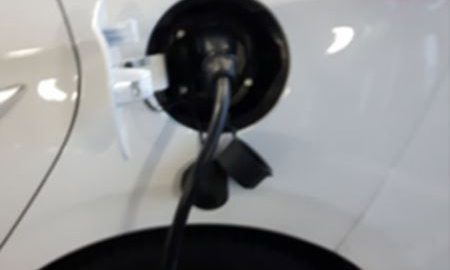
Charge Port Door (Image: T. Heale)

Model update: Hyundai Ioniq 5 AWD Ultimate

We’re not alone in having been wowed by Hyundai’s Ioniq 5 EV since it made its debut late last year. However, until now we were yet to drive what should, based on price at any rate, be the range’s most impressive offering – the one with the most powerful, all-wheel drive powertrain. So, is this really the best of the bunch, or an unnecessary excess when the rear-wheel drive version is already so good?


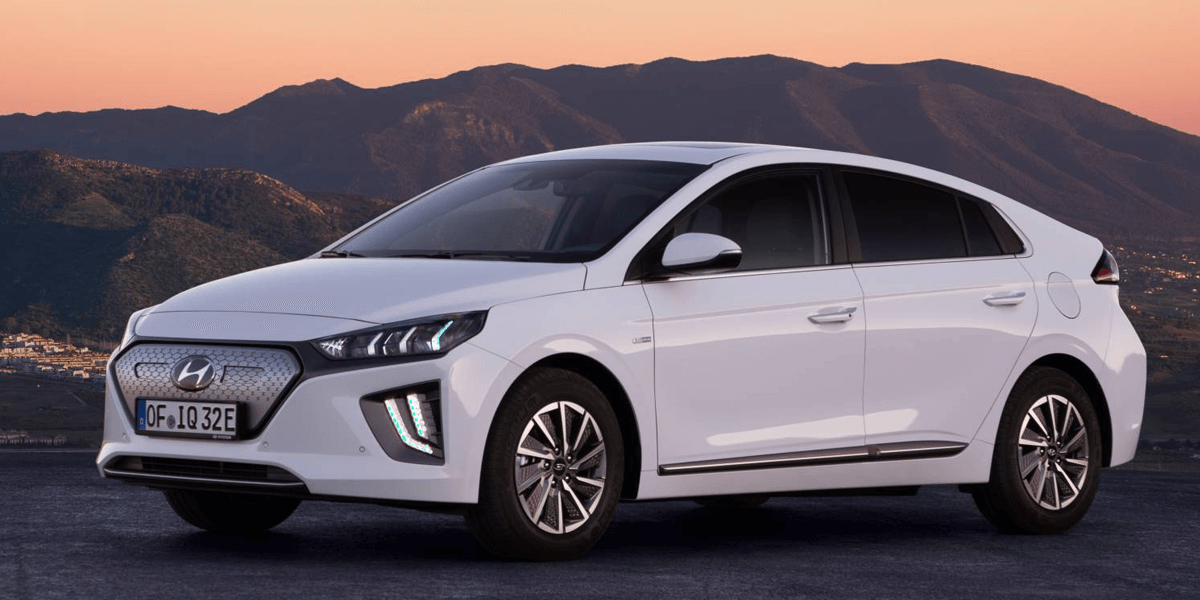
2020 Hyundai IONIQ (Image: Hyundai)

Well, the all-wheel drive model certainly delivers when it comes to performance. Using an electric motor to power each axle, it has a total output of 305hp, which puts it in high-end hot hatch territory, and despite the heavy weight associated with EVs there’s acceleration to match. 0-62mph in 5.2 seconds is quoted, and from behind the wheel seems very realistic. The way the car gains speed is highly impressive and a little bit intoxicating, with the usual instant response of an EV to the accelerator pedal only adding to the sensation. And with very little audible accompaniment to the speed gain, other than a very faint whine, a keen eye needs to be kept on the speedometer to ensure continued legality.

Read more: BusinessCar

It’s Time to Go Green!

If you would like to know more about Solar Panels and the PowerBanx range of home battery systems, and get a free instant quote, please complete our online form:

Honda e Electric Car (Image: Honda.co.uk)

What’s The Difference Between Hybrids And Plug-In Hybrids?

The Honda Insight and Toyota Prius are renowned for being the world’s first mass-produced hybrid electric vehicles, while the Chevy Volt was the first commercially available plug-in hybrid car in the USA (according to the Department of Energy). These cars are popular, and their popularity is growing. According to Car and Driver, hybrids and Plug-in-hybrid-electric vehicles (PHEVs) are in the “middle ground” of new-age electrified vehicles and are ideal for consumers who aren’t yet ready to take the full electric plunge. Today we’re going to take a look at what makes a car classifiable as a hybrid or a plug-in hybrid.


Honda E 2021 (Image: honda.co.uk)

According to Forbes, the technology behind hybrid vehicles is among the least understood environmentally-friendly tech in a vehicle today. We find this interesting since PHEVs have been around for more than a decade, while hybrids have existed since the early 2000s. In addition, PHEV sales nearly doubled from 308,000 to 608,000 in 2021, representing a 138% increase from 2020. If you are thinking of upgrading to a hybrid or plug-in hybrid vehicle, it’s crucial to discern what makes a hybrid a hybrid, and what the differences are between a standard hybrid and a PHEV.

Read more: SlashGear

It’s Time to Go Green!

If you would like to know more about Solar Panels and the PowerBanx range of home battery systems, and get a free instant quote, please complete our online form: