All posts by Repost

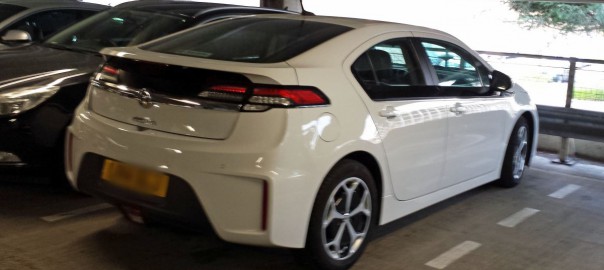
Vauxhall Ampera in Milton Keynes Central railway station multi-storey (Image: T. Larkum)

Ground-breaking electric Chevrolet Volt runs out of juice

DETROIT — As their company was swirling around the financial drain in the early 2000s, General Motors executives came up with an idea to counter its gas-guzzling image and point the way to transportation of the future: An electric car with a gas-engine backup that could travel anywhere.

At Detroit’s auto show in 2007, they unveiled the Chevrolet Volt concept car, not knowing yet whether they had the technology to pull off a major breakthrough in battery-powered vehicles.

It took nearly four more years, but the first Volt — a longer-range version of a plug-in hybrid — rolled off the assembly line late in 2010. GM had hopes that customers would be ready for a car that could go 38 miles on electricity before a small internal combustion generator kicked in.

Vauxhall Ampera in Milton Keynes Central railway station multi-storey (Image: T. Larkum)
Vauxhall Ampera (rebadged Chevrolet Volt) (Image: T. Larkum)

They weren’t. On Tuesday, the last Volt was built with little ceremony at a Detroit factory that’s now slated to close. Sales averaged less than 20,000 per year, not enough to sustain the costly undertaking.

The Volt wasn’t the first electric car, but it was the first to conquer anxiety over range at a reasonable cost. GM’s limited-range EV1 came out in the 1990s, and Tesla put out its 200-plus-mile Roadster in 2008 for more than $100,000.

The Volt was among the first plug-in hybrids, many of which can go only 20 or so miles on electricity and haven’t gained much popularity among consumers.

Yet the Volt did serve a purpose. It led to advances in lithium-ion batteries similar to those that power smart phones and computers. But such advances ultimately led to the Volt’s demise as GM and other manufacturers developed fully electric vehicles that can go 200 more miles per charge.

“While it was a financial loser, it did what was intended,” said retired GM Vice Chairman Bob Lutz, who shepherded the Volt into production. “We viewed it as a stepping stone to full electrics, which were totally out of reach due to the then-astronomical cost of lithium-ion batteries.”

Read more: Washington Post

Nissan Leaf 3.Zero e+ (Image: Nissan)

Nissan LEAF Plus first drive review: more of a good thing

Last week we were invited to San Diego to drive the new Nissan Leaf Plus, the updated version of the Leaf with a new 62kWh battery pack, which will start sales in March.

We spent the day driving it all through the county on a variety of roads, and came away impressed if not surprised by this iteration on an already-solid package.

The main practical upshot of the Leaf Plus’s larger battery is that the car has increased range, power and quick charge ability.

Nissan Leaf 3.Zero e+ (Image: Nissan)

Nissan has managed to fit a larger battery in about the same volume by eliminating dead space in the battery pack. They employ a new battery module design with less space between cells and adopted laser welding to reduce the size of connections between cells and squeeze more energy into the space they have available. They’ve also added another parallel module to modify the input/output current of the pack in an attempt to reduce heat generation.

Performance

As soon as we got onto the freeway, the Nissan Leaf Plus impressed. The main place where increased power output from the larger battery is noticeable is in high-speed acceleration. Electric cars typically only have one gear and suffer from a drop-off in power delivery at higher speeds. The easiest way for manufacturers to solve this problem is to attach a larger battery. The Leaf Plus has done this, and that allows it to pull more at higher speeds, offering better highway-merging and lane-change acceleration.

Even in “ECO” mode, I felt that the Leaf Plus offered good acceleration at all legal highway speeds. When I discovered that I had accidentally been driving in ECO mode for the first 10 miles or so of the review (and then, naturally, turned it off right away), I found that the car was even snappier.

The increased power resulted in some torque steer. On front-wheel drive cars with a lot of torque (thus, many electric cars), torque steer is the sensation that a car is pulling to one side or the other, particularly under hard acceleration. It can be a bit surprising to drivers who experience it for the first time, so this is something to be aware of in this vehicle.

One thing I appreciate about the Leaf is that Nissan has not artificially slowed down the throttle response of their car in any noticeable way. When I speak of throttle response, I mean the time delay between pressing the pedal and the car surging forward. In many electric cars, manufacturers seem hesitant to allow drivers full access to their car’s instant torque, so they slow down the throttle pedal response just a little bit. This is presumably done for safety or comfort reasons, as a driver who isn’t used to this could end up driving in a “jerky” manner. Personally, I think manufacturers just do it so they don’t make their gas cars look bad.

Read More: Electrek

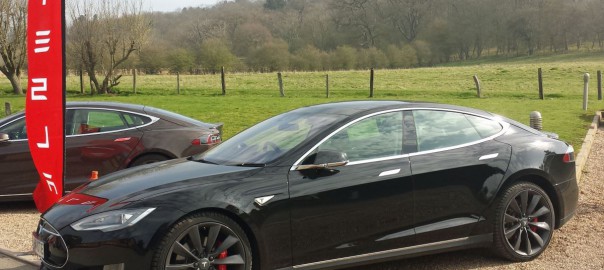
Our very own Tesla Model S – for a while anyway (Image: T. Larkum)

Electric Vehicles Benefit All Utility Ratepayers

As electric-vehicle sales mount, observers are finding benefits to society—especially to electric ratepayers—that sometimes surpass the benefits to the EV buyers.

Our very own Tesla Model S – for a while anyway (Image: T. Larkum)
Tesla Model S (Image: T. Larkum)

“These vehicles use a different kind of fuel and plug into our electricity system, and the good news about that is that there are a number of cost-benefit studies that are showing this can be really beneficial to all rate payers, not just the drivers of the vehicles,”

said Matt Stanberry, the managing director of the advanced transportation program for the trade group Advanced Energy Economy.

“As you increase electricity sales for charging the vehicles, it has the effect of driving down rates for all ratepayers because it spreads the fixed cost of the system out across a larger volume of sales.”

That sounds like the opposite of the scenario feared several years ago in which rooftop solar would enable homeowners to abandon the grid, concentrating fixed costs on the shrinking population that remains.

Recent studies have analyzed the impact of EVs in five Northeastern States and in California and found hundreds of dollars per car in annual benefits to three groups: to EV owners in saved fuel and maintenance costs, to electric ratepayers in reduced fixed costs, and to society in reduced carbon emissions.

Read more: Forbes

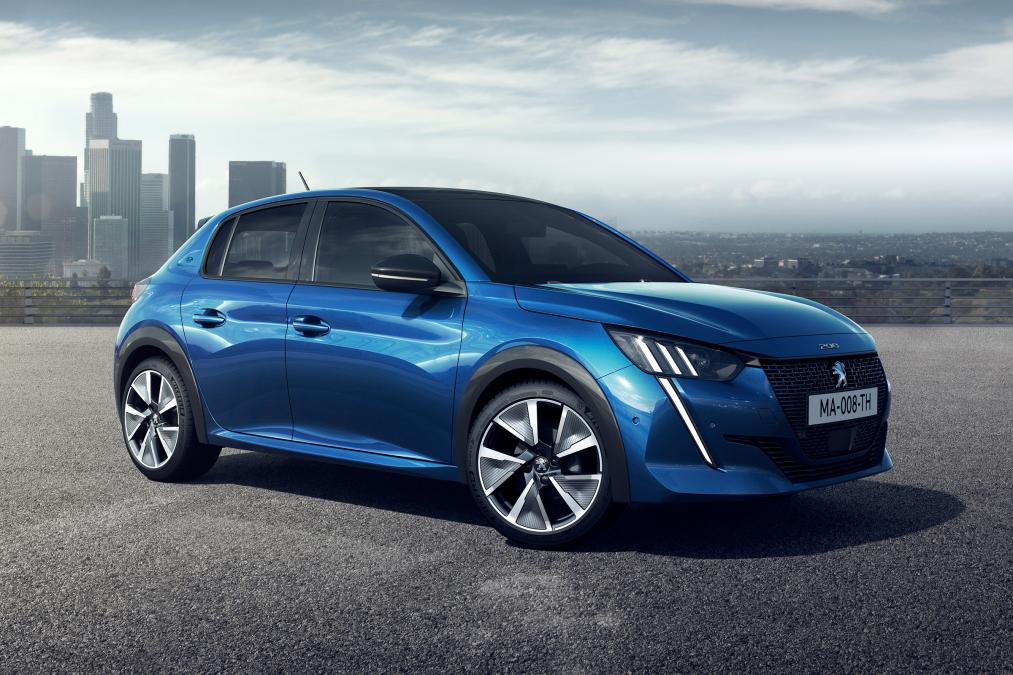
Peugeot e-208 (Image: Peugeot)

New electric Peugeot e-208 revealed with 211-mile range

All-electric Peugeot e-208 supermini set to upstage the Renault Zoe with 211-mile range and 134bhp electric powertrain

Peugeot has revealed the sharp new second-generation 208 ahead of the Geneva Motor Show, and while regular petrol powered versions of the firm’s latest supermini are due to remain the big sellers, an all-electric version dubbed e-208 is the headline grabbing news.

It’s Peugeot’s first ever all-electric production car, and when the e-208 arrives on roads this summer it’ll go into direct competition with the latest iteration of the Renault Zoe. It uses a variant of the new 208’s CMP platform dubbed e-CMP, which allows the electric supermini to roll off the same production line as its petrol and diesel powered siblings. It’s one of a handful of cars the PSA Group is preparing on the new architecture.

Peugeot e-208 (Image: Peugeot)

Peugeot claims that the electric version of the platform allows neat integration of the battery pack under the rear portion of the floor, meaning that bootspace in the e-208 is no different to that of its petrol and diesel siblings. However, no bootspace figure has been revealed.

On board is a battery 50kWh in size, which sends power to a 100kW (134bhp in old money) electric motor driving the front wheels. Peugeot claims a maximum range of 211 miles on a single charge, rated under WLTP rules.

It’ll take 20+ hours to recharge on a household three-pin plug, while using a dedicated home charging point will top the batteries up in approximately eight hours. Peugeot says an 80 per cent recharge is possible in 30 minutes using a roadside 100kW rapid charger.

Read more: Auto Express

Nissan Leaf 3.Zero e+ (Image: Nissan)

2019 Nissan Leaf Plus First Drive: Is It Plus Enough?

Nissan’s top-range Leaf finally has battery range on par with other affordable EVs

Remember the horsepower wars of the 1960s?

In yet another twist on Mark Twain’s saying, “History doesn’t repeat itself, but it often rhymes,” the car industry is humming its 50-year-old, horsepower one-upmanship tune once again. But now there’s a new verse, with the lyrics “miles of battery range” instead of “plain ol’ horsepower.”

Nissan Leaf 3.Zero e+ (Image: Nissan)

A right-now snapshot of the current BEV-range leader board of affordable EV offerings, with more than 200 miles of range, looks like this:

1: Hyundai Kona Electric – 258 miles

2: Kia Soul EV (just announced) – 243 miles

3: Kia e-Niro – 239

4: Chevrolet Bolt EV – 238 miles

Where, pray tell, is the biggest-selling affordable EV of them all, the Nissan Leaf? When its second-generation version was introduced two years ago in Japan, the Bolt’s then-staggering 238 number had already been announced. Needless to say, that cast a pall over the Tokyo proceedings as Nissan struggled to justify the new Leaf’s 150-mile range. Sure, sure, we all nodded in agreement; of course it’s way better than the first gen’s 107 miles. But it was as if Ford pulled the sheet off a Mustang with 37 percent fewer ponies than the existing Camaro. The guys in Yokohama had miscalculated. They knew it. And Scouts’ honor, they promised a bigger-battery fix, ASAP.

True to its word, here’s the car Nissan wishes it had actually introduced: the descriptively named Leaf Plus.

Read more: Motor Trend

VW e-Golf (Image: Volkswagen.co.uk)

Volkswagen is pushing for CO2 neutral production of electric cars

The Volkswagen group is doing a 180-degree turn from their emission cheating days to pushing for CO2 neutral production of electric cars.

In a new presentation, VW shows how the I.D., its first next-generation electric vehicle, will be “CO2 neutral throughout the entire life cycle if the customer consistently charges with green power.”

They want to address CO2 emissions through the different phases including manufacturing.

VW e-Golf (Image: Volkswagen.co.uk)

In the manufacturing phase alone, VW says that “the carbon footprint of the ID. will be improved by more than 1 million tons of CO2 per year.”

They want to use green power throughout the entire supply chain and at their own factories.

Earlier this year, Volkswagen launched a new energy and charging unit to complete energy loop and help its future electric vehicle owners power their cars with green power.

Thomas Ulbrich, the Board Member responsible for e-mobility at the Volkswagen brand, commented on the effort:

“Climate change is the greatest challenge of our times. As the world’s largest car manufacturer, Volkswagen is assuming responsibility: The new ID. will be the Group’s first climate-neutrally produced electric car. To ensure that it remains emission free during its life cycle, we are working on many different ways to use green power. Truly sustainable mobility is feasible if we all want it and we all work on it.”

Read more: Electrek

Tesla showroom in Milton Keynes (Image: T. Larkum)

Electric Vehicles and the Future of Oil

Just two percent of all auto sales today are electric. It is estimated that over 3.5 million electric cars are on the road today, and there may be as many as 36 million electric cars by 2025.

By 2040, 30 percent of all new car sales will be electric, according to analysts at IHS Markit. What does this massive increase of electric vehicles mean for the future of oil?

China Matters

The largest disrupter to the future of oil may be coming from China. Elon Musk has big plans in China where electric vehicle sales are three times higher than they are in the United States. Tesla (TSLA – Get Report) has just broken ground on a massive gigafactory that will have capacity to manufacture 500,000 cars per year.

Tesla showroom in Milton Keynes (Image: T. Larkum)
Tesla showroom (Image: T. Larkum)

Since tariffs have driven up the price of importing these vehicles, Tesla will now be able to build locally and bypass tariffs. In addition, BP Ventures just invested in the Chinese electric vehicle (EV) charging start-up PowerShare.

China is targeting sales of more than 7 million EVs by 2025, up from just 350,000 over the last 12 months. By 2030, China will overtake the United States as the largest consumer of oil with net imports reaching 13 million barrels per day, (the U.S. currently consumes about 20 million barrels per day).

Transportation Still Dominates Crude Demand

Global oil demand is forecast to stall within the next decade and the rise of EVs may accelerate the decreased demand. According to the Energy Information Administration, global oil demand is expected to average over 101 million barrels per day in 2019. But growth may have already peaked. The EIA’s estimate is a reduction of about 100,000 from its previous outlook.

The 101 million barrels consists of approximately 80 percent crude oil and 20 percent natural gas liquids. According to EIA, about 55 percent of the crude oil demand is for transportation while 35 percent is for industrial use and the remainder in other categories such as electricity. IHS also estimates that roughly a third of global oil demand is from cars: 40 percent of the growth since 2000 has come from cars. Again, the growth of EVs, especially in China, may greatly affect this number.

Read more: The Street

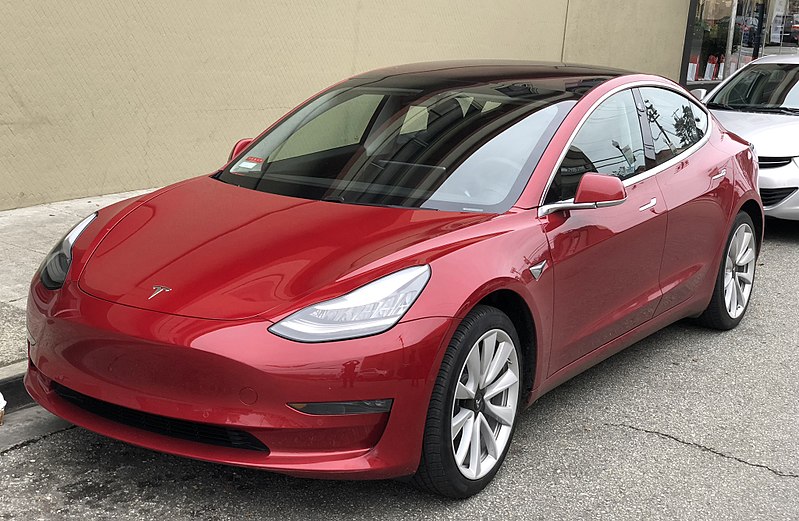
Tesla Model3 (Image: Wikimedia/Carlquinn)

As More Electric Cars Arrive, What’s The Future For Gas-Powered Engines?

Most American automobiles are powered by internal combustion engines: Gas or diesel goes in, tiny explosions power pistons and turn a crankshaft, the car moves forward, and carbon dioxide goes out.

But a growing chorus of environmental activists, business analysts and auto executives are predicting a sea change as battery-powered electric vehicles grow in popularity.

Tesla Model3 (Image: Wikimedia/Carlquinn)

Going electric is not just an eco-friendly goal, an ambition that would help fight climate change. It’s a business reality, according to industry analysts. But if the general path ahead is widely agreed on, the speed of the change — and the role that combustion vehicles will play during the transition — is far from clear.

‘You cannot stop it any more — it’s coming’

“Electrification, you cannot stop it anymore — it’s coming,” says Elmer Kades, a managing director with the consulting firm AlixPartners. “We have fantastic growth rates, between 50 and 60 percent on a global level.”

Electric vehicles are currently a tiny fraction of the car market, which is dominated by internal combustion engines. But many more electric car models will hit showrooms in the next few years, and several factors have analysts convinced that is part of a major transition in the industry.

Read more: National Public Radio

Cheap Motoring

Is This The Tipping Point For Electric Vehicles?

A new report by McKinsey forecasts a rapid switch from gas guzzlers to electric vehicles on the world’s roads will be boosted by the plummeting costs of owning a battery powered vehicle.

The consulting firm’s 2019 Global Energy Perspective report foresees a two-thirds drop in the cost of EV battery packs by 2030. The tipping point at which EVs will be cheaper to own than internal combustion engine-powered vehicles is forecast to be reached in the early 2020s:

The timing of total cost of ownership (TCO) parity in the U.S. and China is comparable to Europe, with China slightly earlier and the U.S. slightly later, reflecting differences in fuel taxation and subsidies for electric vehicles.

Cheap Motoring

After this tipping point, “economic considerations alone” would be sufficient to accelerate the growth of EV sales, says McKinsey. Car sharing and autonomous driving will add further incentives to go electric. Improving battery technologies will mean that even long-haul trucks could be economically electrified during the second half of the next decade.

Read more: Oil Price

This was the scene when Leighton arrived this morning (Image: T. Heale)

Why Electric Vehicles Are Great Winter Cars

Winter is not the easiest season for getting around.

Electric cars, like cars with internal combustion engines, function less efficiently in the cold. But while we accept and ignore the limitations of traditional vehicles, reports from groups like AAA misrepresent cold weather concerns about electric vehicles, fueling anxiety about vehicle range.

The reality is, electric vehicles are great winter cars.

This was the scene when Leighton arrived this morning (Image: T. Heale)
Hyundai IONIQ in the snow (Image: T. Heale)

Being realistic about range

Cold weather range is becoming less of an issue with the rapid advancement of battery technologies. Every year, electric vehicle ranges get longer.

Take my family’s experience as an example. Our first 2012 Nissan LEAF had only 73 miles of driving range. This year the same vehicle has a battery that offers a 151-mile range and in a couple of months you will be able to get a LEAF with an even bigger battery and a range of well over 200 miles. So, range is becoming less of an issue and truthfully we never had any issues with it. My wife has a 35-mile round trip commute so she could manage it even with the 2012 LEAF, but nowadays with longer range electric vehicles, things are really easy. Battery electric vehicles available in Minnesota this year have ranges between 151 to 335 miles and people who want even more flexibility in their daily driving range should choose one of the plug-in hybrids that can take you up to 640 miles. See all plug-in EV models available in Minnesota here.


Many reasons to love electric vehicles in the winter

The best part of electric vehicles for me in the wintertime is the fast heating system. Many electric cars have a heat pump heating system that works like the traditional AC, but in reverse. This system is incredibly fast in heating up the car. I tried it the first time with our 2016 Nissan LEAF. It was a typical 16 degree Minnesota winter day. I went into our cold garage and reversed the car outside to the alley. While I waited for the garage door to close I wondered why the automatic fan was already running and to my surprise it was already pushing lukewarm air from the heating ducts. I drove less than a block and the air coming out was already hot. I had never experienced this kind of heating performance from any car before.

Another rocking feature is the preheating. These cars have a preheating function that we have set up so that when my wife walks to our cold garage at 7:20 in the morning her car is waiting with a warm interior, hot seat, and even a hot steering wheel. It is a nice way to start the commute to work. Naturally I don’t recommend trying this inside a garage with an internal combustion vehicle, because the exhaust gas emissions could be lethal. This feature also mitigates the effects of cold on the range, since the bulk of the heating was done using grid power. Another perk is that you can do this anywhere you want with your phone app. Whether you are ready to leave work or a restaurant, the only thing you have to do is to take your phone and tell your car to please heat up.

Read more: Clean Technica