All posts by Repost

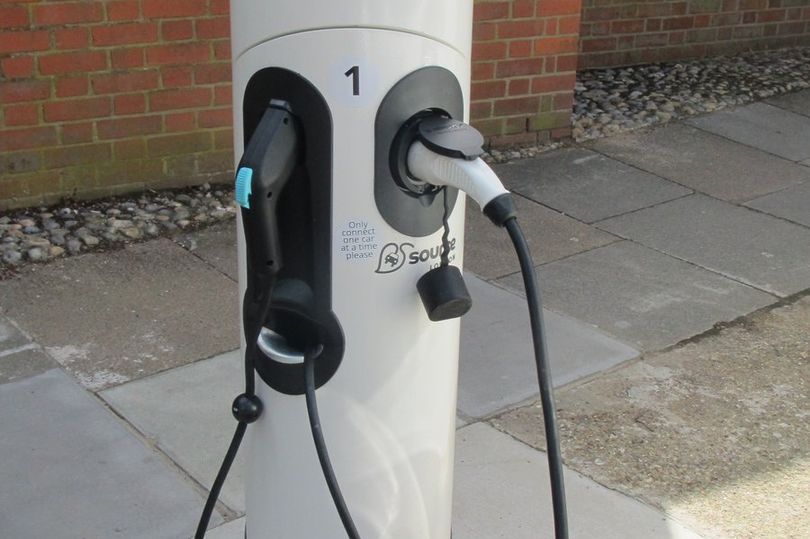
Charge Port Door (Image: T. Heale)

UK Drive: Hyundai’s Ioniq 6 arrives to turn heads in the EV market

The Ioniq 6 might look like nothing else on the road, but what else does it have to offer? Jack Evans finds out.

What is it?

Boy, that electric car segment doesn’t stop growing, does it? We’ve got new models cropping up from manufacturers across the board, while companies that have already established a solid foothold in the market are now taking things further and pushing the envelope wherever possible.

Take Hyundai, for example. It has already wowed the sector with its futuristic Ioniq 5, but is it stopping there? No way. We’re here with the new Ioniq 6, which is an EV that looks like nothing else on sale today. Is it all show and no go, though? We’ve been driving it in the UK to find out.

What’s new?

Dubbed a ‘streamliner’ by Hyundai, the Ioniq 6’s design has been shaped by its need to be bar-as-soap slippery through the air. Less drag means more range, after all, which is why the 6’s look is as smoothed-out as it is. It’s underpinned by Hyundai’s E-GMP modular platform which you’ll find tucked under a variety of the groups’ EVs, too, such as the Genesis GV60 and, of course, the Ioniq 5.
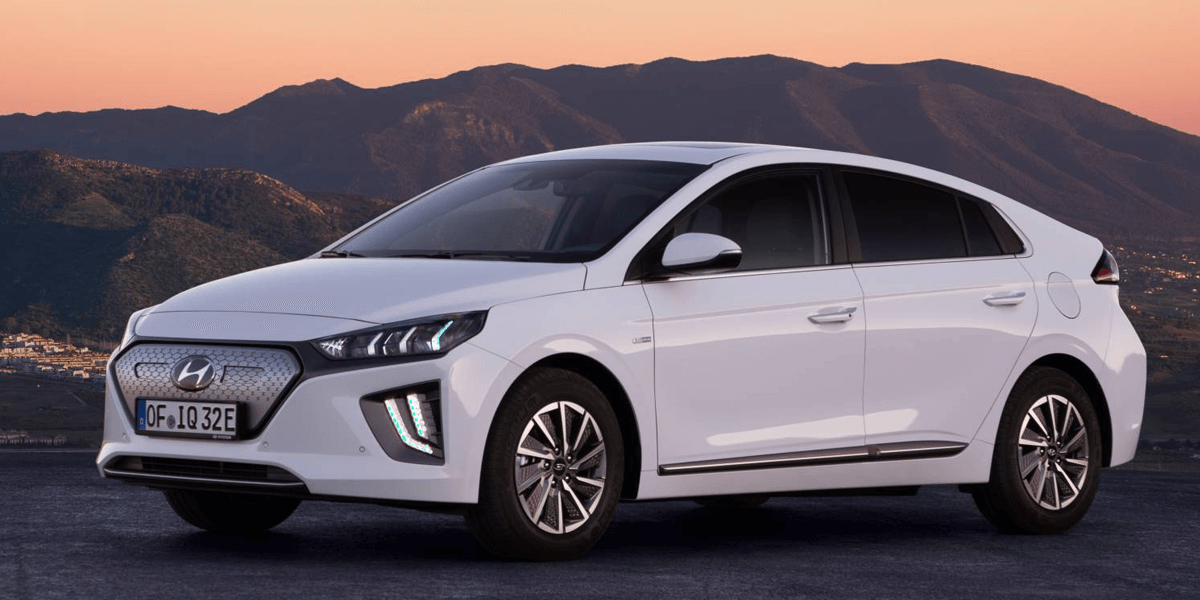
2020 Hyundai IONIQ (Image: Hyundai)

Inside, we’ve got some clever tech – including ‘digital’ wing mirrors which replace mirrors with screens – and super-speedy charging that means a ten to 80 per cent charge can be conducted in as little as 18 minutes.

Read more: Express&Star

It’s Time to Go Green!

If you would like to know more about Solar Panels and the PowerBanx range of home battery systems, and get a free instant quote, please complete our online form:

Do electric vehicles really cost less than ICE cars to maintain?

While many organisations are electrifying their fleets with the main aim of reducing carbon emissions, cost still matters.

Traditionally, the typically higher purchase or lease rates of a battery electric vehicle (BEV) compared with an internal combustion engine (ICE) model have been mitigated by factors such as lower fuel and/or charging costs.

However, this advantage has been eroded significantly through the soaring cost of electricity.


Another traditional benefit for BEVs has been lower service, maintenance and repair (SMR) outlay.

It has been widely supposed they will deliver uniform SMR benefits over petrol and diesel vehicles because they have fewer mechanical parts, minimising the likelihood of breakdown and requiring less routine maintenance.

But with growing numbers of BEVs on the road giving more data in this area, does this expectation still hold true?

Yes, says Vincent St Claire, managing director of Fleet Assist, which has a network of 5,200 franchised and independent garages, but with a caveat.

“All the indicators are strong that SMR for BEVs will continue to be less than that for ICE vehicles,” he adds.

“However, while we are now in a period after the pandemic where BEVs are in proper real world use and we are seeing vehicles doing higher mileage than they’ve ever done, it is still a small sample and until we get a bigger data set in terms of numbers of BEVs, we can’t say with a high degree of conviction the issue is settled.”

Read more: FleetNews

It’s Time to Go Green!

If you would like to know more about Solar Panels and the PowerBanx range of home battery systems, and get a free instant quote, please complete our online form:
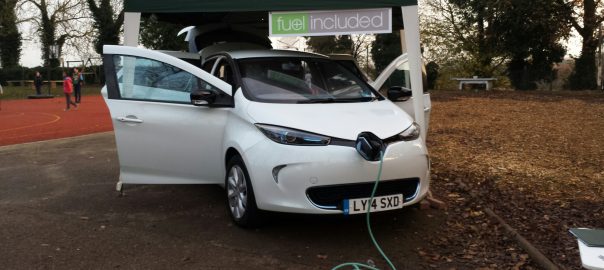
Renault ZOE in contactless car vending machine (Image: Taylor Herring)

10 Advantages Of Electric Cars

As EV technology continues to improve, electric cars are become more and more viable, and here are some advantages to owning one.

Fiat 500 Electric (image: fiat.co.uk)

Electric vehicles have been around for many years, but they have only recently started to gain more traction in the market. They offer a lot of advantages compared to conventional gas-powered cars. They are known for their low operating costs compared to gas-powered cars. In addition to them being cheaper to maintain and more efficient, they also provide an environmentally responsible mode of transportation. And, you can’t deny they look fascinating too with a wide variety of stylish designs, proving that eco-friendliness doesn’t have to come at the cost of great and futuristic design. They help in saving money on fuel costs, reducing carbon emissions (which is particularly important because climate change is rapidly becoming a global concern), and more. The advantages of driving an electric car are hard to ignore. They provide better performances and are more reliable than ever before. As EV technology continues to improve, the benefits of driving an electric car are becoming more and more clear. With a large variety of available technology features, improved charging infrastructure, and more options to choose from, the shift toward electric vehicles is inevitable, and there are many excellent reasons to make the switch.

Read more: TopSpeed

It’s Time to Go Green!

If you would like to know more about Solar Panels and the PowerBanx range of home battery systems, and get a free instant quote, please complete our online form:

‘We tried out driving from Yorkshire to Dordogne in an electric car’

Journalist Nick Jenkins reports on how charging stops worked out travelling to his second home in France

The screen told us we had 0% left in our battery as our electric car crawled up to the charger. We had been holding our breath but could finally let out a sigh of relief. We plugged the car in – and disaster… the charger was out of order.

Only kidding.

Nothing at all like that happened on our recent drive to Dordogne, though it might surprise those who believe everything they read on some Brits-in-France Facebook pages.

Electric cars are no longer a novelty, of course.

The Renault Zoe has been around since 2012. All the major manufacturers are now producing electric vehicles (EVs) and plug-in cars accounted for a quarter of new sales in France last December – and a third in the UK.


PARIS (Nov. 30, 2015) Ð As the official passenger-car provider for the United NationÕs COP21 climate conference in Paris, the Alliance will provide 200 pure electric vehicles to the annual summit which runs from Nov. 30 to Dec. 11. A network of 90 charge spots has been set up to charge the vehicles using low-carbon electricity provided by French energy supplier EDF.

No doubt many readers already drive one. They are clearly the future, but there is still resistance.

Some people are so attached to the quaint mid-Victorian technology of the internal combustion engine that they cannot accept change is coming.

“I’m not buying a Noddy car that only goes 50 miles,” one Luddite told me.

Read more: TheConnexion

It’s Time to Go Green!

If you would like to know more about Solar Panels and the PowerBanx range of home battery systems, and get a free instant quote, please complete our online form:

Watford Council secures substantial grant for EV charging points

Watford Council is pleased to announce that a grant of £592,500 has been successfully secured through the On-Street Residential Charge Point Scheme (ORCS).

The funding will enable the installation of 79 new electric vehicle (EV) charging points across the town, bringing the total number of locations to 112.

The 29 new charging columns will be installed on-street in a mix of 2/3/4 charge points per location, providing residents and visitors with more convenient access to EV charging facilities. This will significantly contribute to our efforts to become a net zero carbon town and promote sustainable transport in the borough.


Elected Mayor of Watford, Peter Taylor, said: “I’m thrilled that we have secured this funding. It will help us expand our EV charging infrastructure, making it easier for people to use of electric vehicles. The council is committed reducing carbon emissions in the borough through a range of initiatives.

Thousands of people already drive electric vehicles in Watford and we know that these reduce pollution and improve air quality locally. It’s important that we have the charging infrastructure needed to support this, so I want to thank the team that worked so hard to secure this grant funding. It will make a real difference.”

Read more: WatfordBoroughCouncil

It’s Time to Go Green!

If you would like to know more about Solar Panels and the PowerBanx range of home battery systems, and get a free instant quote, please complete our online form:

Electric dream? What it’s really like to drive 285 miles to The Lakes in a leccy car

With its rugged landscape, winding country lanes and laidback lifestyle, you wouldn’t necessarily put The Lake District down as being an electrifying hotspot.

However, the folks at BMW have teamed up with 15 UK National Parks  – including The Lakes – as part of a three-year initiative called Recharge in Nature, which aims to install electric vehicle (EV) charging points at some of our best-loved beauty spots.

It’s a wise move. With sustainable tourism and off-grid adventures being big business these days, eco-friendly destinations are becoming a must-have on our in our holiday tick list. (Not to mention the boom in staycations due to the pandemic and cost of living crisis.)

Being England’s largest and most visited National Park, The Lakes are the first to be kitted out with charging points in three locations, Windermere and Ambleside, Hawkshead and Coniston.

But just how well will this eco-conscious initiative work in reality?

To find out I was loaned the newly launched fully-electric BMW iX1 and told to head to the Langdale Hotel just outside Ambleside – a mere 285 miles away from my Essex home.

Advised that the car had a range of between 259 and 270 miles on a single charge, and able to recharge up to 80% of the range in less than half an hour, it looked like we’d need just one pit stop along the way, so we were more than excited to jump in our fancy new wheels and head towards the M6.

Read more: Metro

It’s Time to Go Green!

If you would like to know more about Solar Panels and the PowerBanx range of home battery systems, and get a free instant quote, please complete our online form:
Electric vehicle sales leapt 55% in 2022 – here’s where that growth was strongest

  • Global sales of electric vehicles (EVs) increased by 55% in 2022 from the year before, according to data from the EV Volumes sales database.
  • China remains the world’s largest EV market, with 59% of global sales.
  • World Economic Forum estimates annual EV sales need to increase 18-fold by 2030 to meet global emissions targets.

Many people around the world will have noticed an increasing number of electric vehicles (EVs) on the roads in the towns and cities where they live. The latest data on global sales of EVs confirms a growing appetite for green motoring.

Reanault Kangoo ZE

EV sales rose by 55% in 2022, reaching a total of 10.5 million, according to the EV Volumes sales database. These figures include both battery electric vehicles (BEVs) and plug-in hybrids (PHEVs).

Where were EV sales strongest?

Sales of new EVs in China increased by 82% in 2022 compared to the year before. The country accounted for 59% of global EV sales last year, cementing its position as the world’s largest electric vehicles market. China is also the world’s biggest EV producer, with 64% of global volume.

Read more: WorldEconomicForum

It’s Time to Go Green!

If you would like to know more about Solar Panels and the PowerBanx range of home battery systems, and get a free instant quote, please complete our online form:

38% of UK drivers rate their understanding of Electric Vehicles as ‘poor’ or ‘very poor’

New research conducted by Peugeot UK has revealed that less than a quarter of UK drivers say they have a good understanding of electric vehicles.

The survey of 2,000 UK motorists found that only 23% thought their understanding of electric vehicles was ‘good’ or ‘excellent’, while 38% described their knowledge as ‘poor’ or ‘very poor’.

Peugeot e-2008 electric SUV (Image: Peugeot)

Amazingly, less than half of those spoken to were aware that battery electric vehicles emit zero emissions while 12% also thought that plug-in hybrid cars and electric cars are exactly the same type of vehicle.

Perhaps less surprisingly, when asked about the EV charging network, 70% of respondents said they found the way different providers operate to be confusing.

The same percentage also said they found the language surrounding electric vehicle power, battery capacity and efficiency difficult to understand, with only 31% aware that Kilowatt Hours (kWh) is the unit used to measure battery capacity in EVs.

A generation gap comes into play here as 46% of 18-24-year-olds correctly selected ‘Miles per kWh’ as the unit commonly used to measure efficiency in electric vehicles, compared to just 20% of the over 65s.

Of the former group, 58%  rated their knowledge as ‘good’ or ‘excellent’ while, half of those over 65 admitted that their knowledge was ‘poor’ or ‘very poor’.

Read more: AirQualityNews

It’s Time to Go Green!

If you would like to know more about Solar Panels and the PowerBanx range of home battery systems, and get a free instant quote, please complete our online form:

Best value small electric cars 2023: Volkswagen e-up! vs Renault Zoe

Finding a cheap electric car isn’t very easy, so we’ve done the hard work for you

Finding a cheap electric car is still very difficult, but look in the right places and there are bargains to be had. Nowhere is that more clear than with our first contender, the Volkswagen e-up!. At the time of writing, we found an offer for the VW Group’s smallest EV for just £167.99 per month on a two-year deal.

Renault Zoe Volkswagen e-up!
Contract type: Personal Contract Hire (PCH) Personal Contract Hire (PCH)
Monthly cost: £206 £168
Length of contract: 36 months 24 months
Initial payment: £1,853 £1,513
Mileage allowance: 5,000/year 5,000/year

The dinky e-up! punches well above its weight when it comes to interior design. The finish is superb for such a small car, and the overall layout is well thought-out, right down to the neat smartphone cradle on top of the dash which, once an app has been installed, lets your own device act as the car’s infotainment system. A USB port hidden around the back of the mount keeps your phone charged on the move.

Volkswagen e-Up charging outside the Experience Centre (Image: T. Larkum)

The fully-electric model first joined the up! range in 2013, but an update four years ago increased the battery capacity to 36.8kWh, which allows for a 159-mile range. The 80bhp output doesn’t sound like much, but at 1,235kg, the e-up! is much lighter than most EVs. As a result, accelerating to 30mph feels livelier than you might expect.

Read more: AutoExpress

It’s Time to Go Green!

If you would like to know more about Solar Panels and the PowerBanx range of home battery systems, and get a free instant quote, please complete our online form:
Drivers can save £25,000 on new electric vehicle as Plug-in Grant scheme extended

Motorists and businesses around the UK will be able to save money on electric vans and HGVs this year after the grant scheme was extended again.

The Office for Zero Emissions (OZEV) has confirmed an  to the Plug-in Van Grant, which allows motorists to save money on a . It is understood that OZEV upgraded the limit of Plug-in Van Grant orders per user from 1,000 units to 1,500 units per financial year.

The limit was originally introduced in December 2021 to “ensure best value for money for the taxpayer” and make sure budgets were distributed as fairly as possible.


Dennis Eagle eConnect electric refuse vehicle (Image: Dennis/Twitter)

OZEV is believed to be keeping the Plug-in Van Grant under continual review and could eventually pull the grant once it is satisfied with uptake.

Some vans can be sold at a 35 percent discount, with small vans attracting a maximum discount of £2,500, with drivers able to use this on popular brands including Vauxhall, Nissan and Toyota.

Motorists can get a maximum discount of £5,000 when purchasing a new large van, which must be between 2,500kg and 4,250kg in weight, have CO2 emissions of less than 50g/km and be able to travel at least 96km (60 miles) without any emissions.

Commenting on the announcement, Gerry Keaney, chief executive of the British Vehicle Rental and Licensing Association (BVRLA), praised the move but warned of the challenges faced by van drivers.

Read more: Express

It’s Time to Go Green!

If you would like to know more about Solar Panels and the PowerBanx range of home battery systems, and get a free instant quote, please complete our online form: