All posts by Jo

Red Tesla Model S (Image: T. Larkum)

All New Vehicles Sold In Europe Will Be Electric From 2035

By 2035 all vehicles sold in Europe will be electric, at least that’s the prediction made by the major Dutch bank ING.

Red Tesla Model S (Image: T. Larkum)

The report predicts a huge increase in the adoption of electric vehicles, potentially overtaking many country’s own regulations which promise to cut out the sale of petrol and diesel cars.

While this is fantastic news for the environment, ING’s report points out that it could potentially have a major impact on the European car industry.

According to ING, America and Japan are well ahead of Europe when it comes to electric car technologies including the development of batteries.

With companies like Tesla already leading the way, the Dutch bank warns that unless European manufacturers pick up the pace of their R&D into the technology they could be left behind.

It goes on to warn about the potential effects on manufacturing as well. Electric cars require a lot of advanced materials, but constructing an electric motor is actually far less complicated than building a conventional combustion engine.

The main catalyst for the rise in popularity though will be a huge reduction in price.

Read more: Huffington Post


Driving the Future of Blockchains Part One: From Car to Super Computer

It is becoming clear that the fundamental concepts of car ownership, ridership and even the physical asset of the automobile itself are about to transform, particularly with the horizon of fully-autonomous vehicles now estimated to become a market reality in 2020.  

This new universe will not only be one of more instrumented vehicles, but one that is a critical part of the distributed and data-driven ecosystem. Getting there will require what Chris Ballinger, director of mobility services and chief financial officer at the Toyota Research Institute (TRI), termed “minimum viable partnerships.”

Future Roadmap

In this four-part series, “Driving The Future of Blockchains,” we will explore the automobile ecosystem at large and the role that these “minimum viable partnerships” might play in shaking up an industry that sees the future automobile as not just as another physical asset, but a machine driven by software, with intelligent sensors bringing data from physical endpoints to actionable and monetizable insights, turning a depreciating asset whose value plummets as soon as it’s driven off the dealership lot into a data-fueled profit center.

The future model of traditional cars, electric and autonomous, will be embedded with more sensors than ever before and able to capture data that make them more aware of external environmental factors and allow them to become “super-connected” intelligent devices.

These sensors will not only integrate with a driver’s other intelligent devices, but they will collect data about the car, navigation and external elements like weather and road conditions. This will make our cars their own computing machines, profound and far-reaching, as the data collected by them are exposed to analytics software to extract actionable insights.

This vision is precisely in line with blockchain technology, which truly lays the foundation for this future avalanche of data. It is precisely this data which is valuable for a broad ecosystem of stakeholders which begins with the driver and moves to the manufacturer and the insurer, interested not only in the state of the vehicle for safety, maintenance and insurance premium pricing, but for accident reporting and registration.

Read more: Distributed

AA Trust launches Drive Electric

Free electric car driving course, launched at Electric Vehicle Experience Centre

One third of drivers (32%) say they want to start learning to drive again – but drive in an electric car, according at an AA-Populus survey of 16,239 drivers.

The AA Trust has launched the first ever Drive Electric course, free of charge and specifically geared to those who want to get the best out of driving electric vehicles (EVs).

The announcement was made by Edmund King OBE, Chairman of the AA Trust at the launch of the Electric Vehicle Experience Centre (EVEC) in Milton Keynes on 20 July 2017.

Drivers were asked: To what extent would you be interested in a free one-hour electric vehicle driving lesson – aimed to show you how to get the best out if an EV – in your local area?

  • Overall 32% were interested (16% extremely interested)
  • 35% of younger drivers (18-24, 25-34) were interested compared with 31% of older drivers (65+)
  • Drivers in London were the most interested (35%)
  • Drivers in the North East were the least interested (26%)

AA Driving School and Drive Tech trainers have developed the Drive Electric experience in conjunction with Chargemaster, the UK’s leading provider of electric vehicle charging infrastructure.

It will be piloted in the Milton Keynes area with a view to be rolled out nationally.

Edmund King, AA Trust Chairman, said:

“We are approaching a tipping point as more and better electric cars come on stream.

“We want to help drivers understand this exciting new technology at the EV Experience Centre but we also want to help them get the most out of their electric cars.

Drive Electric sessions, conducted by AA instructors, can either be carried out in the driver’s own electric car, or in one of the EV Experience Centre’s test drive fleet. The EV Experience and Drive Electric experiences will really put Milton Keynes on the map as the most go-to EV City in the World.”

Read more: AA

f

BMW Plug-In Sales In June At Nearly 9,500. MINI Joins The Party

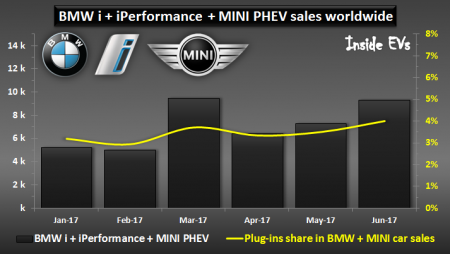
BMW scored one of its best ever results for plug-in electric car sales in June, delivering around 9,350 units (up 79.8% year-over-year) and a record 42,573 in the first half of the year.

BMW i + iPerformance + MINI PHEV sales worldwide – June 2017

In June, plug-ins accounted for 4% of total BMW & MINI sales, while for the first six months that market share number stood at 3.5% – although we have to stress that the full year number is not quite representational now, as it includes MINI, which just started sales of the new plug-in Countryman on June 24th.

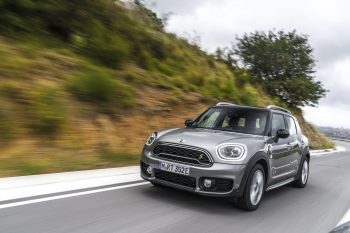
MINI Cooper S E Countryman ALL4

Production of BMW Group plug-ins this year was 51,725, and company says is on track for 100,000 sales in entire 2017. With 43k sales already bagged, and the 2nd half of the year always showing far greater plug-in sales across all regions and brands, the goal seems easily attainable at this point.

Because BMW’s cumulative plug-in sales topped 100,000 in late 2016, by the end of this year BMW will also reach 200,000.

Dr Ian Robertson, Member of the BMW AG Board of Management with responsibility for Sales and Brand BMW commented:

“June rounds off our best ever first half-year and the BMW Group remains the world’s leading premium car company. We’ve already sold more than a million BMW vehicles this year, which is a new first-half-year record. June also saw our successful electrification strategy expand still further to include the MINI brand, meaning customers can now choose from nine electrified BMW Group vehicles. With sales of these models up by eighty per cent compared with the first half of last year, we’re looking forward to celebrating delivery of the 200,000th electrified BMW Group vehicle later this year,”

Source: Inside EVs

More than two thirds of UK interested in EVs

New research shows 69% of people in the UK would consider switching to an electric vehicle (EV).

Charge point provider NewMotion surveyed more than 3,000 consumers to gain insight into their understanding of EVs and the issues surrounding them.

When asked why they would buy an EV, 59% of respondents said they wanted to reduce pollution.

Around 57% of people also suggested they wanted to reduce the money they’re spending – existing owners claim they are saving 15% of the cost associated with fuelling a traditional car.

However, the survey also illustrated a lack of understanding from the general public.

More than three quarters of respondents did not know what ‘EV’ stood for and roughly a quarter didn’t know how an electric car would be charged.

They were also unclear on how far an EV can travel, with the majority of people guessing an average of 63 miles range on a fully charged battery, far less than a car such as the Nissan Leaf, which can travel 107 miles on a full battery.

Sander van der Veen, UK Country Manager of NewMotion, said:

“There’s definitely an appetite from consumers to move away from the traditional petrol/diesel model of transport.

“Not only are costs increasingly prohibitive, consumers are concerned about the environmental impact of driving with petrol and diesel.”

This opposes suggestions higher insurance premiums are putting drivers off from switching to hybrids and EVs.

Source: Energy Live News

New Report Says Electric Cars Will Dominate European Markets by 2035

The Dutch bank ING recently released a report that essentially predicts the doom of conventional petrol and diesel vehicles. According to ING’s forecast, electric vehicles will dominate European roads by 2035.

A new report, released by Dutch bank ING, predicts that electric vehicles (EVs) will become the new normal in Europe within just two decades. While that seems like slow progress, it’s actually relatively progressive when compared to other reports. The ING forecast pins the rise of EVs to the increasingly low prices of electric batteries, government support, and the ability to scale.

Between 2017 and 2024, completely electric cars are expected to “become the rational choice for motorists in Europe,” the report said, as EV showroom prices fall due to cheaper batteries and EV ranges increasing. Charging infrastructure is also expected to become more widespread, in part due to government support.

The shift from fossil fuel to electric-powered cars would create a disruption in the European automotive industry. In fact, this has already begun, with Swedish manufacturer Volvo pledging to focus on hybrids and plug-ins by 2019. The ING report said that the cost of owning EVs in Germany in 2024 would be similar to owning fossil fuel-powered cars. Last week, France joined this movement, implementing a ban on new petrol and diesel cars by 2040.

Stanford University economist Tony Seba, who published a separate report on EVs, made a similar forecast for worldwide adoption. “Our findings clearly indicate that essentially all vehicle miles travelled will be electric by 2040 [worldwide],” he told The Guardian. “The car industry faces an imminent technology disruption by AEVs [autonomous electric vehicles] in the early 2020s. Even without autonomous technology, the internal combustion engine car industry will have been long decimated by 2040.”

Source: Futurism

Koch-funded Group, Fueling US Forward, Echoes America Rising Squared in Misleading Attack on Electric Cars

Fueling U.S. Forward, the Koch-funded campaign to “rebrand” fossil fuels as “positive” and “sustainable,” has released a new video attacking the “Dirty Secrets of Electric Cars,” signaling a possible strategic pivot from straightforward fossil fuel cheerleading to electric vehicle (EV) and clean energy bashing.

The video and accompanying Dirty Secrets of Electric Cars web page feature blatant factual errors, misleading statements, and glaring omissions (all of which will be debunked thoroughly below), while essentially attacking electric cars for using the same materials needed to manufacture cell phones, laptops, defense equipment, and gas-powered cars, and which are even a critical component of the very oil refining processes that form the foundation of the Koch fortunes.

When Fueling U.S. Forward launched last August, the organization’s president Charles Drevna described the campaign as an effort to rebrand fossil fuels by focusing on the “positive” aspects of coal, oil, and gas. This newly released video seems to further confirm investigative journalist Peter Stone’s reporting from last spring that the Kochs were

“plotting a multimillion dollar assault on electric vehicles.”

How do we know that Fueling U.S. Forward is this Koch-funded campaign? First, Charles Drevna, who is leading the effort, developed the concept while serving as a Distinguished Senior Fellow at the Institute for Energy Research, a pro-fossil fuel think tank that was partially founded by Charles Koch and that is run by a longtime lobbyist for Koch Industries. Second, and more concretely, Drevna told DeSmog’s Sharon Kelly that he was working with Koch Industries’ board member (and longtime Koch brothers’ confidant) James Mahoney on the campaign and that it was funded by “one of the brothers.”

Echoes of America Rising Squared

Fueling U.S. Forward and America Rising Squared (or AR2) have no public affiliation. Yet within a few weeks in June, both groups launched attacks on electric vehicles using the same misleading arguments and nearly identical language. While the former group is a known Koch-funded campaign to promote fossil fuels, the latter has close ties to the GOP establishment, and has invested heavily in promoting alleged hypocrisy among climate action advocates, even paying “trackers” to follow around the likes of Tom Steyer and Bill McKibben.

In June, as DeSmog reported, AR2 published a white paper that purports to reveal the

“human and environmental costs of ‘clean energy,’”

taking electric vehicles and solar panels to task for their reliance on rare earth metals. As we wrote at the time:

Here’s what the white paper doesn’t mention: many of the very same rare earth minerals that the AR2 report bashes are critical components of cell phones, computers, cameras, military and defense equipment, and even traditional gas-powered vehicles. What’s more, the petroleum refining process is critically dependent on some of the same rare earths that AR2 lambasts in this white paper.

Read more: DESMOG

Our electric car is driving on sunshine

Our solar panels occupy only a third of our roof area. Even so, on a summer day they produce about the same power our Volkswagen electric car draws as it charges from a plug in the garage.

Electric car on the road. ‘We are literally driving on sunshine,’ write James and Lesley Willis. Photograph: EPA

So, to the extent that we top up during the day, we are literally driving on sunshine: nil use of resources, nil pollution, and, in the context of your article (Battery cars may eat up more than Hinkley Point’s capacity by 2030, 13 July), nil load on national power generation infrastructure. Going for a drive in serene, effortless near-silence, knowing that it hasn’t cost anybody anything, is quite simply wonderful.

The rapid increase in the number of distributed solar power installations is producing an unmanageable peak on sunny days. But our experience illustrates that there is an excellent match between renewable energy and electric vehicles. Electric cars are big batteries on wheels, storing far more power than they need for journeys. They could be made to play a dynamic part in balancing the uneven generation inherent in many forms of renewable energy.
James and Lesley Willis
Alton, Hampshire

Zoe Williams suggests (Is a car maker about to save the planet? 10 July) that “the goal has to be an electric car powered by renewable energy”. A seemingly admirable aim but one that implies that the only problem is atmospheric pollution. Unfortunately, the motor car also encourages sprawl, making our cities less compact and sustainable and resulting in healthy travel alternatives (walking, cycling, public transport) becoming more difficult. It divides communities, both by splitting them with transport corridors and by isolating users in their car bubbles. It maims and kills, which may become more of an issue, as electric cars are quieter. It requires road space that is increasingly not available, causing issues from congestion and excessive travel time to access and pavement parking. And, given that a high percentage of pollution in the life-cycle of a car is in its production, how much is actually avoided?

Source: The Guardian

Electric cars are the key to ending our addiction to oil

A shift of emphasis to electric cars will raise supply challenges for both components suppliers and talent managers.

Last orders’ has been called for the internal combustion engine.

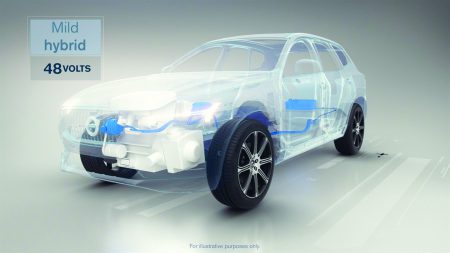
Volvo hybrid car concept

Just a day after Volvo announced plans to include an electric motor element in all its cars, the new French government said it will legislate to phase out non-electric vehicles.

This will not be an overnight transformation. Volvo has said that all new cars from 2019 will be either fully electric, hybrid or what it calls “mild hybrid”.

The French government’s 2040 deadline is sensibly long-term, given that in France only 1.1% of new car registrations last year were for fully electric vehicles and in the whole of the EU the number was just 0.6%.

But make no mistake – this is a big shift. Other countries will follow France’s lead; other car makers will follow Volvo in the footsteps of Toyota, Tesla and others.

Manufacturers of electric cars seek talent

For the electronics sector, it’s a big deal too. The automotive industry is already a major employer for electronics engineers as in-car electronics become increasingly sophisticated.

Jaguar Land Rover’s recent campaign to recruit 1,000 engineers is testament to how hard they have to work to recruit already, but as the market shifts more to electric vehicles it will surely soak up even more of the talent pool.

Growing demand for components from tier one automotive firms has been mooted as one cause of strong sales and extending lead times in the market. This is before the shift to electric really takes hold, so expect massive changes as the market adapts.

How stakeholders in the electronics supply chain adapt to the challenge will be a defining factor in our attempts to break our addiction to oil.

Source: Electronics Weekly

Electric Vehicles Are On the Rise

It seems like most major car retailers are jumping into the electric vehicle game.

Let’s talk about one of our favourite things: cars. And more specifically, how the internal combustion engine is on the verge of extinction.

Not only that, but we’re also being told that in five years we’re going to be driving self-driving cars. OK, that’s not accurate. They will be driving us — or at least a lot of us.

Unless you were at the beach and had your head buried in the sand because of worries about Russia’s determination to wipe out democracy on the planet, you undoubtedly heard that Volvo will stop making cars that run solely on gasoline.

Volvo announced that starting in 2019 all new models it introduces will be either hybrids or vehicles powered solely by batteries. While the new electric cars will initially be made in China, where air pollution is critically dangerous, a new plant is being built near Charleston, S.C., and some will be built in Europe.

Tesla, the posh electric car maker, plans to sell hundreds of thousands of new electric models priced at “only” $35,000, which is substantially less expensive than most of the flashy vehicles it currently sells. The new cars will be serviced at 250 centers that don’t charge service fees! If you live too far from a service center, Tesla will send one of its 350 special vans to your home or office to repair your vehicle on site! The vans will have toys for children, espresso machines and, you won’t believe this, replacement parts. I know. I know. Except for the sticker shock, it seems like heaven.

Tesla, which makes nowhere near the number of cars that Ford and General Motors produce, earlier this year beat the two auto behemoths in stock market value because investors think the future is in electric vehicles. Part of this is urban congestion and part of it is climate change — carbon dioxide from burning gasoline depletes the ozone layer, playing havoc with climate patterns around the globe.

Read more: GOVTECH