Monthly Archives: August 2023

Zapmap statistics show EV charge point installation up more than 80%

Electric Vehicle (EV) chargepoint mapping service Zapmap has published mid-year statistics showing that the rate of chargepoint installations has increased 82% since the first half of 2022.

Cornwall Insight recently published a report suggesting that the rate of increase in chargepoints had reached 70% over the past year, but now Zapmap says deployment of chargers is taking place even faster.

In the first half of 2022, an average of 891 charge points were installed each month, a figure which has increased to 1,622 in the first half of 2023, an increase of 82%.

Zapmap calculates that there will be more than 50,000 chargepoints across the UK by the end of 2023. At the moment there are around 44,000 public charging devices across the UK, an overall growth of 36% year on year.

Almost 20% of chargepoints are rapid or ultra rapid chargers, with 8,680 of these at the end of June. Ultra rapid chargers showed the biggest year on year growth. There were 1,803 ultra rapid chargers across the UK at the end of June 2022, which has grown to 3,493 at the end of June 2023, a 94% increase.

The statistics show that charging hubs, with six or more rapid/ultra rapid chargers in one location, are also opening at a significant rate. There were 79 hubs in June 2022, which has increased to 170, with another 77 Tesla Supercharger hubs.

Ultra rapid chargers are also well distributed across the UK, with 9/12 geographical regions in the UK seeing more than 100 new ultra rapid chargers installed, with the most in the South East with 269.

Read more: Current+

It’s Time to Go Green!

If you would like to know more about Solar Panels and the PowerBanx range of home battery systems, and get a free instant quote, please complete our online form:

New rules to make it easier to use public electric car chargers

Motorists are currently forced to use multiple smartphone apps or membership cards to access different charging networks.

Electric car drivers will only need one app to pay for public chargepoints operated by different companies, under legislation laid in Parliament.

Motorists are currently forced to use multiple smartphone apps or membership cards to access different charging networks.

BP Chargemaster Rapid Charger at Milton Keynes Charging Hub (Image: T. Larkum)

Mandating so-called payment roaming is among new Department for Transport (DfT) regulations aimed at encouraging the uptake of electric vehicles by making it easier, cheaper and more convenient to charge them across the UK.

Operators will be required to accept contactless payments at newly installed chargepoints at eight kilowatts and above, and at existing rapid chargepoints.

A standardised pence per kilowatt hour price will be mandated to enable drivers to compare the cost of using different networks.

Rapid chargepoint networks will be required to function for 99% of the time during a calendar year, and a new helpline will be launched to support motorists when something goes wrong with electric vehicle charging.

Chargepoint data will also be opened up to make it easier for drivers to check their availability.

Transport minister Jesse Norman said: “As demand for electric vehicles continues to grow, the Government wants to make sure that drivers continue to have confidence in the UK’s charging network.

Read more: Independent

It’s Time to Go Green!

If you would like to know more about Solar Panels and the PowerBanx range of home battery systems, and get a free instant quote, please complete our online form:

Matt Prior: Should electric sports cars have engine notes?

Hyundai Ioniq 5 N simulates engine revs and gearchanges in ‘Ignition’ mode

How involved would you like to be? You might remember that last year Toyota filed a patent for a battery-electric vehicle with an H-pattern gearshift, so that an electric powertrain would respond like a manual internally combusting car, complete with a clutch pedal that felt like the real thing, even though, like the gearlever, it would be false.

As yet, no Toyota has arrived with this hardware, but Hyundai’s N performance division has taken a similar concept.

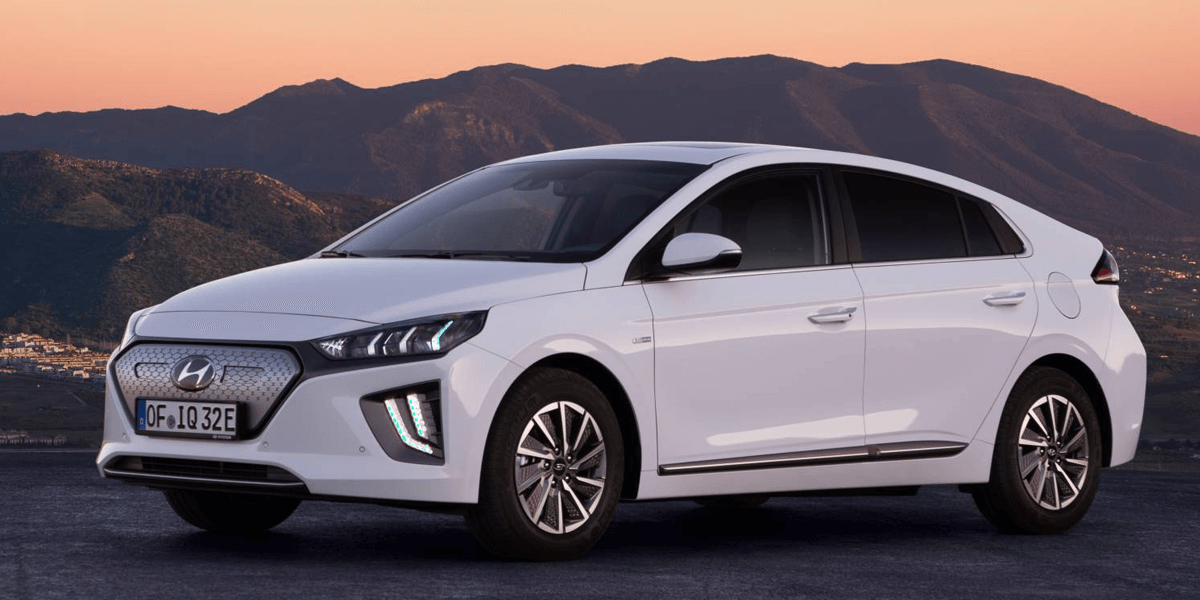
2020 Hyundai IONIQ (Image: Hyundai)

The Hyundai Ioniq 5 N is the first electric product of Hyundai’s N fun division. “For N, fun to drive is the highest priority. Electrification has transformed our lives but [so far] not our hearts,” Till Wartenberg, N’s vice-president, told me before we drove a prototype. “Car enthusiasts are the last group who can be electrified,” he said. I have a feeling he’s right. I like electric power, but it’s quite telling that when I recount the most fun I’ve had in EVs, an original Tesla Roadster, a Renault Twizy and a Nissan Leaf with plastic ‘drift tyres’ at the back all still feature heavily.

Finally, the Ioniq 5 N on a circuit eclipses all of those. It’s meant to be the car that finally sucks enthusiasts in, and part of the way it does so is by giving us the chance to pull on our muscle memory and aural sensibilities.

Read more: Autocar

It’s Time to Go Green!

If you would like to know more about Solar Panels and the PowerBanx range of home battery systems, and get a free instant quote, please complete our online form: