Monthly Archives: December 2019

Red Tesla Model S (Image: T. Larkum)

3 Reasons Why Even Skeptics are Turning Bullish on Tesla (TSLA)

  • Skeptics of Tesla have turned bullish on the electric car manufacturer.
  • Tesla has matured in 2019, operating more like a traditional automotive company.
  • It’s already too far ahead of the pack in the electric car market, no other company comes close.

The market cap of Tesla (NASDAQ:TSLA) has surpassed the $60 billion mark, supported by the rising popularity of the newly released Cybertruck. The firm’s turnaround has even led skeptics to turn bullish.

Red Tesla Model S (Image: T. Larkum)

Up until October, Tesla was criticized for being a little bit too different from traditional automakers in the way the company handles conferences, earnings and other crucial aspects of the business.

As the company evolved, and so did its market cap, high profile investors like Jim Cramer and Pierre Feragu started to believe that Tesla is now far ahead of the automotive industry. Three reasons support that claim.

1. Highly innovative

Tesla has stood out from its competitors since its inception. The public’s reception of its newest products like the Cybertruck have changed the mind of investors who previously thought such products would only appeal to a niche market.

Jim Cramer, host of CNBC’s Mad Money, said that he was blown away by the demand for the Cybertruck. With an improving balance sheet, beloved CEO in Elon Musk, and an active following, Cramer said that Tesla has all signs of a great company:

Even better, on that last conference call, he revealed his true rigor without the sardonic quips. Musk, it turns out, is a great CEO when he can get out of his own way, and that seems to be what he’s doing. Cult product? Check. Sound balance sheet? Check. Charismatic Leader? Check. If you’re going to invest in a battleground stock, Tesla’s got all the ingredients of a winner.

So far, 250,000 orders for the Cybertruck have been made. That’s equivalent to $25 million in revenue once the cars ship.

Read more: CCN

It’s Time to Go Green!

If you would like to know more about Solar Panels and the PowerBanx range of home battery systems, and get a free instant quote, please complete our online form:

Are Electric Vehicles Actually Worse for the Environment than Combustion Engines?

With so many people claiming that electric vehicles are in fact bad for the environment, we take a look at the data.

We’ve all seen it in the comments sections of social media posts. There are always a few people adamant that electric vehicles pollute more than internal combustion engine vehicles.

At best, they claim the electric vehicle (EV) industry is scoring an own goal by creating a technology that, throughout a vehicle’s lifetime, pollutes more than internal combustion engine (ICE) vehicles. At worst, they say it’s all part of a conspiracy aimed at filling the pockets of clean energy providers.

So, are electric vehicles really worse for the environment than internal combustion engine vehicles? The short answer is no. Here’s why.

The battery production conundrum

Whether you are a proponent of electric vehicles or not, one issue is widely accepted: EVs release a lot of CO2 during the manufacturing process. This is due largely to the production of lithium-ion batteries.

A new IVL report, released this month, says, “according to new calculations, the production of lithium-ion batteries on average emits somewhere between 61-106 kilos of carbon dioxide equivalents per kilowatt-hour battery capacity produced.”

However, this figure keeps improving. The figure above, for example, is an improvement on the same organization’s study in 2017 that said, “an electric car with a 100kWh battery [emits] 15-20 tons of carbon dioxide even before the vehicle ignition is turned on,” with emissions of 150 to 200 kilograms of carbon dioxide for each kilowatt-hour storage capacity in a car battery.

Read more: Interesting Engineering

It’s Time to Go Green!

If you would like to know more about Solar Panels and the PowerBanx range of home battery systems, and get a free instant quote, please complete our online form:

2020 Renault Zoe (Image: Renault)

New Renault Zoe picks up double win at Driving Electric Awards

The new Renault Zoe has won Car of the Year and Best Small Electric Car at the annual Driving Electric Awards, with the judges citing its long range, improved quality and its performance.

Renault has completely restyled the Zoe’s exterior, featuring standard LED headlamps. Wireless smartphone charging is also available, and a free home wallbox charger allows owners to recharge their Zoe overnight with minimal effort. The vehicle is capable of running up to 245 miles (WLTP) on a single charge and features a new 52kWh battery. It is also available with optional 50kW DC fast charging, enabling 90 miles of range to be restored in just 30 minutes.

2020 Renault Zoe (Image: Renault)

There is a choice of R135 100 kW or R110 80 kW motors, which both feature a smooth, single-speed automatic transmission with new B-mode function that intensifies the regenerative braking effect to deliver true one pedal driving characteristics.

“The Zoe has always been affordable, but the real joy of the New Zoe is that it has all the comforts – particularly the range and equipment – of a big electric car, in an affordable and compact package. Even with the influx of new rivals, it deserves to remain one of the most popular electric cars in the UK” said Vicky Parrott, Associate Editor at Driving Electric.

Read more: Renewable Energy Magazine

It’s Time to Go Green!

If you would like to know more about Solar Panels and the PowerBanx range of home battery systems, and get a free instant quote, please complete our online form:

White Tesla Model S (Image: T. Larkum)

The best electric cars you can buy – and the one to avoid

Electric cars are growing in popularity, and no wonder: the best are quiet, cheap to run and smooth to drive. But which are the bright sparks to consider – and which are the loose connections?…..

Electric cars are now entering the mainstream, and their rise is only going to accelerate as rules are introduced to limit the kind of vehicles allowed into major cities.

White Tesla Model S (Image: T. Larkum)

The main thing that has traditionally held them back is range anxiety – the fear that you won’t have enough juice to get to where you’re going. However, with plenty of models now capable of covering more than 200 miles between charges, this is becoming less of an issue.

So, which electric cars should you consider? Here, we count down our favourites and tell you the one to avoid. And, remember, if any of them take your fancy, check out our What Car? New Car Buying to see how much we could save you.

Read more: What Car

It’s Time to Go Green!

If you would like to know more about Solar Panels and the PowerBanx range of home battery systems, and get a free instant quote, please complete our online form:

Nissan Leaf (Image: Qurren/Wikipedia)

Amsterdam stadium integrates bi-directional charging

As of today, visitors to the Johan Cruijff Arena (JCA) in Amsterdam can actively contribute to the power supply of the arena with their electric cars by integrating them into the stadium’s power grid.

The first of 15 bidirectional charging stations in the JCA is now officially in operation.

The project combines the 15 new charging stations with the existing 3 MW battery storage – consisting of 148 Nissan Leaf batteries – and the 1 MW photovoltaic system on the roof of the arena. An innovative charging and energy management system is working in the background.

Nissan Leaf (Image: Qurren/Wikipedia)

In the future, all of JCA’s nearly 2,000 parking spaces will be successively equipped with intelligent charging infrastructure. “Enabling visitors to give back clean energy to the stadium ensures they have a smart way of doing their bit towards the ecosystem,” Gers Baron, CTO for the Amsterdam City Council.

The intelligent software control was supplied by The Mobility House, based in Munich, Germany. It coordinates the energy supply in both directions – car-to-stadium and stadium-to-car. This enables electric cars to transfer energy from stadium visitors – with their consent – to boost the maximum current capacity of the stadium, “thus reducing the stadium’s electricity bill and contributing to a more stable national grid.” At the same time, the system ensures that the car battery is recharged in time when visitors want to drive home.

Read more: Electrive

It’s Time to Go Green!

If you would like to know more about Solar Panels and the PowerBanx range of home battery systems, and get a free instant quote, please complete our online form:

NISSAN LEAF TO NISSAN TREE: EV TRANSFORMS INTO CHRISTMAS SPECTACLE

Nissan has turned its all-electric Leaf hatchback into a Christmas tree, powering an extensive array of lights from the car’s regenerative braking energy systems.

The one-off vehicle utilises the manufacturer’s e-Pedal and B mode to power the model’s ‘spectacular light display’, including thousands of LEDs.

Helen Perry, head of electric vehicles for Nissan Europe, said: “Santa shouldn’t be the only one with a festive mode of transport. We wanted to make the Nissan Leaf more fun at this time of year whilst driving home a very important message.

“We hope this custom-made vehicle inspires people about the benefits of regenerative energy.”

The difference between the two regenerative braking systems mentioned is that while the e-Pedal harvests energy from the movement of the car during braking or deceleration, feeding it back to the batteries, B mode is a driving function that regenerates energy when using the traditional brake pedal as normal.

The Nissan Tree was created as a means to showcase the benefits of regenerative energy, emphasising that the average Leaf driver regenerates 744kWh of clean energy if they drive 11,000 miles – equivalent to 20 per cent of the overall domestic electricity consumption of an average household.

Read more: Motors

It’s Time to Go Green!

If you would like to know more about Solar Panels and the PowerBanx range of home battery systems, and get a free instant quote, please complete our online form:

Tesla Model 3 (Image: Tesla.com)

2019 was the year electric cars grew up

Electric cars had their biggest year ever in 2019, even as storm clouds gathered over their future.

The numbers were huge. Automakers committed $225 billion to electrification in the coming years. Electric vehicles (EVs) grabbed 2.2% of the global vehicle market over the first 10 months of 2019 as a slew of new models hit the road. Ford, which has yet to sell an all-electric vehicle, showed off the upcoming electric Mustang Mach-E (a crossover SUV) and an electric F-150 pick-up. Tesla, of course, shocked everyone by turning a profit and previewing a strange future with its “cybertruck,” potentially the Hummer for Millenials.

Tesla Model 3 (Image: Tesla.com)

But it wasn’t all rainbows. Outside of China and Norway, where car buyers enjoy generous incentives, the market is still driven by early adopters rather than the mainstream. EV sales for the year have been sluggish. While some states such as California have seen EVs capture 8% of new sales (all-electric and plug-in hybrid), the rest of the country has not yet caught on. After doubling between 2017 and 2018, EV market share in the US had crept up from 1.6% last March to 1.8% a year later (pdf).

That hasn’t slowed automakers’ ambitions. They’re betting it’s better to get ahead of the now-inevitable shift to EVs than play catch up to established rivals and Tesla. But if demand fails to pick up the big bet may mean consolidation and bankruptcy for some.

Here are the highlights from 2019.

EVs sold even as the car market dipped. The Model 3 can claim most of the credit.

The year started off strong for electric cars. After selling a record 361,000 EVs in 2018, automakers foresaw a robust 2019. Yet for carmakers not named Tesla, sales sputtered out mid-year. Sales for the three dozen or so other EV models on the market declined by an about 20% in 2019 compared to a year earlier, while Tesla’s Model 3 sales tripled between January and September. Tesla represented an astonishing 78% of US EV sales as of October, estimated CleanTechnica, delivering about 123,000 Model 3s, and 30,000 Model S and Model X vehicles. But EVs proved to be a rare bright spot amid what appears to be a long-term decline in global auto sales now entering its third year, what industry analysts call “peak car.”

Read more: Quartz

It’s Time to Go Green!

If you would like to know more about Solar Panels and the PowerBanx range of home battery systems, and get a free instant quote, please complete our online form:
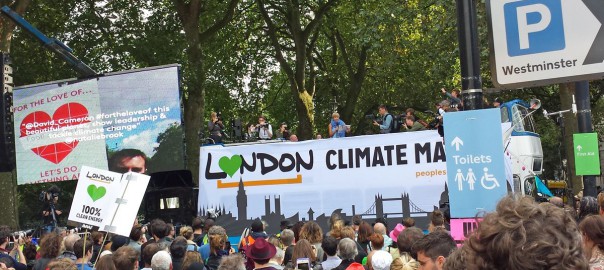
London Climate March - the Rally (Image: T. Larkum)

This Guy Studies the ‘Global Systems Death Spiral’ That Might End Humanity

Could climate change get so bad that it leads to our extinction? A few researchers are trying to answer that question.

Simon Beard has a career that most people would consider depressing and terrifying. He is part of a team of researchers trying to figure out if, how, and when climate change could cause the human species to go extinct. The stakes of his research—a potential annihilation of 7.7 billion humans and all the unborn people who come after them—couldn’t be any higher.

The idea that a heating planet will doom humanity is the subject of a lot of public speculation and anxiety, yet there are very few experts studying the existential impacts of climate change with any sort of academic rigor. Beard, who does this work at the Cambridge Center for the Study of Existential Risk, described it as “a field with next to no data” and a lot of unsupported hypotheses. “Under what circumstances could climate change cause a collapse of global civilization?” he said. “When you start asking that question, then your already quite-limited literature gets even more scarce.”

London Climate March - the Rally (Image: T. Larkum)
London Climate March – the Rally (Image: T. Larkum)

By bringing scientific precision to the doomsday scenario that wipes us off the planet, Beard hopes to convince world leaders to actually do something about it. “That’s really what we’re aiming for at the moment,” he said. “I think this could be genuinely transformative—firstly for the science but also by implication for the policy and the way that these things are discussed in society.”

The starting point for Beard’s research is that humans are incredibly resilient: We have found a way to survive in tropical rainforests, blistering deserts, icy tundra, and even for a brief time on the moon. But that says more about our collective strength than our skills as individuals. Shut down the grocery stores, turn off the taps, disband the government and very few of us, perhaps apart from a small number of rugged survivalists, would be able to stay alive for long.

“And so every one of us as an individual, I think, is very vulnerable, and relies upon these massive global systems that we’ve set up, these massive global institutions, to provide this support and to make us this wonderfully adaptable generalist species,” Beard recalled earlier this year on the Future of Life Institute podcast,

Those systems—the ones that put broccoli and frozen pizzas in our fridges and keep our streets from becoming Mad Max war zones—are themselves way more vulnerable and interconnected than we appreciate. The greenhouse gas emissions that humans are pumping into the atmosphere at record levels are changing the climate in ways that make it harder for us to grow and distribute food. This also increases pressure on our political system—as we saw with drought and crop failures in the lead-up to the Syrian civil war.

Read more: Vice

It’s Time to Go Green!

If you would like to know more about Solar Panels and the PowerBanx range of home battery systems, and get a free instant quote, please complete our online form:

Cheap Motoring

Why manufacturers aren’t delivering your EV sooner

If you have ordered an existing model in the past months, it’s unlikely you will pick it up at the dealer’s before January.

If you have put your name down for a model that is yet to be launched, you will probably have to wait until the end of 2020. What’s going on?

Getting electric vehicles to market has always been troublesome for Western OEMs. From the first-gen Renault Zoé to the Tesla Model 3 and the Audi e-tron: they have all arrived on the market later than planned. Somehow, manufacturers have a tendency of promising more than they can deliver, perhaps underestimating the challenges behind developing an EV and getting the supply chain and factories ready to build them.

Cheap Motoring

It seems that the Asian manufacturers have been better at managing this. It should hardly come as a surprise that in the land of affordable EVs with a decent range, it’s the Koreans and Japanese that rule. Hyundai Ioniq and Kona, Kia Niro, Nissan Leaf: they head the electric vehicle sales charts in Europe. They give the nearly pre-historic, totally obsolete VW e-Golf and equally retirement-deserving BMW i3 a run for their money.

Super credits

Whichever mass-production electric model you may have ordered in the past months, chances are you won’t see your EV arrive at the dealer’s before the first months of 2020. The same goes for the premium crossovers that go by the name Audi e-tron, Jaguar I-Pace or Mercedes EQC, incidentally. Is battery supply the issue, or is there more at play?

There are indeed only a handful of suppliers – mainly Chinese, Korean and Japanese – on the global lithium ion cell market and they are calling the shots. If you want cells as an OEM, you either pay a hefty price, or you wait until prices come down. The longer you wait, the cheaper you can buy, essentially. Guess which option most OEMs choose?

There is another, more important thing obstructing the delivery of EVs: the so-called super credits. Starting in 2020, every vehicle that emits less than 50g/km counts double in the calculation of an OEMs weighted average CO2 emissions. The average target is 95g/km and needs to be reached by 2021. No wonder that OEMs and their importers are postponing the delivery of as many EVs as possible.

Read more: Fleet Europe

It’s Time to Go Green!

If you would like to know more about Solar Panels and the PowerBanx range of home battery systems, and get a free instant quote, please complete our online form:
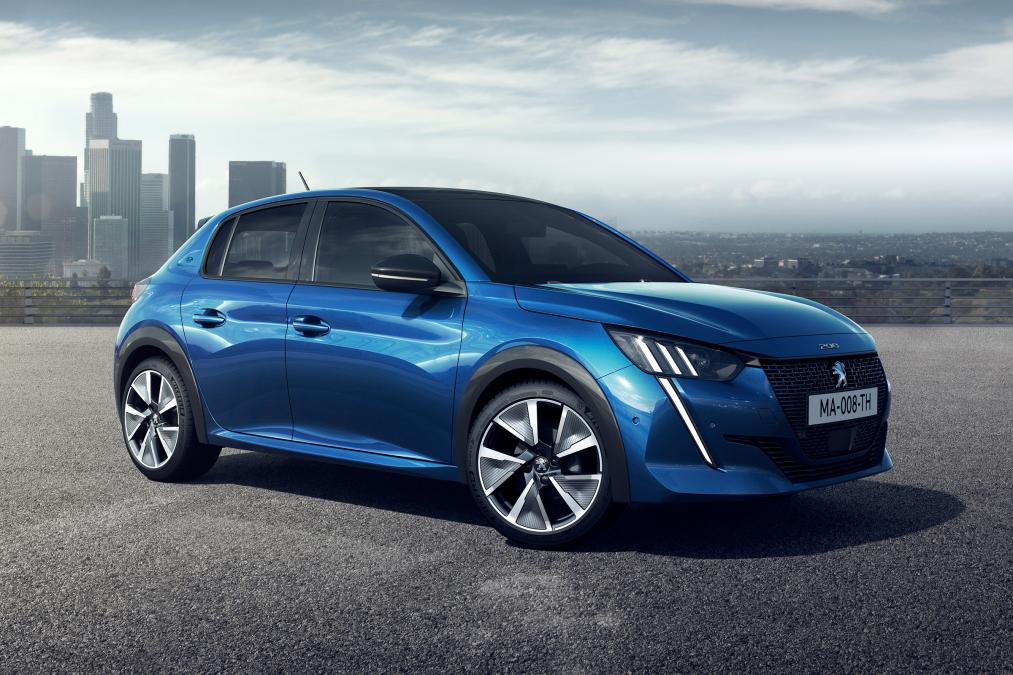
Peugeot e-208 (Image: Peugeot)

2020 set to be year of the electric car as sales soar

Experts are predicting that 2020 will be the year of the electric car as sales continue to rise.

Figures released today by the Society of Motor Manufacturers and Traders (SMMT) show that the number of battery-electric vehicles registered in November increased by 228.8 per cent compared to the same month in 2018 – with over 4500 new EVs hitting the roads.

So far this year, nearly 14,000 electric cars have been registered in the UK, compared to 38,500 plug-in hybrids and nearly 80,000 hybrids. Mild hybrids have also seen a dramatic increase in popularity, with registrations of mild-hybrid diesels increasing by more than 450 per cent last month.

Peugeot e-208 (Image: Peugeot)

Car manufacturers are rushing to launch new electric cars in a bid to meet new emission targets set by European Union legislators. By 2021, they face strict fines if their average CO2 emissions for each car exceed 95g/km. By selling more electric vehicles (with zero tailpipe emissions) and hybrids (with reduced tailpipe emissions), average CO2 emissions will drop.

Kia recently admitted that it has 3000 customers on a waiting list for the e-Niro – something it says it intends to clear in the first half of 2020, despite previously having to halt orders as it couldn’t keep up with demand.

Volkswagen is set to launch its new electric ID range with the ID.3 hatchback, while the Volkswagen Up, SEAT Mii and Skoda Citigo city cars are also going electric-only for 2020. Vauxhall’s new Corsa is available as a pure-electric model, as is the closely-related Peugeot 208.

Read more: Honest John

It’s Time to Go Green!

If you would like to know more about Solar Panels and the PowerBanx range of home battery systems, and get a free instant quote, please complete our online form: