Monthly Archives: March 2019

MINI Cooper Concept (Image: MINI)

Mini Cooper SE 2019 review: first drive of electric Mini

It has taken a decade but at last there’s an electric Mini that we can buy. Or there will be soon.

Our drive of this prototype is a prelude to the launch of the finished article at the end of this year. That car is called the Mini Cooper SE, the S implying equivalence to the 189bhp petrol Cooper S and the E that it’s electric. Its motor puts out 181bhp and 199lb ft of torque, the latter slightly adrift of the S’s 221lb ft, but they’re comparable.

It has taken a decade but at last there’s an electric Mini that we can buy. Or there will be soon.

MINI Cooper Concept (Image: MINI)
MINI Cooper Electric Concept (Image: MINI)

Our drive of this prototype is a prelude to the launch of the finished article at the end of this year. That car is called the Mini Cooper SE, the S implying equivalence to the 189bhp petrol Cooper S and the E that it’s electric. Its motor puts out 181bhp and 199lb ft of torque, the latter slightly adrift of the S’s 221lb ft, but they’re comparable.

Although there was a 2013 electric Mini concept, the 2009 Mini E project was a more substantial undertaking, being part of a test programme in which more than 500 vehicles were publicly trialled. This full-production electric Mini shares plenty of characteristics with the 2009 Mini E, among them brisk-to-rapid, instantly available acceleration, notable deceleration when you release the throttle and a pleasingly easy drive.

But there are also substantial differences, not the least of them being the restoration of the rear seats and a boot. Both of these spaces had been sacrificed to bulky battery and power electronics in the experimental car. The new version’s battery occupies the tunnel running the length of the cockpit and the area previously taken up by the fuel tank to occupy a T-shaped space, requiring almost no changes to the Mini’s body-in-white.

That there have been any at all is because BMW, Mini’s parent company, did not anticipate that the power density of batteries would improve fast enough to allow a viable pack to be installed in the current Mini hatch. In fact, the battery pack has slightly fewer cells than the BMW i3’s, offering 92Ah rather than 94Ah of stored energy, and its protrusion below the floor has necessitated a slight ride height rise. Despite this, the SE’s centre of gravity is lower than the Cooper S’s, promising sharp handling.

Read more: Autocar

Renault Celebrates 200,000 Electric Vehicle Sales Across Europe

  • Renault has sold 200,000 electric vehicles in Europe since its Z.E. range was launched in 2011
  • In France, the fourth biggest global market, Renault has registered 100,000 electric vehicles
  • Renault is number one in electric vehicle sales in Europe for the fourth consecutive year
  • ZOE and Kangoo Z.E. remain the flagship models in the group’s electric offensive

Renault has topped the 200,000 mark for sales of electric vehicles in Europe. At the same time, it has crossed a symbolic milestone in France with 100,000 vehicles registered. This double achievement underlines Renault’s position as leader in the European electric vehicle market, with steady growth in sales.

2018 – Renault ZOE

Almost one electric vehicle in every three sold in Europe is a Renault

A pioneer in electric vehicles with a range launched in 2011, Renault continues to lead the European electric vehicle market for the fourth consecutive year. Almost one electric vehicle in every three on European roads is a Renault. In 2018, Renault sales of electric vehicles in Europe surged by 36%, accelerating strongly in the second half-year to + 62%. In France, Renault holds a 56.8% share of the electric vehicle market, in both passenger cars and LCVs.

“Today, we are proud to say that over 200,000 customers in Europe have chosen Renault to make electric driving part of their everyday lives! And of course this is just a step on a far longer journey. Our clearly stated aim for the past ten years has been to make electric mobility available to everybody. Groupe Renault’s ambition is for electric vehicles to account for 10% of sales by 2022. To achieve this, it will build on the eight electric vehicles that will make up the range by this date,” says Gilles Normand, Senior Vice President, Electric Vehicles, Group Renault.

Read more: Renault Press

Highways England announces £2.8m electric vehicle deal

Highways England has awarded two contracts worth a total a £2.8m to install 50 electric vehicle charging points across the country over the next nine months.

The deal is part of Highways England’s aim to ensure 95% of its motorways and major A roads are within 20 miles of a charge point.

The contracts have been awarded to BP Chargemaster to carry out work in the north of the country and Swarco UK Ltd in the south and include initial installation and commissioning of facilities followed by ongoing operation and maintenance for a seven-year period.

Highways England’s Mark Collins, Environmental Designated Fund (Carbon) portfolio manager and project lead said:

‘To help improve air quality and reduce carbon emissions we’re introducing more electric charging points, at locations near to the network, for example at nearby town centres. This shows that we are looking ahead to meet the future demand for this facility.

‘This contract is about supporting drivers of electric vehicles using our network. It will give them additional charging facilities just off England’s motorways and major A roads to help them make longer journeys and reduce the anxiety of potentially running out of power. We look forward to the benefits this will provide drivers on our roads.’

Read more: Transport Network

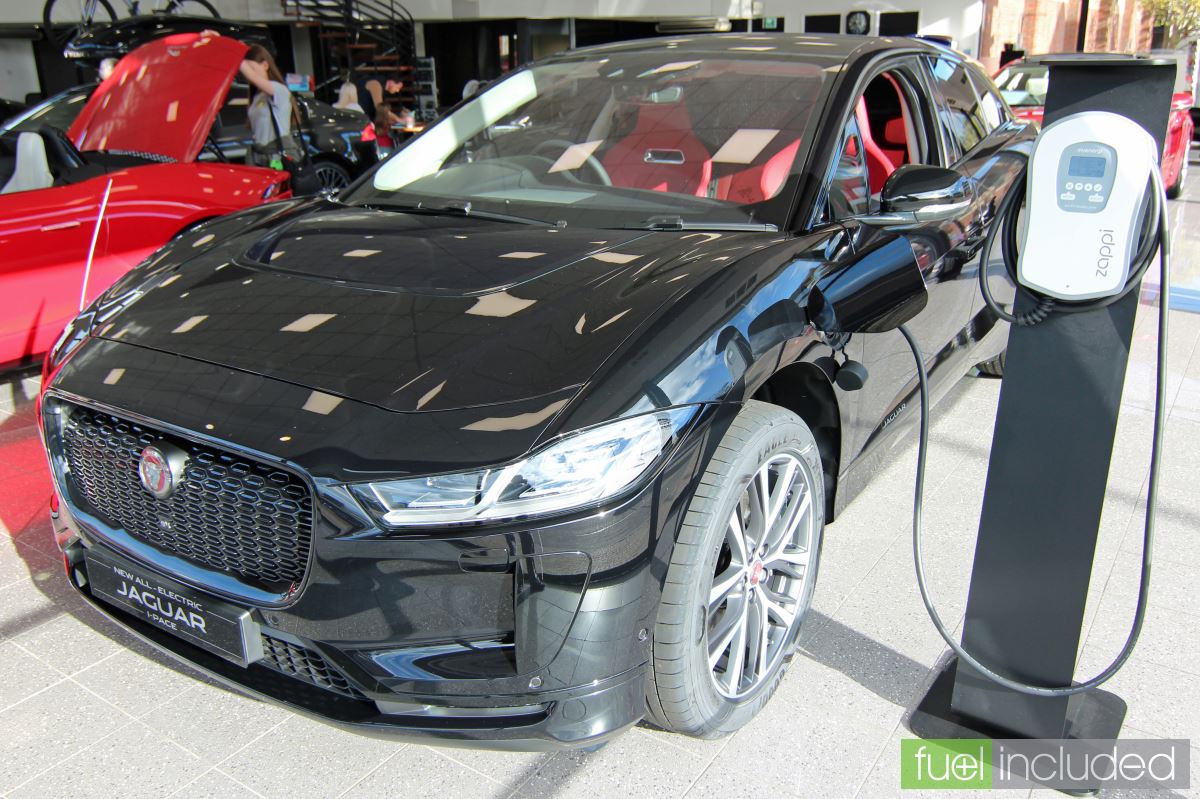
Jaguar I-PACE Electric Car (Image: T. Larkum)

Jaguar I-Pace wins 2019 European Car of the Year

The electric Jaguar I-Pace has claimed a narrow victory in the European Car of the Year award, edging out the Alpine A110.

The British firm’s electric SUV finished level on points with the A110 in the jury voting and was declared the winner after a tie-break based on how many judges had given a first-place vote to each car. The I-Pace received 18 first-place votes, compared with 16 for the A110.

It is the first time in the history of the event that two cars have finished tied after the main jury vote and the first time a Jaguar has won the award.

Jaguar I-PACE Electric Car (Image: T. Larkum)

Jaguar design boss Ian Callum said: “Why are people still surprised that electric cars win these awards? This is the future. We’d better all accept that.”

He added: “This was a wonderful car for the team to design and work on, because it’s a unique new car on a unique platform. For me, after 40 years in the business, this is the most exciting car I’ve ever had the chance to work on.”

Read more: Autocar

Electric cars charging in Milton Keynes (Image: T. Larkum)

Good Energy accelerates EV push with £1 million Zap-Map deal

Clean power supplier Good Energy has taken a 12.9% stake in the parent company of EV charging app Zap-Map, bolstering its nascent position in the EV sector.

And the firm has also reserved the option to take a majority stake in the firm within the next two years.

Zap-Map, which has around 70,000 monthly users, has been described as “go-to app” for EV drivers in the UK and helps consumers locate charge points, plot routes, check charger availability and, crucially for Good Energy, share power.

Good Energy said the investment reflected the evolution of the power sector towards a more localised nature, insisting it was the company’s intent to be at the forefront of that transition.

The firm expects EVs to play a “crucial role” in that development by helping enable a “new energy sharing economy”.

Electric cars charging in Milton Keynes (Image: T. Larkum)

A crucial factor in Good’s decision to take the stake in Zap-Map is the app’s ‘Zap-Home’ feature, which essentially opens up private household and business EV chargers to be used publically by other Zap-Map registered drivers. The charge point owner sets the access times and charging costs, with peer-to-peer payments able to be processed in-app.

The investment is intended to help fund further product development at Zap-Map, with the duo’s respective teams aiming to collaborate on “broader applications” for its proprietary platform.

Good is to pay a total consideration of just over £1 million for the stake in a structured deal which sees it acquire the 12.9% share for a cash consideration of £280,000. In addition, a maximum further consideration of £720,000 is to be payable upon certain product milestones and financial targets being reached by July 2020 and December 2021 respectively.

A further investment of £800,000 is to be made through secured convertible loan notes comprising three tranches. Good has the right to exercise the convertible into additional shares in Zap-Map up until the end of 2021.

Read more: Current News

O-M-G — Get Me Out Of This Gasmobile!

I’m renting a gas car for a few days. I won’t bother naming it, but it’s one of the 10 top selling cars in the USA. (Oh yeah, you can also see it above.) O–M–G, I cannot wait to get out of this car!

For people driving a Tesla, a BMW i3, a Nissan LEAF, a Chevy Bolt EV, or probably any other electric car for a while, I think the feelings they have when driving a gas or diesel car again are highly similar to mine below. Even knowing that, and even experiencing it years before,I couldn’t avoid the visceral shock of this experience.

Initially, I thought, “hey, it will be interesting to experience this car and maybe I’ll find some features I like about it.” Instead, I was quickly reminded of how “1910” gas car technology feels. The first sign (aside from the large grille on the front) was when I sat in the car and couldn’t find the “On” button. “Where the heck is the ‘On’ button in this thing? So many buttons and knobs and I can’t find it anywhere.” Okay, it didn’t take 10 minutes, but there were 30–60 seconds before I realized I had to insert the key into the car and turn it. It was a sign I wasn’t ready for what was about to come.

But the really annoying features are once the car is on. It starts rumbling and grumbling immediately. Like I said, it quickly feels like 1910 tech. It sounds like a monster. Putting the most positive spin on it that I can, it’s like a mild chair massager. 😛 But, yeah, it’s more annoying than relaxing.

Read more: Clean Technica

VW e-Golf (Image: Volkswagen.co.uk)

All about that bass: carmakers seek electric car sounds for post-petrol era

GENEVA (Reuters) – Carmakers are dreaming up futuristic electric car engine sounds to ensure that pedestrians can hear vehicles that lack audible cues like high-revving, howling combustion engines, senior executives at the Geneva car show said.

As BMW, Mercedes-Benz, Audi, Mini and VW prepare to launch battery-driven vehicles, carmakers are searching for a new way to market the potency of their zero-emissions vehicles.

“The electric vehicle sound is its identity. It cannot be too intrusive or annoying. It has to be futuristic and it cannot sound like anything we had in the past. We cannot simply add the sound of a combustion engine,” Frank Welsch, responsible for technical development at Volkswagen, told Reuters.

VW e-Golf (Image: Volkswagen.co.uk)

VW’s electric cars will have speakers designed to draw the attention of pedestrians, Welsch said, standing next to a lime- green electric dune buggy being shown in Geneva.

“Performance models need to have a more assertive sound, with more bass. It cannot be a high pitched din, like a sewing machine. It has to be futuristic,” he said, adding that SUVs will have a deeper sound to reflect their bigger size.

Read more: Reuters

Nissan Leaf 3.Zero e+ (Image: Nissan)

Nissan Leaf becomes the first EV to surpass 400,000 sales

Throwing the confetti for the long-running, mass-market electric car

Nissan said Tuesday that the Leaf surpassed 400,000 sales, making it the first electric vehicle to hit that sales plateau. Of course, it’s also had a hefty head start over its closest competitors, the Tesla Model 3 and the Chevrolet Bolt, having first gone on sale in late 2010, and it has a few other advantages as well. Not to rain on the Leaf parade or anything.

Now in its second generation and sporting improved driving ranges, Nissan says Leaf owners have driven their cars more than 6.2 billion collective miles, equating to an estimated savings of 3.8 million barrels of oil per year. The battery-powered hatchback is now available in more than 50 markets across the world, with six new markets coming on board during the first half of 2019 in Latin America, and seven across Asia and Oceania by year’s end. The Leaf was the best-selling EV in Europe in 2018 and the top-selling vehicle of any kind in Norway last year, Nissan says.

Nissan Leaf 3.Zero e+ (Image: Nissan)

Nissan also builds the Leaf at three different plants globally: Oppama, Japan; Sunderland, England; and Smyrna, Tenn.

By comparison, a spokeswoman for Tesla said the company had built more than 150,000 Model 3s as of the end of 2018, with nearly 140,000 sold since it went into limited production in mid-2017, according to its most recent quarterly letter to shareholders. Tesla said December was the car’s highest-volume month ever, with 63,359 Model 3s delivered in the fourth quarter. The company also has begun producing the vehicle for export to Europe and China, has begun construction on a new plant to build it in Shanghai, China, and it recently announced it would finally start selling the vehicle at its long-promised entry-level price of $35,000, making it competitive on price with the Leaf.

Read more: Autoblog

New Green NCAP highlights real-world emissions performance

Safety rating organisation Euro NCAP has launched a new green car assessment programme called Green NCAP in conjunction with European Governments, motoring clubs and other organisations.

It aims to promote cars that are less polluting and more fuel- and energy-efficient by providing consumers with independent information about cars’ performance in tests that go well beyond legislative requirements to uncover the differences between manufacturers’ emissions-control strategies.

With members and independent test laboratories in eight European countries, Green NCAP aims to motivate car manufacturers to develop cars that make the most efficient use of the energy they use and to minimise the pollutant and greenhouse gases they emit.

For now, Green NCAP considers only the energy used while driving (‘tank to wheel’), but in time, well-to-wheel and ultimately the whole life-cycle will be considered, including the energy used to produce the vehicle, the energy it consumes in its lifetime and the energy needed to scrap and recycle its parts.

Pierre Castaing, chairman of Euro NCAP, said,

“For years, there has been a mismatch between the way cars perform in regulatory tests and how they perform on the road. Consumers often don’t get the fuel economy officially claimed for their vehicles and end up paying for the difference in fuel. Now, legislation is tightening-up, but consumer testing can complement it and go a step further: it can really encourage car manufacturers to beat their competitors by innovating in the field of energy efficiency and emission reduction. We’re confident that they will respond to the challenge, to the benefit of car-buyers and the environment.”

In Green NCAP’s first round of tests, twelve cars have been rated: the Hyundai Ioniq and BMW i3, both electric vehicles, achieve a maximum five-star rating; the VW up! GTI gets a creditable four stars; BMW’s X1 2.0d and the Mercedes-Benz A200 are both awarded three stars; the Ford Fiesta 1.0 EcoBoost is rated as two stars in its latest guise, and a one-star rating is given to the Audi A7 50 TDI, the Volvo XC40 T5 and the Subaru Outback 2.5. Three cars – the VW Golf 1.6TDI, the FIAT Panda 1.0 and the previous level Ford Fiesta 1.0 EcoBoost – get zero-star ratings. All three of the zero-star cars are approved to Euro 6b emissions standards, still valid for models introduced before September 2017. However, from September 2019, all cars will have to meet the tougher standards of Euro 6d-temp and updated versions of these cars will be rated in the next round of tests.

Read more: Fleet News

Seat el-Born Concept electric car (Image: Seat)

2020 Seat el-Born electric car revealed: price, specs and release date

Concept previews Seat’s first electric car: a five-door family hatchback that will challenge the Nissan Leaf and Renault Zoe…

Look just beneath the surface of this el-Born concept car’s funky, futuristic styling and you’ll glimpse Seat’s first electric car. Based on the same underpinnings as Volkswagen’s upcoming ID electric hatchback, the el-Born will lead to a production model with about the same footprint as the current Leon family hatchback.

2020 Seat el-Born range and charging

Powered by a 201bhp electric motor, the el-Born has an official range of 261 miles on the new WLTP test cycle – far greater than electric rivals such as the Renault Zoe and Nissan Leaf, which offer 186 and 168 miles respectively on the same test. The el-Born should also be nippy; it can cover the 0-62mph sprint in 7.5sec.

Seat el-Bron Concept electric car (Image: Seat)
Seat el-Born Concept electric car (Image: Seat)

Charging the el-Born to 80% capacity takes as little as 47 minutes using the latest 100kW rapid chargers, but that time will increase dramatically if you use a standard wall-mounted charger. A heat pump can extend battery life by as much as 37 miles in conditions where cold can quickly sap an electric car’s range.

Seat is traditionally seen as the VW Group’s sporty brand – something that’s emphasised by the el-Born’s wide, low stance, with its wheels pushed to the very edges of the car. Design features include a closed-off grille (no air intake is needed to cool an engine). There are intakes lower down, though, to increase the car’s aerodynamic efficiency and send air to the battery pack. The el-Born concept sits on 20in wheels that help to channel cooling air to the brakes.

2020 Seat el-Born interior

Inside, the el-Born features a 10.0in touchscreen infotainment system that’s angled towards the driver, plus a digital instrument cluster. The absence of an engine up front has also allowed Seat to maximise room inside the car and provide lots of storage space, including under the centre console between the front seats, although boot capacity is still unknown.

The el-Born is capable of controlling its own acceleration, braking and steering in certain situations, such as on the motorway, and its advanced driver assistance systems include a self-parking function.

Read more: What Car