Daily Archives: August 31, 2017

Electric vehicle charging hub approved

Planners have given the green light for a new electric vehicle charging hub near the centre of Dundee.

Images have been released showing how the charging hub would look in what is currently a vacant yard

Solar canopies and charging points will be installed at the site in Princes Street, which is currently a vacant yard.

The chargers will be available to the public, taxis, NHS vehicles and local businesses.

Dundee City Council now has an 83-strong fleet of electric vehicles, the biggest of any UK local authority.

Funding for the hub, as well as charging points at eight other locations, was part of a £1.86m award made to the city by the Office of Low Emission Vehicles (OLEV) last year.

Mark Flynn depute convener of Dundee City Council’s city development committee said:

“Our use and encouragement of electric vehicles in Dundee has been something of a quiet revolution and in leading the charge we have been meeting many social and economic priorities.

“Zero and low emission vehicles reduce cost, congestion and carbon emissions as well as improving air quality and the charging hub will help us to continue our journey.

“The council’s extensive use of such vehicles is encouraging other public bodies and private individuals to buy and use them as a real practical alternative to fossil fuelled cars.”

The council owns 58 charging point at eight publicly available charging locations, including Scotland’s first rapid charger.

Work on the new charging hub is expected to start in autumn and it is planned to be up and running by the end of the year.

Source: BBC News

New engine development at German makers to end by 2025, says supplier

Continental, a major supplier for automakers around the world, has come out with a bold prediction: internal-combustion engine development by German automakers will essentially end by the year 2025.

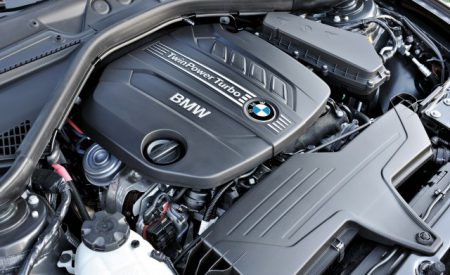
BMW Engine

The supplier, which makes exhaust-gas-cleaning systems for diesel cars and nitrogen oxide-measuring sensors, lists several factors contributing to its prediction: the increasing costs of development, the end of diesel’s dominance, and an overall shift to electric cars and other alternative propulsion methods.

Specifically, Continental CFO Wolfgang Schaefer predicts 2023 will be the final hurrah for German engines running on fossil fuels.

He believes one final generation of internal-combustion engines will be developed and launched by that date. Then investment and engineering will taper off after 2023, with 2025 sealing the engine’s fate with the very last refinements.

“A new generation of combustion engines will again be developed, but after that (around 2023), a further development will no longer be economically justifiable because more and more work will switch into electric mobility,”

he said in an interview with Reuters.

Schaefer’s prediction comes at a time when the use of fossil fuels for transportation faces greater scrutiny than ever across Europe.

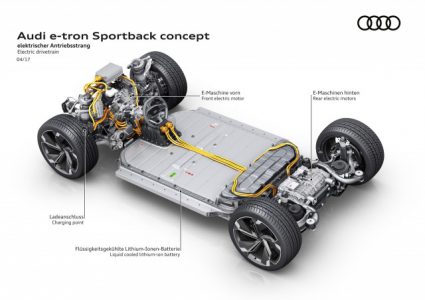
Audi e-tron Sportback concept, 2017 Shanghai auto show.

France, the United Kingdom, the Netherlands, and Norway have all announced similar plans to phase out sales of cars powered by internal-combustion engines.

The Netherlands and Norway want the ban to be in place by 2025, while France and the UK have targeted 2040 for implementation.

All the while, European authorities continue to investigate Volkswagen Group over diesel emission cheating and have alleged BMW, Daimler, and VW Group colluded to manipulate emission regulations.

Each German automaker now plans to update software on its diesel-powered vehicles to curb emissions further, at no cost to customers.

Read more: Green Car Reports

Electric Cars

I live a short drive away from the birthplace of the shale oil revolution. It was 2006 that we started to get an inkling that something big might be happening.
I’m referring to the Bakken boom…

My business has always been finance, so I wasn’t directly involved. However, the people around me very much were.

I watched twenty-five year olds blow through hefty six-figure salaries as fast as the money came in. Then I watched them scramble to keep their houses when oil prices crashed in 2014.

For years now I’ve been surrounded by oil industry families wherever I go.

My gym, the grocery store, at my kid’s school. Everywhere I go, interacting regularly with oil patch workers is part of my daily life.

Nice people for the most part, if a little rough around the edges. It has been hard to watch them go through the bust that followed the really good times that were driven by $100 oil.

What I’ve learned through my interactions is that these oil industry folks share some very passionate opinions. Not surprisingly those opinions are directly aligned with what is in the best interests of their industry.

If you are wondering what I mean, let’s just say that the strong majority of them drive giant gas guzzling trucks or SUVs, don’t own a copy of Al Gore’s Inconvenient Truth, and probably don’t live in a neighborhood with solar panel rooftops.

And it’s my familiarity with the loyalty these people have to their industry that made the remarks from the mouth of Royal Dutch Shell’s CEO even more surprising.

In fact, I’d say that his words were like a splash of cold water in my face that provided me with a much needed wake-up call as an investor…

His exact words were…

“The next car I buy will be electric.”

Our Wake Up Moment – The Inflection Point For Electric Cars Is At Hand

I’m pretty sure that when I look back on today ten years from now, those words from Shell’s CEO Ben Van Beurden will be a critical point in time that I remember.

That will be the moment when I realized that the electric car revolution is truly underway.

The talking points about electric cars for an oil man are supposed to be about all the reasons they aren’t even close to being ready for mainstream acceptance:

  • The lack of range
  • The prohibitive up front cost
  • The lack of charging station infrastructure
  • Inability of an owner to self-service
  • The fact that they still require lots of energy to charge them, likely including coal

Shell’s CEO said none of those things. What he said told me that the age of the electric car is underway.

That means that the growth curve for electric car use is about to go parabolic. Seriously, I mean parabolic.

I want you to fully appreciate how crazy the numbers here really are.

The chart below from International Energy Agency data shows the impressive growth that the electric car has had since 2010. We have gone from virtually zero electric cars on the road to just over 2 million in 2016.

Read more: Daily Reckoning