Daily Archives: August 28, 2017

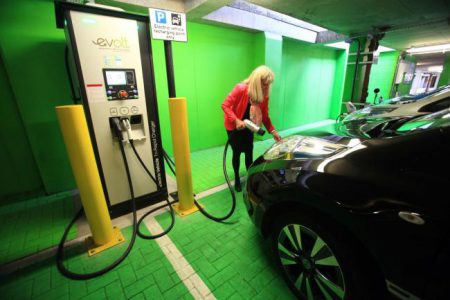
Solar Charge Points charging electric cars (Image: T. Larkum)

Charging Our Car at Devon Cliffs

We are currently holidaying in the Devon Cliffs Holiday Park at Sandy Bay, Exmouth. We arrived last week from Northampton, having charged on the M4 at Chieveley and on the M5 at Sedgemoor.

The Solar Charge Points at Devon Cliffs - and only 2/3 of the cars shouldn't be parked there! (Image: T. Larkum)
The Solar Charge Points at Devon Cliffs – and only 2/3 of the cars shouldn’t be parked there! (Image: T. Larkum)

On arrival we found a pleasant surprise – a solar powered charging bay in the main reception car park. I have since learned that it was installed about a year ago in a joint venture with Bourne Leisure (owners of the park), Solarplicity and POD Point.

Having last charged at Sedgemoor, about 60 miles back, we didn’t need to charge again for the first few days. Then I started looking into how to start a charge – doing some Googling, searching on the POD Point online map (which didn’t show the charge point), installing the POD Point app, etc.

However, it all turned out to be unnecessary – I called POD Point and they explained that it was a private charge point – hence not on the public map – and that it was free to use. In hindsight I should have just plugged in and tried it!

The POD Point charge points at Devon Cliffs (Image: T. Larkum)

We have since made good use of the charge point, leaving the car on charge overnight most days. It is marked as a 7kW point which should charge our i3 in about 4 hours. In fact I am seeing charge times significantly longer than that so I would guess it is actually running at about half that, 3.5kW. Perhaps that has something to do with being solar powered, e.g. a reduced charge outside sunny hours, I don’t know. Anyway, the car is fully charged every morning so it doesn’t really matter.

The charge point has been a real boon – allowing us to go on long trips out most days without needing to find anywhere else to charge.

And all our holiday motoring for free.

Electric car sales in sharp rise as diesels run out of gas

SCOTTISH motorists are turning in increasing numbers to all-electric and hybrid vehicles as uncertainty reigns over the future of petrol and diesel cars that are due to be banned from 2040.

Electrical charging ports are installed in some of the big cities

Latest official figures show a 64.9 per cent surge across the UK in new registrations of Alternatively Fuelled Vehicles (AFVs) to the end of last month – when the Government announced the policy – as drivers invest in the latest environmentally friendly technology.

There were 437 sales of either all-electric, hybrid or plug-in vehicles last month, compared to just 193 in the same month of 2016 north of the Border – with 3,684 new registrations of such models so far in 2017. Scottish Motor Trade Association (SMTA).

The vehicles now account for a record 5.5 per cent of the British new car market share with 70,000 registered already this year.

Diesel model sales are continuing to plummet amid uncertainty over possible higher taxes, or even bans on them being allowed into big towns and cities, because of the health impact, particularly on young children, of the nitrogen oxide (NO2) gases they give off.

New diesel car registrations fell by 20 per cent, and by three per cent for petrol models, across the UK in July, according to figures from the The Society of Motor Manufacturers & Traders (SMMT) .

In Scotland, sales of diesel cars were just 4,440 last month, down by 1,214 on the same month in 2016, with petrol sales down by 744 compared to July last year, said the SMTA.

Sandy Burgess, SMTA chief executive, who said uncertainty over the Government’s Brexit plans was also weighing on drivers’ minds, urged the Government to provide “clarity” over its plans for diesel and petrol cars.

Garage forecourts are struggling to shift diesel models, despite the fact the latest models are equipped with cleaner, more efficient ‘Euro 6’ engines,= Mr Burgess said:

“We are experiencing a drop-off in consumer and business confidence and there is no doubt this is having a knock-on effect on demand in the new car market.

“Our Government must act quickly to clarify the position on the use of our current vehicles and, of course, share its intentions on Brexit.”

Read more: The Herald

Number of electric car charging points in London to double in 2018

The prospect of thousands of electric cars driving round London’s streets came a step closer today as Sadiq Khan announced a £4.5 million investment in 1,500 new charging points across the capital.

Sadiq Khan announced a £4.5 million investment in 1,500 new charging points PA

Transport for London and the capital’s town halls will roll-out the new green charging infrastructure – which will almost double the number of points – over the course of 2018.
It comes after the Government last week announced a ban on sales of petrol and diesel cars from 2040 to help tackle the country’s toxic air problem.

But Mr Khan, environmentalists and some motoring experts accused it of falling short of what is needed to deal swiftly with toxic air — which is blamed for a death toll of about 9,000-a-year in the capital alone.

The chosen boroughs – 25 of London’s 32 – will each receive up to £300,000 of government cash to install the standard charging points, which take between four and eight hours to charge a family car, in residential areas.

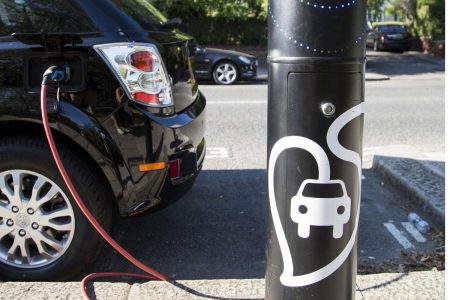
Town hall officials will now identify sites where charging points could be installed. Some of the cash could be spent on new approaches such as using lamp posts as the base and power supply for charge points, which would be cheaper and quicker to roll out with less impact on the streetscape.

They believe the scheme will help motorists without access to off-street parking to make the switch from polluting vehicles to zero-emissions ones more easily. More money will follow next year if the scheme is successful.

The new points will be in addition to the network of 150 rapid charge points for taxis and commercial fleets that TfL is installing by 2018.

Mr Khan, who wants all new road vehicles driven in London to be zero emission by 2040, said:

“This substantial investment in electric charging points will make a real difference, making electric vehicles an easier and more practical option for Londoners across our city.

“We have a bold ambition to make London’s transport system zero emission by 2050, and working with boroughs to roll out more charging infrastructure is a vital part of making this a reality.”

The money for this tranche of charging points comes from the Government’s Office for Low Emission Vehicles’ ‘Go Ultra Low City’ scheme.

Read more: Evening Standard

Volkswagen Passat GTE Estate long-term test review: first report

A plug-in hybrid load-carrier sounds like it should be a frugal, refined and practical antidote to the hassles of everyday life. Will that be the case here?

We’re all for diversity around here. Among the current 30-odd cars on the fleet, we have a V-twin three-wheeler, a petrol V8, a tri-turbo diesel V8, a petrol W12, an EV, a parallel hybrid, two hydrogen fuel cell cars, a petrol-electric sports car and now this, the plug-in hybrid Volkswagen Passat GTE Estate.

Those last six cars are interesting because they represent a disproportionate 20% of Autocar’s long-termer lineup – disproportionate because for now the real-world percentage of alternatively fuelled vehicles on our nation’s roads is much lower.

Diversity, then, and pioneering the future of motoring – whatever that may turn out to be. And I suppose it’s worth asking if that future is going to be one in which the plug-in hybrid prevails, and it’s a question to which I hope to find an answer or, more likely, several answers, depending on your point of view. I already have a feeling, you see, that this car is going to cause some head-scratching.

We’re pretty well acquainted with the Passat GTE. We’ve already road tested it, albeit in saloon guise, and subjected it, as an estate, to a comparison test, and the car has scored a solid four stars on each occasion. This Passat uses the Volkswagen Group’s increasingly familiar petrol-electric set-up of a 1.4 TSI petrol engine, here making 154bhp, mated to a 113bhp electric motor and driving through a six-speed dual-clutch automatic gearbox. It’s good for 0-62mph in a claimed 7.6sec, which isn’t exactly slow.

The electric motor is powered by a 9.9kWh battery, which takes about two and half hours to fully charge via a wall box charger (at the office) or four and a half hours via a three-pin domestic plug (at my house). The battery lives under the rear seats and reduces fuel tank capacity from the 66 litres of a regular Passat to 50 litres.

You can have your Passat GTE in regular form, which comes quite well equipped, or in Advance trim, which is much more generous. We’ve gone for Advance, which includes VW’s Discover Navigation Pro with an 8.0in touchscreen, adaptive cruise control, emergency braking, a panoramic sunroof and a fully configurable 12.3in-wide TFT instrument display. To that, we’ve added metallic paint, Dynamic Chassis Control (DCC, or switchable suspension settings to you and me) and the tech-tastic Driver’s Assistance Pack. We’ve also got ‘St Tropez’ leather trim.

Read more: Autocar