Daily Archives: August 27, 2017

Severe Flooding, Against a Background of Wind Turbines: November 2012, Tyringham, Bucks. (Image: T. Larkum)

Climate change to cause humid heatwaves that will kill even healthy people

If warming is not tackled, levels of humid heat that can kill within hours will affect millions across south Asia within decades, analysis finds

Climate Change Impact in Africa (Image: iPhoto)

Extreme heatwaves that kill even healthy people within hours will strike parts of the Indian subcontinent unless global carbon emissions are cut sharply and soon, according to new research.
Even outside of these hotspots, three-quarters of the 1.7bn population – particularly those farming in the Ganges and Indus valleys – will be exposed to a level of humid heat classed as posing “extreme danger” towards the end of the century.

The new analysis assesses the impact of climate change on the deadly combination of heat and humidity, measured as the “wet bulb” temperature (WBT). Once this reaches 35C, the human body cannot cool itself by sweating and even fit people sitting in the shade will die within six hours.

The revelations show the most severe impacts of global warming may strike those nations, such as India, whose carbon emissions are still rising as they lift millions of people out of poverty.

“It presents a dilemma for India between the need to grow economically at a fast pace, consuming fossil fuels, and the need to avoid such potentially lethal impacts,”

said Prof Elfatih Eltahir, at Massachusetts Institute of Technology in the US who led the new study.

“To India, global climate change is no longer abstract – it is about how to save potentially vulnerable populations.”

Heatwaves are already a major risk in South Asia, with a severe episode in 2015 leading to 3,500 deaths, and India recorded its hottest ever day in 2016 when the temperature in the city of Phalodi, Rajasthan, hit 51C. Another new study this week linked the impact of climate change to the suicides of nearly 60,000 Indian farmers.

Read more: The Guardian

Tesla Powerwall display (Image: T. Larkum)

Aussies Are More Interested In Solar Batteries Than Ever

With electricity prices on the rise and an uncertain future ahead for Australian electricity, it’s not surprising that more and more Aussies are looking at the option of home batteries. What is surprising is just how fast the market is progressing — batteries are rapidly coming down in price and the numbers suggest they aren’t just for early adopters anymore.

Tesla Powerwall display (Image: T. Larkum)

Before the Tesla Powerwall burst onto the scene less than two years ago, batteries were seldom considered an option for houses with solar panels, unless they were remote or off-grid. Powerwall installer Natural Solar says that only 2-3 per cent of customers even asked about batteries prior to 2015. “Since adding Tesla Powerwall to our energy storage range, the volume of consumer enquiries for battery power and Tesla Powerwall specifically has grown to more than 95% of customers,” explained Natural Solar CEO Chris Williams.

Even the difference between the first, somewhat experimental Powerwall and Tesla’s newer, bigger, better Powerwall 2 is clear. Williams sums it up quite succinctly when he says that the original Powerwall buyers were the early adopters, while their experiences have helped the Powerwall 2 hit the mainstream.

“This is exciting,” Williams said, “as it represents the typical Australian household and consumer, who are making educated decisions based on financials and are trying to offset the skyrocketing electricity bills expected to increase by 20 per cent in the coming weeks.”

While the Tesla brand has something to do with it, there are other reasons Australians have become so interested in powering their homes via batteries. Australian energy retailers recently announced an impending increase on the price consumers pay for electricity — in some places astronomically. On July 1, South Australia will overtake Denmark in having the world’s most expensive electricity. With some new Powerwall 2 customers expecting their power bills to come down to almost nothing, it’s not surprising to see more and more people looking to make that leap.

South Australians in particular have even more motivation to install batteries, in the wake of the state-wide power failures that happened last year. Demand in South Australia has increased by 300 per cent compared to the rest of Australia with 98.5 per cent of those wanting a power back-up in case of further instability. It’s not just households either — commercial enquiries for Natural Solar have seen an 800 per cent increase, with businesses wanting the option to keep their doors open and their lights on even when the grid is down.

Read more: Gizmod

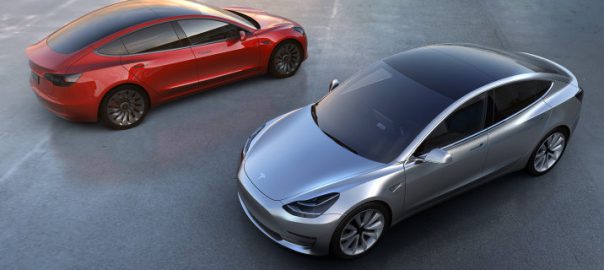
Tesla Model 3 Unveil (Image: Tesla)

Tesla Model 3 doesn’t have a key – and seven other things we learned

Elon Musk’s new mass market-aimed electric car has no directly visible speedometer, comes in two battery versions and isn’t a bad option for a sleep.

Tesla Model 3 Unveil (Image: Tesla)

lon Musk revealed Tesla’s Model 3 is unlocked by a smartphone and doesn’t have a traditional key or fob among a host of other details at the delivery event for the first 30 mass-market electric cars over the weekend.

As the Model 3 enters what Musk called “six months of manufacturing hell” as Tesla ramps up production to meet the more than 500,000 pre-orders, one of the most surprising titbits is that there is no traditional key to open and start Tesla’s mass-market electric car hope.

Instead, would-be buyers of the $35,000-plus five-seat electric car will have to unlock the car with their smartphones over Bluetooth. The car will detect the owner’s smartphone – almost all modern smartphones made in the last three years supports Bluetooth – and automatically unlock, ready to start and go.

Should the battery on your phone run flat, which is a very real possibility in the days of increased use for everything from music, cameras and now keys, Tesla has a backup in the form of an NFC key card that is apparently thin enough to store in a wallet.

Press the card against the car’s B-pillar to unlock it and place it between the seats on a special spot to be able to start the car. It’s designed for valet use, but should be good to get into the car and at least charge your phone so you can properly unlock the Model 3 and go.

But the key-less design wasn’t the only thing we learned over the weekend …

1. Two battery versions

The minimalist interior of the Model 3. Photograph: Reuters

The Model 3 will come in two versions. The $35,000 base model has a battery with a 220-mile range, does 0-60mph in 5.6 seconds and has a top speed of 130mph. It can be “supercharged” to 130 miles of range in 30 minutes and charges at a rate of 30 miles per hour via a 240V, 32A home charger.

The range-extended version, which costs $44,000, will travel up to 310 miles per charge, reaches 60mph in 5.1 seconds and a top speed of 140mph. It will reach a charge of 170 miles in 30 minutes attached to a supercharger, and charges at a rate of 37 miles per hour with a 240V, 40A home charger.

The more expensive Model 3 with the longer range is currently being produced, with the cheaper version to be produced at a later date. A high-performance version of the Model 3 will also be available sometime in the middle of next year, according to Musk.

2. There are no instruments, just a 15in touchscreen in the middle

The 15in touchscreen is the only display in the cabin. Photograph: Reuters

There’s no speedometer, battery gauge or anything else directly in front of the driver. Instead there’s a large, 15in touchscreen in the middle of the dash, which displays a virtual instrument cluster along with mapping, entertainment and cabin controls.

The Model S has a 17in touchscreen in the middle of the dash, but it is in mounted in a portrait orientation compared to the Model 3’s landscape orientation.

Read more: The Guardian