Daily Archives: August 25, 2017

I spent three minutes inside Tesla’s Model 3 — and I’m still thinking about it a day later

The raucous crowd had dwindled to a few dozen hangers-on. The international reporters had returned to their hotels, and Tesla’s billionaire chief executive, Elon Musk, had disappeared into his sprawling Fremont, Calif., factory about an hour earlier.
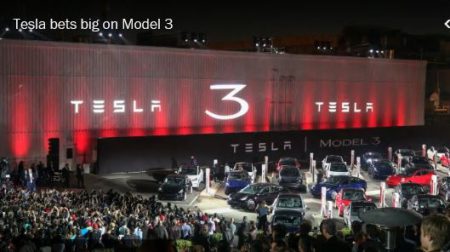
Tesla’s Model 3 rollout was essentially over, but in a nearby parking lot where the first test rides of the electric car were being offered, the night’s enthusiasm had yet to wane.

In almost any other circumstances, a silent, three-minute ride around a poorly lit factory parking lot that barely cracked school-zone speed limits would’ve been a laughably underwhelming experience. But for many riders, myself included, this time was different.

One spin in the Model 3 just wasn’t enough. Journalists, factory workers and their family members, and random revelers on hand to celebrate returned to the back of the line over and over again as if the understated electric sedan were a futuristic carnival ride.

“That was fantastic,” one man said as he got out of the car. “Can we take pictures?”

“Can we do it again?”a woman asked.

It’s quite likely that the effusive reactions were at least partly influenced by Tesla’s sustained PR campaign. Company handlers had been force-feeding attendees a diet of Model 3 exuberance for several hours in the form of mesmerizing videos, splashy lights, upbeat dance tracks and free drinks – giving people the feel of having an exclusive backstage pass to the automotive future.

“This is the world’s first mass-market electric vehicle,” we were told. “You, my friend, are experiencing history!”

Read more: The Washington Post

BP in talks with electric carmakers on service station chargers

LONDON (Reuters) – BP (BP.L) is in talks with electric vehicle makers on partnering to offer battery re-charging docks at its global network of fuel service stations as it seeks to benefit from the move away from diesel and petrol cars, Chief Executive Bob Dudley told Reuters on Tuesday.

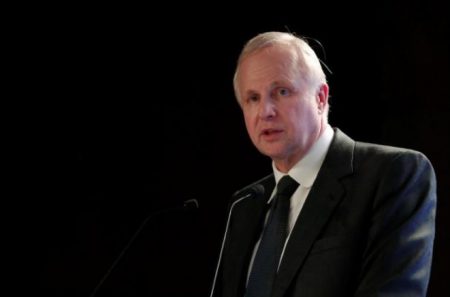
BP Chief Executive Bob Dudley addresses the gathering during a media interaction in New Delhi, India, June 15, 2017.

The expected rapid growth in the use of electric vehicles in the coming decades is threatening oil companies’ business model as demand for some road fuels could plateau as early as the late 2020s, according to some oil company estimates.

Looking to take a slice of the growing market, London-based BP is however examining different ways to get involved in the sector.

“We have discussions going on with a lot of the EV manufacturers to have a tie-up with our retail network for charging,”

Dudley said in an interview.

Rival Royal Dutch Shell (RDSa.L) has already launched a pilot scheme to install battery charging docks at a few of its service stations in Britain and the Netherlands.

The number of electric vehicles on roads is forecast to grow significantly in the coming decades, particularly in cities, with BP estimating that there will be 100 million by 2035, up from 1.2 million in 2015.

Dudley has been a vocal advocate of the oil and gas industry’s need to take part in the move away from fossil fuels toward using cleaner sources of energy in order to combat global warming.

But BP, along with rivals including Shell have yet to come up with a clear plan for increasing their interests in renewable energy production such as solar and wind.

“We’ll be ready for this world but we’re not going to dive in too deeply,”

he said, referring to BP’s previously unsuccessful ventures into renewable energy, including solar power.

BP will make investments in future technologies but these will be small percentage stakes in companies or partnering with them, he said.

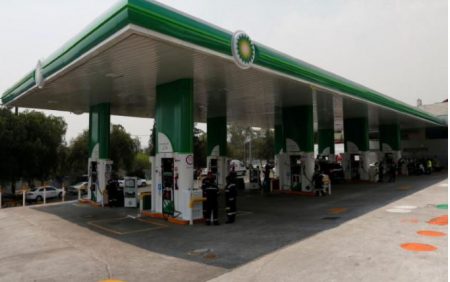
FILE PHOTO: A general view of a new BP petrol station on the outskirts of Mexico City, Mexico, March 9, 2017.

Dudley said BP was also studying autonomous vehicles and the potential for combining natural gas with solar power generation.

Read more: REUTERS

Van and taxi drivers offered pathway to electric vehicle transition

Drivers of old and polluting vans and taxis have been offered fast-track options and incentives to purchase electric vehicles (EVs), with revamps to licensing and a new £42m taxi fund set to increase compliance with the diesel vehicle phase-out.

From January 2018, no more new diesel taxis will be licensed in London

Following on from Environment Secretary Michael Gove’s launch of the Air Quality Plan last week, which included a ban on all new petrol and diesel cars and vans from 2040, both Transport for London (TfL) and the Department of Transport (DfT) have launched new EV initiatives.

Mayor of London Sadiq Khan announced on Friday (28 July) that TfL would host a £42m fund to encourage owners of older and polluting diesel black cabs to retire them from the Capital’s fleet.
Owners of black cabs between 10 and 15 years old can check whether they are eligible of a “delicensing” scheme and to apply for a grant worth up to £5,000 to retire a taxi. The three-year scheme will attempt to speed up the process of tackling the illegal pollution levels in London’s air as part of a long-term goal of making the Capital a zero-carbon city by 2050.

“London’s filthy air is a health crisis that needs urgent action,”

Khan said.

“The plans announced by the Government this week go nowhere near the action needed. Cleaning up London’s taxi fleet will play a significant part in our toxic air battle and there will be no new diesel taxis licensed in London by the end of this year.

“However, it is important we financially support drivers to help them retire their oldest vehicles and upgrade to greener models. I hope this fund helps deliver a new generation of zero-emission taxis on our roads and paves the way for the Government to offer a diesel scrappage scheme so all London motorists can ditch their dirty diesels.”

From January 2018, no more new diesel taxis will be licensed in London, and the London Taxi Company officially rebranded after unveiling its new electric model. Taxis are thought to be responsible for 16% of NOx and 26% of particulate matter (PM) road transport emissions in central London.

The Government already offers a Plug-in Taxi Grant, part-funded by the Mayor, which offers up to £7,500 for new EV taxi purchases. When combined with the new delicensing payment, drivers can save up to £12,500 on new purchases.

Read more: edie.net