Daily Archives: August 19, 2017

V2G found to improve the lifetime of electric vehicle batteries

Intelligent use of vehicle to grid (V2G) technology can improve the battery life of electric vehicles according to a new study from the University of Warwick, potentially disproving a key criticism levelled at the technology.
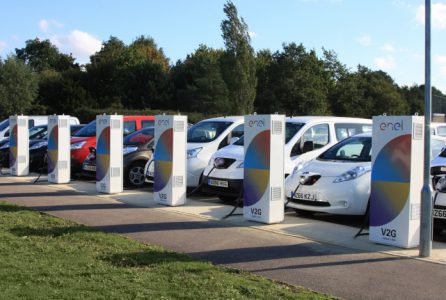
Working with the Energy and Electrical Systems group of the university’s research division WMG and Jaguar Land Rover, Dr Kotub Uddin analysed advanced lithium ion batteries used in commercially available EVs over a two year period.

This allowed him to create what is thought to be one of the most accurate battery degradation models existing in the public domain to predict battery capacity and power fade over time, under various ageing acceleration factors including temperature, state of charge, current and depth of discharge.

Using this model, Dr Uddin developed a ‘smart grid’ algorithm to calculate how much energy a vehicle requires to carry out daily journeys, and how much energy can be taken from its battery without negatively affecting it, or even improving its longevity.
This algorithm was then applied to WMG’s International Digital Laboratory to see if energy from EVs parked on the University of Warwick campus could power the multi-use building.

The study concluded that the number of EVs parked on the campus (around 2.1% of cars, in line with the UK market share of EVs) could spare the energy to power this building. In doing so, capacity fade in participant EV batteries would be reduced by up to 9.1%, and power fade by up to 12.1% over a year.

Dr Uddin said:

“These findings reinforce the attractiveness of V2G technologies to automotive original equipment manufacturers; not only is V2G an effective solution for grid support – and subsequently a tidy revenue stream – but we have shown that there is a real possibility of extending the lifetime of traction batteries in tandem.

“The results are also appealing to policy makers interested in grid decarbonisation.”

Until now a general consensus had been in place that the increased cycles imposed on a battery by V2G would lead to more rapid degradation. However, the new study suggests that this process is more complex than thought and that in fact, it can be exploited to improve a battery’s lifetime.

Read more: Clean Energy News
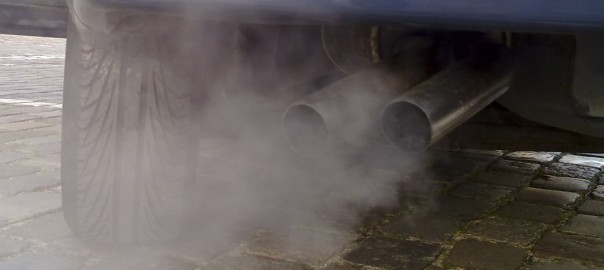
Car exhaust pollution (Image: Wikipedia)

Britain to ban sale of all diesel and petrol cars and vans from 2040

Plans follow French commitment to take polluting vehicles off the road owing to effect of poor air quality on people’s health

Britain is to ban all new petrol and diesel cars and vans from 2040 amid fears that rising levels of nitrogen oxide pose a major risk to public health.

Car exhaust pollution (Image: Wikipedia)

The commitment, which follows a similar pledge in France, is part of the government’s much-anticipated clean air plan, which has been at the heart of a protracted high court legal battle.

The government warned that the move, which will also take in hybrid vehicles, was needed because of the unnecessary and avoidable impact that poor air quality was having on people’s health. Ministers believe it poses the largest environmental risk to public health in the UK, costing up to £2.7bn in lost productivity in one recent year.

Ministers have been urged to introduce charges for vehicles to enter a series of “clean air zones” (CAZ). However, the government only wants taxes to be considered as a last resort, fearing a backlash against any move that punishes motorists.

“Poor air quality is the biggest environmental risk to public health in the UK and this government is determined to take strong action in the shortest time possible,”

a government spokesman said.

“That is why we are providing councils with new funding to accelerate development of local plans, as part of an ambitious £3bn programme to clean up dirty air around our roads.”

The final plan, which was due by the end of July, comes after a draft report that environmental lawyers described as “much weaker than hoped for”.

The environment secretary, Michael Gove, will be hoping for a better reception when he publishes the final document on Wednesday following months of legal wrangling.
A briefing on parts of the plan, seen by the Guardian, repeats the heavy focus on the steps that can be taken to help councils improve air quality in specific areas where emissions have breached EU thresholds.

Measures to be urgently brought in by local authorities that have repeatedly breached EU rules include retrofitting buses and other public transport, changing road layouts and altering features such as roundabouts and speed humps.

Reprogramming traffic lights will also be included in local plans, with councils being given £255m to accelerate their efforts. Local emissions hotspots will be required to layout their plans by March 2018 and finalise them by the end of the year. A targeted scrappage scheme is also expected to be included.

Some want the countrywide initiative to follow in the footsteps of London, which is introducing a £10 toxic “T-charge” that will be levied on up to 10,000 of the oldest, most polluting vehicles every weekday.

Read more: The Guardian

Ubitricity | Fully Charged

The simple and very commonplace lamp post will soon become a ubiquitous charge point for electric cards.

They charge at about 5 kW, or 16 amps, not super fast but overnight charging is all most drivers need.

Ubitricity is a German based company who’ve come up with a simple, cheap to install and well managed system for more people on more streets to adopt electric cars.