Daily Archives: August 17, 2017

New battery technology could cut energy bills by up to £40bn by 2050, says Ofgem

The new rules will help households generate and store electricity and sell it back to the National Grid.

File photo dated 24/11/10 of electricity pylons as a Parliamentary report has found that electricity prices have soared because of constant intervention in the energy sector by successive governments.

The first phase of a four-year £246m Government investment into battery technology has been launched in a move that could help bring down household electricity bills.

The long-term vision includes creating giant battery facilities around the National Grid to store excess wind and solar energy for when demand rises.

In addition, new rules will help households with solar panels to generate and store their own electricity with new battery technology and sell it back to the Grid when they do not need it. They will also reduce costs for people and businesses who power down appliances at peak times and use electricity at cheaper times.

The Government and Energy regulator Ofgem estimate that consumers could save between £17bn and £40bn by 2050.

Business and Energy Secretary Greg Clark unveiled details of the first phase, known as the Faraday Challenge, on Monday.

This includes a £45m competition to establish a centre for battery research which he said would help make the UK a world leader in the design, development and manufacture of electric batteries. This will be spearheaded by the Engineering and Physical Sciences Research Council (EPSRC) to bring the best minds and facilities together to create a ‘battery institute’ to make products more accessible and affordable.

A three-month consultation earlier this year on an industrial strategy to increase UK productivity and growth attracted more than 1,900 written responses from businesses and organisations.

A shift to cleaner energy and technologies such as electric cars has made the design, development and manufacture of batteries a top industrial priority.  Mr Clark said:

“A smarter energy system will create new businesses and high-skilled jobs, while making sure our infrastructure is able to cope with demand.”

Gareth Redmond-King, head of climate and energy at WWF, said battery storage was a “game-changer” in the ability to produce clean power from renewables.

“These technologies give us flexibility to run on solar when the sun isn’t shining, and be powered by wind when it is still.

“It will support the transition to electric cars and enable our homes to be more efficient – which means cheaper, as well as cleaner and greener energy.”

Read more: Sky News

Visit the showroom where you can test drive every electric car

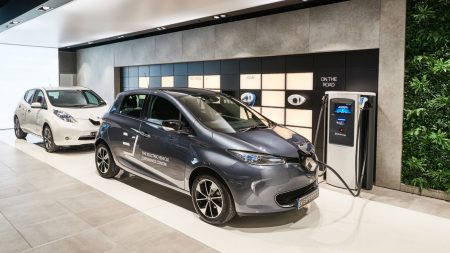
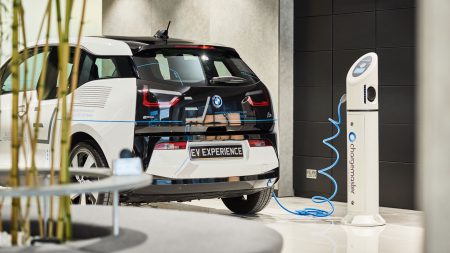
Yet to be convinced that electric cars are the future? EV stalwarts are hoping this unique ‘experience centre’ located in a shopping centre in Milton Keynes could be the encouragement you need to swap your diesel for a plug-in – and we’ve been for a behind-the-scenes look at the showroom which is being described as a “landmark moment”.

Renault ZOE ZE40

The EV experience centre is operated by Chargemaster using Government funds through Milton Keynes’ Go Ultra Low City status. It’s not a pop-up dealership – there’ll be no hard sell, just experts on hand to talk people through electric cars and advise about whether they’ll fit into their lifestyle.

“[There’s] a series of myths people have about electric cars,” transport minister Jesse Norman told Motoring Research during our preview of the EV experience centre.

“They think about whether they might be expensive or whether they’re hard to charge, and how long that takes. An experience centre that actually gives a person the experience of actually sitting behind the wheel or potentially driving it, that just knocks down a whole series of these myths and that makes it much easier to think about buying one.”

BMW i3

The showroom, located in Centre:MK, is multi-brand, displaying cars from partners including Renault, Mitsubishi, Volkswagen, Nissan, BMW and Kia. The experts on hand won’t be on commission and will be able to give independent advice on which – if any – electric car suits a particular person’s needs.

If an electric car won’t fit a person’s lifestyle, they’ll be honest that they’re better suited to a conventional petrol or diesel car – while, although Tesla isn’t a partner, a visitor with a big budget after a long range and high performance will be pointed in the direction of a Tesla dealership.

“With 17 million people a year coming into this particular shopping centre in Milton Keynes, that’s potentially an awful lot of people who are potentially going to be impressed by it,”

added Norman.

Read more: Motoring Research

Household batteries will be key to UK’s new energy strategy

UK to pioneer energy innovation through batteries in homes as energy department announces £246m research funding

Renewables will be able to provide more of the UK’s energy when companies are able to store it more efficiently. Photograph: Danny Lawson/PA

Batteries and renewable power sources are on the verge of bringing about an “epochal transformation” of the UK that could make energy clean, abundant and very cheap, according to a cabinet minister.

As the government unveiled plans for a more flexible energy system and £246m of funding for battery research, Greg Clark told the Guardian that a smarter grid would “radically” bring down bills.

“Energy, for the last 100 years, for good reasons, we’ve rationed the consumption of [because] it’s been very expensive and environmentally-damaging to consume fossil fuels. [But] given the possibilities we are on the cusp of at the moment, we might move to a world where energy is clean and abundant,”

said the business secretary.

Storing intermittent renewable power in batteries so it was ready when the grid needed it would bring down costs for everyone, including vulnerable and low income energy consumers, he said.

“If only we can capture it [power from the sun and wind] then we can go from energy being a worrying cost to people, to being, if not free, then very cheap,”

Clark said, speaking in Birmingham on Monday as he put energy at the centre of the government’s industrial strategy.

Read more: The Guardian