New Nissan LEAF with e-Pedal premieres in the U.S. September 5 (Septermber 6 in Japan)
Daily Archives: August 16, 2017

Solar car start-up launches vehicle and prepares for European tour
German start-up manufacturer Sono Motors has presented its solar car, the Sion, in Munich. Sold without a battery, the vehicle has a range of 250km and will sell for €16,000.

The Sion features integrated solar cells, which generate additional energy to top up an electric vehicle (EV) battery, creating an extra 30km of range in a day. The company’s vision is to offer a mobility concept for the future which does not produce CO2 emissions or use oil. The Sion also offers drivers the opportunity to extract power from the vehicle and offer it to other users, in a form of bidirectional charging. The company believes ‘with the Sion’s output of 6.6kW, other electric cars can be charged.’
Sono Motors aims to either sell a battery for an additional €4,000, or offer a monthly lease, similar to that offered by Renault. The company hopes the car’s design will make it a popular choice for both families and commuters, with its low price bringing it in line with the traditional automotive market, in a sign that EV prices are beginning to come down.
A statement released by the company to coincide with the launch comments: ‘Sono Motors first attracted attention after launching a successful crowdfunding campaign in the summer of 2016. For the development and production of the vehicle, the company is working together with well-known contract manufacturers and system suppliers from the European automotive industry. A total of 5,000 reservations of the Sion are required to start serial production in the second quarter of 2019. Shortly before the presentation of the solar car, more than 1,200 reservations had already been placed.’
As Sono Motors sees sharing as the future of mobility, the Sion comes equipped with three mobility services: ‘powerSharing, rideSharing and carSharing.’ An app allows Sion users to share power, rides and even the car itself with other users.
Read more: Autovista Group

Drop in wind energy costs adds pressure for government rethink
Tories urged to look at onshore windfarms which can be built as cheaply as gas plants and deliver the same power for half the cost of Hinkley Point, says Arup
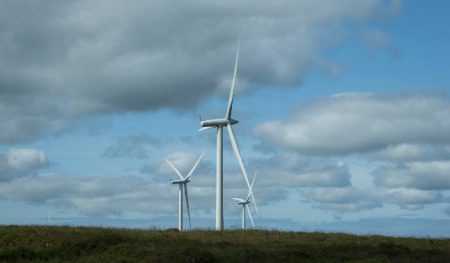
Onshore windfarms could be built in the UK for the same cost as new gas power stations and would be nearly half as expensive as the Hinkley Point C nuclear plant, according to a leading engineering consultant.
Arup found that the technology has become so cheap that developers could deliver turbines for a guaranteed price of power so low that it would be effectively subsidy-free in terms of the impact on household energy bills.
France’s EDF was awarded a contract for difference – a top-up payment – of £92.50 per megawatt hour over 35 years for Hinkley’s power, or around twice the wholesale price of electricity.
By contrast, Arup’s report found that windfarms could be delivered for a maximum of £50-55 per MWh across 15 years.
ScottishPower, which commissioned the analysis, hopes to persuade the government to reconsider its stance on onshore windfarms, which the Conservatives effectively blocked in 2015 by banning them from competing for subsidies and imposing new planning hurdles.
Keith Anderson, the firm’s chief operating officer, told the Guardian that onshore wind could help the UK meet its climate targets, was proven in terms of being easy to deliver, and was now “phenomenally competitive” on price.
“If you want to control the cost of energy, and deliver energy to consumers and to businesses across the UK at the most competitive price, why would you not want to use this technology? This report demonstrates it’s at the leading edge of efficiency,”
he said.
The big six energy firm believes that with a cap on top-up payments so close to the wholesale price, onshore windfarms would be effectively subsidy-free – but the guaranteed price would be enough to de-risk projects and win the investment case for them.
Read more: The Guardian