Daily Archives: August 11, 2017

Electric Car Benefits in Milton Keynes

Following the success of our first eBook we have decided to do another one. The first one was a guide to charging your electric car at home. This one is specific to the Milton Keynes area, where we are based (though of course we deliver nationwide). Milton Keynes is the best city in the world for giving incentives to electric car drivers.

If you are considering an electric car and you live near, work in or visit Milton Keynes, then this is the guide for you.

Red Tesla Model S in the new MK showroom (Image: T. Larkum)
Red Tesla Model S in the new Milton Keynes showroom (Image: T. Larkum)

This eBook tells you all you need to know about the benefits of an electric car in Milton Keynes:

  • Charging in and around Milton Keynes
  • How to get free parking in Central Milton Keynes
  • How to get free parking at MK railway station
  • The Experience Centre, with free test drives and lessons
  • Planned future benefits, e.g driving in bus lanes

f

Click on the image, enter your name and email, and download your free guide.

If it leaves any questions unanswered, just get in touch (contact details here and in the eBook).

Dr Trevor Larkum
FuelIncluded.com
MyRenaultZOE.com

A Brighter Future for Electric Cars and the Planet

There is simply no credible way to address climate change without changing the way we get from here to there, meaning cars, trucks, planes and any other gas-guzzling forms of transportation.

That is why it is so heartening to see electric cars, considered curios for the rich or eccentric or both not that long ago, now entering the mainstream.

A slew of recent announcements by researchers, auto companies and world leaders offer real promise. First up, a forecast by Bloomberg New Energy Finance said that electric cars would become cheaper than conventional cars without government subsidies between 2025 and 2030.

At the same time, auto companies like Tesla, General Motors and Volvo are planning a slate of new models that they say will be not only more affordable but also more practical than earlier versions. And officials in such countries as France, India and Norway have set aggressive targets for putting these vehicles to use and phasing out emission-spewing gasoline and diesel cars.

Skeptics may see these announcements as wishful thinking. After all, just 1.1 percent of all cars sold globally in 2016 were electrics or plug-in hybrids. And many popular models still cost much more than comparable fossil-fuel cars.
The skeptics, however, have consistently been overly pessimistic about this technology. Electric cars face challenges, yet they have caught on much faster than was thought likely just a few years ago. There were two million of them on the world’s roads last year, up 60 percent from 2015, according to the International Energy Agency.

The cost of batteries, the single most expensive component of the cars, fell by more than half between 2012 and 2016, according to the Department of Energy. Tesla has indicated that it can produce batteries for about $125 per kilowatt-hour. Researchers say the cost of electric cars will be at parity with conventional vehicles when battery prices reach $100 per kilowatt-hour, which experts say is just a few years away. Electric cars are more efficient, of course, but they also require less maintenance, which should make them cheaper to own over time.

Read more: The New York Times

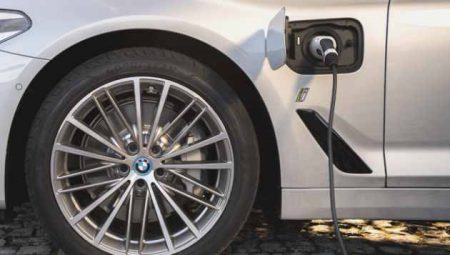
Plug-in BMW sales soar

BMW has announced its latest sales results, with the German giant reporting that electrified models have increased 80% in the first half of 2017, compared to the same period last year.

Group sales of BMW i, BMW iPerformance, and Mini electric have seen dramatic growth

Part of this increase is because of new models arriving and coming into production. However, it shows that demand is strong, and the BMW Group’s line-up is continuing to expand so sales will only continue to shoot up for the foreseeable future.

A total of 42,573 BMW i, BMW iPerformance, and Mini Electric vehicles were sold in the first six months of 2017, with production totalling almost 52,000 cars. BMW says that it is on target to sell more than 100,000 electrified vehicles in 2017, with the delivery of the 200,000th plug-in car expected later this year.

These sales include the new Mini Countryman Cooper S E All4, which only arrived in showrooms in June, so wasn’t able to make much of an impact on the half year sales. This new plug-in Mini joined the likes of the BMW’s i3, i8, 225xe, 330e, 530e, 740e and Le, and X5 xDrive 40e to form one of the most comprehensive plug-in car line-ups on the market.

Further models are already in the pipeline too, with the new i8 Roadster due next year, along with a new X3 PHEV, and all-electric X3 and Mini.

Peter Schwarzenbauer, Member of the BMW AG Board of Management responsible for MINI, Rolls-Royce and BMW Motorrad, said: “Sales of the new Mini Countryman are particularly pleasing and I’m delighted that with the launch in June of the Mini Cooper S E Countryman ALL4, electric mobility is now available on a large scale from the Mini brand.

“Customer interest in this car has been extremely high and I’m confident we will see continued growth across the brand in the second half of the year.”

Source: Next Green Car

Combustion engines: high emissions from short commutes a huge challenge

Drivers in the U.S. have longer commutes than those in Europe and Asia, on average.

In the U.K., short commutes in vehicles with combustion engines—whether gasoline or diesel—pose particularly tough emission problems.

That’s because the exhaust aftertreatment systems have to warm up fully before they cut emissions to the levels required under EU regulations.

The problem has been highlighted by the British consultancy Emission Analytics, which routinely analyzes the data from its various EQUA Index sectors to highlight different emission statistics and challenges.

The company’s trenchant analyses of real-world emission and fuel-consumption data has gotten considerable attention, and it has now expanded into the U.S. as well.

This week, it noted that according to British government data, the average distance of a car journey in inner London was just 1.5 miles.

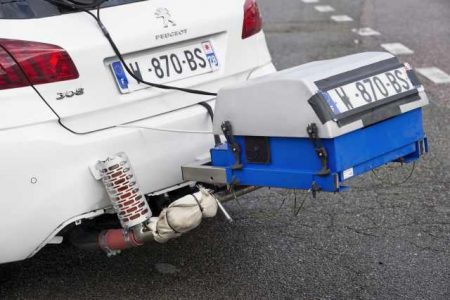
Portable Emissions Measurement Systems (PEMS) on a Peugeot 308

The implications of that figure, as well as the fact that more than half of all vehicle trips in the U.K. are under 5 miles, are dire for limiting emissions of nitrogen oxides (NOx). As the company wrote:

The average daily distance driven in [U.K.] passenger cars is not sufficient for a vehicle’s pollution control system to warm up and become fully functional.

The resultant high levels of cold start NOx emissions, from both gasoline and diesel engines, could provide an additional challenge for urban air quality initiatives such as the proposed Clean Air Zones in the UK.

Read more: Green Car Reports