Daily Archives: August 5, 2017

UK electric and plug-in car registrations hit record high

More electric and plug-in hybrid cars were registered during the first half of 2017 than in any previous six-monthly period.

More than 22,400 plug-in models were registered between January and June 2017, a rise of 14.3% on 2016 and 53.8% up on the same period in 2015.

June exceeded all previous non-plate-change months with 4,405 new plug-in models sold during the month (33% up on June 2016). Demand from private buyers has driven growth with 44.9% more consumers opting for plug-in hybrid and electric power between January and June 2017, compared to the same period last year.

Transport minister Jesse Norman said: “It is great to see that electric and plug-in hybrid cars are helping more UK motorists to cut fuel costs and emissions.

“The total number of plug-in cars on our roads is at record levels, with the latest figures showing that there are now over 100,000 plug-in cars and vans registered in the UK.

“The UK is a world leader in tackling climate change and the Government is committed to supporting the transition to a low carbon economy and improving air quality. Our aim is that nearly all cars and vans on our roads are zero emission by 2050.”

The Nissan Leaf was the UK’s best selling plug-in car in the first six months of 2017, while BMW’s plug-in hybrid 3-Series saloon was one of the year’s biggest growers, rising 79.9% following its launch last year.

Poppy Welch, head of Go Ultra Low, said:

“Month after month we’re seeing record levels of registrations, demonstrating that the public awareness and appetite for electric and plug-in vehicles is growing.

“They are fast becoming a serious consideration for an increasing number of motorists who are switching on to the cost-saving and environmental benefits of driving an electric car.”

Read more: FleetNews

The post-Brexit future of the UK’s electric transport industry

According to the latest edition of the International Energy Agency’s Global EV Outlook, the number of electric cars in motion has to reach 600 million by 2040 in order for the current greenhouse gas emission target of temperature increases below 2°C to be reached and maintained.

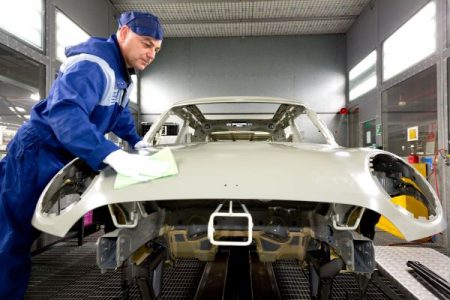
A MINI chassis receives a polish at BMW’s Oxford plant. Source: BMW

Currently, we are nowhere near this figure, as only 0.2% of total light-duty vehicles were EVs in 2016. The figure is estimated to rise to 20 million vehicles by 2020, without taking into account regional politics. Is this estimate realistic when regional political uncertainty is included in the equation? Take, for example, the European perspective –Brexit could have a negative impact on the EV industry, especially under a Conservative government which was more inclined to drop the European gas emission targets a year ago. A year after the Brexit vote, relations between Europe and the UK may be looking at a bleak future, but neither should be short of ambition to make the best of their decarbonisation efforts.

Immediate reactions

A year ago, the Brexit vote triggered the immediate reaction of the British automotive sector to demand from the UK Government protection of the current tariff arrangements, as according to SMMT’s estimations a change in import tariffs could result in an increase of up to £1,500 per purchase if the retailers were unable to cover the additional costs.

Additionally, a report by PA Consulting has estimated that the cost of assembling a car in Britain could increase by £2,370 in the event of a hard Brexit. With more than 30 manufacturers based in the UK, accounting for over £69.5 billion of annual turnover, such an unfavourable change in tariff arrangements with the EU would cause stagnating sales, as the EU still remains the biggest market for vehicle parts from the UK.

Threats of relocating the plants outside of the UK were raised by carmakers, such as Nissan, whose production of Nissan Leaf EV in Sunderland accounts for 400,000 units annually. Nissan went as far as suing the Leave campaign for using their logo. On the other hand, BMW tried to remain cool-headed, hinting that its production network spread out across 31 locations in 14 other countries provides enough flexibility for the manufacturer to relocate the production of new models, such as the first battery-powered version of the Mini expected to go on sale in 2019.

In the window of Brexit negotiations, the ambition of UK-based manufacturers still remains focused on developing electric power trains. Depending on the final tariff arrangements in the near post-Brexit future, the electric transport industry might be negatively affected by the fleet of consumers to cheaper alternatives, meaning that more electric incentives have to be provided by the UK Government. However, there are positive consequences for British manufacturers to get up to speed with their own EVs.

Read more: Electrans