Daily Archives: July 22, 2017

Every new Volvo model to be electrified by 2019

From 2023, you won’t be able to buy a new Volvo without an electric motor.


As part of a radical move to increase sales of its electrified cars, every newly launched Volvo will come as either a hybrid, a plug-in hybrid or as a fully electric vehicle by 2019, with the brand’s entire portfolio of models following within four years.

Five new electric cars

Volvo will also build five new fully electric cars between 2019 and 2021. Two of these will be sold under Volvo’s new Tesla-rivalling performance sub-brand, Polestar.

The remaining three new Volvo electric cars will be all-new models, rather than being derived from existing cars. The electric vehicles will be offered with two battery choices – in much the same way as Tesla offers different varieties of both the Model S and Model X depending on desired range and performance.

It’s understood that one option will focus on extended range, while the other will maximise power. That second option will still have a range of around 310 miles, meaning you’d be able to travel further than in a Nissan Leaf, Renault Zoe or entry-level Model S.

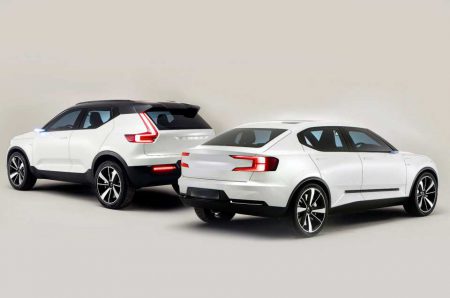
While it hasn’t been confirmed what form Volvo’s all-electric models will take, the most likely candidate is the upcoming XC40 small SUV.

Volvo hasn’t said how much it will charge for its electric models, but has re-iterated that it intends to create premium cars. The brand wants to sell one million electric cars globally by 2025.
A range of hybrid vehicles

Throughout the rest of Volvo’s product range, new cars will be offered as either a hybrid, a plug-in hybrid or as a mild hybrid. Mild hybrids are the least noticeable form of electrification, as the small electric motor only provides extra power when accelerating away from junctions or traffic lights.

That means time is limited for Volvo’s current range of petrol and diesel-engined cars, although the Swedish car maker already offers plug-in hybrids, most recently on the XC60 small SUV.

Read more: Whatcar

Renault Actually Considering Production Of Hot Zoe RS

Fingers crossed that it will make it!

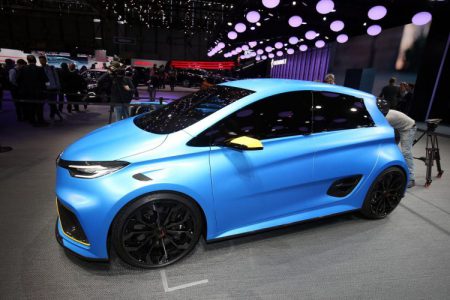
Renault ZOE E-Sport

The pint-sized Zoe is far from being the most exciting electric car out there, but it’s a whole different story with the bonkers E-Sport concept. Unveiled earlier this year in Geneva, the zero-emissions city car had a pair of electric motors good for a combined output of close to 460 horsepower (343 kilowatts) and a torquetastic 472 pound-feet (640 Newton-meters).

As it turns out, Renault Sport is actually analyzing the prospects of coming out with a high-performance Zoe that would carry the “RS” suffix. In an interview with Autocar, the go-faster division’s boss, Patrice Ratti, admitted

“we are thinking about doing a Zoe RS but it is a big study that will take time.”

He went on to specify the hot e-hatch is being considered thanks primarily to the developments made in battery technology, thus making the Zoe RS a feasible project worthy of being evaluated for a potential production model.

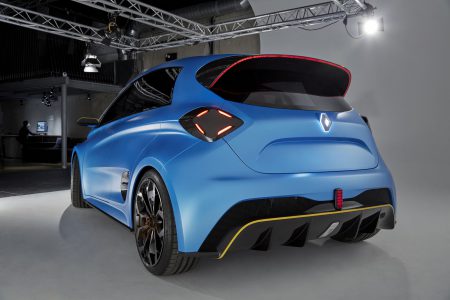
Renault ZOE E-Sport

If green-lighted, the Zoe RS (see render here) will go through some significant changes compared to the concept. Besides being subjected to steering and chassis modifications, the batteries would also have to be tweaked in order to boost range over the E-Sport, which had enough juice for a mere 15 minutes while being driven at full throttle. For the sake of comparison, the regular Zoe ZE 40 you can actually buy can cover up to 250 miles (400 kilometers) between charges as per the New European Driving Cycle (NEDC).

Should the road-going model get even close to the concept’s performances, it’s going to be a little electric beast. Renault Sport said the show car would do 0 to 62 mph (100 kph) in just 3.2 seconds. Top speed was electronically capped at 130 mph (210 kph), a process which took less than 10 seconds from a standstill.

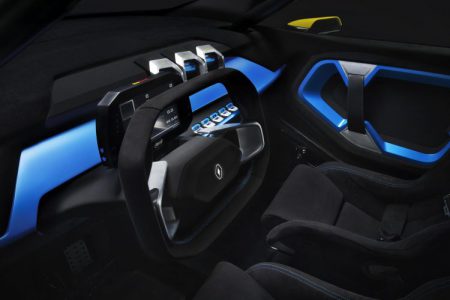
Renault ZOE E-Sport

But Renault Sport has bigger fish to fry right now as it’s gearing up to introduce the all-new Megane RS. Slated to debut on September 12, the newest performance model carrying the diamond logo will premiere at the Frankfurt Motor Show.

Source: InsideEVs

Plug-in hybrid completes Ioniq trio

The plug-in hybrid uses a 105hp 1.6-litre petrol engine in conjunction with a 61hp high-efficiency electric motor driven through a six-speed dual-clutch transmission. This produces a combined output of 141hp and CO2 emissions of 26g/km, thereby attracting a zero-rate Vehicle Excise Duty for the first year.

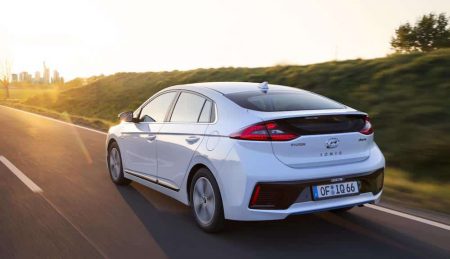
Hyundai has completed the line up of its Ioniq with a plug-in hybrid model.

Hyundai claims that its new PHEV is capable of up to 39 miles of pure electric driving and a total range of 680 miles.

The Ioniq PHEV can be plugged into a domestic three-pin outlet when no dedicated charging points are available. For an additional £300, a 7kW charger and wall box can be supplied and installed at a customer’s home.

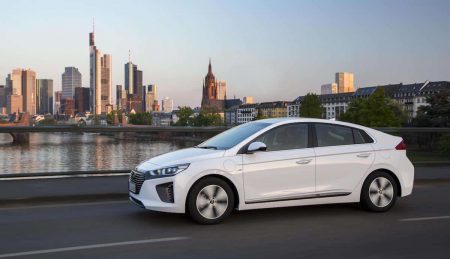
The standard paint finish is Polar White, though customers are able to specify from Phantom Black, Platinum Silver, Iron Grey, Demitasse Brown, Marina Blue and Phoenix Orange. Two trim levels, Premium and Premium SE, are available.

The Ioniq PHEV goes on sale this month with UK pricing starting from £24,995, including a £2,500 Plug-in Car Grant.

Polar White is the standard paint finish for the new PHEV

Source: The Car Expert