Daily Archives: July 5, 2017

Should you join the charge and buy an electric car?

Green motoring is becoming financially attractive thanks to a drop in leasing prices and lower running costs
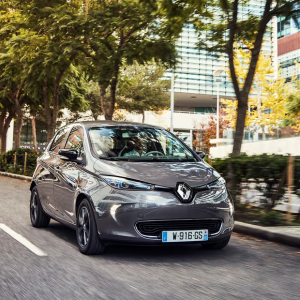
Renault ZOE ZE40

Is now the time to buy an electric car? Falls in financing costs mean that switching to a zero carbon-emitting vehicle won’t just help the environment, it can be cheaper than buying and running a conventional car.

When Guardian Money last looked at electric cars, the price premium for most models meant they made most financial sense to central London drivers keen to avoid the £11.50-a-day congestion charge – but for other motorists the case for going electric was less obvious. However, a drop in leasing costs, plus much lower running costs, have made the financial package much more attractive.

The popular Nissan Leaf, with a large 30kWh battery, can now be leased for about £240 a month with a deposit of £2,000. This is just £70 a month more than the larger, petrol-engined Nissan Juke and many supermini class vehicles.

When you consider that someone who uses their car to commute each day could easily be spending £70 on petrol a month, the green option is starting to look as good for your wallet as for the environment. The cost of an overnight charge that delivers a typical 100 miles of driving is about £3-£4 depending on your electricity tariff. To go the same distance in a petrol car would typically cost £15 – more if your journeys are all around town. This in part is why there are now 100,000 electric cars on UK roads, and 2m worldwide.

“Once you’ve got used to living with an electric car, most people say they’d never go back to a conventional one. You are driving the future,”

says Melanie Shufflebotham who runs NextGreenCar, a website dedicated to low-carbon vehicles. An enthusiastic Nissan Leaf owner, she says improvements to the charging infrastructure, a greater awareness of the benefits of going electric in cities, and the fact that the technology is now proven have all allowed electric cars to move into the mainstream.

“Range anxiety is largely a thing of the past. The newest Renault Zoe, with its bigger battery, now offers a range of about 180 miles from a single charge – more than enough for most users who drive to and from work or similar,”

Shufflebotham says.

“I wouldn’t necessarily want to drive to Edinburgh, but I regularly drive my Leaf from Bristol to London with one fast 30-minute recharge at one of the Ecotricity charging points on the motorway network. For that I pay £6 – a fraction of the cost of filling a tank with petrol.”

Read more: The Guardian

Green energy given the go-ahead with electric vehicle charge point

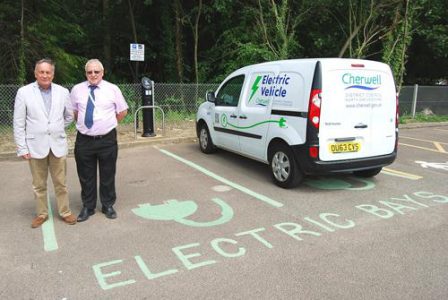
An electric vehicle charge point has been installed in the Tove Short Stay car park in Towcester by South Northamptonshire Council (SNC).

Cllr Dermot Bambridge and Facilities Manager Stephen Wright

The charge point is a type-two floor mounted socket which is part of the Charge Your Car electric vehicle re-charging network.

The charge point can be activated by using the Charge Your Car access card, Charge Your Car mobile phone app or automated pay-as-you-go telephone line and is compatible with most electric vehicles.

There are two parking bays designated for electric vehicle charging only and they are marked in green.
Parking restrictions of three hours maximum stay, with no return within 3 hours Monday to Friday 8am until 6pm still apply.

Cllr Dermot Bambridge, SNC’s portfolio holder for environmental services, said:

“This is a really proactive step forward in the move towards greener energy sources in the district.

“As a council it’s important for us to encourage the use of more environmentally friendly travel options, and also pave the way for other councils to follow suit.

“I hope that, as electric vehicles become increasingly accessible and common place, we will see an increase in use and adoption of charge points such as this.”

Electric vehicle owners will need to supply their own cable in order to use the charge point.

Rebecca Roper, Community Manager for Charge Your Car, also said:

“Here at Charge Your Car we want to make it as easy as possible for electric vehicle drivers to charge their cars, so it’s encouraging to see organisations such as SNC taking the initiative and installing charge points in more rural locations.”

Source: AboutMyArea/Northamptonshire

ENGIE joins the drive towards electric vehicles

ENGIE has pledged to invest £600,000 to start switching to a fleet of electric vehicles (EVs) in the UK.

It aims for 20% of its vehicle fleet to be electric by 2020 and zero diesel vehicles by 2025.

It is part of ENGIE’s plans towards tackling air pollution and helping meet its decarbonisation targets for 2020 and beyond.

The project will start in the second half of this year, with the company switching to 395 EVs in the next three years.

Wilfrid Petrio, CEO of ENGIE in the UK & Ireland said: “This is an exciting programme which looks to position ENGIE as a front runner in green mobility whilst capitalising on our newly acquired EV charging capabilities following ENGIE’s purchase of EV-Box.

“There are many benefits including improved air quality, carbon reduction and operating efficiencies, all of which support our goal of improving the lives of the communities and clients that we serve.”

The company has also launched an air quality app in partnership with King’s College London, which will help employees and customers to walk and cycle using the lowest pollution routes across the capital.

Source: Energy Live News

Porsche changes its mind on electric vehicles, plans 50% of its production to be electric within 6 years

It wasn’t long ago that Porsche claimed all-electric powertrains didn’t offer enough performance to reach the level that their customers expect from the premium German brand.

As their work on their first all-electric vehicle progresses, they are now changing their view on the technology and CEO Oliver Blume now says that he expects half of Porsche’s production to be electric by 2023.

The Mission E will be Porsche’s first all-electric vehicle and it is planned to enter production in 2019.
Last year, Blume said that they were planning for an annual production of 20,000 units for the new vehicle. It’s a significant volume for the German automaker considering they delivered just over 230,000 vehicles worldwide last year across its entire lineup.

But now they are ready to crank it up with a second all-electric vehicle based on the Macan.
In a surprising move, The CEO now says that between the two vehicles, Porsche is preparing for a capacity of 60,000 cars per year at its Zuffenhausen plant. Blume made the comment to Germany’s business magazine Manager Magazin last week.

The capacity would quickly make electric vehicles an important part of its overall production and it explains why the CEO now sees them reaching 50% of its total production as soon as 2023, which is much sooner than any established automaker.

Read more: Electrek