Daily Archives: May 27, 2017

First drive: Smart Forfour Electric Drive company car review

Sales of electric five-door Forfour expected to overtake its two-door forerunner.

Smart is offering a four-seat electric car for the first time with the new Forfour Electric Drive.

It will go on sale alongside the Fortwo Electric Drive later this year, and it’s the five-door, four-seater Forfour that Smart believes will be the best-seller in the UK.

Although prices hadn’t been set at the time of testing the car, the Forfour should reflect other models in the range and command a £500 premium over the Fortwo, with many customers then recognising the extra value in the additional doors and seats of the Forfour.

The Smart Forfour is a joint development with Renault that also spawned the current Twingo. The Forfour Electric Drive is produced in Slovenia, with the drivetrain manufactured by Renault in France. There is no word on whether an electric version of the Twingo will be launched, but Renault already has a compact EV in the Zoe, so maybe it is unnecessary.

Potential battery range in the Forfour is slightly lower than in the Fortwo (96 miles instead of 100), with maximum power of 81PS from the electric motor and top speed electronically limited to 81mph to avoid wasting charge unnecessarily.

The car will be sold with a standard 7kW charger, meaning the car can be charged in around two and a half hours from empty using a 16amp socket. Early in 2018, Smart will launch a 22kW on-board charger, which means the Smart could be charge in around 45 minutes using a 32amp charger.

Smart had considered delaying the launch of the Electric Drive models until this rapid charging system was available, but has decided to introduce it with the 7kW on-board charger.

The Forfour Electric Drive is nippy around town and eager to take advantage of gaps in traffic with responsive acceleration. Despite being slightly less powerful than a Renault Zoe, it actually accelerates more quickly. The Forfour takes 12.7 seconds to reach 62mph from rest, while a Zoe covers the same benchmark in 13.5 seconds. It isn’t as quick as the Volkswagen e-Up, (12.4 seconds) and is also slightly behind on the e-Up’s 99-mile electric range.

Like other Smart models, there are three equipment grades: Passion, Prime and Proxy, with power steering and heated front seats standard from Prime, as well as a lane-keeping assistant.

The maximum range of 96 miles is disappointing compared to the latest models coming to market (the new Zoe is up to 200 miles). In winter it wouldn’t be surprising if this fell to 60 or so miles, with heated seats and climate control as well as headlamps and windscreen wipers adding to demands on the battery.

We can’t help feeling the company should have been a bit more ambitious and given more people a reason to switch to electric.

Source: FleetNews

BMW Q1 2017 Plug-In Sales At 4% Of Total Sales, Double Year Ago

BMW released its sales results for the first quarter of 2017, and boasted of twice higher sales of plug-in vehicles compared to the previous year.

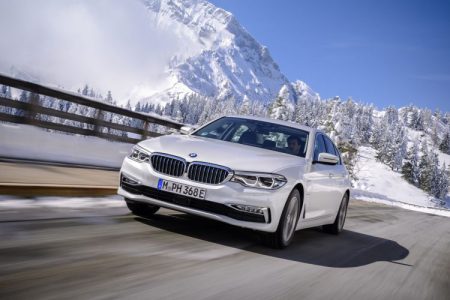
BMW 530e iPerformance

Total deliveries amounted 19,400 (up 101%), which was a 3.85% share of the total 503,438 BMW vehicles sold during the period.

We also got some insights/splits between the BMW i and iPerformance brands:

  • BMW i – 8,098 (up 57.9%)
    BMW iPerformance – 11,302 (up 150%)

The BMW i3 is still the most popular plug-in model with 7,431 sales in Q1 (up 67%), while the i8 decreased by 3% to 667.

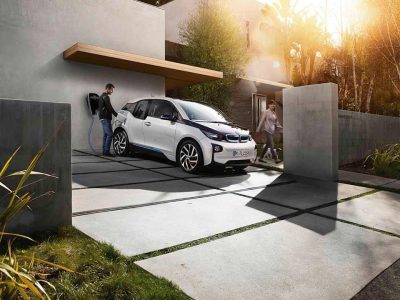
BMW i3

BMW Group vehicles with electrified drivetrains performed particularly well during the first quarter, as nearly 20,000 BMW i3, BMW i8 and BMW iPerformance plug-in hybrids were sold, twice the previous year’s corresponding figure.

“We are therefore well on course to delivering more than 100,000 electrified vehicles for the first time in 2017,”

Krüger stated.

Electrified vehicles accounted for more than three per cent of all BMW Group vehicle deliveries to customers in the first quarter (Q1 2016: 1.7%).

With the launch of the BMW i3 almost four years ago, the BMW Group was an early pioneer of electric mobility and has remained true to its strategy ever since. When the first MINI brand plug-in hybrid model is introduced in summer 2017, the BMW Group will have nine electrified models in its portfolio. The BMW i8 Roadster is set to follow in the coming year and the first all-electric MINI is due in 2019. In 2020, the battery-powered BMW X3 will integrate all-electric mobility into the Group’s core brand. One year later, the new BMW iNEXT is set to take to the roads. As the BMW Group’s new technological spearhead, it will set the benchmark in the future-oriented ACES fields Autonomous, Connected, Electrified and Services/Shared.”

Source: Inside EVs

The great climate silence: we are on the edge of the abyss but we ignore it

We continue to plan for the future as if climate scientists don’t exist. The greatest shame is the absence of a sense of tragedy

After 200,000 years of modern humans on a 4.5 billion-year-old Earth, we have arrived at new point in history: the Anthropocene. The change has come upon us with disorienting speed. It is the kind of shift that typically takes two or three or four generations to sink in.

Our best scientists tell us insistently that a calamity is unfolding, that the life-support systems of the Earth are being damaged in ways that threaten our survival. Yet in the face of these facts we carry on as usual.

Most citizens ignore or downplay the warnings; many of our intellectuals indulge in wishful thinking; and some influential voices declare that nothing at all is happening, that the scientists are deceiving us. Yet the evidence tells us that so powerful have humans become that we have entered this new and dangerous geological epoch, which is defined by the fact that the human imprint on the global environment has now become so large and active that it rivals some of the great forces of nature in its impact on the functioning of the Earth system.

This bizarre situation, in which we have become potent enough to change the course of the Earth yet seem unable to regulate ourselves, contradicts every modern belief about the kind of creature the human being is. So for some it is absurd to suggest that humankind could break out of the boundaries of history and inscribe itself as a geological force in deep time. Humans are too puny to change the climate, they insist, so it is outlandish to suggest we could change the geological time scale. Others assign the Earth and its evolution to the divine realm, so that it is not merely impertinence to suggest that humans can overrule the almighty, but blasphemy.

Red more: The Guardian