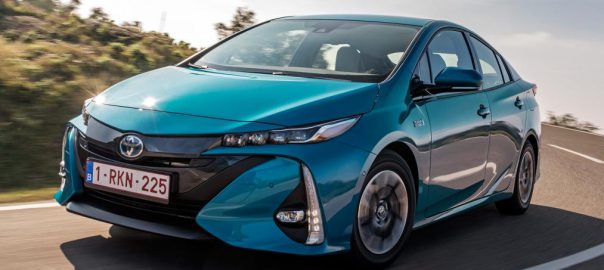
Plug-in Prius is a technological achievement, but it’s pricey and we wonder if the regular hybrid is better for day-to-day driving
Toyota has been making huge strides with its latest Prius, managing to improve both the driving dynamics and fuel efficiency over the car it replaced last year. Now the plug-in hybrid version of the new generation is about to land in UK dealers – and although we sampled the car in American form last autumn, this is the first opportunity we’ve had to try a UK-spec model on European roads.
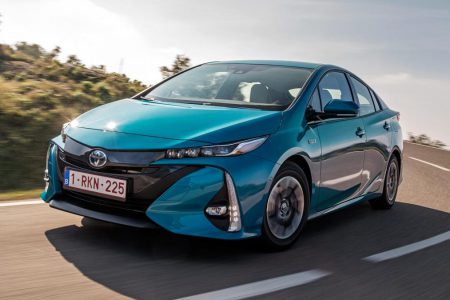
Plug-in hybrids are all about pure-electric range, of course, because if you aren’t bothered by the ability to drive without any combustion engine noise, you’ll just buy the regular hybrid instead. The old Prius Plug-in could manage a claimed 15 miles on electric power alone, but the new model doubles that figure.
The gain is down to a more efficient electric motor in the middle of the 121bhp powertrain, and the latest lithium-ion battery tech; Toyota’s engineers managed to double its capacity compared with the unit in the old car, in fact – but in physical terms it’s only two thirds larger and 50 per cent heavier.
Toyota has also fitted a clutch to its innovative drive system, allowing the generator to be switched into a secondary electric motor; this has allowed engineers to raise the maximum speed in pure-electric mode to more than 80mph.
The other significant numbers on the Prius Plug-in are a 0-62mph time of 11.1 seconds, combined fuel economy of 283mpg and CO2 emissions of just 22g/km. A 43-litre fuel tank means that you can still travel a meaningful distance when you’re away from a plug socket, too. A full charge on a rapid domestic charger will take you about two hours; add just over an hour to that figure if you’re going to use a 13A plug.
The Prius Plug-in comes in just two trim levels in the UK. Business Edition Plus brings more than enough kit, with safety features such as rear-cross traffic alert, a pre-collision system with pedestrian detection, road sign assist and adaptive headlights. You also get an 8in touchscreen with sat-nav, plus dual-zone air-con, a wireless mobile phone charger and heated front seats.

Read more: AutoExpress