Monthly Archives: February 2017

Severe Flooding, Against a Background of Wind Turbines: November 2012, Tyringham, Bucks. (Image: T. Larkum)

A Climate Change Economist Sounds the Alarm

Some people who study climate change believe that addressing it later — when economic growth has made humanity wealthier — would be better than taking drastic measures immediately. Now, though, one of this group’s most influential members appears to have changed his mind.

In the early 1990s, Yale’s William Nordhaus was among the first to examine the economics of reducing carbon emissions. Since then, he and colleagues have mixed climate physics with economic modeling to explore how various policies might play out both for global temperatures and growth. The approach attempts to weigh, in present-value terms, the costs of preventative measures against the future benefit of avoiding disaster.

Nordhaus has mostly argued for a small carbon tax, aimed at achieving a modest reduction in emissions, followed by sharper reductions in the medium and long term. Too much mitigation now, he has suggested, would damage economic growth, making us less capable of doing more in the future. This view has helped fossil fuel companies and climate change skeptics oppose any serious policy response.

Severe Flooding, Against a Background of Wind Turbines: November 2012, Tyringham, Bucks. (Image: T. Larkum)
Severe Flooding, Against a Background of Wind Turbines (Image: T. Larkum)

In his latest analysis, though, Nordhaus comes to a very different conclusion. Using a more accurate treatment of how carbon dioxide may affect temperatures, and how remaining uncertainties affect the likely economic outcomes, he finds that our current response to global warming is probably inadequate to prevent temperatures from rising more than 2 degrees Celsius above their pre-industrial levels, a stated goal of the Paris accords.

Worse, the analysis suggests that the required carbon-dioxide reductions are beyond what’s politically possible. For all the talk of curbing climate change, most nations remain on a business-as-usual trajectory. Meanwhile, further economic growth will drive even greater carbon emissions over coming decades, particularly in developing nations.

Nordhaus deserves credit for changing his mind as the results of his analyses have changed, and for focusing on the implications of current policies rather than making rosy assumptions about the ability of new technologies to achieve emission reductions in the future. Many other analyses — including those of the Intergovernmental Panel on Climate Change — don’t demand such realism.

Nonetheless, the shift in his assessment is stark. For two decades, the advice has been to do a little but mostly hold off. Now, suddenly, the message is that it’s too late, that we should have been doing a lot more and there’s almost no way to avoid disaster.

Perhaps the main lesson is that we shouldn’t put too much trust in cost-benefit calculations, the standard economic recipe for making policy decisions. In the case of climate change, they are inherently biased toward inaction: It’s easy to see the costs of immediate emissions reductions, and much harder to quantify the benefits of avoiding a disaster likely to materialize much farther in the future. By the time the nature and impact of that disaster become clear, it may be too late to act.

Source: Bloomberg
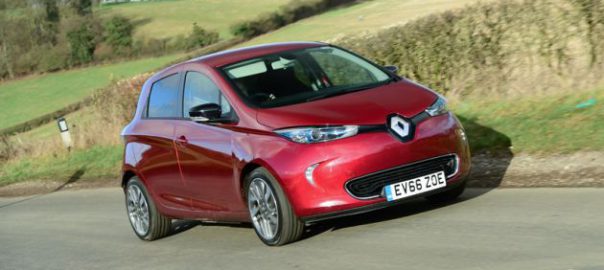
Renault ZOE Z.E. 40 in Mars Red (Image: NGC)

Renault Zoe Z.E. 40 first drive

Renault’s new Zoe Z.E. 40 promises the greatest range of any mainstream EV on the market today.

With an official range of up to 250 miles depending on model, only Tesla’s line-up can beat that range figure, but they cost far more than twice the amount of the little Renault. Next Green Car got behind the wheel of the new longer-range EV to see how it performs on a cold and misty winter’s morning in the UK.

Review by Chris Lilly

WHAT’S CHANGED?

Renault ZOE Z.E. 40 in Mars Red (Image: NGC)

We’ll start with the biggest and most significant change to the Zoe – the battery. Previous models were equipped with a 22 kWh battery which is good for an official range of 149 miles on a single charge. The new version now packs a 41 kWh battery with a quoted range of 250 miles. The previous 22 kWh model is still available in one specification, but it is the Zoe Z.E. 40 with almost double the battery capacity that is the big news and the model being pushed.

The extra range has been achieved by ‘chemical wizardry’ according to the presentation from Renault’s PR team, but essentially the engineers have made a battery with greater energy density through tweaking and improving the materials used. All of this means that the extra capacity battery is the same physical size, so it fits in the Zoe without the need for costly re-engineering.

Other changes include a new top-of-the-range trim level Signature Nav, which includes leather upholstery, bronze highlights inside, rear reversing camera, new alloy wheel design, and Bose stereo. All models get slight design tweaks inside and out, though you will be hard pushed to list them.

Charging has changed only in the sense that it now takes longer to top up the battery. Available in both rapid charge-capable 230 mile specification, and non-rapid 250 mile trim, the Zoe Z.E. 40 will take varying amounts of time to charge. The 250 mile model tested can connect to a 43kW rapid charger, but will only be charged from 0-80% in one hour and 40 minutes. A 7kW home charger – which comes free with a new Zoe Z.E. 40 – will complete a full charge in a little under seven and a half hours. The 230 mile model cuts rapid charging time to just over one hour, but increases the 7kW charge time by an hour. This is compared to the one hour rapid charge, and four hour 7kW charge offered by the 22kWh model.

Read more: Next Green Car

Renault #EV day, 2017 – Zoe Z.E.40 & Twizy

Renault has launched its latest Zoe version, with a new 41kWh battery that promises 186-miles (real world) range, 124-mile worst case range and 250-mile official NEDC range. The new car also introduces new motor and charging options plus new colours and trim levels including BOSE sound system.

Meanwhile, the ever-enjoyable Twizy continues to provide on road open-air thrills (via a lack of windows) and a great way to travel the Cotswolds.

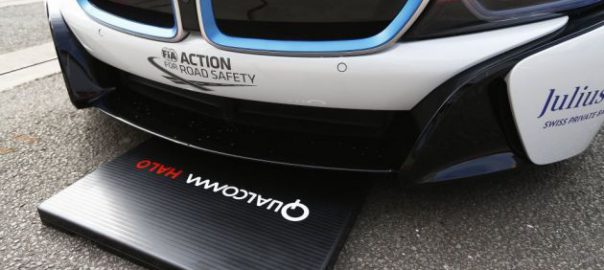
New standardised wireless chargers mean cross-brand and network compatibility

Wireless EV Charging Standard Agreed

The world’s major electric car makers and charging equipment providers have agreed on a standardised specification for wireless EV charging points, allowing companies to develop components going forward that will seamlessly work with each other anywhere.

Although not as exciting on the surface as say a new high-powered rapid charger, the standardisation of wireless car charging is of vital importance to the EV market in the future.

New standardised wireless chargers mean cross-brand and network compatibility

All of the main EV and PHEV manufacturers are planning on incorporating wireless charging into future models, while it is also a crucial element of autonomous EVs that can drive off and charge themselves when not in use.

The new SAE J2954 standard will charge at either 3.7 kW or 7.7 kW in Level 1 or Level 2 respectively. These use current commonly found charging rates, with a Level 3 set-up charging at 11 kW planned for later this year.

The agreements were made at a meeting at Audi HQ in Ingolstadt, Germany, chaired by Jesse Schneider who has worked on the project since 2010.

Mr Schneider said:

“Charging your vehicle should be as simple as parking it and walking away — and wireless charging with SAE J2954™ enables that freedom and convenience to do this automatically. Automakers believe that wireless charging can greatly help to make both electrified and autonomous vehicle mainstream, and they have been active supporters of our standardization efforts.

“Reaching a decision for a common J2954™ RP test station, equipped with circular topology, provides automakers with the technical direction for their wireless charging system design, development and production release plans to meet industry compatibility, interoperability and performance standards. It is a major step forward for the industry.”

Source: Next Green Car

BMW i3 in Fluid Black (Image: BMW.co.uk)

New BMW i3 Business Contract Hire Prices


Warning: preg_match(): Compilation failed: invalid range in character class at offset 4 in C:\inetpub\vhosts\fuelincluded.com\httpdocs\wp-content\plugins\maxbuttons\assets\libraries\simplehtmldom\simple_html_dom.php on line 1389

Warning: preg_match_all(): Compilation failed: invalid range in character class at offset 4 in C:\inetpub\vhosts\fuelincluded.com\httpdocs\wp-content\plugins\maxbuttons\assets\libraries\simplehtmldom\simple_html_dom.php on line 694

Warning: foreach() argument must be of type array|object, null given in C:\inetpub\vhosts\fuelincluded.com\httpdocs\wp-content\plugins\maxbuttons\assets\libraries\simplehtmldom\simple_html_dom.php on line 701

Warning: preg_match_all(): Compilation failed: invalid range in character class at offset 4 in C:\inetpub\vhosts\fuelincluded.com\httpdocs\wp-content\plugins\maxbuttons\assets\libraries\simplehtmldom\simple_html_dom.php on line 694

Warning: foreach() argument must be of type array|object, null given in C:\inetpub\vhosts\fuelincluded.com\httpdocs\wp-content\plugins\maxbuttons\assets\libraries\simplehtmldom\simple_html_dom.php on line 701

Fatal error: Uncaught Error: Attempt to assign property "href" on array in C:\inetpub\vhosts\fuelincluded.com\httpdocs\wp-content\plugins\maxbuttons\blocks\basic.php:171 Stack trace: #0 C:\inetpub\vhosts\fuelincluded.com\httpdocs\wp-content\plugins\maxbuttons\classes\button.php(382): MaxButtons\basicBlock->parse_button() #1 C:\inetpub\vhosts\fuelincluded.com\httpdocs\wp-content\plugins\maxbuttons\classes\button.php(476): MaxButtons\maxButton->parse_button() #2 C:\inetpub\vhosts\fuelincluded.com\httpdocs\wp-content\plugins\maxbuttons\classes\button.php(903): MaxButtons\maxButton->display() #3 C:\inetpub\vhosts\fuelincluded.com\httpdocs\wp-content\plugins\maxbuttons\classes\maxbuttons-class.php(525): MaxButtons\maxButton->shortcode() #4 C:\inetpub\vhosts\fuelincluded.com\httpdocs\wp-includes\shortcodes.php(434): MaxButtons\maxButtonsPlugin->shortcode() #5 [internal function]: do_shortcode_tag() #6 C:\inetpub\vhosts\fuelincluded.com\httpdocs\wp-includes\shortcodes.php(273): preg_replace_callback() #7 C:\inetpub\vhosts\fuelincluded.com\httpdocs\wp-includes\class-wp-hook.php(324): do_shortcode() #8 C:\inetpub\vhosts\fuelincluded.com\httpdocs\wp-includes\plugin.php(205): WP_Hook->apply_filters() #9 C:\inetpub\vhosts\fuelincluded.com\httpdocs\wp-includes\post-template.php(256): apply_filters() #10 C:\inetpub\vhosts\fuelincluded.com\httpdocs\wp-content\themes\twentythirteen\content.php(43): the_content() #11 C:\inetpub\vhosts\fuelincluded.com\httpdocs\wp-includes\template.php(812): require('...') #12 C:\inetpub\vhosts\fuelincluded.com\httpdocs\wp-includes\template.php(745): load_template() #13 C:\inetpub\vhosts\fuelincluded.com\httpdocs\wp-includes\general-template.php(206): locate_template() #14 C:\inetpub\vhosts\fuelincluded.com\httpdocs\wp-content\themes\twentythirteen\archive.php(42): get_template_part() #15 C:\inetpub\vhosts\fuelincluded.com\httpdocs\wp-includes\template-loader.php(106): include('...') #16 C:\inetpub\vhosts\fuelincluded.com\httpdocs\wp-blog-header.php(19): require_once('...') #17 C:\inetpub\vhosts\fuelincluded.com\httpdocs\index.php(17): require('...') #18 {main} thrown in C:\inetpub\vhosts\fuelincluded.com\httpdocs\wp-content\plugins\maxbuttons\blocks\basic.php on line 171