Monthly Archives: December 2015

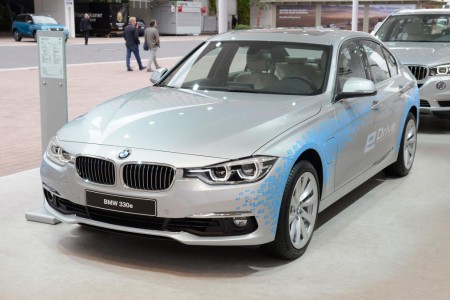
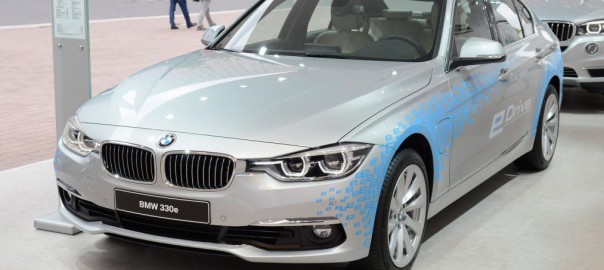
BMW 330e PHEV

Prices revealed for BMW 330e and 225xe plug-ins

BMW’s new 2-Series Active Tourer and 3-Series plug-in hybrid range priced from £35,005 and £33,935 respectively

BMW 330e PHEV
BMW 330e PHEV

After their debut at the 2015 Frankfurt Motor Show, BMW has revealed pricing for its two new plug-in hybrid models, the 330e and 225xe. The petrol-electric 3-Series is on sale now, while the 2-Series Active Tourer will be available from March.

The 330e starts from £33,935 in SE trim and is available in all other trims in the 3-Series range. It also remains a dedicated rear-wheel drive sports saloon. The £35,005 225xe, on the other hand, is a standalone model that previews one of the key powertrains planned for the X1 and for the upcoming X2.

The 225xe takes its powertrain inspiration from BMW’s bravest shape, the i8, effectively taking its combination of electric and petrol motors and turning them around.

Read more: Auto Express

Discover the BMW i3

https://youtu.be/Sf48CiRolHU

BMW released one of the best video presentations of the i3 and i8 plug-in electric cars, from Drive Module through all the major components like motors, batteries, Life Module and so on up to the final product.

The i3 video is available in two slightly different version (with back-up range-extender engine and without).

Discover the BMW i3

“The BMW i3 opens a new chapter of a visionary design language for BMW that is tailor-made for electric vehicles. The innovative LifeDrive architecture with carbon passenger compartment provides an especially roomy feeling in the interior (in part thanks to the absence of a centre tunnel) and is characterised by the use of high-quality, sustainable materials.”

Source: Inside EVs

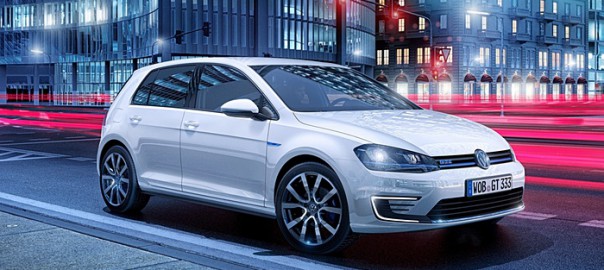
Turn it on: Golf’s GTE is part electric and part petrol, with a promise of 166 miles to the gallon

Huge plug-in investment by VW

The Volkswagen Group will invest an additional 100 million Euros (£70 million) in alternative drive technologies in 2016. Group CEO Matthias Müller announced the plans today (Friday 20th November) at the company’s headquarters in Wolfsburg.

2016 Volkswagen e-Golf

The move comes as the VW Group is planning on limiting its spending on capital expenditure to 12 billion Euros, down from the previously planned 13 billion Euros. These cuts will impact projects such as the proposed new design centre in Wolfsburg, which will save around 100 million Euros. The all-electric Phaeton which was announced in mid-October has been put on hold too, but remains in the pipeline rather than being cancelled indefinitely.

Most of the projects that will not be affected by cuts involve new products and modular toolkits. Money will continue to be spent on the next-generation VW Golf, the Audi Q5 and the new Crafter van plant in Poland. Crucially, the modular electric toolkit (MEB), announced at the same time as the all-electric Phaeton, will still be developed.

The MEB will work in a similar fashion to the current MQB, which is the architecture that underpins a large number of models in the VW Group, including those in the VW, Seat, Skoda and Audi ranges. This common platform keeps costs low and allows the group to offer a variety of models without encountering huge engineering costs for each.

The plan is that the MEB will do the same thing for the VW Group as the MQB did, namely dramatically increase the number of models available – with the difference being that MEB models will all feature plug-in drivetrains of one sort or another. This will help bring the VW Group’s plans to have 20 electric and plug-in hybrid models on sale by 2020 to fruition.

Read more: Next Green Car

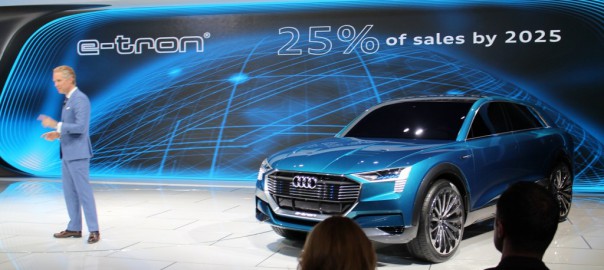
Audi of America president Scott Keogh with Audi e-Tron Quattro Concept, 2015 Los Angeles Auto Show

One-Quarter Of All Audis To Be Electric In 10 Years

It was an audacious statement, but there it was.

Audi of America president Scott Keogh with Audi e-Tron Quattro Concept, 2015 Los Angeles Auto Show

Audi expects that 25 percent of the cars it sells just 10 years hence will be either battery-electric or plug-in hybrid models.

And it came directly from Scott Keogh, president of Audi of America, in front of a packed media audience at the Los Angeles Auto Show.

Audi sold 1.7 million cars globally in 2014, of which 182,000 went to U.S. buyers. Assuming at least 2 million vehicles by then, that means the company would sell half a million electric or plug-in hybrid vehicles a year in 2025.

The public projection culminated an intensive week of activity by Audi to talk more openly and candidly about the addition of plug-in vehicles to its portfolio, and how it intends to roll them out over the next few years.

The media events were planned well before the Volkswagen diesel-emission scandal broke in mid-September, executives say, and reflect a public commitment by the second of Germany’s luxury brands to commit to a broad program of electrified vehicles.

Read more: Green Car Reports

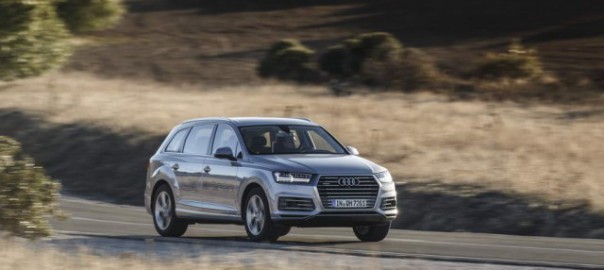
Audi Q7 e-tron PHEV (Image: Audi)

First drive: Audi Q7 e-tron plugin hybrid

The large SUV marketplace is quickly becoming awash with plugin hybrid options for savvy buyers that want to reduce their tax bill without sacrificing performance. The latest, Audi’s refined new Q7 e-tron, is brimming with clever technology, plus it takes a different path to most others in the segment by pairing a diesel engine with the electric componentry. Is it a game-changer?

Audi Q7 e-tron PHEV (Image: Audi)

What’s this?

Audi’s latest stepping stone on its path to full range electrification. It’s called the Q7 e-tron and it’s a diesel-electric plugin hybrid electric vehicle (PHEV) based on the company’s range-topping SUV. That’s right, diesel. Unlike all other hybrids in the segment (BMW X5, Lexus RX 450h and Porsche Cayenne), the Q7 stops at the black pump for fuel. It’s a 3.0-litre V6 engine producing 258hp and 600Nm. Boosting that is a 94kW electric motor, mounted within the casing of the eight-speed automatic gearbox, producing 350Nm of torque from zero rpm. It’s fed by a large 17.3kWh battery pack sitting above the rear axle, which can be recharged from an external source by various means and the total system outputs are 373hp and 700Nm. The electric-only range is quoted at just under 35 miles, while recharging takes as little as 2.5 hours from an industrial outlet. Official figures peg the Q7 e-tron at 166.2mpg and 46g/km, meaning zero annual road tax and large grants. When it arrives in the UK in 2016 the on-the-road price is expected to be about £65,000.

Read more: Car Enthusiast

Car exhaust (Image: BBC)

When Will We Start To See ‘Tailpipes’ On Cars As Morally Wrong?

For those of us who don’t already…

The economists call them “externalities.”

Car exhaust (Image: BBC)

They’re the costs of people’s actions on other people or communities–but the people taking those actions don’t have to pay for those costs, even though they harm others.

And the emissions from combusting fossil fuels are clearly a prime example.

While complaints about air quality in the Los Angeles Basin date back literally centuries, research more than 50 years ago established that vehicle emissions were the primary cause of photochemical smog.

That led the state of California to begin efforts to regulate tailpipe emissions–well before the U.S. Environmental Protection Agency even existed–which led in turn to the first catalytic converters in U.S. vehicles in 1975.

Catalysts spread throughout most of the automaking world over the next 20 years, hugely reducing emissions of carbon monoxide (CO), hydrocarbons (HC), and nitrogen oxides (NOx), all of them toxic in various ways.

The gradual recognition and scientific acceptance of climate change due to rapid and unparalleled human emissions of carbon dioxide (CO2) since the dawn of the Industrial Revolution around 1750 adds an entirely new problem.

Read more: Green Car Reports

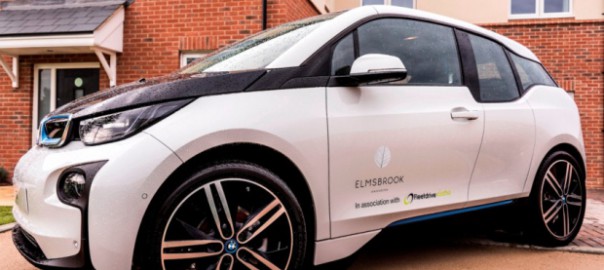
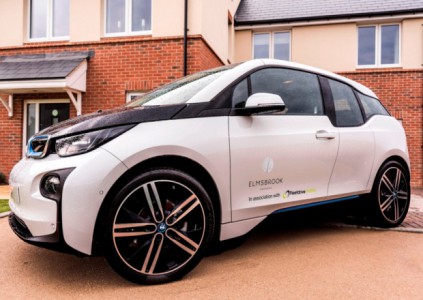
One of the new electric cars in the new e-car fleet for Elmsbrook development in Bicester

Fleet of electric cars to take to the town’s roads

An electric car club which aims to get residents in the new Elmsbrook development in North West Bicester to use environmentally friendly transport has been launched.

One of the new electric cars in the new e-car fleet for Elmsbrook development in Bicester

The car club, which sees Fabrica by A2Dominion working with North Oxford BMW, Fleetdrive Electric and E-Car Club, will be in place for Elmsbrook’s first residents.

The club will consist of two cars, a BMW i3, sponsored by North Oxford BMW and a Renault Zoe, sponsored by A2Dominion, although the number of cars in the fleet will rise as more residents move in.

A2 Dominion is aiming to reduce the number of local journeys made by petrol/diesel cars from 67.5 per cent to 50 per cent by 2026.

Louise Caves, NW Bicester strategic partnership manager said:

“We are delighted to have formed this partnership with Fleetdrive Electric, North Oxford BMW and E-car to help achieve our sustainable travel targets.

“By working together it will give Elmsbrook residents unparalleled choice when it comes to alternative modes of travel and access to test drives and trial periods on a number of different electric vehicles.”

She added they were aiming for 10 per cent of the development’s residents to switch to electric or hybrid cars by 2017. The developer hopes to achieve this through measures including a travel plan co-ordinator, a community bus service and bicycle stores for every home.

E-Car will be managing the club and Elmsbrook residents will receive half-price lifetime membership with A2Dominion subsidising five hours free use for every resident.

Read more: Buckingham Today

RENAULT-NISSAN AND PARTNERS INSTALL 90 NEW EV CHARGE SPOTS AROUND PARIS FOR COP21

  • 90 new charge spots powered by low-carbon electricity will refuel 200 Renault-Nissan EVs during the COP21 climate change conference
  • EV shuttle service is expected to log at least 400,000 kilometers over the two-week summit—without a single drop of oil
  • Many of the most conveniently located quick chargers will remain after COP21 and be available for the public

PARIS (Nov.  19, 2015) — The Renault-Nissan Alliance is installing 90 new charge spots for electric vehicles in and around Paris for the COP21 global summit on climate change.

68937_1_5_Renault

The installation is being done in partnership with French energy provider EDF, Schneider Electric, Aéroports de Paris, Paris City Council and SNCF, France’s national railway company.

The charging stations, several of which will be donated by Schneider Electric, will refuel 200 EVs serving as VIP shuttles for negotiators, delegates and media attending the conference. More than 20,000 U.N. participants from 195 countries are expected to attend the 21st annual Conference of Parties (known as COP21), from Nov. 30 to Dec. 11.

“COP21 is a call to action to reduce the impact of climate change–including global warming resulting from personal transportation,” said Renault-Nissan Chairman and CEO Carlos Ghosn. “Electric vehicles are the only existing, practical and affordable transportation solution to our planet’s environmental challenges – and they are available today. Expanding the EV infrastructure is mandatory for any city or state that’s serious about environmental stewardship.”

The quick and standard EV charging stations will use renewable and extremely low-carbon electricity from EDF, enabling the Renault-Nissan fleet to cover more than 400,000 km in two weeks. The quick charging stations will recharge EVs from 0 to 80% capacity in about 30 minutes.

EVs consume any form of electricity used in the power grid, including hydropower, solar and wind energy. As countries reduce dependence on fossil fuels and increase reliance on renewable resources, EVs become even greener.

Small carbon footprint

The COP21 charging stations in the Paris region will use electricity with a small carbon footprint. The French power grid distributes electricity with a very low average of CO2 emissions per kWh: less than 40 g in 2014, compared to the European average of 325 g of CO2 emissions per kWh. Renewable energy accounted for about 19% of France’s electricity last year.

“EDF supports the development of electric mobility, which is a cornerstone of countries’ efforts to minimize urban pollution. EDF produces extremely low-carbon electricity in France, which enables a significant reduction in greenhouse gas emissions and thus reinforces the favorable ecological footprint of this new generation of transport,” said EDF Chairman and CEO Jean-Bernard Levy.

In addition, EDF is offsetting the remaining CO2 emissions through carbon credits generated by projects certified by the United Nations. That means the Renault-Nissan EV fleet will use electricity considered fully “decarbonized.”

Fourteen of the 27 quick chargers installed will remain after the climate change conference and will be available for the public to use. These include two at Charles de Gaulle Airport, two on the Paris périphérique highway and one at Orly Airport.

France already has about 10,000 quick and standard charging spots. In the Paris region alone, there are more than 4,000 spots, making Paris one of the most “plugged in” cities in Europe.

Source: Renault Nissan Blog
An electric vehicle [Renault ZOE] is charged with photovoltaic power from the roof of the house using a charging station (Image: Fraunhofer ISE)

Solar vehicle charging at home

Owners of home photovoltaic systems will soon be able to make their households even more sustainable, because PV power is also suitable for charging personal electronic vehicles.

An electric vehicle [Renault ZOE] is charged with photovoltaic power from the roof of the house using a charging station (Image: Fraunhofer ISE)
A home energy management system created by Fraunhofer researchers incorporates electric vehicles into the household energy network and creates charging itineraries.

The house of the future is environmentally friendly, energy efficient and smart. Its inhabitants can utilize rooftop-generated PV energy not only for household consumption but also to charge their personal electric vehicle. This scenario has already become reality for a collection of row houses built according to the “Passive House” standard in the German city of Fellbach in Baden-Württemberg. The group of new homes was upgraded as part of the “Fellbach ZeroPlus” project to include electromobility enhancements as well as a comprehensive energy management system. The initiative is sponsored by the German Federal Government’s “Electric Mobility Showcase” program.

Fast charging stations and home energy management

“The large photovoltaic systems on the rooftops of the houses provide more power than the inhabitants consume over the long term. Surplus power can be fed into the public grid as well as be used for charging the household electric vehicle,” explains Dominik Noeren, a scientist at the Fraunhofer Institute for Solar Energy Systems ISE in Freiburg. To efficiently incorporate electromobility enhancements into the daily routines of the households, Noeren and his team designed a 22 kW fast charging station as well as a home energy management system (HEMS) for five of the seven homes. The Java-based HEMS software runs on small computers known as embedded systems. The HEMS collects data from the various electricity meters in the house, including those for the photovoltaic system, the electric vehicle, the heat pump, and general household power. The system displays the various power flows and informs the homeowners about their current power consumption at any time of the day. “They can see how much power is coming from either the public grid or the household solar system, and they can see where it is going — to the heat pump, household appliances, or the electric vehicle,” says Noeren.

Read more: Science Daily

Fully Charged Checks Out Longer Range 30 kWh Nissan LEAF – Video Review

Nissan recently demonstrated the new 30 kWh LEAF to journalists in France.

Among the various media outlets was Fully Charged with Robert Llewellyn impressed by the longer range LEAF.

According to latest episode, it’s worth buying the 30 kWh version, as you’ll definitely notice the difference in range compared to 24 kWh – reasonably about 110-120 miles (107 miles EPA).

“A wonderful drive up a mountain in the South of France in the newly released 30kWh Nissan Leaf. No question, it’s a big improvement in terms of range and driver interface.

A bigger battery that’s not physically bigger, just 25% more energy dense.”

Source: Inside EVs