Monthly Archives: October 2015

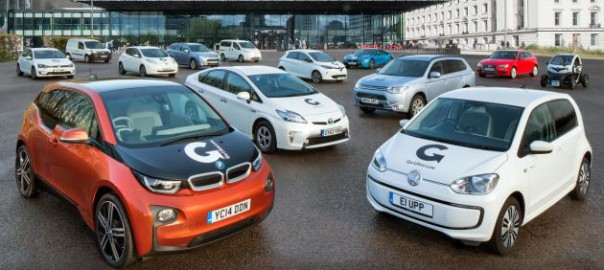
Ultra-low emission registrations up 386% on first quarter of 2014 (Image: OLEV)

Should you join the electric car revolution?

You’ve probably noticed more electric cars on the road and toyed with switching. We give you the lowdown on the costs involved.

Ultra-low emission registrations up 386% on first quarter of 2014 (Image: OLEV)

It’s becoming clear to anyone monitoring the UK’s roads that electric cars are here to stay. The numbers are increasing to the point that they now represent over 1% of new UK car sales – not a lot but enough to make them visible and get people thinking: “Should I be joining them?” That’s what we’ll attempt to answer here.

Sales are increasing – to the end of July this year, they rose an impressive 211% over the year to 16,170 registered. That’s split between roughly a third pure electric cars and two-thirds plug-in hybrids, which keep a regular engine to extend the range when battery power is exhausted.

The government so far remains pro EVs (electric vehicles) and PHEVs (plug-in hybrid electric vehicles). It has extended a generous purchase grant to “at least” February 2016 after it looked like the previous allocation was about to run out and has said that it wants every new vehicle sold in the UK from 2040 onward to be an ULEV (ultra-low emission vehicle – you’d better get used to the acronyms if you want to join the ranks of buyers).

The list of cars that qualify for this grant of upwards of £5,000 off the list price are growing all the time (see box for the current list). Whereas two or three years ago your choice was limited to a handful of geeky machines in strange sizes, now you can zap about in electric-powered cars to suit all tastes, including versions of ordinary, practical models such as the Volkswagen Golf and Ford Focus. You can wow neighbours in a PHEV supercar (the BMW i8) or lord it in the outside lane in the pure electric Tesla Model S, a phenomenally quick (and pricey) limo, which is surprisingly long-legged for an electric car. There are superminis, PHEV SUVs, people-carriers and even a minibus.

Read more: Moneywise

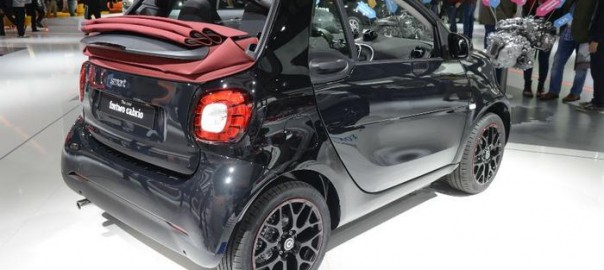
Smart unveiled its latest ForTwo Cabrio at the Frankfurt show

Renault will supply Daimler’s Smart with electric motors

FRANKFURT (Reuters) — Renault will supply motors for electric versions of Daimler’s Smart city cars under their deepening 5-year-old alliance, the carmakers said today.

Smart unveiled its latest ForTwo Cabrio at the Frankfurt show

The motors will be the same as those used in the Renault Zoe EV. The units are manufactured at the French automaker’s plant in Cleon, France.

They will equip battery-powered versions of the Smart ForTwo minicar made at Daimler’s Hambach facility in France as well as its larger ForFour model, assembled by the French carmaker in Slovenia alongside the Renault Twingo subcompact.

All three cars share a Daimler-developed platform.

The Renault-powered electric Smart models will go on sale in 2016, the companies said in a statement at the Frankfurt auto show.

Batteries for the Smart EVs electric drive will be produced by the Daimler’s subsidiary, Deutsche ACCUmotive, in Kamenz, Germany.

The alliance between Daimler and Renault-Nissan, launched in April 2010, now covers 13 projects including engines, compact cars and a pickup for Mercedes-Benz.

Source: Auto News

What Does A ‘Pre-Apocalyptic’ Future Look Like?

Three years ago, author Claire Vaye Watkins burst onto the literary scene with her acclaimed short story collection, Battleborn. On September 29th, readers can finally get a copy of her much-anticipated first novel: Gold Fame Citrus, a blistering tour de force set in the drought-blighted California of a near future.

In Watkins’ future, the conditions of today have given way to a desertification so vast and powerful it’s almost sentient. The Sierra snowpack is depleted, the scant remaining water is protected by the National Guard and rationed by the Red Cross. A worst-case drought scenario has resulted in an unstoppable salt-sand dune sea, called the Amargosa after the first mountain range it subsumed. Despite the best efforts of technology, FEMA, and human stubbornness, the Amargosa is grinding away the inhabited Southwest in its wake.

In this near-future world, we meet Ray and Luz, two “mojavs” squatting in “Laurelless” Canyon. They are trapped inside withered California by closed borders, armed thugs, and above all, bureaucracy. After adopting a mysterious child named Ig, they attempt escape across the Amargosa. Their journey puts them directly in the path of the indifferent desert and its inhabitants: a colony led by a charismatic “dowser” with a miraculous ability to find water where none exists.

Read more: Think Progress

Getting Older After the Apocalypse

Every now and then the Internet serves up something perfectly pitched to what you assumed were your own very individual fears.

On Thursday, for me, that was Romie Stott’s “futurist vision of retirement planning” at The Billfold. Planning for the eventual end of paid work isn’t just difficult because life is expensive and saving money is hard, she points out — it’s also difficult because the world is ending.

Okay, that might be my fears talking. But Ms. Stott does note that climate change over the next several decades will, at the very least, affect certain popular retiree destinations: “If your retirement dream includes a beach house, lake house, Florida, or New Mexico, add four to 11 degrees to the daily forecast; that’s the EPA’s best prediction for 2100 AD.”

That may sound relatively tame, but she also mentions booming populations of disease-bearing insects, and increasingly catastrophic storms. It’s predictions like this that, for years, have made me think of retirement planning not just in terms of 401(k)s but in terms of learning to build a fire.

Read more: NY Times

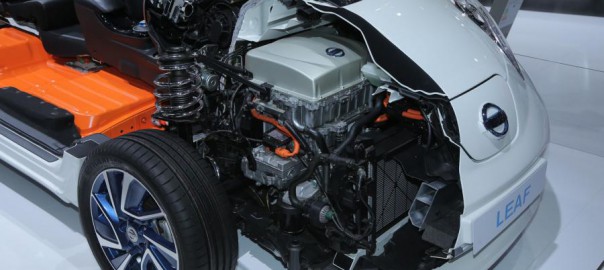
New battery for Nissan Leaf to deliver 155-mile range

A new 30kWh battery in the Nissan Leaf will go on sale in December, delivering a claimed range of 155 miles.

iaa-2015-0493_Nissan_Leaf_Autocar

It will go on sale alongside the 24kWh unit but will only be available in Acenta and Tekna trim, priced from £24,490 to £27,940 including the UK government’s £5000 Plug-in grant, which was recently extended until February 2016.

Nissan is also increasing its warranty for the 30kWh unit to an eight-year, 100,000-mile warranty.

The new battery brings an increase in range of around 25% over the alternative 24kWh unit, according to Nissan. It has the same dimensions as the lesser-powered unit but is 21kg heavier. The manufacturer says this longer range is the result of the introduction of carbon, nitrogen and magnesium to the electrodes in the new unit.

Nissan expects the real-world range of the new battery to be around 12-15% less than the claimed 155 miles, representing a similar loss to the 24kWh unit. This would put the new battery’s real-world range at around the 135-mile mark.

In Acenta and Tekna trims, the 30kWh Leaf comes with a 7.0in touchscreen and the smartphone-compatible Nissan Connect EV infotainment system, which allows users to check the charge status of the car and remotely control features such as the air-con. The system the previous Car Wings set-up.

The new infotainment package includes a charging map that can show which charging points are available and which are being used. It also delivers maintainance alerts and a car-finder facility.

Exterior alterations are minimal and include a new roof-mounted aerial as well as the choice of a new bronze colour.

“It’s a game changer for Nissan,” said EV director for Europe Jean-Pierre Diernaz. “This increased range will have an impact on the perception of our electric vehicles and will open it up to a wider market.”

Diernaz also added that the Leaf range could expand in the future to new electric models.

“It’s possible,” he said. “We will take this technology, improve it, and we are looking at putting it wherever it is relevant for us as a line-up expansion, and where it is releveant for a consumer.

“This new battery is just the beginning of something bigger,” he added. “The next milestone is a range of over 180 miles.”

Earlier this year Nissan expanded the Leaf trim range with a new Acenta+ version, sitting between Acenta and range-topping Tekna priced at £24,740 including the plug-in grant.

Source: Autocar

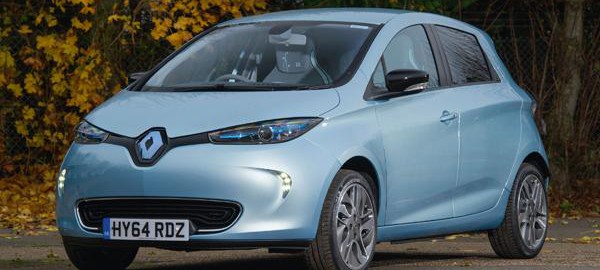
Renault ZOE EV

A fresh and futuristic electric car


Then comes along the Renault Zoe (Zero Emissions).

I’d be lying if I said my heart doesn’t sink whenever an electric car turns up at Motors HQ for a test. It just seems like hard work – working out how far you need to travel, checking the battery level available and then faffing around with charging cables.

But then I open the Zoe’s door and it looks … stunning.

Renault-ZOE_2013_wallpaper_3f_cs

There’s no drab, grey interior here – lots of white plastic and some nice digital displays.

The Star Wars geek in my thought it screamed Stormtrooper…

It’s comfortable and there’s an air of quality and technology all around.

Foot on the brake, press the Start button and the car comes alive. Not that you’d know it though because, being electric, it’s as quiet when fired up as it is turned off.

And this is where it gets good again.

There’s something magical about the way an electric car moves – it glides away, silently.

Except the Zoe has ZE Voice – an artificial noise that sounds like some kind of SFX you’d hear on Star Trek’s Enterprise. It’s all a bit spacey-sounding, and designed to work at low speeds to warn pedestrians that you’re there. It’s noticeable from inside, but not annoyingly loud, and can be turned off on each trip if you choose.

While driving the Zoe, there’s a flurry of excitement at the low-speed power available underfoot that’s mixed with concern over the damage that acceleration does to your battery life.

I never even got close to worrying about running low on juice, but that’s because I’ve learned from my past experiences and didn’t get too ambitious with my destinations.

After each full charge the Zoe told me I had roughly 70 miles of range.

So I stuck to routes that were no further than about 20 miles away, meaning I’d always have a bit extra for diversions, getting lost or just being able to put my foot down.

But the range meter stayed rather true to its estimates on all my trips, and on some regular commutes between Truro and Falmouth I ended up using even less “miles” than those I’d actually travelled.

Despite feeling like it’s carrying a bit of extra weight with all those batteries, the Zoe was totally comfortable and fun to drive.

If you’re brave enough to keep your foot down (on a closed track, obviously) then the Zoe will get to a top speed of 84mph.

Nought to sixty might be 13.5 seconds but bear in mind that nought to thirty is only four seconds. It’s wonderfully nippy for around town and while not intended for long journeys over dual carriageways or motorways, it’ll certainly hold its own, but you’d be a tad foolish to hammer down the right-hand lane, overtaking like glory-days Michael Schumacher.

An installed wall charger will allow you to keep it topped up at home, but you can also get a three-pin plug that can connect to the household mains – with the front Renault logo flipping open to take the connector.

There’s plenty of tech, too – from touchscreens to TFT displays and sat nav to air con, Bluetooth and downloadable apps.

The car we tested is currently £7,995 plus battery hire (which starts from, £43 per month – which is less than the cost of a tank of petrol).

The Renault Zoe feels fresh and futuristic, but shouldn’t be too alien for most drivers.

Much like politics, don’t let yourself be put off by the boring bits you don’t understand or worry might be too complicated.

My love/hate relationship with electrics continues – but this time the Zoe has put me back on a positive.

Source: Cornish Guardian

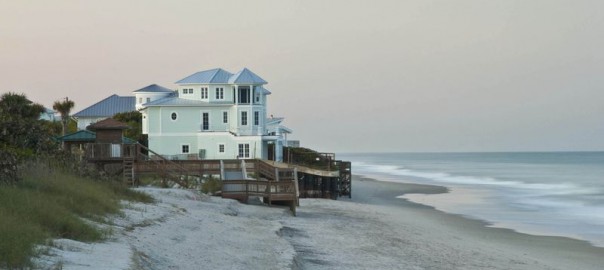
Atlantic Ocean Excited To Move Into Beautiful Beachfront Mansion Soon

WEST PALM BEACH, FL—Admitting it has had its eye on the property for quite some time, the Atlantic Ocean confirmed Monday that it was looking forward to moving into a beautiful beachfront mansion in the near future.

800_beachfront_property_onion

“For the longest time it seemed like this place was completely out of reach for me, but I’ve come a long way in the past few years, and now it’s looking more and more like a real possibility,”

said the body of water, which confided that, after having admired the building’s impressive exterior and grounds for so long, it was thrilled at the prospect of finally going inside and exploring all eight bedrooms and 7,500 square feet of living area.

“I’m not quite ready yet, but in a couple years or so, I can definitely see myself in there, making the place completely my own. And the little beachside community that the house is located in is just so cute, too—I can’t wait to go through and visit all the shops and restaurants.”

The ocean noted, however, that it might make a few cosmetic changes to the mansion once it moves in, including gutting the lower floor and taking out a few walls.

Source: The Onion

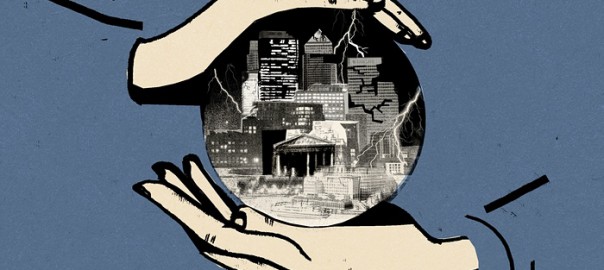
October 2017, after the crash

October 2017, after the crash: George Osborne wonders what went wrong

The chancellor might have looked in control in 2015, but the UK was badly exposed as the global economy faltered

2559_economic_crash_Guardian-EFP

October 2017: just hours to go, and still the words wouldn’t come. Other conference speeches had been straightforward. A few easy gags about the Labour leader, some gravelly bits about tough choices and the long-term economic plan and then – whoosh! – a rush of confident promises to zap the deficit and win the global race. The hall’s menagerie of blue-rinses and sixth-formers in suits got the message: George Osborne – a man you can trust with your finances, even if not love with all your heart. But now what was he going to say?

The chancellor glanced down at the A4 leaves, crawling with scribbles from his speechwriter and aides, and sighed. How different things had seemed just two years ago. Tory conference, autumn 2015: an election won, an economy humming, and him credited as the genius behind it all. Lobby hacks said he was the next prime minister. Lefty flacks thought he was parking tanks all over their parched little lawn. Westminster feared him; Beijing respected him. The world had hit Peak Osborne.

Read more: The Guardian

Economy round up

There are a lot of doom-and-gloom messages going around at the moment – it’s hard to know which to believe. Here’s a smorgasbord of articles that caught my eye, though they’re only a small selection of what’s out there.


Biosphere collapse: the biggest economic bubble ever

Worried about debt, defaults and deficits? Save up your concern for the real problem, writes Glen Barry. The systematic destruction Earth’s natural ecosystems for short-term profit is the ‘bubble’ that underlies economic growth – and if allowed to continue its bursting will leave the Earth in a state of social, economic and ecological collapse.

“The human family will only avert biosphere collapse if we choose to live more simply, share more with others, go back to the land, have fewer kids, protect and restore ecosystems, grow more of our own food, end fossil fuels, and embrace social justice.”

The global environment collapses as in the pursuit of short-term growth, humanity overruns natural ecosystems including the atmosphere that make Earth habitable.

Together we urgently address inequity, climate change, overpopulation and natural ecosystem loss or alone we each face the horrors of economic, social, and ecological collapse.

Newspapers are full of disastrous warnings if economic growth does not return to Greece, or if it drops a couple points in China. Rarely in human history have so many been so fundamentally wrong about a matter of such importance as the desirability, and even the possibility, of perpetual economic growth.

The real threat to human well-being is not that there is too little economic growth. Rather, it is that there is too much, and that we have overshot how much growth can occur without collapsing our shared environment.

The industrial growth economy is ravaging natural ecosystems. Stocks of natural capital – including water, soil, old-growth forests, wild fish – are being pillaged to artificially inflate short-term economic growth numbers.

Modern industrial capitalism’s narrow focus upon GDP growth as a measure of a society’s well-being utterly fails to account for the very real and detrimental costs of liquidating Earth’s natural life-support systems.

Infinite growth on a finite planet is a recipe for disaster. Nothing grows forever and trying inevitably rips apart any system seeking to do so.

Continued ravaging of Earth’s natural ecosystems for short-term growth is the biggest economic bubble ever. Such a short-term, myopic focus upon economic growth can only end in social and ecological collapse.

Read more: The Ecologist

steamworkshop_webupload_previewfile_333389464

Deflationary Collapse Ahead?

Both the stock market and oil prices have been plunging. Is this “just another cycle,” or is it something much worse? I think it is something much worse.

Back in January, I wrote a post called Oil and the Economy: Where are We Headed in 2015-16? In it, I said that persistent very low prices could be a sign that we are reaching limits of a finite world. In fact, the scenario that is playing out matches up with what I expected to happen in my January post. In that post, I said

Needless to say, stagnating wages together with rapidly rising costs of oil production leads to a mismatch between:

  • The amount consumers can afford for oil
  • The cost of oil, if oil price matches the cost of production

This mismatch between rising costs of oil production and stagnating wages is what has been happening. The unaffordability problem can be hidden by a rising amount of debt for a while (since adding cheap debt helps make unaffordable big items seem affordable), but this scheme cannot go on forever.

Read more: Our Finite World


You Call This Progress?

One of the prevailing narratives of our time is that we are innovating our way into the future at break-neck speed. It’s just dizzying how quickly the world around us is changing. Technology is this juggernaut that gets ever bigger, ever faster, and all we need to do is hold on for the wild ride into the infinitely cool. Problems get solved faster than we can blink.

But I’m going to claim that this is an old, outdated narrative. I think we have a tendency to latch onto a story of humanity that we find appealing or flattering, and stick with it long past its expiration date. Many readers at this point, in fact, may think that it’s sheer lunacy for me to challenge such an obvious truth about the world we live in. Perhaps this will encourage said souls to read on—eager to witness a spectacular failure as I attempt to pull off this seemingly impossible stunt.

The (slightly overstated) claim is that no major new inventions have come to bear in my 45-year lifespan. The 45 years prior, however, were chock-full of monumental breakthroughs.

Read more: Do The Math


How our energy problem leads to a debt collapse problem

Usually, we don’t stop to think about how the whole economy works together. A major reason is that we have been lacking data to see long-term relationships. In this post, I show some longer-term time series relating to energy growth, GDP growth, and debt growth–going back to 1820 in some cases–that help us understand our situation better.

When examining these long-term time series, I come to the conclusion that what we are doing now is building debt to unsustainably high levels, thanks to today’s high cost of producing energy products. I doubt that this can be turned around. To do so would require immediate production of huge quantities of incredibly cheap energy products–that is oil at less than $20 per barrel in 2014$, and other energy products with comparably low cost structures.

Our goal would need to be to get back to the energy cost levels that we had prior to the run-up in costs in the 1970s. Growth in energy use would probably need to rise back to pre-1975 levels as well. Of course, such a low-price, high-growth scenario isn’t really sustainable in a finite world either. It would have adverse follow-on effects, too, including climate change.

Read more: Our Finite World


How the banks ignored the lessons of the crash

Ask people where they were on 9/11, and most have a memory to share. Ask where they were when Lehman Brothers collapsed, and many will struggle even to remember the correct year. The 158-year-old Wall Street bank filed for bankruptcy on 15 September 2008. As the news broke, insiders experienced an atmosphere of unprecedented panic. One former investment banker recalled: “I thought: so this is what the threat of war must feel like. I remember looking out of the window and seeing the buses drive by. People everywhere going through a normal working day – or so they thought. I realised: they have no idea. I called my father from the office to tell him to transfer all his savings to a safer bank. Going home that day, I was genuinely terrified.”

A veteran at a small credit rating agency who spent his whole career in the City of London told me with genuine emotion: “It was terrifying. Absolutely terrifying. We came so close to a global meltdown.” He had been on holiday in the week Lehman went bust. “I remember opening up the paper every day and going: ‘Oh my God.’ I was on my BlackBerry following events. Confusion, embarrassment, incredulity … I went through the whole gamut of human emotions. At some point my wife threatened to throw my BlackBerry in the lake if I didn’t stop reading on my phone. I couldn’t stop.”

Other financial workers in the City, who were at their desks after Lehman defaulted, described colleagues sitting frozen before their screens, paralysed – unable to act even when there was easy money to be made. Things were looking so bad, they said, that some got on the phone to their families: “Get as much money from the ATM as you can.” “Rush to the supermarket to hoard food.” “Buy gold.” “Get everything ready to evacuate the kids to the country.” As they recalled those days, there was often a note of shame in their voices, as if they felt humiliated by the memory of their vulnerability. Even some of the most macho traders became visibly uncomfortable. One said to me in a grim voice:

“That was scary, mate. I mean, not film scary. Really scary.”

Read more: The Guardian


IMF warns of stagnation threat to G7 economies

Fund’s latest World Economic Outlook cuts global growth forecasts saying emerging markets slowdown may entrench low inflation and promote stagnation in the west

The International Monetary Fund is warning that the weak recovery in the west risks turning into near stagnation after cutting its global economic growth forecast for the fourth successive year.

In its half-yearly update on the health of the world economy, the Washington-based fund predicted expansion of 3.1% in 2015, 0.2 points lower than it was expecting three months ago and the weakest performance since the trough of the downturn in 2009.

“Six years after the world economy emerged from its broadest and deepest postwar recession, a return to robust and synchronised global expansion remains elusive,”

said Maurice Obstfeld, the IMF’s economic counsellor.

Read more: The Guardian


The Stock Markets Of The 10 Largest Global Economies Are All Crashing

You would think that the simultaneous crashing of all of the largest stock markets around the world would be very big news. But so far the mainstream media in the United States is treating it like it isn’t really a big deal. Over the last sixty days, we have witnessed the most significant global stock market decline since the fall of 2008, and yet most people still seem to think that this is just a temporary “bump in the road” and that the bull market will soon resume. Hopefully they are right. When the Dow Jones Industrial Average plummeted 777 points on September 29th, 2008 everyone freaked out and rightly so. But a stock market crash doesn’t have to be limited to a single day. Since the peak of the market earlier this year, the Dow is down almost three times as much as that 777 point crash back in 2008. Over the last sixty days, we have seen the 8th largest single day stock market crash in U.S. history on a point basis and the 10th largest single day stock market crash in U.S. history on a point basis. You would think that this would be enough to wake people up, but most Americans still don’t seem very alarmed. And of course what has happened to U.S. stocks so far is quite mild compared to what has been going on in the rest of the world.

Read more: The Economic Collapse Blog


HSBC fears world recession with no lifeboats left


The world authorities have run out of ammunition as rates remain stuck at zero. They have no margin for error as economy falters.

The world economy is disturbingly close to stall speed. The United Nations has cut its global growth forecast for this year to 2.8pc, the latest of the multinational bodies to retreat.

We are not yet in the danger zone but this pace is only slightly above the 2.5pc rate that used to be regarded as a recession for the international system as a whole.

It leaves a thin safety buffer against any economic shock – most potently if China abandons its crawling dollar peg and resorts to ‘beggar-thy-neighbour’ policies, transmitting a further deflationary shock across the global economy.

Read more: Telegraph


The Crash of 2015: Going Global

Just in the past week, the headlines have been coming like triphammer blows: in Bloomberg News, “Something has gone wrong with the global consumer,” (according to JP Morgan); in International Business Times, “G7 Finance Ministers to address faltering global growth;” in London’s Telegraph, “HSBC fears world recession with no lifeboats left;” in OilPrice.com, “Clock running out for struggling oil companies;” and even in the mainstream vanilla Washington Post, a column by Robert Samuelson predicts “China’s coming crash,” then puts a question mark at the end to make sure we don’t worry too much.

When you add these concerns to longer standing ones about wild gyrations in the world’s stock and bond markets; the advent of peak oil in pretty much every oil-exporting country in the world; the onset of the effects of global climate change in California, the Middle East, North Africa, Brazil and elsewhere; it becomes apparent that optimism ought to be listed as a disorder requiring medical intervention.

Read more: Daily Impact


Global Financial Meltdown Coming? Clear Signs That The Great Derivatives Crisis Has Now Begun

Warren Buffett once referred to derivatives as “financial weapons of mass destruction“, and it was inevitable that they would begin to wreak havoc on our financial system at some point. While things may seem somewhat calm on Wall Street at the moment, the truth is that a great deal of trouble is bubbling just under the surface. As you will see below, something happened in mid-September that required an unprecedented 405 billion dollar surge of Treasury collateral into the repo market. I know – that sounds very complicated, so I will try to break it down more simply for you. It appears that some very large institutions have started to get into a significant amount of trouble because of all the reckless betting that they have been doing. This is something that I have warned would happen over and over again. In fact, I have written about it so much that my regular readers are probably sick of hearing about it. But this is what is going to cause the meltdown of our financial system.

Many out there get upset when I compare derivatives trading to gambling, and perhaps it would be more accurate to describe most derivatives as a form of insurance. The big financial institutions assure us that they have passed off most of the risk on these contracts to others and so there is no reason to worry according to them.

Well, personally I don’t buy their explanations, and a lot of others don’t either. On a very basic, primitive level, derivatives trading is gambling. This is a point that Jeff Nielson made very eloquently in a piece that he recently published…

No one “understands” derivatives. How many times have readers heard that thought expressed (please round-off to the nearest thousand)? Why does no one understand derivatives? For many; the answer to that question is that they have simply been thinking too hard. For others; the answer is that they don’t “think” at all.

Derivatives are bets. This is not a metaphor, or analogy, or generalization. Derivatives are bets. Period. That’s all they ever were. That’s all they ever can be.

Read more: The Economic Collapse Blog
See also: Why Are The IMF, The UN, The BIS And Citibank All Warning That An Economic Crisis Could Be Imminent?
Peak oil round up

There’s a lot of discussion in the ‘blogosphere’ of whether we’re starting to see the effects of peak oil in our economic woes – here are some highlights (and don’t forget my blog post).


2015 Could Be The Year Of Peak Oil


I am now more convinced than ever that 2015 will see the peak in world crude oil production. I have very closely studied the charts of every producing nation and my prognosis is based on that study. I see many nations in steep decline and most every other nation peaking now, or in the last couple of years, or very near their peak today. These include the world’s three largest producers, Russia, Saudi Arabia and the USA.

Read more: Oil Price

(Image: D. Bacon/Shutterstock/Economist)
Oil Mountain (Image: D. Bacon/Shutterstock/Economist)

China Peak Oil: 2015 Is the Year

Domestic production looks set to peak, with some profound implications for the world market.

Intense focus on the North American shale boom, Saudi Arabia, and ISIS obscures an important emerging energy trend: China’s oil production is peaking. This has profound implications for the world oil market, because China is not just a massive importer of crude; it is also among the world’s five largest oil producers, trailing only the U.S., Russia, and Saudi Arabia, and virtually neck-in-neck with Canada.

China’s oil industry has delivered impressive oil and gas production growth over the past decade. Yet a range of data and historical analogies increasingly suggest that, at global oil prices between $50-to-$100 per barrel, China’s oil supply capability is plateauing and may peak as soon as this year. Lower or higher prices would accelerate or extend this timing.

Read more: The Diplomat


US Oil Production Nears Previous Peak

The EIA’s Monthly Energy Review came out a couple of days ago. The data is in thousand barrels per day and the last data point is July 2015.

US consumption of total liquids, or as the EIA calls it, petroleum products supplied, reached 20,000,000 barrels per day for the first time since February of 2008.

Something I never noticed before, consumption started to drop in January 2008, seven months before the price, along with world production, started to drop in August 2008. This had to be a price driven decline. Could the current June and July increase in consumption be price driven also?

Read more: Peak Oil Barrel


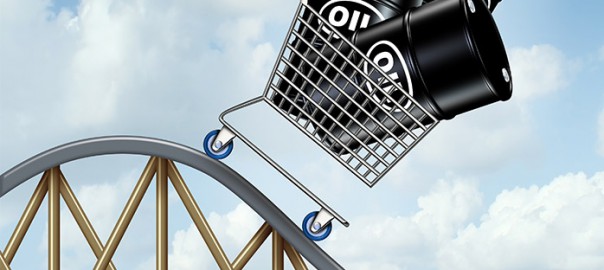
Crashing Oil Prices Aren’t Due to an Oil Glut But to Demand Destruction

As I began to mention at the end of the first part of this three-parter, I’ve only just recently come to the conclusion that oil prices aren’t going to have a tendency to rise due to the tightening of supply imposed by peak oil, but to depreciate. This of course flies in the face of the common logic of supply and demand, but when factoring in the method by which the majority of our money is created, a deflationary effect can be seen to come into play. This has taken me an absurdly long time to clue into, for although I’d steadfastly amassed a bunch of pieces (various information), I hadn’t realized they were actually all part of the same puzzle.

With peak oil and fractional-reserve banking being the first two pieces of this puzzle, the third piece that I needed to factor in (which oddly enough I’d already written about) is the fact that money is a proxy for energy.

Read more: From Filmers to Farmers


Will declines in U.S. and Canadian oil production lead to a global decline?

At the beginning of this year I noted that all of the growth in world oil production* since 2005 has come from two countries: the United States and Canada. And, I suggested that since the growth in production in those two countries came from high-cost deposits–tight oil in the United States and tar sands in Canada–that the precipitous drop in oil prices would lead to declines in production in both countries.

I concluded that unless another area of the world suddenly started growing its oil production significantly that those declines would probably result in a worldwide decline in oil production.

Well, declines in the both the United States and Canada have arrived. It will be several months before we can know with any certainty whether those declines will translate into a persistent global decline.

Read more: Resilience


Support For OPEC Production Cut Is Increasing


Now the shale producers won’t willingly reduce output, as shale production is made up of many different companies, and not a national company like most global oil producers; but due to the economics of the current oil price environment, many shale oil producers will face bankruptcy next year, and as a result, will go out of business.

The reason being is that in 2016, most oil hedges will expire. These hedges have allowed shale oil companies to stay afloat and achieve cash flow neutrality, despite the decline in oil prices. These hedges have also helped shale oil companies gain access to credit, so they can raise the capital needed to put their wells into production. When these hedges expire, companies will not generate the cash flow needed to meet their covenants, which will in turn bankrupt them, and production from U.S. shale oil wells, will start declining rapidly. This will also dry up the credit markets and prevent any type of quick rebound in shale oil production.

This is why the IEA even estimates that U.S. oil output will start collapsing next year.

Read more: Oil Price


US Shale Oil too Expensive, Peaks 1H 2015

According to EIA data, monthly US crude oil production peaked in April 2015 at 9.6 mb/d.

Read more: Resilience


This is When Bonds Go Kaboom!


In the energy sector, the bond devastation is even worse.

California Resources – Occidental Petroleum’s spinoff of its oil-and-gas assets in California, a masterpiece of Wall Street engineering – has done nothing but burn investors in its 10 months as an independent company. When I last wrote about it ten days ago, its $2.25 billion of 6% notes due 2024, issued at par to QE-drunk investors in September last year, had plunged to 66 cents on the dollar. Now they’re at 59.5 cents on the dollar.

Chesapeake Energy, the second largest natural gas driller in the US, is also facing the music. Two of its brethren, Quicksilver Resources and Samson Resources, have already filed for bankruptcy. When I last wrote about Chesapeake a month ago, its $1.1 billion of 5.75% notes due 2023 – that in June 2014 had been at 112 cents on the dollar – had plummeted to 70. Now they’re at 67.

Read more: Wolf Street


And from last year:

Collapse is Inevitable

There has been considerable discussion lately as to whether or not total collapse of the world’t economies will happen in the relatively near future. I think that is the wrong question. Let me explain.

Ecological collapse of the world’s ecosystem is a lead pipe cinch. It is already well underway and instead of slowing down, it is gaining momentum fast.

Read more: Peak Oil Barrel