Monthly Archives: August 2015

Fossil fuels still going in 2100

Some rather controversial views on fossil fuel usage – not just as a fuel – and particularly on carbon capture; it makes depressing reading

The most powerful leaders in the West used the G7 summit in Germany to make a big statement on the environment. Their stated goal is to cut carbon emissions by 40% to 70% by 2050 and then end all fossil-fuel use by 2100. They announced a US$100bn (£65bn) fund by 2020 comprising public and private money to help smooth the transition. My response to David Cameron, Angela Merkel and the rest is pretty simple: good luck with that.

When people talk about decarbonisation, they tend to make the mistake of thinking about energy only in terms of electricity. If you ask how to wean us from fossil fuels, they will say build more solar power, more wind farms and so forth. There are several problems with this. We are already struggling with capacity on the grid and have a huge task to add as much renewable energy as it can cope with. To cover the extra requirements to make heat and domestic transport electric, we would need five times more. I don’t know anyone who thinks this is remotely realistic.

Because most forms of renewable energy only work when the power source is available, be it wind, sun or whatever, we will need large amounts of storage capability to allow them to replace electricity powered by fossil fuels. And while it’s easy to see how you can store kilowatts and megawatts of green power in the batteries of the future, getting up to gigawatts is another matter. The huge engineering requirement makes it almost impossible to get the costs to a point where this is viable.

Electricity is also the least of the big drains on energy. The big challenges are transport fuels, especially for long-distance haulage and trans-ocean shipping. We really don’t have any smart ideas for replacing diesel for these yet, and it’s difficult to see where they will come from. The Royal Academy of Engineering did a study in 2013 looking at the options for low-carbon fuelling of shipping. The best it could come up with was LNG (liquefied natural gas).

You can conceive of running large numbers of domestic cars on green electricity by charging them on the grid. But the idea that anybody is going to be able to produce a battery big enough to store the electricity to power a passenger aircraft or a major container ship is laughable.

Read more: The Conversation
Electric cars take over the market

A view on electric vehicles taking over – possibly a pessimistic one?

What would the world look like if electric cars took the lead in market share by 2030? “Couldn’t happen,” you say?

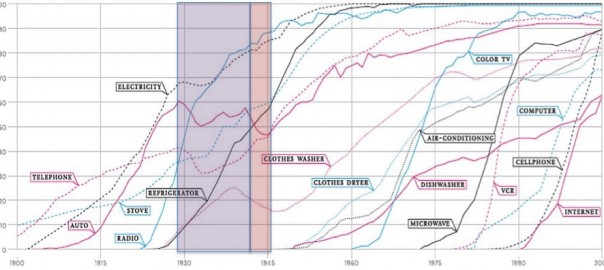
Consider the ramping up of some of the most basic items that have conquered the American market over the past century. Refrigerators went from a luxury item to 60 percent household penetration during the Depression and World War II. Technologies we used to live without including PCs, the Internet, and cell phones have become an integral part of daily life.

Once a breakthrough gets its footing, the rise to mainstream requirement is meteoric and, for reasons unknown (Copernicus has yet to weigh in), the rocket burn lasts about 15 years as the chart above indicates. Trace the rise of both electricity and automobiles. Radios had the sharpest rise of all, which may be why the 1920s were known as the Radio Days. Since the war, color TVs, microwaves, VCRs, PCs, the Internet and cellphones have all caught on as fast as radio. The air-conditioning vector appears to have been bent by the oil embargo in 1973. Auto production sputtered and coughed during the Depression, and throughout the war years, as factories churned out tanks and airplanes. It is not a coincidence that when the stock market peaked in 1929, auto production did too; neither would exceed the 1929 level until 1953.

We are about to find out if electric vehicles can make their mark and become mainstream. The launch sequence and liftoff phase (now barely underway) will soon reveal the extent of their fuel supply, i.e. How much interest will consumers have in EVs when a 200-mile-per-charge car costs less than $25,000? When a 60 kilowatt-hour (kWh) battery costs $9,000, there will be plenty of room in the budget to build a lightweight car around it. (UBS says that at $150 per kWh, the key variable in the calculation above, the EV market will take off.

Read more: Oil Price

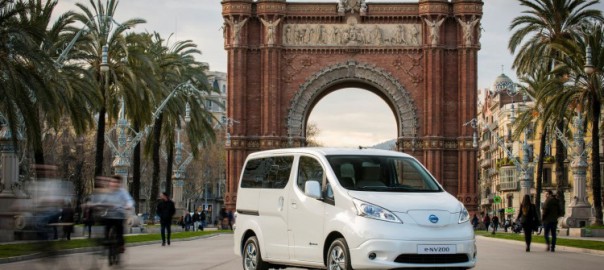
Nissan 7 seat e-NV200 (Image: Nissan)

The seven-seat electric Nissan e-NV200 arrives

Autocar talks about the family- and business-friendly en-NV200, Nissan’s van version of the Leaf

Nissan has unveiled a seven-seat version of the battery-powered e-NV200 MPV. It goes on sale in July, priced from £19,895 to £22,255 – including the £5000 government grant – if leasing the battery.

It’s powered by the same electric powertrain used by the Nissan Leaf and has an electric range of 106 miles on a full charge.

Range-topping Evalia trim is now offered with the e-NV200 and includes a reversing camera, cruise control, automatic lights and wipers, steering wheel-mounted controls and privacy glass.

In seven seat form this trim costs £27,260 if buying the battery outright, or £22,255 if leasing the battery.

With the extra two seats in the third row the e-NV200 has an 870-litre boot capacity, increasing to 2940 litres with all seats folded away.

Jean Pierre Diernaz, head of EV for Nissan Europe, told Autocar that the MPV is primarily aimed at business customers.

“There are between 150 and 200 Ultra Low Emissions Zones now, and this is something that is going to dramatically explode in the coming years,” Diernaz said.

“This will be a massive problem for companies that need to deliver into the city,” he added. “It’s a game-changer for some big companies.”

Diernaz believes the e-NV200 will change how businesses operate in big cities.

“Because it’s an electric car, you can drive indoors,” he said. “Suddenly you can enter the warehouse, load the car and go outside.

“Today you stop at the entrance of the warehouse then you need an additional system to take the goods and then load them back to the car.”

All-Electric ZOE takes off at TAG Farnborough Airport

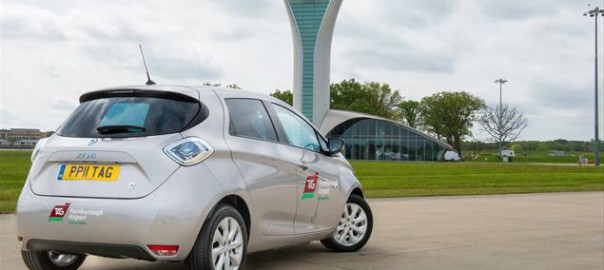
  • TAG Farnborough Airport takes delivery of three 100% electric Renault ZOEs
  • Cars will be used as airside staff shuttles
  • ZOE will help the airport meet its sustainability and carbon footprint targets

Europe’s leading business aviation airport has taken delivery of a fleet of three 100 percent electric Renaults ZOEs as part of its ongoing strategy to reduce its carbon footprint.

TAG Farnborough Airport – the only dedicated business aviation airport in the UK receives thousands of business jets every year – is using the vehicles to shuttle staff between buildings, including the main control tower.

The vehicles make a contribution to the airport’s continued efforts to reduce its carbon footprint and meet the goals set out in its sustainability charter, which covers everything from waste management and energy usage to vehicle emissions.

The ZOE – rated the best electric vehicle to own in the Auto Express Driver Power 2015 survey and back-to-back winner of What Car? Magazine’s ‘Best Electric Car Under £20,000’ award –offers true zero emissions transport with no tailpipe emissions, in addition to ultra low running costs.

CHR3350_nlm_ZOE_Renault

Miles Thomas, Environment Manager at TAG Farnborough Airport, said

“We monitor our carbon footprint very closely across all our services and departments, and being able to reduce the environmental impact of the staff vehicle movements across the airport was a driving factor for us.

“We looked at all the electric vehicles on the market but only the ZOE ticked all our boxes. The car offers the low running costs and zero emissions and it’s also small, functional, simple and enjoyable to drive and has an impressive range.”

He added: “The reaction of our staff to the three ZOEs has been fantastic and very positive. People are enjoying driving them and we’ll definitely be looking to add more EVs to our fleet as a result.”

Ben Fletcher, Renault UK Electric Vehicle Product Manager, said:

“Every day more and more fleet operators are discovering the benefits of Renault electric vehicles.

“The ZOE is a practical, spacious and well-equipped family car but its innovative electric technology means it can offer incredible savings in running costs and whole life costs as well as making a real impact on a business’ carbon footprint.

“Drivers love them too, as evidenced by the ZOE’s performance in the Auto Express Driver Power Survey 2015, and that makes the model a win-win for fleet operators and families,” added Fletcher.

A spacious five-door family hatchback, the ZOE can cover up to 130 miles on a single charge according to official New European Driving Cycle (NEDC) figures.

A new longer-range version of ZOE, with a new Renault-developed motor, was announced at this year’s Geneva Motor Show which will bring a best-in-class official range of 149 miles when it joins the ZOE line-up this summer.

The ZOE can be charged in as little as 30 minutes using a fast charger, available in hundreds of locations across the UK, but retail customers can also have a 7kW wall-mounted charger – capable of fully charging the ZOE in three to four hours – fitted free of charge at their home. Renault is the only manufacturer to offer this service.

Available in three distinct trim levels, all ZOEs feature generous levels of standard specification and innovative technologies, including smartphone-controllable climate control and satellite navigation, and all the creature comforts the modern driver demands.

Prices start from just £13,443 RRP (including Government Plug-In Car Grant) when opting for the flexibility of battery leasing and £18,443 RRP (including PiCG) for those purchasing outright.

Renault is one of the global leaders in electric vehicle technology and is the only manufacturer with three 100% electric vehicles in its range – the Twizy urban vehicle, ZOE hatchback and Kangoo Z.E Van.

Sales in the UK of Renault’s electric models were up 90 per cent in 2014 to 1,286 vehicles and continued this strong growth in the first three months of 2015 with sales up 148 per cent to 401 vehicles.

Source: Renault Press Office

No global warming pause according to US scientists

The long talked-about global warming pause or ‘hiatus’ may now be consigned to history

US researchers say new evidence casts doubt on the idea that global warming has “slowed” in recent years.

A US government laboratory says the much talked about “pause” is an illusion caused by inaccurate data.

Updated observations show temperatures did not plateau, say National Oceanographic and Atmospheric Administration (Noaa) scientists.

The warming rate over the past 15 years is “virtually identical” to the last century, they report in Science.

Dr Thomas Karl, of Noaa, who led the new analysis, said:

“We would hope that it would inform the general public that the temperature today really is continuing to warm.”

Read more: BBC

Car exhaust (Image: BBC)

1300 deaths from London’s air

The London Evening Standard continues its campaign on London’s poor air quality

More than 1,300 Londoners have already died prematurely due to toxic air so far this year, campaigners warned today.

The shocking death toll includes over 60 estimated fatalities linked to “killer” pollution in Barnet, Croydon and Bromley, and more than 50 in Ealing, Enfield and Havering.

In Wandsworth, Lambeth, Brent, Bexley, Greenwich, Lewisham, Hillingdon, Redbridge and Waltham Forest it was at least 40.

Shadow environment minister Barry Gardiner said:

“So far this year 1,337 people have already died as result of air pollution yet the mayor’s proposals will not bring this down to safe levels until 2030.

“We need a new national framework of low and ultra-low emissions zones within which London must roll out the electrification of buses and the highest vehicle standards for all new fleet vehicles within four years. We need decisive action now to protect our children not vague promises for 15 years down the line.”

Read more: Standard

The 2C climate goal may die in Paris

More bad news about likely results in the Paris climage conference

The U.N.’s Paris climate conference, designed to reach a plan for curbing global warming, may instead become the graveyard for its defining goal: to stop temperatures rising more than 2 degrees Celsius above pre-industrial levels.

Achieving the 2C (3.6 Fahrenheit) target has been the driving force for climate negotiators and scientists, who say it is the limit beyond which the world will suffer ever worsening floods, droughts, storms and rising seas.

But six months before world leaders convene in Paris, prospects are fading for a deal that would keep average temperatures below the ceiling. Greenhouse gas emissions have reached record highs in recent years.

Two Adelie penguins stand atop a block of melting ice on a rocky shoreline at Cape Denison, Commonwealth Bay, in East Antarctica January 1, 2010.   REUTERS/Pauline Askin
Two Adelie penguins stand atop a block of melting ice on a rocky shoreline at Cape Denison, Commonwealth Bay, in East Antarctica January 1, 2010 (Image: Reuters/P. Askin)

And proposed cuts in carbon emissions from 2020 and promises to deepen them in subsequent reviews – offered by governments wary of the economic cost of shifting from fossil fuels – are unlikely to be enough for the 2C goal.

“Paris will be a funeral without a corpse”

said David Victor, a professor of international relations at the University of California, San Diego, who predicts the 2C goal will slip away despite insistence by many governments that it is still alive.

Read more: Reuters


Racing a Renault ZOE

Steve Cropley has fun racing a Renault ZOE, from AutoCar

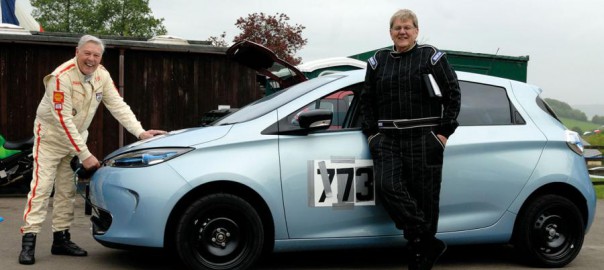
SUNDAY AM – Can driving be brilliant and terrible at once? It certainly can, and here’s an example. Headed off to Prescott to run an electric Renault Zoe in the annual hillclimb for French marques, La Vie en Bleu.

Plan was to compete on my own for a bit of fun, but some club type decided I should drive with Barrie ‘Whizzo’ Williams, one of the country’s most versatile and experienced racing drivers. If ever there were a recipe for humiliation, this was it.

Renault found a set of super-sticky Yokos, and the car felt instantly quick off the line, especially for something with a 12.3sec 0-60mph time.

Most importantly, it gripped, steered and turned really well, even during a late-morning downpour.

Whizzo was fast, of course, finding time to make ‘hush’ signs to the marshals as he noiselessly sped by. He soon turned 60.29sec, easily beating his previous electric record (in a Zoe). I soldiered on, eventually managing 61.88sec – slow but not entirely beyond the pale.

SUNDAY PM – Prescott is less blokeish than most race tracks, but it was still surprising just how interested people were in our Zoe, especially women.

They liked the styling and the interior but, funnily enough, they also liked the way it zipped uphill, which they felt matched its cheeky persona.

Found myself slipping into sales patter: “People pay £100k for cars with very little noise and vibration – and here’s one with none of either, small enough to park, for £15k.” Might even have sold a couple of the little things.

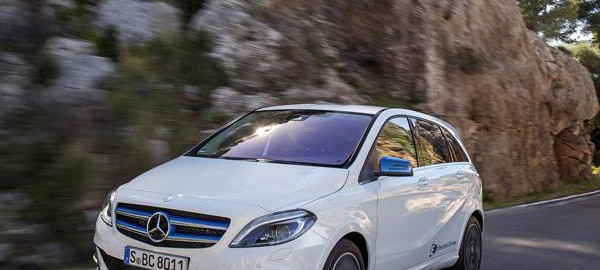
Mercedes B Class Electric (Image: MB)

Mercedes offers home energy storage

Tesla may be the automaker with the highest profile on energy storage, but they’re not the only ones. Now Mercedes goes public with its plans.

As the newest carmaker on the block, it’s perhaps not surprising that Tesla Motors likes to do things differently. That includes reaching beyond the automotive sector with its recently-announced plans to sell standalone battery packs for home and commercial energy storage. Yet that seems to be an idea the world’s oldest car manufacturer is pursuing as well.

Mercedes-Benz now plans to enter the energy-storage business as well. A division of parent company Daimler has been testing battery packs that can power houses, and plans to launch commercially in September, according to Australia’s Motoring.

Like Tesla, Daimler has tested quietly energy-storage systems for some time.

Read more: Green Car Reports

Powervault Energy Storage System (Image: Powervault.co.uk)

Upcoming storage boom in UK market

It looks like affordable home energy storage could finally be coming available in the UK

Maturing and more affordable storage technology promises to “revolutionise” the UK solar PV market, according to a panel at today’s Solar Finance and Investment Conference.

Ray Noble, consultant to the Renewable Energy Association, said that while some storage technologies were 10 to 20 years away from being realised, technological advancements in lithium ion batteries – driven largely by the automobile sector – had meant that storage batteries for residential installations could be affordable within two or three years.

The timeline fits well with projections conducted by industry analysts, with IHS having previously forecast grid-connected energy storage installations to surpass 6GW in 2017, almost treble the 2GW+ estimate for 2015.

Read more: Solar Power Portal