Monthly Archives: January 2015

Audi A3 e-tron Sportback (Image: Audi)

Road Test: Audi A3 Sportback e-tron

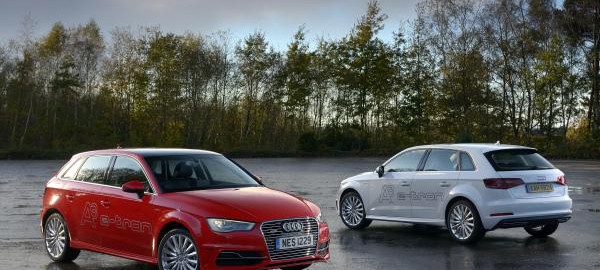
THE 2014 World Car of the Year is adding zero emissions motoring to its repertoire with the arrival of the new A3 Sportback e-tron, the first plug-in hybrid to join the Audi range.

Priced from £29,950 (including government grant incentive), the spacious five-door compact hatchback combines a conventional 1.4-litre TFSI petrol engine with an electric motor to deliver impressive performance, exceptional efficiency and, equally crucially, complete freedom from range limitation. The first e-trons will arrive with customers early this year.

At a glance, nothing about the A3 e-tron is new at all. But delve beneath that ubiquitous surface and you will find a very clever petrol-electric hybrid drivetrain that combines the cheap energy of plug-in tech and the ability to recharge on the move. The modified 1.4-litre TFSI unit, in this application featuring a peak power output of 150PS, is linked by a clutch to a 75kw electric motor, which is integrated into a specially developed six-speed S tronic transmission sending power to the front wheels. Combined, the two power units generate 204PS of system power, good for a 0-62mph sprint of 7.6 seconds and a top speed of 137mph. So, it’s no slouch.

Equally importantly, according to the ECE standard for plug-in hybrid cars, the A3 Sportback-based e-tron is capable of covering up to 176.6mpg with CO2 emissions of only 37g/km. With the combination of electric motor and combustion engine, an overall operating range of up to 584 miles is possible.

The Audi A3 e-tron can run exclusively on electric power for up to 31 miles at speeds of up to 81mph, or can be powered by petrol alone. Alternatively, the hybrid mode brings both units into play, and the driver can choose to run these simultaneously – a function known as ‘boosting’ – by initiating kickdown by the S tronic transmission. In this mode the full 350Nm torque output is deployed for the strongest possible acceleration, but when the driver stops accelerating both motors temporarily deactivate, eliminating motor braking torque and allowing the car to glide to conserve fuel and recuperate energy.

Up to medium loads the motor can also function as an alternator, making a significant contribution to retardation and recovering energy which is fed into the traction battery. In this mode the wheel brakes only become active if the driver applies moderate force to the pedal.

The driver has several ways of actively managing the vehicle’s response. Four key settings are available – the EV mode gives priority to electric drive, the hybrid auto mode is useful for long journeys as it engages the electric motor wherever possible, the hybrid hold mode preserves the electrical energy stored in the battery for later use and the hybrid charge mode uses the combustion engine as a generator to charge the battery.

Inside the four passenger doors interior space is good for five, and luggage capacity is the same as a Quattro four-wheel driven A3, which is to say 100 litres down on the basic A3 Sportback and technically only 29 litres more than a Volkswagen Up. It’s broad rather than deep, though, and turns out to be plenty practical enough.

Standard trimmings include LED headlights and daytime running lights, special ‘turbine design’ 17-inch alloy wheels, rear parking sensors, light and rain sensors, MMI navigation plus with hard drive-based mapping and Audi connect online services bringing in-car internet access.

The A3 Sportback e-tron is supplied with two charging leads as standard. One is specifically designed for use at public charging points and the other for domestic use.

The charging lead supplies the car with alternating current from the grid via the charging connection, which is located in the single frame grille behind the fold-out four rings. As well as a status LED, the unit includes two pushbuttons allowing the user to choose between timer-controlled charging and immediate charging.

Using a domestic socket it takes four hours to fully charge the battery. When a wallbox is connected or a public charge point is used this reduces to two hours and fifteen minutes.

The e-tron excels in electric-only mode in city environments, where its is quiet and smooth, but loses something of the dynamics of the regular A3 because of the battery weight beneath the floor. Crucially, the standard everyday hybrid mode does brilliantly well at using the electric motor as much as possible, saving the 1.4-litre turbocharged petrol back-up for more pressing needs and topping up battery charge.

Source: The Northern Echo
Mitsubishi Outlander PHEV (Image: Yorkshire Times)

Mitsubishi Outlander PHEV – The Green SUV Is Here

I have previously reviewed a diesel-powered Outlander and came away impressed by its family-friendly credentials coupled with go-anywhere capabilities. It was also reasonably frugal for this type of vehicle, returning 40+ mpg over a week of mixed driving – not bad for a seven-seat, off-roader with an automatic gearbox.

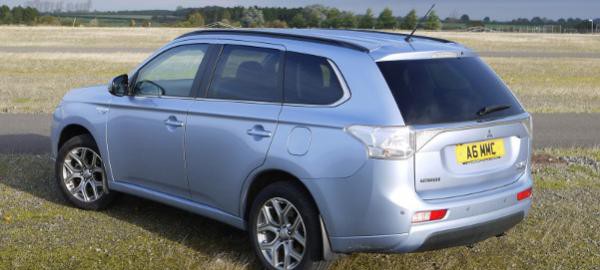
On test this week has been the latest version of the Outlander, this time in hybrid-electric form. This technologically advanced vehicle lays claim to being the most fuel efficient SUV on the market and by a country mile.

So how does it work?

Two electric motors drive the front and rear axles independently, with the batteries allowing forward progress at speeds of up to 75mph. Beyond that speed, the 2.0-litre petrol engine will cut in to boost the performance and will also burst into life if the battery pack charge falls to below 30%.

On the move these changes to propulsion are seamless and there are some clever touches allowing you to manually select the method of power.

For example, you might choose to travel on petrol power for the faster part of a journey, saving the battery for urban travel (increasingly useful as more and more towns introduce emissions charges for polluting vehicles).

It is also possible to select a ‘charging mode’ on the move, whereby the petrol engine charges the battery, useful if it has not been possible to plug the car into a charging station.

If this all sounds a little complicated, in practice it is simplicity itself.

At home the car can be plugged into a domestic 13 amp socket for a cheap overnight charge and out and about we are at last seeing an increasing number of charging station springing up across the country.

Mitsubishi suggest that up to 500 miles might be possible on a tank of fuel. I was unable to reach these dizzy heights, but with several long motorway journeys to complete it and no recharging opportunities, it was always going to be a struggle.

Removed from the strains of long distance travel, it was a great joy to complete all my local driving on electric power alone and can imagine petrol free weeks were an Outlander PHEV to permanently grace my driveway.

An added joy when travelling under electric propulsion is the silence. I found I switched the radio off so that I could enjoy a level of hush previously only enjoyed by the owners of super luxury vehicles with large and thirsty petrol engines.

As a driver’s car the Outlander PHEV does not set out to thrill. Initial acceleration is somewhat sluggish, the heavy weight of the large vehicle, electric motors and battery pack taking its toll. Once rolling, things improve remarkably and brisk progress can be made.

Ride comfort is fair and the handling safe and secure. In practice, I found myself adopting a relaxed driving style, which also helped to improve the electric range.

The PHEV unfortunately loses the seven seat option, the space being necessary for the battery pack. However, there is still ample space for five large adults to travel in comfort and there is a plethora of equipment to enjoy, including climate controlled air conditioning, leather seating, touch-screen satellite navigation and alloy wheels.

My test car came in top GX4hs trim, bringing with it a lane departure warning system and adaptive cruise control. The latter was a huge boon on the congested motorway network, allowing a top speed to be set and a safe gap to be maintained at all times with no driver input. It reduces stress immensely and once you learn to trust the system you will wonder how you ever managed without it!

The Outlander range starts at just under £24,000, though with diesel power.

The PHEV range starts at £33,304 and for many it will justify the premium. The low CO2 emissions of 44g/km will favour the company car driver, but for many urban-based SUV owners the PHEV may well make sense, providing they have the facility to charge the car at home.

Other than luxury car manufacturer Tesla, no manufacturer has yet made an all-electric car with a practical everyday range.

For the time being therefore, hybrid power seems to make most sense and Mitsubishi seem to have comprehensively covered all bases with the PHEV.

I liked it a lot!

Source: Yorkshire Times

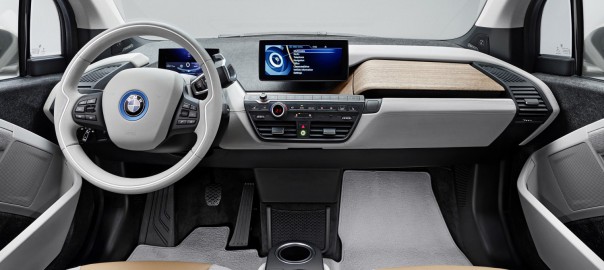
BMW i3 Interior

2,500+ Miles on One Gallon of Gas

Finally in the spring, I saw my first i3, and it is absolutely a head turner; you have never seen a car like it; because there has never been a car like it. The first models I saw on the street were in an orange/pumpkin-like color combination, which, as my mother used to say, would not be my choice. I saw a pretty good looking one in white with black trim. The i3 in my driveway is, I love these lofty official color names, Laurel Grey Metallic with the BMWi frozen blue accent. I generally don’t like dark colors on a car; but I like this; and I love the hint of blue in the front grille and on the lower side door panels.

The BMWi series, the i3 I am driving and the space-age i8, are electric cars built from the ground up. 100% new. They didn’t just take a 3 series and put a new engine in; instead BMW designed an entirely new manufacturing process for what may be my favorite part of the entire car; what they call the “life module,” and I would simply call the interior or the cabin.

On the outside, I would say the BMW i3 has the footprint of a small car; around the same size as the Prius or the Leaf. But on the inside, the full cabin space has the similar total interior volume of a BMW 3 series. There is ample room and comfort from the single most important position; the driver’s seat.

Let me get all-superficial for a moment. The interior cabin looks great. I have the, more official names now, Giga Cassia Natural Leather & Carum Spice Grey Wool Cloth. It’s light, modern, and beautiful. The remaining trim in the cabin is all made from recycled woods and carbon fiber. I wish I had a study or man cave in my own home that looked as nice as the i3 does from the inside.

The easily adjustable heated seat has a great driving position; and there is, I don’t know a better way to describe it, a vastness to the front windshield. BMW says the car is equipped with super-ergonomic controls; I don’t know what that means, but what it means to me, is everything is easy to find and where it is supposed to be. The center console screen is right-sized, not at all tiny, and not too big; so the Sirius/XM/FM radio is easy to see and operate, as are all the maps and various ways the car communicates with the driver.

Prior to my i3 experience, I spent a few weeks behind the wheel of the BMW 6 series M, with every single bell and whistle imaginable. I don’t find that I am missing anything at all behind the wheel of the i3.

A few last interior notes. The car features what has long been colloquially described as suicide doors. Where the front doors open in traditional fashion and the smaller rear doors open out from the center. I find this actually easier in getting the kids in and out of the backseat. Speaking of the back seat, it is perfectly serviceable. My most frequent passengers are my kids and their friends. You can easily have yourself plus 3 passengers in the car. If you are taking the entire soccer team, this isn’t the right car for you. But I have never been stymied by lack of interior space. The rear hatch opens big and wide and has a perfectly fine amount of trunk space; and the back seat folds down flat if you are the type that takes your boogie board with you everywhere.

Now, to what matters most. How does the i3 drive? Perhaps I can engage you in a little demonstrative exercise. Please, indulge me. Snap your fingers. How long does it take from the moment you snap your fingers to the moment you hear the sound? That’s how fast the i3 is. Officially timed at 0–30 MPH in 3.5 seconds, my car is faster than that. You press on the accelerator and off you go. Boom. Real quick. Freeway acceleration shows absolutely no strain, and the i3 can keep up with and/or pass anything. It is a good thing that I drive to work at 5 a.m. in the morning. The steering is tight and responsive. The i3 is all electric AND all BMW.

Some EV drivers are very interested in wringing out every last watt of energy and translating that to mileage. If you are into those sorts of range games; the i3 has three driving modes. I am a “comfort” person all the way, there is also ECO PRO, and if Ed Begley Jr. were driving the car, ECO PRO+. The car features a brake energy regeneration system; oh, and at 124 MPGe, the EPA lists the i3 as the most efficient electric car sold in the U.S.

Many people have asked me for the years I have been driving electric, “what if you run out of juice and there are no charging stations around?” This fear has now been given an official psychological term; it is called “range anxiety,” and since the father of modern psychology Sigmund Freud was born in Austria, leave it to his German neighbors at BMW to cure this ill. My i3 has, as an option, something called a “range extender.” Basically, it is a small gasoline powered engine; and a super small gas tank; that in the event you absolutely run out of electric power, will provide power to the batteries of the i3 to keep you going. This device is pure Prozac to those who worry about these kinds of things. I never do worry; and in my 2500 mile test drive, I have purchased all told; one gallon of gas. O N E. Not going to the gas station is the single greatest reliever of most the anxieties I deal with.

A little bit more about range. The EPA says the i3 can travel 81 miles on a single charge, and a total of 150 miles if the range extender is used as well. In my own experience, and I like to go fast, I think those estimates are probably a little high if you drive like I do. On any given day I probably drive about 30 miles a day. Brentwood into Hollywood; an errand somewhere, some trip with the kids; and back home. I have more than enough pure electric power to last all day. I have taken the i3 on longer drives; from Brentwood to Hollywood, to Costa Mesa, to Diamond Bar and back home, all in one day, and I was fine. If you have a massively long daily drive, the i3 may not be for your needs.

Now the bottom-line about the bottom-line. Our pals at the EPA say “going electric” can save more than $9,000 in fuel costs if you drive an electric car for 5 years. We all know that gas is fairly inexpensive right now; but do you sincerely believe it will always stay that way?

The i3 represents a far cleaner, far more efficient, far better way to drive; both now and into the future. Before I accept my own award from Greenpeace, you should also know that the 2013 World Green Car of the Year was the Tesla Model S; the 2014 World Green Car of the Year is the BMW i3.

There are dozen of other features, including the self-parking feature of the i3, I didn’t dwell on because, to be honest, I haven’t used them yet.

What I want the most is the get from “A” to “B” with speed, style, safety and comfort. I was already sold on electric cars before I experienced the i3. Maybe I love the i3 so much because it just reinforces my own opinion that I was right to begin with. All that, and some amazing and impressive engineering breakthroughs that you really have to drive yourself to experience.

Source: Medium

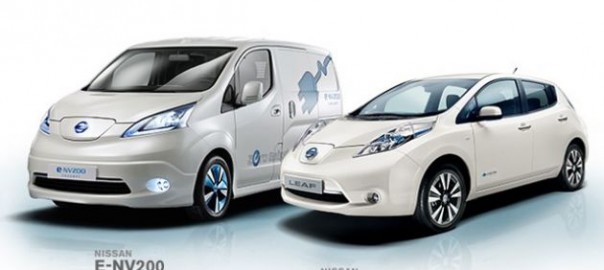
Nissan e-NV200 electric van and Leaf electric car (Image: Nissan)

2014: A bumper year for Nissan in the UK

NISSAN Motor GB Limited recorded its best ever sales year in 2014 with 138,338 cars sold in the last 12 months. This represents a 17% increase over 2013’s figure of 117,967.

Nissan also bolstered its position as the fastest growing top 10 brand in the UK, commanding a market share of 5.6% in 2014 – smashing yet another record. This increased share in the car market puts Nissan in sixth position in the UK.

Boosting this sales success was Nissan’s UK-built stars – the new Juke and the 100% electric LEAF and the Note – all of which broke sales records for another year.

The all-electric LEAF clocked up 4,051 sales in the UK, more than doubling the volume sold in 2013 (1,812), confirming that the British-built Nissan LEAF remains the nation’s electric model of choice. The Nissan LEAF boasts 55% of the pure EV market and outsold its nearest competitor by more than 2:1.

Nissan’s extraordinary sales success comes as Nissan’s Sunderland Plant broke the half a million production barrier again for the third year running, building a staggering 500,237 vehicles.

James Wright, Managing Director, Nissan Motor GB, said:

“Key to Nissan’s success in 2014 is the onslaught of new and updated products launched in the last year and I am immensely proud of the hard work and dedication displayed by the Nissan team in the UK.

“Our British-built offering continues to capture the attention of UK motorists and I am particularly delighted to see that the all-electric LEAF is still dominating the pure EV market, doubling its sales volume last year.”

Nissan has launched no-less than nine new and updated products, starting with the multi-award winning British-built Qashqai in January. This was then followed by the MY14 GT-R, new Juke, all-new X-Trail, GT-R NISMO and the all-electric e-NV200.

Including Light Commercial Vehicles (LCVs), Nissan sold 148,607 vehicles in the UK, up 16% from 128,586 in 2013.

Source: Nissan Insider

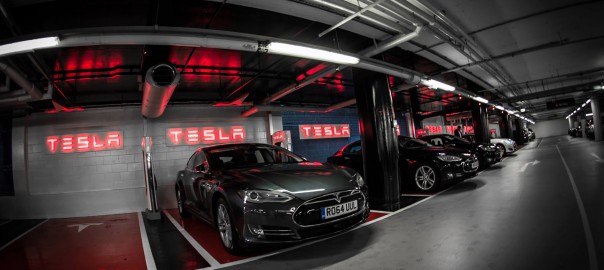
Tesla Supercharging Station at Westfield, London (Image: Tesla)

Tesla Unveils Largest Underground Supercharger Station

Tesla Supercharging Station at Westfield, London (Image: Tesla)

Now this is one sweet Supercharger station.

Located in Westfield London, Tesla Motors says this site is the automaker’s largest underground Supercharger station in all of Europe:

Our largest underground Supercharger station in Europe, located in Westfield London, just got its final touch. Have a look.

Sources: Inside EVs, Tesla on Facebook

Test Drive Sunday

A showroom tour of a Nissan Leaf (Image: T. Larkum)

We had very strong interest in electric cars from our first public event so that we arranged to have a dedicated test drive day. On a Sunday in December we invited four families/couples to the St. Alban’s Nissan dealership (Glyn Hopkin) en masse to have test drives; all attended.

The format was simple – it began with a tour around a Leaf in the showroom to have its various features explained. This was followed by a test drive around the local area, about half of which was on side roads and half on dual carriageways.

Looking in the business end of a Nissan Leaf (Image: T. Larkum)

The event went extremely well and we are very grateful to the staff at Glyn Hopkin Nissan, particularly Ben, for their time, patience and courtesy on the day.

Nissan LEAF is the Best-Selling Electric Car in Europe For Fourth Year in a Row

Nissan LEAF is the Best-Selling Electric Car in Europe For Fourth Year in a Row

  • 2014 European sales rise 33% over 2013 as  UK-built car accelerates sales
  • Nissan LEAF leads with 26% of the rapidly growing electric car market
  • UK sales top 4,000 units, more than doubling 2013 volumes
  • Sales driven by strong customer advocacy with 95% recommendation rate

Rolle, Switzerland, 19 January 2015: The all-electric Nissan LEAF has smashed its own sales record with a 33 percent increase in European sales in 2014 over the previous year, taking more than a quarter of the burgeoning electric car market with 14,658 sales.

This year the Nissan LEAF has been joined by an unprecedented number of new entrants into the EV market and has emerged as the leader on a global, US and European basis. Last year was the fourth year in a row that the electric family car has topped the zero-emission sales charts in Europe.

Moreover, the all-electric LEAF clocked up 4,051 sales in the UK, more than doubling the volume sold in 2013 (1,812). The British-built Nissan LEAF remains the nation’s electric model of choice, boasting 55% of the pure EV market and outselling its nearest competitor by more than 2:1.

Nissan Europe senior vice president of sales and marketing, Guillaume Cartier explains the increase in sales, commenting:

“We can now see the impact that word of mouth is having on our sales, with 95 percent of our customers happy to recommend their car to a friend and 50 percent saying they would never go back to diesel or petrol. This kind of powerful advocacy, combined with an increasing awareness of the massive running cost savings electric car drivers experience, is why our Nissan LEAF sales continue to grow.”

“Data from our CarWings telematics system* shows us that Nissan LEAF drivers drive 40% more kilometres than the European average for petrol or diesel cars, covering over 16,500 km per year. This data demonstrates that this car is the primary car for many households and that is changing the consumer perception of electric cars.”

The Nissan LEAF was launched in early 2011 in the European market, followed by a revised version introduced in mid-2013 with over 100 improvements led by customer feedback.The Nissan LEAF is built in Sunderland, UK, with batteries constructed in a new purpose-built facility on the same site. In June 2014 the 100 percent electric Nissan e-NV200 light commercial vehicle was launched, built at Nissan’s Barcelona factory, with batteries from Sunderland.

Ranking January-December 2014 Volume EV Passenger Car Segment share
Total  Pure EV Passenger Car Volume 56,393 100%
1 Nissan LEAF 14,658 26%
2 Renault Zoe 11,227 20%
3 Tesla Model S 8,734 15%
4 BMW i3 5,804 10%
5 Volkswagen e- Up! 5,365 10%
6 Volkswagen e-Golf 3,328 6%

*Figure used is industry standard registrations sourced from official national sources. Nissan recorded retail sales for the Nissan LEAF in 2014 was 15,096 cars

** European owners of its 100 percent electric car, the Nissan LEAF, travel more than 40 percent further per year (10,307 miles) than the European average for a traditional internal combustion-powered vehicle (7,170 miles). Average is calculated from 2013 market specific annual average statistics using data from the UK, France, Spain Italy, Sweden and Norway. An even weighting was applied to each country to find a ‘European Average’. A German statistic was not used in the European average as the raw data is not available and all average figures quoted are estimates.

Country Total Miles Recorded Per Week (LEAF) Total Miles Recorded Per Annum (LEAF)
Spain 228 11,858
Sweden 211 10,954
UK 201 10,468
Norway 197 10,242
Italy 190 9,854
France 188 9,790
Germany 173 9,014

Diesel and Petrol Passenger Car Average (miles)

UK Average 7,900
France Average 7,890
Spain Average 6,168
Italy Average 5,940
Sweden Average 7,245
Norway Average 7,872
European Average 7,170

Source: Nissan Europe

Tesla crack open Knutsford dealership

Tesla is opening a new store in Knutsford, Cheshire. The store strengthens Tesla’s presence for customers in the North West, alongside the Warrington Supercharger station at The Park Royal.

The Canute Place store features the Model S design studio, the dual motor Model S rolling chassis and selected merchandise, and it will also serve as a base for test drives.

Tesla Knutsford continues the company’s unique approach to car retailing. Tesla’s stores, frequently located in city centres and shopping malls, are set up to help customers learn more about electric vehicles and the unique experience of driving Model S. Tesla has also announced plans to open a service centre in the North West to complement the Knutsford store.

Model S

Model S is an uncompromised electric car that delivers 285 miles of range at 65mph on a single charge. With a17-inch touchscreen, an outstanding safety record, and an acceleration of 0-60mph in 3.2 seconds, the fully electric Model S breaks the mould. Tesla and Model S have received numerous accolades, including Autocarmagazine’s Sturmey Award for Automotive Excellence and Motor Trend’s 2013 Car of the Year. Top Gear Magazine called the Model S “the most important car Top Gear has tested.”

Model S also has associated Android and iPhone apps, available in the UK iTunes and Google Play stores. The apps put Model S owners in direct communication with their cars anytime, anywhere. Owners can use the app to check on charging progress, start or stop charging, and heat up or cool down Model S before driving.

In the UK, prices for the Model S start at £49,380 on the road, including the £5,000 government plug-in grant. UK Model S customers can also benefit from other government incentives including zero road tax, zero showroom tax and exemption from London Congestion Charge. The car is also eligible for the 100 percent First Year Allowance for company purchase and 0 percent Benefit in Kind, both of which last until April 2015.

Source: Diesel Car Magazine

Alternative Fuel Registrations (Image: SMMT)

Green vehicle demand revs up as electric car sales quadruple

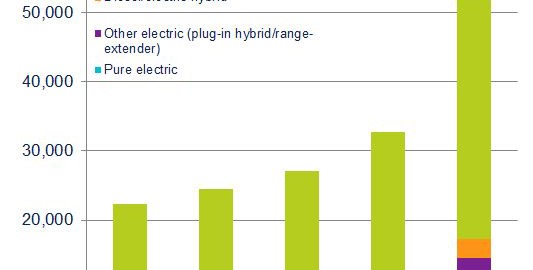
There has been a ‘remarkable surge’ in demand for ultra-low emission vehicles in the UK, with sales of plug-in hybrid cars increasing four-fold in 2014.

New annual figures from the Society of Motor Manufacturers and Traders (SMMT) have revealed that sales of alternatively-fuelled vehicles (AFVs) – including electric cars and hybrids – rose by 58% last year, with 51,739 new AFVs registered.

AFV sales accounted for a market share of 2.1% in 2014 – up from 1.4% a year earlier. Overall car sales increased by 9.3% to just south of 2.5 million.

“The year was particularly strong for alternatively-fuelled vehicles as increased choice, coupled with a growing desire for reduced costs and greater efficiency, resulted in a quadrupling of plug-in car registrations over 2013,”

explained SMMT chief executive Mike Hawes.

“With a variety of new plug-in models expected in 2015, this area of the market will continue to grow significantly,” added Hawes. “For the market as a whole, we expect a more stable 2015 as demand levels off.”

Alternative Fuel Registrations (Image: SMMT)

Leading the charge

At the start of 2014, Deputy Prime Minister Nick Clegg unveiled Go Ultra Low, a £2.5m campaign encouraging UK motorists to adopt ultra low emission vehicles.

Sales of plug-in cars have since increased from 3,586 in 2013 to 14,498 in 2014. There are now more than 20 plug-in models available to buy compared with just six in 2011, with each of the 10 best-selling brands in the UK now having a ULEV in its range.

Clegg said:

“The extremely low running costs of these cars help drivers save money. Electric cars are one of the most promising of our green industries and we want to secure the UK’s position as a global leader in both the production and adoption of these vehicles.”

The Government aims for ULEVs to account for every new vehicle on the road by 2040. As such, it will invest £500m between 2015 and 2020 to boost the ultra-low emission vehicle industry even further and help drivers ‘both afford and feel confident using electric cars’.

Source: Edie

Inconveniences of Gasoline 1: Gas Station (Image: Clean Technica)

Lower Oil Prices in an EV World

What do declining oil prices mean for alternative fueled vehicles, plug-in hybrids and EVs? If anything is to be learned from the past periods where gasoline prices have dropped precipitously it is that they spell death for alternative fuels. Dropping oil prices are a very bad thing for all alternative fuels and most likely will be a very bad thing for electric vehicles and plug-ins as well.

From 1981 to 1986 reduced demand and overproduction created a large amount of oil not being consumed in the open market. I remember going to an area that had refineries at the time and seeing a large number of oil tankers just sitting, anchored out on the bay waiting for their turn to hook up to the refineries. The refineries were not operating at full capacity and when they shipped out their inventory as product, then and only then would they allow for the oil tankers to hook up. This five-year-long period has a direct correlation to the improved fuel economy that vehicles were required to achieve by the CAFE (Corporate Average Fuel Economy) standard laws passed in the 1970s. These laws took effect during the later part of the 1970s and the first part of the 1980s. Fuel economy for automobiles reached somewhere around 27 miles per gallon on average in 1986. Even though these laws may have been put in place during that period of time, it was consumers that rapidly embraced smaller more fuel efficient cars coming from Japan. It was a natural reaction after rising gasoline prices hit them hard in the pocket book and spurred deep recessions in the 1970s. It was a reaction that the US automobile manufacturers were slow to embrace.

Consumers also embraced alternative fuels. Even though the sales of such vehicles were small in number, electric cars made the scene with Bob Beaumont’s Sebring Vanguard Citicars and other brands in the mid 1970s. Although electric vehicles had some impact for alternative fuels it was ethanol that was the biggest entry for alternative fuels, typically blended with gasoline. Demand and pricing was such that independent stations selling ethanol blended gasoline sprang up to sell the stuff starting in the corn belt of the Midwest. By the end of the 1970s major oil companies jumped in the game. Despite being heavily subsidized the number of biomass ethanol producers dropped 47% by 1985. Gasohol as a readily used term to describe 10% ethanol blended gasoline disappeared from America’s vocabulary, and the gasohol independent stations disappeared from the gas station landscape.

I remember a Freedom Gasohol station on route 1 south of Alexandria, Virginia that stood abandoned for over a decade. It stood there as a reminder to me of how fortunes can change very rapidly for investors in alternative fuels. It was also a reminder to me that history is an important teacher. Those who don’t know history are likely to make the same mistakes as others have in the past. The United States by allowing for oil and gasoline prices to drop again without a price floor is reliving a past where alternative fuels were pushed from public awareness.

What is causing the prices to drop today is largely an over supply similar to that of the 1980s. Probably also caused by an anticipated dramatic increase in the CAFE gas mileage requirements signed into law in 2009, but that is not all. John Maynard Keynes referred to a phenomena that tended to keep prices high even though demand drops as “the sticky nature of prices.” Let me explain it to you in a more understandable way. Let’s say you have a house that you borrowed $90,000 for and put $10,000 as a down payment. Let’s say later you want to move from the area and want to sell your house. However, in the in-between time prices of houses comparable to yours have dropped to $70,000. Let’s say you still owe the bank $85,000 and you want to get back the cash you put into the home. You are going to be reluctant to drop the price to $70,000. You most likely will list your home at $95,000, where you will at least get back your down payment. However, the market demands a lower price. Once you get over the shock and accept the reality of the new price being $70,000 you will still have to deal with the bank. The bank is going to not accept a sale that is below what you owe them. So the price again can’t go below the $85,000. When the bank finally comes to grip with the reality of the market and accepts market pricing they will still want to have a say in what they will accept in terms of an offer. Basically, people and businesses get used to prices being a certain amount and have locked in their expenses and expected profits at that price. It is hard for them to move off of that expected price. When prices drop fast like they have with oil and gasoline lately, there are other factors at play. There has to be a willingness by the oil companies to sell at lower prices. The question is what are those other factors for the oil producers that have them willing to sell oil for far less money? Demand has lowered by 13%, so why are we seeing a 50% or more drop in oil prices and why are oil producers willing to accept that asking price when demand exists above that 50% drop in price?

There are odd other factors in the oil markets that make them not react to typical economic conditions, however, surplus crude oil is going to have a strong downward pressure on prices, and when coupled with other factors we get the big price drop. Wall street analysts point out that the price move by OPEC and in particular Saudi Arabia has to do with them believing that the cost factors in US fracking shale oil are high and that by dropping the price of oil OPEC might be able to stop US production since at a certain price per barrel of oil US shale oil becomes unprofitable. Saudi Arabia hopes that by maintaining market share they will be able to increase prices at some later date after the shale oil producers leave the market. Analysts point out that this is flawed thinking, because as soon as prices rise again to where shale oil becomes profitable these producers will comeback online to produce oil again. Since this idea is easily viewable as flawed this may not be the reason for dropping oil prices. I just don’t think the Saudis are stupid.

Other analysts think that the price drop might be a coordinated political move by Europe, Saudi Arabia and the United States to have an affect on global politics. They say that Europe has a desire to weaken Vladimir Putin’s meddling in the Ukraine, Saudi Arabia wants to keep Iran from attaining nuclear weapons and destabilizing the region, and the United State wants to keep Venezuela from influencing Cuba. The high price of oil funds all of Russia, Iran and Venezuela’s extracurricular activities. For the US, Europe and Saudi Arabia a drop in oil prices keeps Russia, Iran and Venezuela in check. If it were true, it seems to be working. Russia’s economy is on the verge of collapse, which, we would hope would curb Putin’s meddling in Ukraine. Iran seems to be coming around to the idea of negotiating a nuclear deal with the west, without oil propping them up they may be more willing to negotiate their nuclear ambitions away for a removal of the sanctions restricting their sale of oil. Venezuela has stopped subsidizing oil to Cuba and, despite other reasons given, many experts say that that is the main reason behind Cuba’s push for better relations with the US. I have already seen an article about US oil companies working with Cuba to do oil exploration there. However, this seems far fetched to me and rather complicated given the entities past cooperation. Also, the United States government and in particular this administration have very little influence on oil companies that are humongous international entities. Although Saudi Arabia might be able to control its oil output, Europe and the United States most likely would not be able to do much in this alliance to influence the price of oil. Which leads me to think that it is probably something else entirely that is leading to the willingness to accept a much lower price for oil.

It could be that oil companies maybe trying to reconstruct demand that was destroyed because of high oil prices and the deep recession it triggered. Oil companies and oil producing nations are hoping that consumers will abandon their thrift ways and go back to overusing petroleum in the form of big cars and trucks, or they may be hoping that consumers will not keep fleeing petrol powered vehicles for alternatively powered ones. This is, I believe, a very important possibility.

What is the one thing that can change the oil demand landscape where it would become irretrievable if it were to actually take hold? Alternatives. For example, we are multi-food consumers. If the price of a single food goes dramatically upward, we simply don’t purchase that food and choose an alternative food to eat. Therefore one source of food can’t jack up its prices and remain in the market for long. In real world economics prices always settle at an equilibrium between price and supply, and the price of whatever can be substituted for that item. The ability for consumers to choose a comparably priced alternative keeps the price of any item in the food market in check. Electricity in most of the United States is far cheaper than gasoline and therefor electric cars provide a competitive alternative to gasoline powered vehicles. This has proven to be a threat to the monopoly like hold that oil has had over the market of car fuels. When electric cars were just a novelty, oil producing nations and oil companies were unconcerned with electric cars and other alternatives and therefor jacked up prices. However, electric cars have sold well over a quarter of a million vehicles last year. That constitutes a real threat that oil sales can’t recover from.

My feeling is that oil companies and oil producing nations don’t want their gravy train to end and they are taking a momentary hit on extreme profits to kill alternatives. That is why I believe there is so much willingness to accept such a precipitous drop in the price of oil of 50% or more for a mere 13% drop in demand.

Source: EV World Blog