Monthly Archives: December 2014

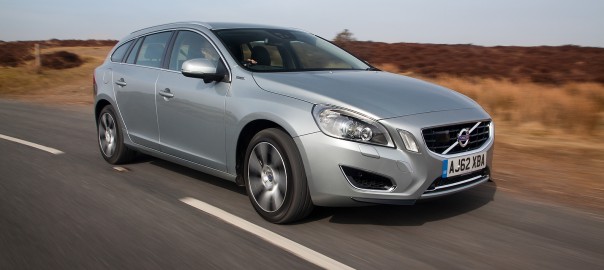
The V60 Plug-In Hybrid features a 2.4-litre diesel engine and an electric motor (Image: Autocar)

Volvo V60 Plug-In Hybrid first drive review

What is it?

The Volvo V60 Plug-in Hybrid sports a 212bhp 2.4-litre turbodiesel driving the front wheels and a 69bhp electric motor driving the rears. It can travel up to 31 miles in pure electric mode.

In Ehybrid mode, the diesel and electric motors combine to deliver the most efficient progress. Or if you’re feeling a bit frisky, select Epower mode and the diesel and electric motors deliver everything they’ve got in the name of performance.

In hybrid or even pure electric mode, if your right foot demands more power than the battery can deliver on its own, the diesel fires up. However, if you treat the throttle as though there’s a hand grenade trapped under it, you can actually top out at 78mph on electricity alone.

What is it like?

Volvo has done a great job of improving the V60’s refinement, which was reportedly a bit rough in earlier prototypes. Now, the transition between pure electric motoring and diesel fire-up is almost imperceptible.

The official fuel economy figure is 155.2mpg. Volvo isn’t for one moment suggesting that the average buyer will get that in the real world, although if you do an inner-city commute of less than 30 miles a day you might be able to get a pretty amazing return. I got 32.7mpg during my time with the V60, which included some very hard miles (not real-world, either), so that’s actually better than it looks. For the record, 0-60mph takes 5.8sec.

Less good is the V60’s ride quality. Very firmly suspended and riding on low-resistance tyres with stiff sidewalls, the V60’s ride around town is just too harsh over broken surfaces.

Power mode is good fun, but the V60 Hybrid’s extra 250kg compared with the non-hybrid equivalent makes itself felt during fast changes of direction; it’s like having two Johnny Vegases in the car with you. The handling balance does feel surprisingly neutral, though, and the hybrid V60’s weight distribution of 55 per cent front and 45 per cent rear is actually better than the regular car’s.

Should I buy one?

So does this rather special V60 make sense? Well, leaving apart the poor ride quality, even Volvo management admits that if you do a highish mileage this isn’t the car for you. On a long motorway run, you’re basically driving a diesel Volvo with a bit of a weight problem.

But if you have that short city commute, travel into central London (no congestion charge) and like the sound of low benefit-in-kind charges, it’s possible that the V60 could work for you.

However, for the vast majority of us that probably won’t be the case, and even after the £5000 Plug-in Car Grant this is still a £43,775 car – nearly £5000 more than the most expensive non-hybrid D5 V60. That’s reason enough to explain Volvo’s cautious forecast of just 150 sales this year.

Source: Autocar 2013
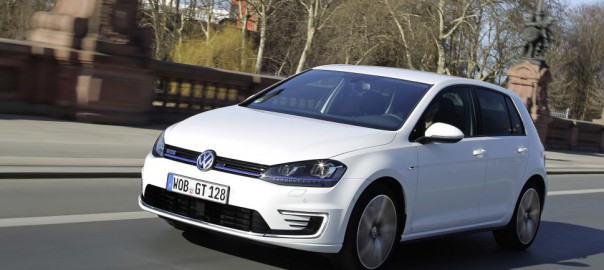
Volkswagen Golf GTE (Image: Evo)

Volkswagen Golf GTE review and pictures

What is it?

The Volkswagen Golf GTE is a plug-in hybrid version of the perenially popular family hatchback. As the badging suggests though, this is no hair-shirt rival to cars like the Toyota Prius Plug-In.

Volkswagen instead bills the GTE as the third member of its Golf GT family, joining the petrol Golf GTI and diesel Golf GTD. Knowing what we do about those models, that billing suggests this new car will be a keen performer and a fun, engaging hot hatch in a demonstrably grown-up sort of way.

Technical highlights?

The internal combustion engine is a 1.4-litre, four-cylinder turbo petrol unit, good for 148bhp, and the gearbox is a six-speed DSG. The 75kW (101bhp) electric motor sits between the two and drives through the gearbox. The hybrid drivetrain, which sends power to the front wheels only, delivers a peak output of 201bhp rather than the theoretical combined maximum of 249bhp because the power curves don’t quite converge at their peaks.

What’s it like to drive?

According to Volkswagen’s own figures, the Golf GTE is 173kg heavier than the GTI. It’ll sprint to 62mph in 7.6 seconds and top out at 138mph; those performance figures are more closely aligned to that of the 1.4 TSI model than the GTI. In its electric-only mode, it’ll cover 31 miles on a full charge.

It must be said that the hybrid drivetrain does work very well. Urban driving and electric motors, with their near-silent operation and instant torque hit, are so well matched that it’s easy to buy into the Golf GTE as a town car.

The powertrain also offers a switchable mode that ramps the energy harvesting up by such a degree that the driver needn’t bother with the brake pedal in town, although that mode is more off-putting than it is useful out on the open road. There’s a sharp edge to the way the GTE rides on city streets, which is just enough to hint at some degree of athleticism without ruining the ride comfort.

The true depth of the Golf GTE’s sporting merit depends entirely on perspective. If the point of reference is a conventional plug-in hybrid or full electric car there’ll be much to commend about the way the GTE grips securely with solid body control and good agility.

Judged as a traditional hot hatch, however, the GTE is unexciting, unrewarding and possessed of a benign chassis that collapses into understeer rather early – almost every component in the drivetrain is located ahead of the front axle line, after all.

How does it compare?

On paper it’s a deeply compelling package, but the reality is that the parsimonious fuel economy figures can only be repeated in quite particular circumstances, and in dynamic and performance terms it’s simply not in the same league as its stablemates, the Golf GTI and GTD.

It is, however, the only plug-in hybrid at this price point that holds driving enjoyment in any regard, which puts the GTE at the very top of a class of one. A Prius Plug-In is nothing like as entertaining, and Volvo’s V60 Plug-In Hybrid is more expensive and less dynamic.

Perhaps closest in spirit is the BMW i3 with the optional range-extender engine. It’s similarly priced – £33,830 before the government’s £5,000 plug-in car grant – and has similar performance with a 7.9sec sprint to the legal limit. It’s more technologically (and stylistically) interesting than the Golf, but the tall body and skinny tyres result in very different dynamics to the more conventional Volkswagen.

Anything else I need to know?

The headline 188mpg figure was achieved on the official New European Driving Cycle (NEDC) test for plug-in hybrid cars. The test is structured so that for two-thirds of its duration the subject is run in electric mode, then in hybrid mode for the remaining third of the test.

That means, then, that the Golf GTE’s petrol engine was only running for one third of the test. By extension, the owner will only replicate that 188mpg figure by running in electric mode for two-thirds of his or her overall mileage. In short, the Golf GTE will only deliver on its grand promises if the owner can plug in regularly and tends only to cover relatively short distances.

Source: Evo

The New Kia Soul EV in ‘The Electric Takeover’

From Kia Motors: When it comes to paying for fuel, we know it can be pricey. So imagine our driver’s reactions when we covertly took over a petrol station and only charged them £2.80 – the amount for a full charge of a Kia Soul EV.

Watch what happened when we charged ordinary drivers extraordinary prices for their fuel.

https://www.youtube.com/watch?v=qayjUsksu6w

Even more flexible EV ownership packages from Renault

EVEN MORE FLEXIBLE EV OWNERSHIP PACKAGES FROM RENAULT

  • Full purchase battery option now available on ZOE i and Kangoo Van Z.E. i
  • Battery Hire scheme continues on ZOE, Twizy & Kangoo Van Z.E.
  • Five-year / 60,000-mile battery warranty on i versions
  • ZOE i available from £18,443 after Government Plug-in Car Grant
  • Kangoo Van Z.E. i from £16,161 (+VAT) after Government Plug-in Van Grant
  • Battery Hire now even more affordable with new offers – from £25 per month for ZOE and from £33+VAT for Kangoo Van Z.E.

Renault UK is today introducing new ownership packages with two of its most popular electric vehicles as part of its determination to make Z.E. (zero emissions in use) mobility flexible and accessible to the widest number of drivers.

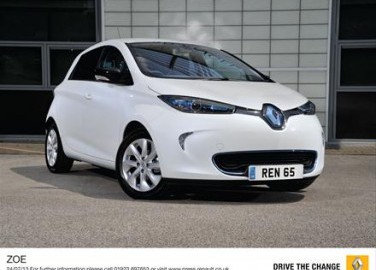
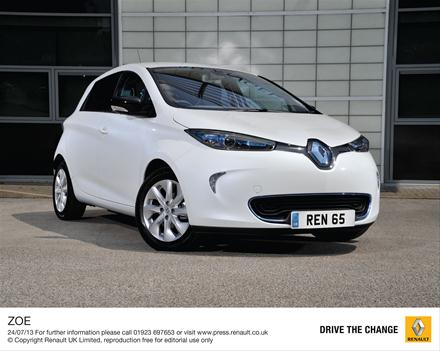
CHR1882_ZOE_Static_Renault

Customers will now be able to order new ZOE i and Kangoo Van Z.E. i versions that are supplied ‘Full Purchase’. This means that there is now the choice between full ownership of the vehicle and the battery, or buy-the-car/hire-the-battery schemes.

Potential Renault electric-vehicle customers can therefore tailor an ownership package to their exact requirements. There’s also good news for those who prefer the peace of mind and lower purchase cost of battery hire, with a special offer with lower monthly rates for ZOE and Kangoo Van Z.E.

Whichever ownership package the customer chooses, the model line-up is exactly the same, with the exception of an ‘i’ badge on the tailgate for full purchase vehicles to ensure easy identification for the used vehicle market.

The ZOE continues to be available in Expression, Dynamique Zen and Dynamique Intens trim levels, while the Kangoo Van Z.E range mirrors the versions available in diesel form, with Van, Maxi, Crew Van and Kangoo Maxi Crew Van Cab to choose from.

The ZOE i is available from £18,443 ‘on-the-road’, after the Government’s Plug-in Car Grant, compared to £13,995 on battery lease. The Kangoo Van i range starts at £16,161 (+VAT) after the Government grant, compared to £12,995 (+VAT) if the battery is leased.

These full purchase models are protected by a five-year, 60,000-mile warranty on the batteries in addition to the standard Renault vehicle protection of four years / 100,000 miles. The battery warranty gives the customer peace of mind against possible decreases in battery performance over time, guaranteeing a minimum of 70 per cent of the original capacity for ZOE and 66 per cent for Kangoo Van Z.E.

Ken Ramirez, Managing Director, Renault UK, commented:

“Renault was a pioneer in the EV market and has remained a leader by offering the best technology, across a wide Z.E. line-up and at affordable prices. The battery leasing scheme has proved popular with customers for the flexibility and lower purchase prices it offers. The addition of full purchase versions on our core EV models will offer private and business customers a greater choice and further strengthen our position in the UK EV market.”

CAP Monitor, one of the UK’s leading assessors of vehicle residual values, has responded positively to these initiatives. Martin Ward, CAP Manufacturer Relationship Manager commented:

“The ZOE and Kangoo Van Z.E. ranges have become a time-tested, high-quality, innovative and important component of a fast-growing vehicle sector. CAP Automotive welcomes any steps that broaden choice for the customer and increase the opportunities for take-up of these cars by the motoring public and businesses.”

Battery Hire – Customer Offers

Meanwhile, the battery hire scheme, which has proved to be such an attractive proposition with early adopters of electric vehicles, becomes even more appealing with the introduction of a new special offer.

Battery hire will start from £25 per month (down from £45) for the ZOE and from £33+VAT per month (down from £61+VAT) for the Kangoo Van Z.E. range. Over a 36-month period this represents a total saving of £900 on ZOE and £1,008+VAT on Kangoo Van Z.E. on the cost of the battery lease.

The flexibility and convenience of Battery Hire make these offers even more attractive, with a Lifetime Performance Guarantee on batteries under its lease scheme, including repair or replacement if they fall below 75 per cent of their original capacity, as well as the peace of mind of roadside recovery even in the event of an owner running out of charge away from a charging point.

Renault has the widest range of all-electric vehicles on sale in the UK. In addition to the stylish ZOE supermini and workaholic Kangoo Van Z.E., it also offers the fun-in-the-city Twizy. Renault has already sold a total of 2,000 electric vehicles in the UK.


PRICING – ZOE & ZOE i

Battery Hire* Battery Purchase

ZOE Expression £13,995 n/a

ZOE Dynamique Zen £15,195 n/a

ZOE Dynamique Intens £15,195 n/a

ZOE i-Expression n/a £18,443

ZOE i-Dynamique Zen n/a £20,043

ZOE i-Dynamique Intens n/a £20,043

*= Battery Hire on ZOE from £25/month


N.B. All pricing figures are after the Government Plug-in Car Grant.


PRICING – KANGOO Z.E. & KANGOO i Z.E.

Battery Hire* Battery Purchase

Kangoo Van Z.E. £12,995 n/a

Kangoo Maxi Z.E. £13,895 n/a

Kangoo Maxi Crew Van Z.E. £14,395 n/a

Kangoo Maxi Crew Van CAB Z.E. £14,895 n/a

Kangoo i Van Z.E. n/a £16,161

Kangoo i Maxi Z.E. n/a £17,062

Kangoo i Maxi Crew Van Z.E. n/a £17,561

Kangoo i Maxi Crew Van CAB Z.E. n/a £18,062

* = Battery Hire on Kangoo Z.E. from £33/month


N.B. All prices excluding VAT and after the Government Plug-in Van Grant.

New generation of BMW plug-in hybrid models

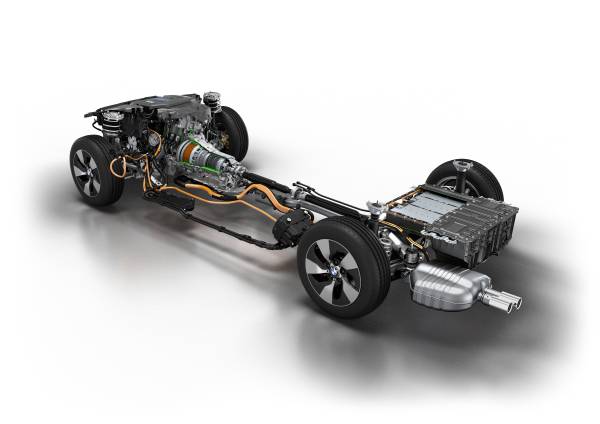
BMW 3 Series Plug-in Hybrid Prototype Drivetrain (Image: BMW)

Munich/Miramas. The BMW Group is preparing to follow up its innovative and revolutionary BMW i models with plug-in hybrid versions of the core-brand models. In Miramas, France, it will present a BMW 3 Series plug-in hybrid prototype and a new generation of hybrid vehicle concepts incorporating technology already used in BMW i models. Long term, the BMW Group is planning to offer plug-in hybrid versions of all its core-brand models.

Herbert Diess, Member of the Board of Management BMW AG, Development, said:

“All BMW Group models benefit from BMW i. The fundamental technology involved in battery cells, electric motors and the power electronics will be used in our upcoming plug-in hybrid models. When it comes to the electrification of the drivetrain, we are deliberately developing a wide-ranging expertise in order to offer our customers worldwide the ideal solution.”

The plug-in hybrid models presented in Miramas are equipped with a highly efficient internal combustion engine and an electric motor powered by an externally rechargeable high-voltage battery. Shorter-distance urban trips or commutes can be completed on electric power only. On longer journeys, the vehicle will usually operate in “combined mode”, with both systems working together.

TheBMW 3 Series plug-in hybrid prototype combines a four-cylinder petrol engine with an electric motor. The internal combustion engine is based on the TwinPower Turbo four-cylinder petrol engine that has already twice been voted “International Engine of the Year”.

The electric motor and power electronics are directly based on the BMW eDrive technology already used in the BMW i3 and BMW i8 models. The prototype’s lithium-ion battery, including the battery management system and the high-efficiency direct cooling system, are likewise based on BMW i experience and know-how.

The plug-in hybrid technology is so flexible that it can be integrated in a wide variety of vehicle concepts. It will therefore be possible to deploy it rapidly across the BMW model range. The route to sustainable mobility in the future will be a multitrack one. The already efficient combustion engines will be even more economical. All-electric vehicles like the BMW i3 are tailored to urban mobility requirements while plug-in hybrids are more appropriate for longer-distance journeys. Beyond this, in the long term electric mobility in conjunction with hydrogen fuel cell technology could also be a viable option.

The focus of our Efficient Dynamics strategy is the electrification of the power train. This is an area in which we will continue to expand in the coming years. The plug-in technology will be one key lever to bring high performance vehicles well below 100 g / km CO2, while retaining the driving pleasure and driving dynamics of a BMW. We will also continue to develop fully electric mobility. Hydrogen fuel-cells will remain a key issue when it comes to drivetrain development, especially relating to its sustainable production.


Key eDrive technologies developed in-house

All the important eDrive technologies and components are developed in-house, and from next year they will all be built at the BMW plant in Dingolfing. This programme is set to create over 200 new jobs around electro-mobility at the BMW plant in Dingolfing. Many tens of millions of euros will be invested at this plant over the next five years.

Harald Krüger, Member of the Board of Management of BMW AG, Production stated:

“Our accumulated expertise guarantees us a competitive edge, this can be seen not only in the performance data of the BMW electric motors but also in our highly efficient production process.”

Since the BMW Group expects to be building a wide range of electric drive components in the future, production will be organised around an intelligent eDrive component-sharing system. This means that one and the same production line will be able to build high-voltage battery modules not just for the BMW i8 but also for the future BMW X5 eDrive. In the case of complete battery packs, too, the new production lines will be designed for a flexible production mix: it will be possible to build battery packs for a number of different future models all on the same lines.


Highly electrified hybrids

With the ongoing development and refinement of hybrid drive systems under the EfficientDynamics programme, the aim is to maximise the amount of time the vehicles are able to spend in electric mode. To ensure that this increased electric operation goes hand in hand with typical BMW dynamic performance, everyday practicality and maximum long-distance capability, the BMW Group’s future hybrids will be “highly electrified”. Highlights of this future Power eDrive technology will include much more powerful electric motors and batteries with twice the capacity of present versions.

The drive systems used in these future hybrid systems will offer combined outputs in excess of 500 kW. Also, the capacity of the lithium-ion batteries – up to 20 kilowatt hours – will be greatly in excess of current hybrid systems. Coupled with an increased all-electric driving range of up to 100 kilometres (62 miles), this will make it possible to operate in locally emission-free pure-electric mode on virtually all day-to-day trips.

Source: BMW Group

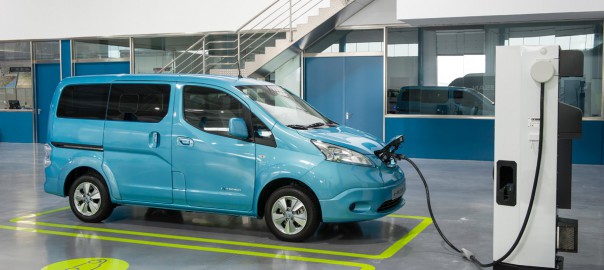
Nissan e-NV200 Combi Electric Van (Image: Nissan)

Nissan e-NV200 Combi first drive review

The passenger version of Nissan’s new electric van is a niche vehicle, but could hold appeal for growing families who need the space

Nissan e-NV200 Combi Electric Van (Image: Nissan)

Aerodynamic revisions, a wider front track, lower centre of gravity and a faster-reacting drivetrain; all the stuff you’d expect Autocar to write about. Only here it relates to a van, or in correct parlance a LCV (Light Commercial Vehicle), the Nissan e-NV200.

What’s really significant here is that drivetrain, those enhancements coming thanks to a battery pack and electric motor borrowed from the Nissan Leaf, making the e-NV200 the working class addition to Nissan’s push for greater electrification of its line-up.

While a couple of small pallets will fit in the back of the panel version there is at least a model with rear seats and windows. In the UK that will be the Nissan e-NV200 Combi, us Brits denied the plushest (relatively speaking) Evalia model, which brings MPV-like niceties such as picnic tables on the back of the front seats and proper plastic moulded door cards on the rear sliding doors.

UK-spec Combis start at £22,895 – or £17,895 if you want to lease rather than own the battery pack. Four grades are available, Tekna Rapid bringing the most car-like specification as standard, with alloy wheels, a multi-function steering wheel, auto lights and wipers and Nissan’s pre-heating or cooling CarWings system linked to your smartphone. Even it comes with push-stud fixings and rough material panels in place of those Evalia door cards and nowhere to picnic.

Most, Nissan admits, will be sold to taxi firms and fleet users, but it’s not unreasonable to expect the odd Leaf buyer who’s after a bit more space for a growing family eyeing the e-NV200 with a glimmer of desire.

The Leaf absolutely dominates the plug-in EV marketplace, Nissan having shifted 110,000 of them worldwide, and it hopes the e-NV200 will do much the same in the LCV arena. It arguably makes even more sense here too, as business operators with fixed or predictable mileage routes aren’t quite so stymied by range anxiety issues.

Range is 106 miles in perfect conditions, which is plenty given Nissan’s claims that some 35 per cent of vans don’t cover more than 80 miles a day. A growing urban and nationwide charging network and the e-NV200’s 80 per cent, 30-minute fast charge potential – which rises to as much as 12 hours if you plug into a conventional plug at home for a 100 per cent charge – help.

The ability to run in low emission zones and operate in near silence in noise-sensitive areas are also obvious advantages. As are lower servicing and running costs and the appealing tax and Congestion Charge avoidance potential of a plug-in over a diesel NV200 – Nissan equating these to around £16,127 for a London user over four years. That mileage would easily cover the school run; the additional space inside and the massive boot clearly useful if you’ve outgrown your family Leaf.

The revised aerodynamics up front bring some Leaf-like looks too, the nose stretching by 160mm to house the charging socket behind the central flap. Just 50mm is to house it, some 80mm accountable for high-speed crash protection and the remaining 30mm to pass pedestrian impact tests.

The re-profiled bumper mates with wider front wings, the e-NV200’s front track some 40mm wider than its diesel relation. That’s thanks to the adoption of the Leaf’s front axle, which is specifically designed to house the electric motor.

Craig Paterson, vehicle layout specialist at Nissan’s Technical Centre Europe, says this has been done to keep costs reasonable, the e-NV200’s drivetrain as unchanged from the Leaf as possible, down to things like motor mounts, even though the e-NV200 wasn’t originally conceived as a plug-in EV.

The battery pack is modified slightly to fit under the floor, that bringing the centre of gravity down over its diesel relation, although the kerb weight rises by around 230kg as a result.

What is it like?

Get in and it’s like a van, the upright driving position with its excellent view and the steering wheel position both screaming ‘commercial vehicle’. Depending on specification, there are some Leaf refinements: the centre console containing Leaf-like detailing, air-conditioning controls and central screen.

The instruments too are similar, at least the details of battery capacity and driving modes – operated by both the Eco button and the gearstick. That stick is more conventional than the Leaf’s somewhat awkward button-shaped shifter, the auto stick offering Drive and B modes. The latter ups the energy scavenging regenerative effect to the point where with planning you can drive the e-NV200 around town without touching the brake pedal.

Like the Leaf it’s not silent, the electrical noise more obvious in the larger interior of the e-NV200, which is less insulated for sound.

Neither can the e-NV200 hide its van status, the plastics superficially looking okay, but undeniably built to last rather than provide appealing tactile quality. The drive is, somewhat unsurprisingly, van-like, although that low centre of gravity gives it a more stable feel in corners over its diesel relation, while the electric motor’s instantaneous response is always amusing.

It’ll manage the 0-62mph dash in 14 seconds, while top speed is 76mph – try to achieve these figures often, though, and you’ll be looking for a charger fairly quickly. Refinement is good, wind noise more obvious in the absence of dominant engine noise, the loss of vibration from the diesel motor the most significant gain. The steering steers and the brakes stop, which is pretty much all you could ask here, the suspension too riding decently.

Should I buy one?

The Nissan e-NV200 is all very predictable. It does everything a Leaf does, but with masses more space and a bit less sophistication on the road. If that appeals to you – and we can see why it might to some – then the e-NV200 Combi is the most practical EV you can buy.

Source: Autocar

Car exhaust pollution (Image: Wikipedia)

Days Numbered For Dirtiest Diesels In Europe

For many European cities, diesel exhaust emissions have become a health as well as an environmental problem.

So in addition to promoting electric cars or alternative forms of transportation, lawmakers are beginning to crack down on the dirtiest diesels.

Next year, the French government will launch a car identification system that will rank vehicles by the amount of pollution they emit.

According to Reuters, this will allow local authorities to limit city access for the worst-polluting cars.

The move – announced in a speech by French Prime Minister Manuel Valls on Friday – is part of an effort to gradually phase out diesel fuel in the country.

In the 1960s, the French government and auto industry made the decision to move to diesel – which was viewed as less polluting than gasoline in the days before catalytic converters became standard.

Now, France is paying for that choice in the form of high levels of harmful particulate matter and other aftereffects of diesel-exhaust emissions from cars that don’t come close to meeting current diesel emission standards.

France has “long favored the diesel engine,” Valls said in his speech, but claimed that it was a “mistake” that must be undone with policy changes that could – in the long term – end diesel’s dominance.

Read more: Green Car Reports

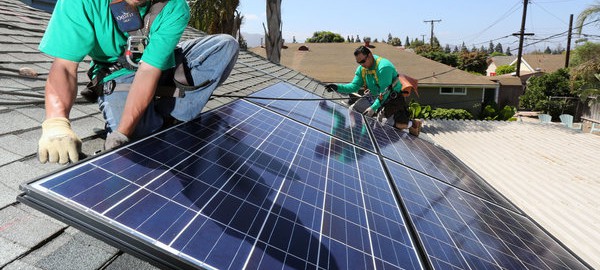
Workers for SolarCity installing solar panels (Image: JE Flores/NYTimes)

Why More Solar Panels Should Be Facing West, Not South

For years, homeowners who bought solar panels were advised to mount them on the roof facing south. That captures the most solar energy over the course of the day, which benefits the homeowner, but does so at hours that are not so helpful for the utility and the grid as a whole.

Mount them to catch the sunlight from the west in the afternoon, and the panels’ production over all would fall, but it would come at hours when the electricity was more valuable.

But that idea is slow to take hold. A new study of 110,000 California houses with rooftop solar systems confirmed that a vast majority of the panels were pointed south because most of the panel owners were paid by the number of kilowatt-hours the panels produced. Pointing them southward maximizes production over all, but peak production comes at midday, not in late afternoon, when it would be more helpful.

In late afternoon, homeowners are more likely to watch TV, turn on the lights or run the dishwasher. Electricity prices are higher at that period of peak demand.

“The predominance of south-facing panels may reflect a severe misalignment in energy supply and demand,”

said the authors of the study, Barry Fischer and Ben Harack. They work for Opower, a company that provides software that electric companies can use to manage their relationships with their customers.

Houses with solar systems consume less than half as much utility-delivered electricity as ordinary houses, the study found. But from about 4 p.m. through the night, they consume more, and they add to the system’s peak demand, which comes around 5 p.m.

Pointing panels to the west means that in the hour beginning at 5 p.m., they produce 55 percent of their peak output. So a 10-kilowatt system would make 5.5 kilowatts. But point them to the south to maximize total output, and when the electric grid needs it most, they are producing only 15 percent of peak, or 1.5 kilowatts.

Why wouldn’t everyone point the panels west? Some homeowners have their panels face south because that is the direction of the roof. While some solar panel owners are paid time-of-use rates and are compensated by the utility in proportion to prices on the wholesale electric grid, many panel owners cannot take advantage of the higher value of electricity at peak hours because they are paid a flat rate, the energy analysts said. So the payment system creates an incentive for the homeowner to do the wrong thing. The California Energy Commission recently announced a bonus of up to $500 for new installations that point west. A new solar installation is completed every 3.2 minutes, according to the authors of the analysis.

Solar panels do not have to be pointed in just one direction; a homeowner can buy a device called a tracker that will pivot them, over the course of the day, like a sunflower, so they always face the sun. A tracker can raise the output of a panel by 45 percent. But adding trackers can cost hundreds or thousands of dollars, and a cheaper way to get the same number of kilowatt-hours may be simply to buy a few extra panels.

Houses with solar panels are not necessarily efficient; during the hours when the sun is not shining, they use more electricity than houses without solar panels. It may be because the bigger users tend to install the panels in the first place. There may be another reason: People who own electric cars tend to also install solar panels, and their overall electricity consumption is higher. But from an environmental standpoint, it is still better to consume the energy as electricity rather than as gasoline.

Source: New York Times

Kia Soul EV

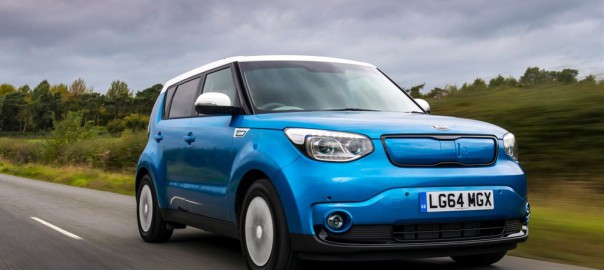
Kia Soul EV UK first drive review

Smooth, refined and responsive, but some way behind the new EV models from Mercedes-Benz and Volkswagen in nearly all areas

What is it?

This is Kia’s first production electric vehicle, based on the familiar high-roofed Soul hatchback. Like all other Kia models, the Soul EV will get the same seven-year warranty which is a market first for battery-powered vehicles and should help reassure potential purchasers.

In the conversion to battery power, the core of the Soul – the conventional internal combustion engines, transmission and heating system – have all been dumped, the front and rear styling revamped and the structure reworked.

While the upper body structure is carried over, it has been further beefed up with extra strengthening in the B-pillars and sills. Five extra crossmembers have also been bolted across the floorpan to increasing the rigidity of the bodyshell by 27 per cent.

The Soul EV also gets a restyled front end and a plastic insert in the grille space, which opens up to revealed the twin charging sockets. The rear bumper and tailgate have also been restyled and LED rear lights have been added.

Inside, the dash is all new and built of higher-quality materials than the conventional models. The EV version gets OLED digital instruments, a large centre touch screen, a rather shapely steering wheel and a new shift lever and surround.

The 27kWh lithium ion polymer battery pack is packaged under the floorpan. Charging from a UK domestic socket could take up to 13 hours. Kia UK is, however, suppling owners with a wallbox charger, which should reduce charging time to around five hours. It is also fitted with a Japanese-standard Chademo fast-charging socket, which can deliver an 80 per cent charge in 33 minutes.

Kia engineers created a new low-energy heating and ventilations system based on the heat pump principle which also allows heating and ventilation to be restricted to just the driver, saving energy.

The 109bhp, 210lb ft electric motor drives a single-speed transmission and Kia claims a 0-60mph time of 10.8sec and a top speed of 90mph. The combination of the polymer battery cells and the new heating system will stretch the potential driving range out to 132 miles.

What is it like?

While the Soul EV delivers the typically compelling electric car dynamic of smooth and torquey performance and a quiet cabin, the whole package feels somewhat dated.

Had this car been launched three years ago, it would have been easily class-competitive with the Nissan Leaf. But the world of the EV has moved on rapidly and the new Volkswagen e-Golf and Mercedes-Benz B-Class Electric Drive are better cars than the Soul EV.

The two German models feel more refined both in terms of cabin ambience and ride quality, the drivetrains perform better and both cars have far superior handling.

The cartoonish looks might, of course, not matter to many potential buyers, but the clinching argument is that the entry-level VW e-Golf is only just over £1000 more than the Soul EV; the B-Class Electric Drive costs around £2000 more, and the excellent BMW i3 only a few hundred pounds more.

That’s not to say the Soul EV has nothing going for it; quite the opposite, in fact. In addition to its EV driving and performance traits, the lofty driving position and boxy styling make it easy to position in busy city-centre traffic.

Should I buy one?

If you are going to buy an electric car, it would be hard to find a compelling argument for the Soul over rival models. It does everything pretty well, aside from suffering a somewhat disturbed ride on poor roads, but is short of EV class leadership.

Kia has modest sales targets for the Soul EV, with next year’s sales tipped to be 100-200 units, the cars only being sold through a select 13 dealers who applied. Despite the £24,995 price (including government grant, battery pack, wall charger, Chargemaster account and generous standard spec), Renault’s Zoe and the Nissan Leaf also benefit from buying packages that make EV ownership even more affordable.

As it stands, the Soul EV, as competent as it is, is neither the best to drive nor the best value.

Source: Autocar

Inconveniences of Gasoline 1: Gas Station (Image: Clean Technica)

The Inconveniences of Buying Gasoline

Thanksgiving weekend has historically been the biggest driving weekend of the year. What better time to discuss buying gasoline?

This article is intended to be a little bit of a light article, but with some food for thought included for consumption. It is not intended to be a full review of the pros and cons of buying an electric vehicle (EV) article. In short, some insights are being put forth here to contribute to the conversation about EVs. This article is a result of my own inner dialogue that has moved me in the direction of buying an EV. An EV will be my next car, but I’m still currently driving an anachronistic internal combustion engine (ICE).

Finding a Gas Station

How far out of our route do we have to drive to get to the gas station? For me, this varies from trip to trip. As an environmentalist, I do my best to get gas right on the road on which I’m already traveling, but that isn’t always possible. How many stop lights do we go through to get to a gas station while paying good money to burn gasoline, and polluting with CO2s, at those stoplights? How much gasoline do we pay for to get us to and from those gas stations? With EVs that charge at home and/or work, this issue is eliminated.

The Cost

The cost savings of using electricity instead of buying gasoline is commonly quoted as between $1,000 and $1,500 per year. This will vary based on one’s electricity rates, the cost of gasoline, and the number of kilometers (miles) someone drives per year.

Premium Gasoline

When we hear the price of gasoline on the news or radio, they are always quoting the price of regular gas as though that’s the only price of gasoline. Many cars such as all ICE Mercedes vehicles require premium petrol. The cost of premium gas varies, but is roughly 8% more costly currently and has cost as much as 20% more than regular in the past (in 1998). With EVs, this issue is eliminated.

Read more: Clean Technica