Daily Archives: December 31, 2014

Electric and Hybrid in Demand on Salary Sacrifice Car Schemes

A survey of over 600 drivers by Zenith Leasedrive Group has revealed that over 61 per cent are interested in ordering an electric or hybrid car through a salary sacrifice car scheme.

Of these, 12 per cent would choose an electric car, 33 per cent a plug-in hybrid and 55 per cent a non-plug-in hybrid. Salary sacrifice car drivers can save money through selecting an alternative fuelled car, through both fuel savings and reduced tax.

The most popular electric car ordered through Zenith’s salary sacrifice car schemes is the BMW i3, followed by the Vauxhall Ampera and then the Nissan Leaf. The Toyota Prius is the most ordered plug-in hybrid, with the Lexus CT 200h being the most in demand non-plug-in hybrid car.

Andrew Kirby, Zenith’s commercial director – employee benefits schemes, commented:

“With this high level of interest in alternative fuelled cars, we expect to see many more drivers switch from diesel or petrol cars over the next 12 months. When taking into account the lower fuel costs and tax savings, they can be significantly more cost effective to run than a fossil fuelled option.”

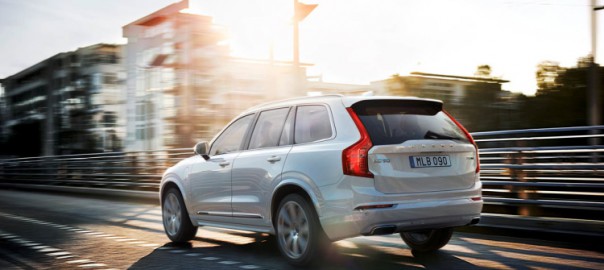
Volvo XC90 T8 PHEV (Image: Volvo)

Volvo XC90 T8 hybrid runs 0-62 in 5.9 seconds

Volvo XC90 T8 hybrid runs 0-62 in 5.9 seconds, will get 59 MPGe

Volvo has shown us the new XC90. It’s even shown us its new every-trick-in-the-book twin-charged hybrid powertrain. It just hasn’t shown the two together… that is, until now.

Although the High Performance Drive-E Powertrain prototype it showcased a couple of months ago was rated as high as 450 horsepower, the production version that will power the flagship XC90 T8 has now been confirmed to produce 400 hp and 472 pound-feet of torque. That’s still pretty damn good – especially from a four-cylinder engine – and is now quoted to propel the big crossover from 0-62 miles per hour in 5.9 seconds.

That’s not bad for a four-cylinder crossover, but if you’re wondering how it stacks up against the competition – well, there isn’t much to speak of. The only other luxury three-row crossover currently on the market is the Infiniti QX60 Hybrid, which doesn’t plug in and offers only 250 hp and 243 lb-ft of torque and takes a good eight seconds to reach highway cruise. (Other luxury hybrid crossovers like the Porsche Cayenne, VW Touareg, Audi Q5, Lexus RX only offer five seats.)

To match the Volvo’s performance in a Mercedes GL, for comparison’s sake, you’d have to go up to the twin-turbo V8-powered GL550, which just edges out the XC90 T8 with 429 hp, 516 lb-ft and a 5.5-second 0-60 time. (One step down, the six-cylinder twin-turbo GL450 offers significantly less with 362 hp, 369 lb-ft and a 6.6-second sprint.) But the Volvo offers pure electric mode that’ll get you 25 miles down the road before firing up the internal-combustion engine.

Gothenburg is estimating that we can expect around 59 MPGe, still to be confirmed, from the XC90 T8, but that is using the lenient European NEDC testing method. Interestingly, Volvo is also quoting an emissions figure of 59 grams of CO2 per km (NEDC), which would be roughly 92 MPGe. We’ve asked Volvo for a clarification. Either one will easily make the XC90 the cleanest crossover on the market, at least until the Tesla Model X arrives in late 2015.

Source: Autoblog

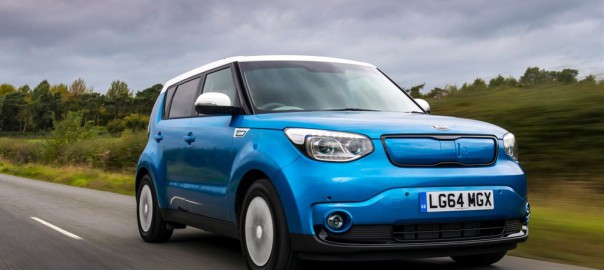
Kia Soul EV

Electric Kia Soul charges ahead

NOT LONG ago mention of the “compact crossover” would have drawn blank faces all round.

Now annual sales of these quasi SUVs are set to rise to more than 600,000 in Western Europe by next year, with more than 150,000 of sales in the UK. The Kia Soul joined the party in 2009 to be superseded by the second-generation 1.6-litre petrol or diesel versions this year. However, its funky, boxy styling has not been a hit in the UK, so it’s something of a niche model here.

Kia hopes to make a bigger splash with this new Soul EV, though, which is its first battery-powered electric vehicle. Running on electricity alone, it is sure to be even more of a niche car, although not even Kia is pretending the Soul EV will be high up the sales charts. There is a very limited global supply from the South Korean factory and it will be available only through 13 specially trained dealers in its first year, but this is a car with an eye on the future and Kia is keen to get ahead of its mainstream rivals.

The Soul EV exterior is similar to existing Souls; the most noticeable differences being its blanked-off front air intake (hiding two charging ports), low-drag lightweight alloys with super-low-rolling-resistance tyres plus redesigned light clusters and rear bumper. Under the bonnet lies a 81.4kw electric motor (equivalent to 109bhp) that drives the front wheels via a single speed CVT automatic gearbox.

Housed beneath the floor in a protective casing is an air-cooled lithium-ion polymer battery with a storage capacity of 27 kilowatt hours (which is more than the BMW i3, Nissan Leaf or VW e-Golf). The battery can be recharged either from a standard 13amp wall socket, via the Kia-branded wallbox supplied as standard, at a public fast charger, or from a public rapid charger.

The combination of the two is enough to get the Soul EV from 0 to 60mph in 10.8 seconds and on to a 90mph top speed but the delivery of the electric motor means it feels punchier than those figures suggest.

The motor and drivetrain are also fabulously smooth and the car really couldn’t be easier to drive. The steering feels light but suitably weighted, while pick-up from low speeds is instant with very swift acceleration.

Meanwhile the feel of the brake pedal is linear and has none of the low-speed inconsistency that blights the regenerative braking systems of some other electric and hybrid cars. Weighing just 8kg over the standard turbo-diesel Soul, there’s little discernible difference on the move either.

Thanks to the retuned suspension the little extra weight it carries does not detract from the car’s nimble handling or comfy ride.

On the move, too, it’s eerily quiet and has a Virtual Engine Sound system which at low speeds apparently alerts pedestrians and cyclists to its presence, although we weren’t aware of it inside the car.

As with any all-electric car though, its maximum range is a concern. Kia claims a full charge gives the Soul EV up to 132 miles subject to conditions and driving style. Although 130 or so miles is good for a pure electric car, in practical terms the Soul EV is really only suitable for city or local use.

LOGBOOK LOWDOWN

Price: £24,995 government grant) Electric – 81.4kw 0 to 60mph in 10.8 90mph top speed : up to 132 miles emissions: 0g/km Ford Focus Electric, Leaf, VW e-Golf, Prius Plug-In 8/10 A full recharge takes 10 to 13 hours from a 230v domestic power supply or about five hours from a wallbox or at a public fast-charge point and recharging at a public rapid charger to 80 per cent capacity takes about half an hour.

During our largely urban drive the battery range held up well despite having the air conditioning on (the climate control system has an energy-saving driveronly function) and without being in full Eco drive mode.

REAR LEGROOM is slightly reduced due to the battery’s underfloor location, while the 281-litre boot is lowered because of an undertray housing the recharging cables. A tyre inflation kit replaces a spare wheel and there’s an EV-specific instrument cluster, but otherwise the interior is much the same as a normal Soul. So fit and finish is high standard, there is ample space and practicality plus good front seats.

The Soul EV will come in one spec grade, retailing at £24,995, including a £5,000 government plug-in car grant. This makes it the priciest Soul by £3,445, and more than the 170bhp 100-mile-range BMW i3.

On the upside, the electric Soul has touch-screen sat nav (showing charge point locations), a reversing camera, air con, DAB digital radio, voice recognition and music streaming; plus there are no road tax costs and highly reduced company car tax. If you can cope with the Soul EV’s range, it’s an enticing prospect.

LOGBOOK LOWDOWN Price: £24,995 (after government grant) Engine: Electric – 81.4kw Power: 0 to 60mph in 10.8 seconds, 90mph top speed Range: up to 132 miles CO2 emissions: 0g/km Rivals: Ford Focus Electric, Nissan Leaf, VW e-Golf, Toyota Prius Plug-In Rating: 8/10

Source: Express
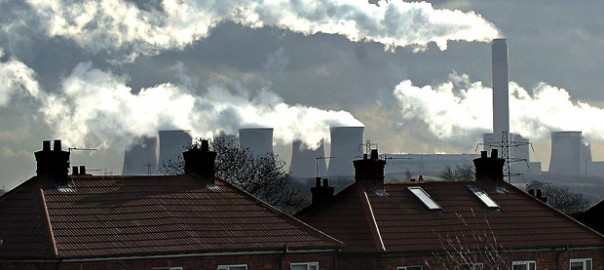
Pollution at Drax Coal Power Station near Selby (Image: J. Giles/PA)

Air pollution costs Britain £10bn a year

Britain is third highest contributor to air pollution that costs Europe up to £149bn a year, says EU agency report

Britain has 10 of Europe’s top 50 “super-polluting” power stations and factories, helping to cost it more in health and environmental impacts than any other countries, except for Germany and Poland.

New air pollution figures from the European environment agency (EEA) suggest that a handful of power stations and industrial plants together cost the National Health Service and the wider UK economy over £10bn a year.

Of over 14,000 major industrial plants identified in Europe’s 27 countries, Drax power station in Selby and the Longannet plant at Kincardine in Scotland were ranked respectively 5th and 10th between 2008-2012.

Drax’s air pollution is calculated to have cost the economy £2.7-£6.34bn and Longannet £1.8-4.56bn. The Corus steel works in Redcar ranked 27th in Europe with Alcan Aluminium in Co Durham 34th.

The 10 biggest British plants together were calculated to have at cost at least £12.6bn in air pollution damages between 2008-2012.

Eight of the 30 biggest sources of air pollution were in Germany, six in Poland, four in Romania and three each in Bulgaria and the Britain. Half of all the health and environmental costs were said to be caused by just 1% of the industrial plants, said the report.

Chart_Environmental_costs_Guardian

The authors calculated the economic damage done not just by major air pollutants emitted from coal and gas power stations but also those from burning diesel and petrol in vehicles. It included the estimated cost to the health service of the premature deaths and respiratory problems caused by traffic and industry, as well as the damage done to buildings, and the money lost from crop damage and from soil and water pollution.
Advertisement

CO2, a major gas responsible for climate change, was costed according to its carbon price. For the air pollutants, the majority of costs were said to be due to the health impacts of people breathing in minute particles of unburned carbon.

According to the authors,

“air pollution cost [European] society at least €59 billion, (£46bn) and possibly as much as €189 billion (£149bn) in 2012. The upper estimate is roughly the same as the GDP of Finland or half the GDP of Poland. In Britain, the cost is estimated to be between £31-99bn in the five years from 2008.”

“While we all benefit from industry and power generation, this analysis shows that the technologies used by these plants impose hidden costs on our health and the environment. Industry is also only part of the picture – it is important to recognise that other sectors, primarily transport and agriculture, also contribute to poor air quality,”

said Hans Bruyninckx, EEA director.

The report recorded a small decrease in the economic damage done over the five years monitored in the report. This, said the authors, reflected lower emissions from European industry, attributed to both tighter air pollution laws, greater efficiency in factories and machines and the Europe-wide economic recession.

But the EEA warned that the total cost of damage to health and the environment from pollution by all sectors of the economy, including from ‘diffuse’ sources such as road transport and households, could be significantly higher.

In 2010, the European commission estimated that the external costs associated with only the main air pollutants ranged from £260- 740bn.

An EEA spokesman added that because air pollution crossed borders, all figures were calculated from sources of pollution. The wide range of damages, he said, reflected different countries’ ways of putting a value on the health impacts of air pollution as well as the different methods used to estimate CO2 related damage.

Source: The Guardian

RSSKL Advent Fair

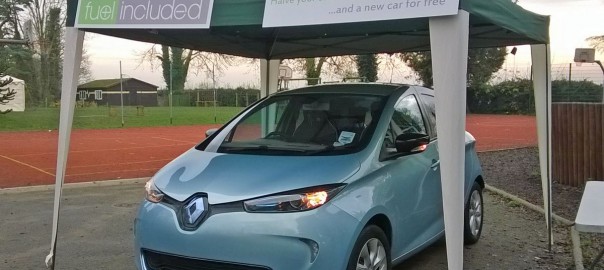
Fuel Included's first public event - the Steiner School Advent Fair
Fuel Included’s first public event – with a Renault ZOE at the Steiner School Advent Fair

We wanted to get the concept of Fuel Included to a different audience and so took a Renault ZOE to the Advent Fair at the Rudolf Steiner School in Kings Langley, Hertfordshire.

It was a mild day and so well suited to standing outside and talking to folks as they passed.

Everyone was in festive mood, and it was gratifying to hear the level of excitement about electric cars as well as the personal commitment people had to making changes and making a difference.

Our message of reducing your personal carbon footprint at the same time as saving money was well received, and after only a few hours, we had many solid leads for electric car leasing with fuel included – essentially fixed cost motoring.

All in all a most enjoyable start to the Christmas season.

Nissan Leaf in one of the OU electric vehicle scheme parking spaces (Image: T. Larkum)

Open University Electric Vehicle Research Study

EV Study venue, the OU Berrill Building (Image: T. Larkum)

In November I was invited to attend an Open University Electric Vehicle Research Study. I came across it online, plus friends who know I am an EV driver had also told me about it.

The study is being conducted by researchers from the Open University’s Ubiquitous Computing and Sustainability Lab, part of the OU’s Centre for Research in Computing. Their aim is to design interactive in-home technologies to help people better understand and manage energy issues of electric vehicles. In particular this study will investigate how an electric vehicle can fit among household energy practices and activities.

The first stage of this study is an interview, and I was happy to visit the OU campus at Walton Hall in Milton Keynes. There in the Berrill Building we talked about my experiences with an electric car, and having solar panels on my home, and my general energy usage/behaviour.

Nissan Leaf in one of the OU electric vehicle scheme parking spaces (Image: T. Larkum)
Nissan Leaf in one of the OU electric vehicle parking spaces (Image: T. Larkum)

While there I noticed that there were electric vehicle charge points in the car park outside, and one was occupied by a Nissan Leaf. However, they are part of an EV Membership Scheme and are not directly associated with this study.

I wish the Lab good luck with this project, and will report on its results when they are published.