Daily Archives: November 20, 2014

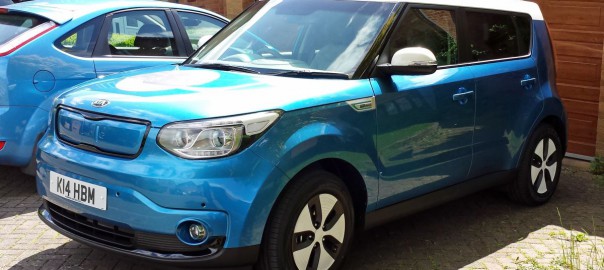
Kia Soul EV (2015) first drive review

Are electric cars the future? It’s a subject that’s very much open to debate. Some drivers are absolutely sold on the idea, while others question their limited range and how green they really are.

The same is true with manufacturers. A few are jumping head first into the electric car revolution, while others are avoiding it in favour of small capacity, turbocharged petrol engines, or even hydrogen power. Some, like Kia, are being cautious, dipping their toes in the water and seeing what happens.

This explains why the Korean carmaker has electrified its Soul mini-SUV, but plans to sell it in very small numbers. There’s no fancy new production line – all Soul EVs are made on the same line as the regular Soul, in an attempt to keep costs down, and just 5,000 a year are expected to be built. And here’s the clincher: no more than 200 are expected to come to the UK in the first year of production.

The reason for this? “Some manufacturers are flooding the market,” says Kia. “They’re selling electric cars to people whose lifestyles aren’t suited to electric cars, and it’s damaging their reputation.” This leads to tales of range-anxiety, and poor residual values, which Kia wants to avoid.

What’s the Kia Soul EV like to drive?

Central London isn’t an obvious place for a car launch, but it really flatters the Soul EV. Threading it through traffic, instant torque available whenever you press the accelerator, it’s hard to deny an electric car is second only to a jetpack in conditions like this.

While adapting a ‘regular’ car might seem an easy way of offering an electric vehicle, it does present some challenges. For a start, there are the big, heavy batteries that need putting somewhere. In this case, they’re hidden under the floor. And then refinement can be tricky. A combustion engine does a great job of drowning out noises – remove that, and even the slightest noise can prove irritating.

But Kia’s done a commendable job. There are no battery whines sometimes associated with electric cars, and road noise is minimal (although, as hard as we tried, we couldn’t get near to the Soul’s 90mph top speed in central London). What’s really impressive is how well the Kia Soul EV rides. The extra 274.5kg from its batteries could easily result in a crashy ride, but Kia’s tweaked the springs to take the extra weight into account, and it deals with bumps and potholes exceptionally well.

Charging using a domestic power supply takes 10 – 13 hours from empty to full, but this can be reduced to five hours using a public fast-charge point. Alternatively, using a public rapid charger, it can be boosted to 80 per cent charge in just over half an hour. From a full charge, expect to get a range of around 132 miles – less than a petrol or diesel car, obviously, but enough for most urban journeys.

Read more: Motoring Research

Plug-in Car Registrations in UK (Image: InsideEVs)

Plug-in Car Sales Strong In UK – 1,700 In October

After the record September, last month (October) sales of plug-in cars remain strong in the UK compared to previous periods.

1,708 units sold is the second best result overall, from which 463 are all-electric cars and 1,245 plug-in hybrids (preliminary data). Plug-in hybrids now dominate the British EV market.

Plug-in Car Registrations in UK (Image: InsideEVs)

Plug-in cars were almost 1% (0.95%) from 179,714 total passenger car registrations in October.

After 10-months of 2014, over 10,000 EVs were sold in UK – 4,963 all-electric and 5,548 plug-in hybrids.

Source: Inside EVs

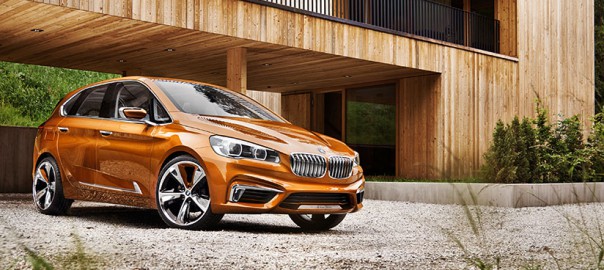
BMW 2-Series Active Tourer Plug-in Hybrid (Image: BMW)

BMW 2-series Active Tourer gets plug-in hybrid in 2015

It’s all change in BMW world on various levels. The 2-series Active Tourer is the first front-wheel drive BMW. The brand’s first MPV, too. And in 2015, it’ll join the ranks of BMW’s burgeoning plug-in hybrid set.

The technology will be shared with the next X1 – and what’s unusual about Munich’s solution is that it powers the rear wheels.

Yes, that’s right: the 2015 BMW 2-series Active Tourer eDrive will be four-wheel drive.

The plug-in hybrid story

While almost all rival hybrids drive the front wheels, BMW’s eDrive concept connects to the rear wheels via a 102bhp/184lb ft electric motor.

According to sources from within Munich’s corridors of R&D, this application offers distinct traction and weight distribution benefits, along with four-wheel torque vectoring.

Decoded: the new BMW people carrier will be quicker and sharper driving, as well as cleaner. And four-wheel drive may well tempt away buyers of regular SUVs to try this taller-riding BMW.

BMW initially showed the Active Tourer as a concept car powered by a plug-in hybrid unit. BMW quoted 113mpg and 60g/km CO2 emissions, although these numbers will be diluted for production, we expect.

A lithium ion battery packs offers a zero-emissions EV range of up to 20 miles, while the 1.5-litre three-cylinder engine takes over when the battery is depleted.

Source: Car Magazine

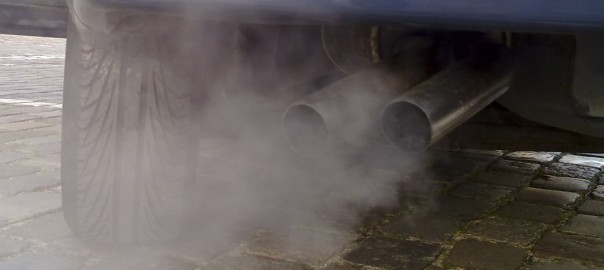
Car exhaust pollution (Image: Wikipedia)

Do Auto Emissions Kill As Many People As Car Crashes?

Carbon-dioxide emissions have documented negative effects at a planetary level–but could the other gases coming out of vehicle tailpipes be as hazardous to overall public health in total as car accidents are?

In the public discourse to date, the answer has previously seemed to be “no.” Emissions generally aren’t discussed in terms of individual deaths, but rather in the context of climate change or as a contributing factor to specific illnesses.

Now, researcher David Levinson suggests the answer is not that simple. In a post on his blog Transportationist, he argues that the impact of crash-related and emissions-related deaths could be roughly comparable, depending on how you crunch the numbers.

More deaths from air pollution

Levinson cited data from the 2010 Global Burden of Disease Study, which found that 36 deaths per 100,000 were attributable to air pollution, compared to 15 for road and transportation-related injuries–the vast majority of which involve cars.

In this case, air pollution is defined as fine particulate matter and ozone only, but the study does not differentiate between transportation-related emissions and other sources.

However, as Levinson’s colleague Julian Marshall noted in the same post, it’s hard to attribute a death to air pollution.

Pollution doesn’t appear as a cause on death certificates–it’s inferred by looking at higher instances of events like heart attacks in areas with high levels of pollution–and tracking an air pollution-related death to a specific source is even more difficult.

In addition, the 2010 study found that transportation-related injuries were responsible for more years of life lost than air pollution–653 per 100,000 people, compared to 565.

That’s because fatal car crashes tend to involve younger people, so they shorten lives more dramatically.

A matter of perspective

Eric Jaffe at CityLab came to largely the same conclusions–finding a larger apparent number of air-pollution-related deaths under a somewhat non-specific definition, but with car crashes cutting lives shorter.

He said the two problems could be “more on par than we typically treat them.”

Following that argument, automotive emissions should be viewed in the same category as traffic deaths–but the link between cause and effect isn’t as apparent.

Air pollution caused by emissions is already linked to respiratory illnesses.

Recently, a new study from the Columbia Center for Children’s Environmental Health (via Gothamist) found that it may also be linked to ADHD in children.

The study found a higher instance of ADHD-like symptoms in children exposed to polycyclic aromatic hydrocarbons (PAH), a byproduct of burning fossil fuels.

It shows the need to curtail emissions from burning hydrocarbon fuels overall, but it also demonstrates how varied their effects on health and lifespan can be.

That sharply contrasts with the immediate and grimly apparent toll of car crashes.

Car exhaust pollution (Image: Wikipedia)

Should electric vehicles be compulsory in city centres?

The subject of making electric vehicles compulsory in city centres in the UK, and indeed many other areas of the world, is one which keeps popping up time and time again. The Liberal Democrat party in the UK has been pushing for greater adoption of electric vehicles within city centres and, don’t shout this, a ban on diesel and petrol vehicles. This is now something of a hot topic and one which will continue to appear in the political domain as we approach general and local elections.

How would you feel about making city centres a no-go area for petrol and diesel vehicles? Is electric vehicle technology of sufficient reliability to support such a dramatic and controversial move?

Air pollution

If we look back 40 or 50 years ago the argument was whether vehicles powered by diesel and electric were making any contribution to air pollution whatsoever. The situation today is very different and all parties agree that non-electric vehicles are pumping out a number of pollutants which are causing major problems within city centres with regards to air pollution. The quality of air in and around city centres is impacted more than any other areas simply because there is limited space, limited airflow and the pollutants tend to hover over the city like a bad smell.

Air pollution within city centres has been linked to an array of health conditions such as asthma and other breathing issues. When you bear in mind the cost and the impact of such health conditions on the individual and health services, perhaps we should now be looking towards diesel and petrol free city centres?

Quote from ElectricForum.com:

“The reputation of BMW is based upon luxury therefore many people are now asking the question, would you buy an electric powered BMW? Is BMW Daimlers joint-venture just a way to placate the green movement? Would an electric BMW be a mass-market seller?”

Infrastructure investment

What came first, the chicken or the egg? There is no doubt that local government and federal government investment in charging networks across the UK and other countries has increased dramatically of late. However, there is a feeling among some experts that the actual investment required to create a suitable and reliable infrastructure has not yet been reached. The argument being, do local authorities invest now and push motorists towards electric vehicles within city centres or do they wait for a gradual transfer and then invest?

If you take a step back and look at the overall cost of air pollution not only in terms of cold hard cash but also health issues, perhaps these do far outweigh the potential investment required to create a reliable recharging network infrastructure?

How will motorists react?

When it boils down to the nitty-gritty politicians will only push through potentially controversial issues which will have the support of the masses. It is an interesting debate as to whether motorists are now moving towards electric vehicles en-masse and would support such a ban in city centres. Let’s not forget, motorists have been a cash cow for many governments around the world in relation to road taxes and the heavy levies cast upon petrol and diesel.

Would any political party be brave enough to take the risk of losing votes by banning petrol/diesel vehicles in city centres in favour of electric vehicles? Politicians can shout and scream about the environment, pollution, etc but the bottom line is they will not push through any controversial changes until they are sure they will not impact their core voting public. When that will be remains to be seen.

Source: Electric Forum