Category Archives: Uncategorized

News posts not yet put into a category.

Q-Park partners EB Charging for rollout of 600 EV chargepoints

EB Charging is to roll out nearly 600 electric vehicle charging points across 80 sites in the UK and Ireland in a new partnership with Q-Park.

The electric vehicle (EV) charging company – which was recently acquired by US charging firm Blink Charging – is to be responsible for the installation of EV charging hardware and the management of the charging provision.

This includes 24/7 customer support service for Q-Park customers who park and charge.
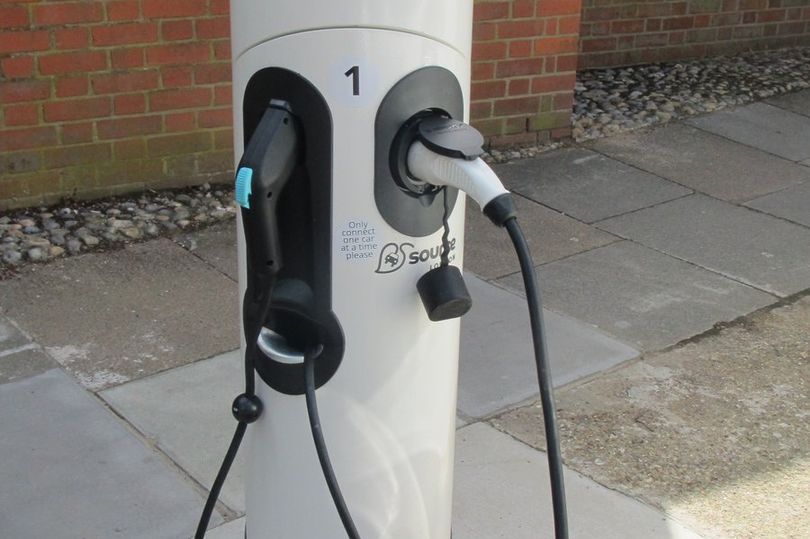
Brent’s first Electric Vehicle Charge Point is up and running on Dudley Road (Photo: Brent Council)

Q-Park is to invest over £3 million in the UK and Ireland on the rollout, with installations due to start in July 2022. This will include the modernisation of existing charging infrastructure with the latest ‘state-of-the-art hardware’, the companies said.

Once the deployment has finished, discussions will start on future phases, with Q-Park stating it is “eager to remain at the forefront of electric charging in the parking market”.

Read more: Current+

It’s Time to Go Green!

If you would like to know more about Solar Panels and the PowerBanx range of home battery systems, and get a free instant quote, please complete our online form:

EV transition ‘gathering pace’ as ownership rises by 71% in 2021

Electric vehicle (EV) use rose by 71% in 2021 to 748,394 cars, vans, buses and trucks according to new figures from the Society of Motor Manufacturers and Traders (SMMT).

The SMMT said EV ownership is continuing to grow rapidly, with the 748,394 figure breaking down into 720,053 cars, 26,990 vans, 993 buses and 313 trucks.

It comes as car ownership fell 0.2% to 35,023,652 units during 2021, with this being the first consecutive annual decrease in car ownership in over 100 years.


Nissan Leaf (Image: Qurren/Wikipedia)

This appears to be a trend that has also continued into 2022, with April 2022 seeing 12,899 BEVs sold, an increase of 40.9% on the same month last year, while new car sales overall fell 15.8%.

According to the SMMT’s figures for 2021, electric cars now account for one in five new registrations, although plug-ins only represent around one in 50 cars on the road. Electric car uptake also varies across the UK, with 33.1% of all plug-in cars registered in London and the South East. This represents 3% and 2.6% of all cars in each area.

Read more: Current+

It’s Time to Go Green!

If you would like to know more about Solar Panels and the PowerBanx range of home battery systems, and get a free instant quote, please complete our online form:

Connected Kerb on-street charging (Image: Connected Kerb)

EV ownership at ‘tipping point’ as 50 percent of all car buyers say they want one

CAR BUYERS are beginning to focus on EVs as half of all new car buyers want battery power.

The speed of the switch to electric vehicles (EVs) in the UK continues to surprise the automotive industry and a new study says almost half of all buyers in the UK are now seeking to purchase a fully battery-powered vehicle.

Some 49 percent of drivers looking to buy a car said they would now choose an electric vehicle, more than double the 21 percent of just two years ago.

New UK charge points (Image: Department for Transport)

The survey by accounting firm EY revealed that a combination of factors including the cost of petrol and environmental benefits are driving the change.

EY said the speed of the change was “eye-opening” with manufacturers now needing to make sure they are catching up with demand, reported the Telegraph.

Maria Bengtsson of EY said: “These findings truly mark a tipping point in the UK car-buying market.

“Nearly 50 percent of consumers across the UK indicating that they want an electric vehicle is a significant milestone in the transition from internal combustion engines.

“Consumers are becoming increasingly socially and environmentally conscious, and they’re willing to pay a premium to meet their environmental standards.”

The survey included 18,000 people in 18 countries including 1,000 people in the UK.

However despite the rise, motorists here still lag behind a country such as Italy, where almost three-quarters are planning to buy a battery-powered vehicle.

Read more: Express

It’s Time to Go Green!

If you would like to know more about Solar Panels and the PowerBanx range of home battery systems, and get a free instant quote, please complete our online form:

Opel Corsa-e Electric Car (Image: Opel.com)

Report: Sales of internal combustion vehicles now in “permanent decline”

Sales of non-plug-in internal combustion-powered vehicles peaked in 2017, according to a report by industry analysts at Bloomberg New Energy Finance, and have been in “permanent decline” since then as sales of plug-in hybrid and electric vehicles increase.

Sales of plug-in vehicles are also expected to triple their current levels by 2025, according to the report.
“Most importantly, the market is shifting from being driven primarily by policy, to one where organic consumer demand is the most important factor,” lead authors Colin McKerracher and Aleksandra O’Donovan wrote in the BloombergNEF report.
Renault Captur Plug-in and Renault Clio Hybrid (Image: Renault)
In 2025, the global auto industry will sell 20.6 million plug-in vehicles, according the report, compared to 6.6 million this year. Sales of purely internal combustion-powered vehicles, while projected to still make up the majority of total car sales in 2025, will have decreased.
Read more: CNNBusiness

It’s Time to Go Green!

If you would like to know more about Solar Panels and the PowerBanx range of home battery systems, and get a free instant quote, please complete our online form:

BMW i4 (Image: BMW.co.uk)

Traditional carmakers could boost profits by accelerating move to electric

Analysis suggests electric operations will become rapidly more profitable than petrol and diesel arms within five years

The world’s largest traditional carmakers could improve their profit margins and boost their value to investors by accelerating the transition to electric cars in the next decade, a new analysis has found.

The electric carmaking operations of Toyota, Volkswagen, Stellantis, Volvo, BMW and Mercedes-Benz will rapidly become more profitable than their traditional petrol and diesel counterparts within the next three to five years as carbon emissions regulations tighten, according to modelling by Profundo, a consultancy.

Volkswagen ID.3 electric car (Image: Volkswagen.com)

The world’s biggest carmakers are all seeking to increase electric car production rapidly in the next decade, as laws in major markets including the EU and UK seek to ban new internal combustion engines as part of the effort to curb carbon pollution from transport. Yet at the same time carmakers still intend to sell millions more vehicles with petrol and diesel engines, in part because they remain more profitable but also because making the transition to electric vehicles (EVs) can include major upfront costs.

Read more: TheGuardian

It’s Time to Go Green!

If you would like to know more about Solar Panels and the PowerBanx range of home battery systems, and get a free instant quote, please complete our online form:

Vauxhall-Mokka-eSUV (Image: media.vauxhall.co.uk)

They’re more expensive to buy but with petrol prices soaring… how long does it take to save money with an electric car?

Motorists are driving a car-buying revolution — with electric vehicles accounting for one in three new car sales.

There are 400,000 already on the roads, up from 130,000 five years ago. And this figure is rising rapidly as the Government seeks to ban sales of new petrol and diesel cars and vans by 2030.

Surging fuel prices are also boosting their popularity. So much so that UK motorists bought more electric vehicles last year than in the previous five years combined.

But they don’t come cheap — and many people will be wondering if it’s worth the investment.

Electric cars are more expensive to buy

Electric cars typically cost more than petrol equivalents. For example, a Vauxhall Mokka-e is £5,000 more expensive than the same model in a 1.2-litre petrol version.

Vauxhall-Mokka-eSUV (Image: media.vauxhall.co.uk)

The cheapest new model on the market is currently the SEAT Mii Electric at £21,300, while the UK’s best-selling electric car is Tesla’s Model 3, which starts from around £45,990.

However, the Government currently provides a grant worth up to £1,500 towards electric cars under £32,000.

While there is no formal deadline for this grant, the maximum amount has been cut by £500 every year since 2018, when it was worth £3,500. The money should automatically be applied by dealers.

Read more: ThisMoney

It’s Time to Go Green!

If you would like to know more about Solar Panels and the PowerBanx range of home battery systems, and get a free instant quote, please complete our online form:

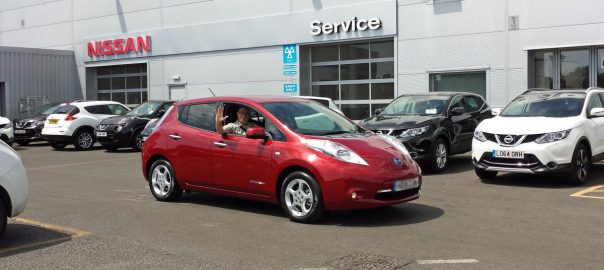
Nissan Leaf collection in St Albans (Image: T. Larkum)

What’s the best electric car for keeping it simple?

The original Nissan Leaf is a glorious bridge between the analogue and digital ages

In this brave new age of smartphone dependence we’ve probably all found ourselves having sunk several weeks of our lives into a time dump of a game that sucks your attention into it and gives nothing back. Like the most recent obsession, a strategy thing where you send trucks back and forth between places carrying stuff. No more sophisticated or interesting than that, but boy was it addictive.

Until it was updated, presumably by someone who never opened the app before, let alone played it. One eight-second download and suddenly the game was rendered unplayable and useless. Sure, it enjoyed a smart new look, some spiffy graphics and a bit of jaunty new in-game music, but the very basic functions had been changed in a blink and it was impossible to work out how to do them. So… deleted.

Charging with an Ohme smart charging cable

But what happens when they do that to your car? Manufacturers are cock-a-hoop about over-the-air updates and the boundless potential of what they can do. Polestar recently did an update that made its cars drive longer distances, Volkswagen did one that meant they could charge harder for longer.

Read more: TopGear

It’s Time to Go Green!

If you would like to know more about Solar Panels and the PowerBanx range of home battery systems, and get a free instant quote, please complete our online form:
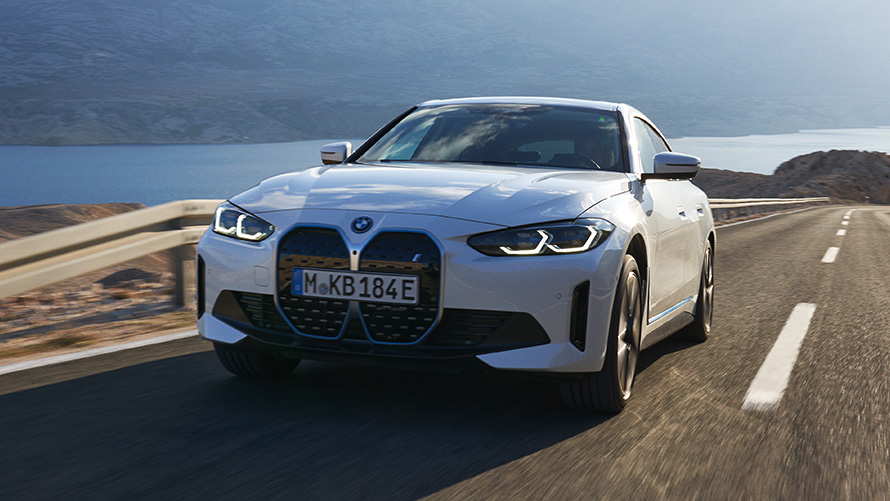
Hyundai Ioniq 5 (Image: hyundai.co.uk)

Tell your friends about EVs: Study suggests automakers still aren’t getting the word out

Electric vehicles make a lot of sense for the pragmatic aspects: their ownership costs and environmental advantages. But once you’re in one, everything changes.

As results from J.D. Power’s U.S. Electric Vehicle Consideration Study indicate, a lot of American consumers still need to simply get a ride in an EV.

Hyundai Ioniq 5 (Image: hyundai.co.uk)

The firm, in the study released Thursday, found that among those who had no personal experience with EVs, just 11% said they were “very likely” to consider one. For those who had merely been a passenger in an EV, the portion “very likely” doubled to 24%; and for those who had driven an EV, it rose to 34%.

Automakers still aren’t effectively getting the word out about EVs to all would-be buyers. Power notes that nearly one-third of those who reject EVs simply cite a lack of information about them.

Across the survey, the “very likely” portion of shoppers rose to 24%, up from 20% a year ago.

The study is based on 10,300 responses from consumers from February through April 2022, and it looks at EV consideration “by geography; demographics; vehicle experience and use; lifestyle; and psychographics.”

There are also potential inroads for automakers in appealing to mass-market shoppers. J.D. Power found that 37% of those who own premium vehicles said that they’re “very likely” to consider an EV for their next vehicle, versus 21% for those who currently own mass-market models.

Read more: GreenCarReports


It’s Time to Go Green!

If you would like to know more about Solar Panels and the PowerBanx range of home battery systems, and get a free instant quote, please complete our online form:

Jaguar LandRover GroupManager Install (Image: Rolec)

UK’s automotive industry, out of the world’s top 15, takes another hit as Jaguar Land Rover looks to Slovakia for electric vehicle batteries


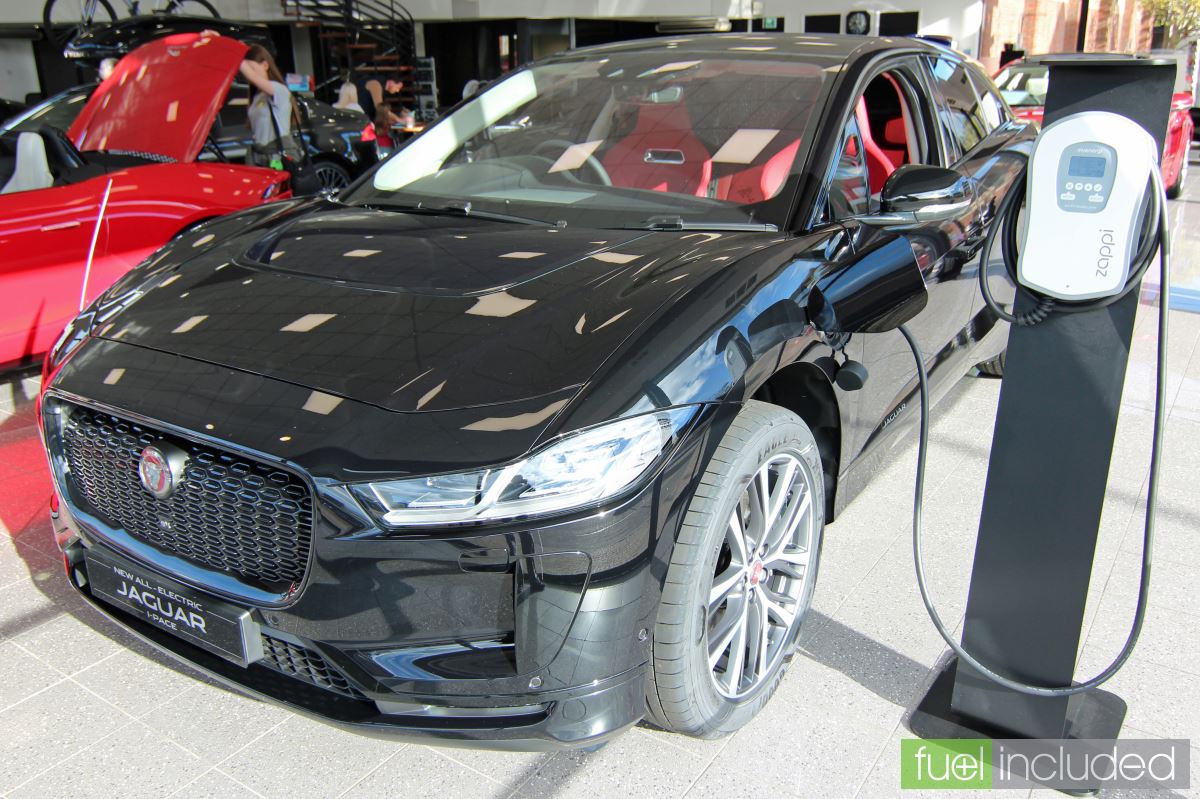
Jaguar I-PACE Electric Car (Image: T. Larkum)
  • Jaguar Land Rover is in talks with Northvolt and SVolt Energy Technology about supplying batteries for a range of EVs it may assemble in Slovakia
  • Unless battery investment picks up, carmakers may only accelerate their exodus from what was once the world’s second-biggest auto manufacturing base

Almost a decade after playing home to Europe’s first mass-produced electric car, the UK is at risk of becoming a footnote in the global auto industry’s shift to battery-powered vehicles.

The UK lacks the cell and pack factories automakers will need to support their transition away from the internal combustion engine. In what could be a fresh blow to British carmaking, the country’s top auto manufacturer, Jaguar Land Rover, is in talks with Northvolt and SVolt Energy Technology about supplying batteries for a range of EVs it may assemble in Slovakia, according to people familiar with the matter.

Unless battery investment picks up, carmakers may only accelerate their exodus from what was once the world’s second-biggest auto manufacturing base. The last few years, the UK fell outside the top 15.

Read more: SCMP

It’s Time to Go Green!

If you would like to know more about Solar Panels and the PowerBanx range of home battery systems, and get a free instant quote, please complete our online form:
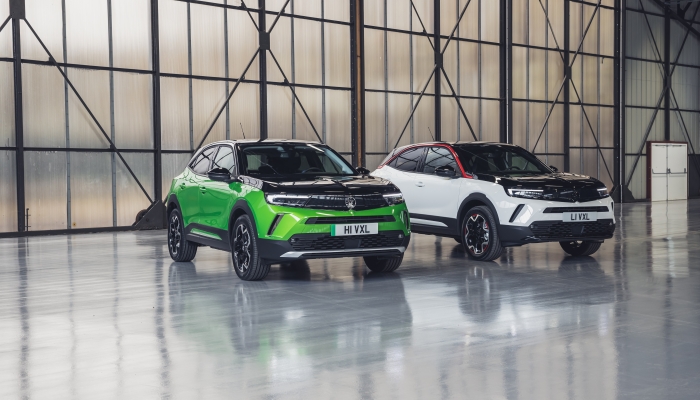
EVs are avoiding about 3% of global oil demand—a fifth of Russia’s total exports

Russia’s ongoing invasion of Ukraine has triggered international sanctions throttling the country’s oil exports, leading to fears of even higher gas prices. But electric vehicle adoption has been helping make the situation less grim.

Plug-in vehicles avoided roughly 1.5 million barrels of oil per day last year, according to new analysis from Bloomberg New Energy Finance. That’s about one-fifth of Russia’s pre-invasion oil exports, Bloomberg NEF said.

 The oil use avoided by EVs has also doubled since 2015, to about 3% of global demand, according to the analysis.

While electric cars tend to get most of the attention, the analysis found that other vehicle types accounted for the most oil avoidance. Electric two- and three-wheeled vehicles—which tend to be popular in Asia—accounted for 67% of the oil demand avoided in 2021, according to Bloomberg NEF.

Those vehicles had an outsized impact on oil demand. Next in rank were electric buses, which accounted for 16% of avoided oil demand, followed by passenger vehicles at 13%. The latter were the fastest-growing segment, Bloomberg NEF noted.

Read more: GreenCarReports

It’s Time to Go Green!

If you would like to know more about Solar Panels and the PowerBanx range of home battery systems, and get a free instant quote, please complete our online form: