Category Archives: Opinion

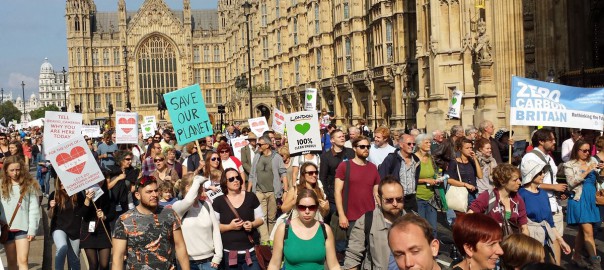
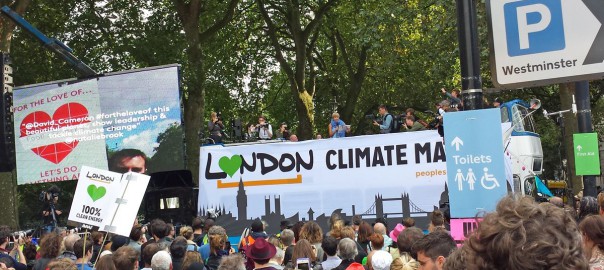
London Climate March - the Rally (Image: T. Larkum)

Our addiction to oil and conflict in the Middle East

Like the addict who will sacrifice his family to feed his addiction, western foreign policy has for decades supported tyrants who have oppressed the peoples of oil-producing states across the Middle East

It would be wrong to argue, as many did in the case of the Iraq War, that the motivation for bombing in Syria is to secure our access to oil. But what is clear is that the Syrian crisis and wider destabilisation of the Middle East has direct links to our addiction to oil. As a poignant reminder of the role oil plays in the conflicts of the Middle East, the first British bombing sorties targeted oil wells in eastern Syria.

London Climate March - the Rally (Image: T. Larkum)
London Climate March (Image: T. Larkum)

Like the addict who will sacrifice his family to feed his addiction, western foreign policy has for decades supported tyrants who have oppressed the peoples of oil-producing states across the Middle East. Our interventions in the region have been driven almost entirely by self-interest, taking little account of the wish for self-determination of the people who live there.

The scientific evidence that our addiction to petroleum is also disrupting the climate is now unequivocal. Equally compelling is the suggestion that climate change is leading to conflict. A working group of the Intergovernmental Panel on Climate Change wrote in 2014 that there was “justifiable common concern” that climate change increased the risk of armed conflict in certain circumstances.Perhaps they had in mind exactly the sort of circumstances witnessed in Syria.

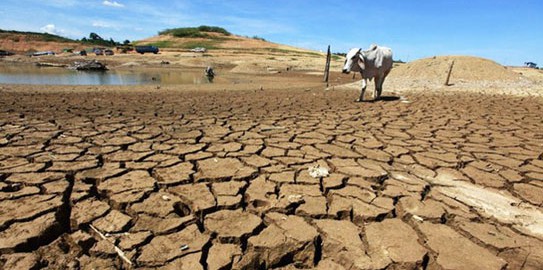
Scientists believe that an extreme drought between 2006 and 2009 was most likely due to climate change. This drought led to crop failures, forcing the migration of up to 1.5 million people from rural to urban areas. This in turn added to social stresses that eventually gave rise to civil unrest and eventually to the civil war.

Read more: Independent

Severe Flooding, Against a Background of Wind Turbines: November 2012, Tyringham, Bucks. (Image: T. Larkum)

The Climate Pistol has fired so why aren’t we running?

There can be no complacency after the Paris talks. Hitting even the 1.5C target will need drastic, rapid action

With the climate talks in Paris now over, the world has set itself a serious goal: limit temperature rise to 1.5C. Or failing that, 2C. Hitting those targets is absolutely necessary: even the one-degree rise that we’ve already seen is wreaking havoc on everything from ice caps to ocean chemistry. But meeting it won’t be easy, given that we’re currently on track for between 4C and 5C. Our only hope is to decisively pick up the pace.

Severe Flooding, Against a Background of Wind Turbines: November 2012, Tyringham, Bucks. (Image: T. Larkum)

In fact, pace is now the key word for climate. Not where we’re going, but how fast we’re going there. Pace – velocity, speed, rate, momentum, tempo. That’s what matters from here on in. We know where we’re going now; no one can doubt that the fossil fuel age has finally begun to wane, and that the sun is now shining on, well, solar. But the question, the only important question, is: how fast.

Read more: The Guardian

The sun sets on drilling (Image: Pexels)

We could be seeing the beginning of the end of cheap oil

Has oil become an unwanted commodity? Plunging prices suggest something is going on.

The sun sets on drilling (Image: Pexels)

While diplomats in Paris hash out a legally binding accord to significantly curb greenhouse gas emissions, oil is trading at a seven-year low, closing Tuesday below $40 per barrel.

The price drop follows OPEC’s failure to put a cap on oil production last week. Energy analysts predict prices could go lower in the next 12 months, but Dan Dicker, an oil analyst with The Street and OilPrice.com, says we could be in for a wild ride that will drive oil prices back up — way up.

“I think there could be a change of four to five million barrels [a day] over the course of the next 22 or 23 months in terms of what comes off line in terms of supply and what gets added in terms of demand,” says Dicker, the author of “Shale Boom, Shale Bust: The Myth of Saudi America.” “It would mean a huge difference in the price of oil. In fact, I’m looking at prices in three digits as early as 2017.”

Dicker concedes that his hypothesis deviates sharply from other analysts who believes prices will stay low. He argues that the Saudis have reached a new limit when it comes to oil production.

“I think that they’re literally, and again I’m on the other side of this, as close to full production capabilities as they’re going to get,” he says. “They’re at a little more than 11 million barrels a day. We’ve talked about spare capacity for years with the Saudis, with a sort of a question mark on how much spare capacity they had. In other words, how much can the ultimately pump if they just wanted to open up the spigots full bore? This — 11 million barrels a day — has absolutely shocked the analysts from their predictions two, three, or four years ago. I think that the limits have really been reached.”

Over the next six to eight months, Dicker predicts that oil and gas prices will remain low, under $50 a barrel. In the long-term, other members of OPEC can increase production if they secure funding, including Iran and Iraq, but Dicker doesn’t find such a scenario possible.

“The potential there is huge,” he says. “But with all that’s going on there geopolitically, obviously that’s not a great bet to increase production two or three fold over the next three or four years.”

Source: PRI

London Climate March - passing the Palace of Westminster (Image: T. Larkum)

Grand promises of Paris climate deal undermined by squalid retrenchments

Until governments undertake to keep fossil fuels in the ground, they will continue to undermine agreement they have just made

London Climate March - passing the Palace of Westminster (Image: T. Larkum)
London Climate March (Image: T. Larkum)

By comparison to what it could have been, it’s a miracle. By comparison to what it should have been, it’s a disaster.

Inside the narrow frame within which the talks have taken place, the draft agreement at the UN climate talks in Paris is a great success. The relief and self-congratulation with which the final text was greeted, acknowledges the failure at Copenhagen six years ago, where the negotiations ran wildly over time before collapsing. The Paris agreement is still awaiting formal adoption, but its aspirational limit of 1.5C of global warming, after the rejection of this demand for so many years, can be seen within this frame as a resounding victory. In this respect and others, the final text is stronger than most people anticipated.

Outside the frame it looks like something else. I doubt any of the negotiators believe that there will be no more than 1.5C of global warming as a result of these talks. As the preamble to the agreement acknowledges, even 2C, in view of the weak promises governments brought to Paris, is wildly ambitious. Though negotiated by some nations in good faith, the real outcomes are likely to commit us to levels of climate breakdown that will be dangerous to all and lethal to some. Our governments talk of not burdening future generations with debt. But they have just agreed to burden our successors with a far more dangerous legacy: the carbon dioxide produced by the continued burning of fossil fuels, and the long-running impacts this will exert on the global climate.

With 2C of warming, large parts of the world’s surface will become less habitable. The people of these regions are likely to face wilder extremes: worse droughts in some places, worse floods in others, greater storms and, potentially, grave impacts on food supply. Islands and coastal districts in many parts of the world are in danger of disappearing beneath the waves.

Read more: The Guardian

Vauxhall Ampera Charging (Image: OLEV)

The Coming Electrification of Everything

At Obvious Ventures, we believe stored electricity, increasingly derived from renewable sources, will entirely replace fossil fuels as the preferred method to power everything in our lives.

Vauxhall Ampera Charging (Image: OLEV)

From cars to scooters to boats to locomotives to industrial equipment, we are in the midst of a transition that will electrify everything previously driven by combustion.

There are two simple reasons we’ll make this change sooner than most people think. First, electrically powered things just work better. And people want things that work better. The second reason is really just a piece of the first. “Better” increasingly means “better forever.” That is, not just better in the moment for that use, but also better for our surroundings, our health, and the health of our planet.

But, at least for the short term, our climate will be served not simply by environmental motivations, but by the same relentless human force that created it: the desire for more, faster, better. Ever-better technology will lead consumers, rather than idealists, to drive this electricity evolution.

Why now? Key trends emerging only in recent years have created the foundation for this evolution.

Read more: Greentech Media

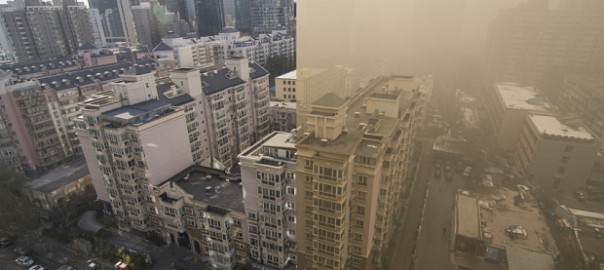
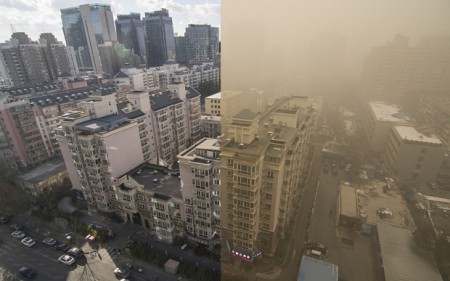
Two pictures of Beijing taken 24 hours apart show the Chinese capital engulfed by smog earlier this month (Image: Rex)

Climate change is the challenge of our generation

Consumers and businesses will have to be more energy-efficient and switch to alternatives to fossil fuels

Two pictures of Beijing taken 24 hours apart show the Chinese capital engulfed by smog earlier this month (Image: Rex)

[From 4 December} The Paris climate change summit will conclude at the end of next week. It aims to reach an international agreement on limiting emissions of carbon dioxide and other greenhouse gases that are contributing to global warming. The main source of these emissions is the burning of fossil fuels – oil, coal and natural gas – that power industry, and heat and light our homes.

One big area where technology is helping is through the development of renewable energy sources, such as solar and wind power. The energy from these sources has increased by a factor of four in the past 10 years. Biofuel production, which is more environmentally friendly than extracting oil from the ground, has increased at a similar rate.

If we can get another four-fold increase from renewable energy sources over the next decade, a total of around a quarter of the world’s energy needs can be met from renewables, nuclear energy and hydro-electricity – without burning fossil fuels and creating greenhouse gas emissions.

Another area where technology is having a big impact is in the development of electric cars. Bigger and better batteries are being developed so that electric cars can be charged more quickly and drive further without recharging.

These developments in technology will enable society to cut its dependence on fossil fuels and reduce the damage to the world’s climate.

But there will still need to be changes to our lifestyles and the way in which businesses operate.

The first change is that we are going to have to become a lot more energy-efficient at home and at work. The less energy we use overall, the easier it will be to reduce our carbon emissions. Consumers need better-insulated homes and smart meters to monitor their energy use.

Read more: Telegraph

Our grand narrative is now climate change

There is the story of our personal lives: our family, our friends, our jobs, our hobbies. There is the story of our communities: our civic, religious, business, artistic and recreational lives. There is the story of our nations: their internal political struggles and their struggles with each other.

imageR_climate_change_unk

But now, there is one grand narrative which ties us all together, whether we want to be connected or not, whether we are preoccupied with our personal, community or national narratives or not. That is the narrative of our changing climate and the resulting threat to the continuity of our world civilization. The climate talks in Paris are but one expression of this new reality.

Even people who oppose doing anything about climate change are forced to talk about it. Even people who somehow have convinced themselves that climate change is not happening and oddly, in the same breath, claim that humans have nothing to do with this thing that is not happening–even those people confirm by their very framing of the issue that they are firmly situated inside this narrative.

Climate change is now the grand narrative because what happens to climate and what we do about it will be a worldwide story which no one can ignore. As such there will be few people without an opinion on the issue of climate change. Increasingly, it will reach down into our national, community and personal lives in ways we had hoped would wait until we are gone. The droughts, the heat, the floods, the damage to crops, the lengthening summer, the late fall, and the early spring–none of them can escape our notice.

We are forced to incorporate the changing climate into our everyday conversations. It is already a big topic among anyone who gardens and certainly anyone who farms. Among those in touch with plants the evidence of a changing climate is incontrovertible.

The grand tension will be how to address climate change without giving up the abundant energy, food and technology that have given us such comfort, ease, mobility and opportunity. Neither side in the debate over what to do wants to relinquish the hope that we will have to give up almost nothing.

Read more: Resource Insights

A Car Dealers Won’t Sell: It’s Electric

More than seven years ago, President Obama called for one million electric cars to be on the road by this year, and the vehicles have gained a large fan club. Environmentalists promote them as a smart way to cut dangerous emissions. Owners love their pep and the gas money they save. Apple and Google have jumped into the race to build next-generation battery-powered cars.

screenshot140_w555_h555_unk

So why are only about 330,000 electric vehicles on the road? One answer lies in an unexpected and powerful camp of skeptics: car dealers. They are showing little enthusiasm for putting consumers into electric cars.

Some buyers even tell stories of dealers talking them into gas cars and of ill-informed salespeople uncertain how far the cars can go on a charge or pushing oil changes that the cars do not need.

Read more: NY Times

Prince Charles blames the Syrian war on climate change – he has a point

Prince Charles has blamed climate change in part for the Syrian war and warned that global warming could exacerbate similar conflicts worldwide.

144222931-638x425_global_warming_shutterstock

Charles’s comments — in an interview broadcast Monday — came exactly one week before the start of a United Nations climate change conference in Paris, where he plans to deliver a keynote address. Unless world leaders take action to slow the impact of climate change, “it’s going to get so much worse,” Charles warned in the interview with Sky News, which was recorded before the Nov. 13 terrorist attacks in Paris.

“Some of us were saying 20 something years ago that if we didn’t tackle these issues you would see ever greater conflict over scarce resources and ever greater difficulties over drought, and the accumulating effect of climate change, which means that people have to move,” he said. “And, in fact, there’s very good evidence indeed that one of the major reasons for this horror in Syria, funnily enough, was a drought that lasted for about five or six years, which meant that huge numbers of people in the end had to leave the land.”

Charles, a longtime environmentalist, is the latest person to blame the Syrian conflict on climate change. Various leading politicians, academics and military officials have made similar claims in recent years.

“It’s not a coincidence that immediately prior to the civil war in Syria, the country experienced its worst drought on record,” Secretary of State John F. Kerry said in a speech at Virginia’s Old Dominion University on Nov. 10. “As many as 1.5 million people migrated from Syria’s farms to its cities, intensifying the political unrest that was just beginning to roil and boil in the region.”

Read more: Washington Post