Category Archives: Opinion

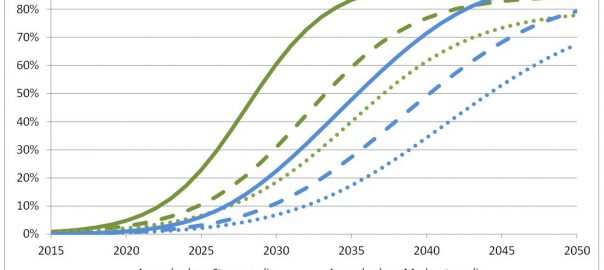
EV Global Market Share (Image: OCCP)

How Fast Could the Market for Electric Vehicles Grow?

Various policy driven scenarios show electric vehicles gaining market share over the next few decades but with the turnover of the vehicle stock taking longer.

EV Global Market Share (Image: OCCP)

I recently argued that BP’s projections showing almost no take-up of plug-in vehicles[1] by 2035 was unrealistic in view of several convergent trends. There is increasing pressure to reduce CO2 emissions, there is large and growing concern about urban air quality, and electric vehicles are likely to prove attractive to consumers in many respects. In line with these drivers, sales are growing very quickly and many new models are coming on line, while battery technology is improving rapidly, with costs falling sharply and energy density rising.

However while these factors suggest that electric vehicles will gain substantial market share it does not say how much how soon[2]. So how fast might the market for plug-in vehicles grow if policy drivers are strong and matched by favourable economics? Here I consider how quickly electric vehicles could gain market share on that sort of optimistic view.

Market share gains for new technologies

The transition to electric vehicles is in its early stages, so extrapolating historical trends offers only limited guidance. Similarly, highly detailed modelling may not offer robust insights, because too many assumptions are required. Instead it seems appropriate to look at some broad indicators.

A good starting point is to look at adoption other new technologies. The chart below shows the rates of penetration of new technologies in the USA over the 20th and early 21stcenturies. It shows variants on a characteristic s-curve shape, with most technologies reaching eventual penetrations of 80-100%. The typical time to reach about 80% penetration following the first 1% or so of deployment (about where plug-in vehicles are now) is around 20-30 years, although some modern highly scalable technologies have become nearly ubiquitous faster than this, and other technologies have taken as long as fifty years or so to reach high penetration.

For example, cars themselves experienced rapid growth between around 1910 and 1930, reaching 60% of households, before experiencing hiatus and decline during the Great Depression and Second World War, before growing steadily again through the to the second half of the 20th Century.

Read more: The Energy Collective

Will the oil giants be disrupted?

The bigger they are, the harder they fall. But the oil industry will prove a slippery target for ambitious tech disrupters

Oilwell_CROPPEDPD_20160509105710476_MT

In the slick, disruptive world of 21st century business, where we are frequently told change is the only constant, the oil majors are starting to look like they belong in a museum. Indeed, like the crude tehy extract from the ground, there is something Jurassic about their staggering size and great antiquity. Shell, BP, Exxon – these giants have bestrode the industrial landscape for up to a century, seemingly invulnerable to the dramatic turns in technology or the cyclical downturns that occasionally starve them of profits.

We are in one such downturn now – and it’s a bad one – yet still the oil majors dominate lists of the world’s biggest companies, challenged only by the tech giants. If Saudi Aramco floats, as appears likely in a few years’ time, it could be two or three times bigger than Apple.

But can they really be free from the law of business atrophy, that success breeds complacency, which makes it vulnerable to dreaded but much-needed disruptive innovation? Indeed, the oil majors perfectly fit the traditional archetype of a company prone to disruption – vast, ancient and incredibly slow to move.

It’s no secret where the threat will come from. Electric cars threaten the lifeblood of the oil industry, the world’s reliance on petrol and diesel. According to data from Statistica, road transportation accounted for 43% of oil consumption. Though electric cars would still need charging, oil has also lost its place in electricity generation, with only 4.4% of the world’s wattage coming from the black stuff in 2013.

This isn’t just a pipe dream, either. The car giants are without exception investing heavily in electric vehicles, themselves trying to avoid disruption from Tesla. With favourable tax arrangements for clean cars and an ever expanding network of charging points, electric cars will only become more commonplace.

Read more: Management Today

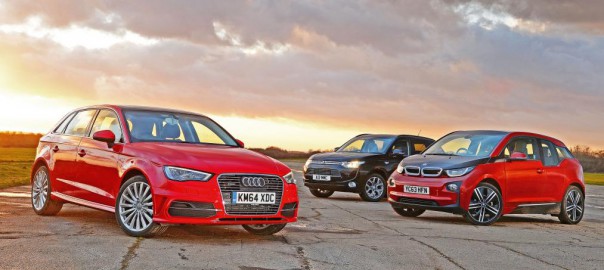
Audi A3 e-tron, Mitsubishi Outlander and BMW i3 plug-ins

10 Things I Discovered When I Got an Electric Car

1. Merging onto the highway can be the best part of the trip. The ability of an electric motor to give maximum torque from low speeds completely changes the experience of zipping onto a fast-moving highway. This is one EV secret that no one talks about.

Audi A3 e-tron, Mitsubishi Outlander and BMW i3 plug-ins

2. Everyone is curious about the car. All my friends ask questions about it. Even strangers in parking lots—all the time. No one has yet turned down the chance to take it for a drive around the block, and they all come back surprised.

3. I don’t miss gas stations that much. Yes, I still visit for a car wash or to use their bathrooms once in awhile or to check my tire pressure. But otherwise, I don’t miss them.

4. I hardly ever use public charging. I nearly always charge at home. There are a pretty good number of public chargers in my area—and I am glad they are there—but it’s cheaper and more convenient to charge at home at night. The one place that public charging is really a lifesaver is DC fast charging along highways.

5. I’m saving a lot of money on fuel. My utility has a time-of-use rate, so we always plug in the car in the evening, when the cost is low. We have solar panels and sell power back to the grid mid-day when the cost is highest, which is also great. My best guess is that we are saving about $100/month on gasoline, even with current low prices.

Read more: Planet Experts

The possible irrelevance of oil

The average price of a barrel of oil has plummeted from over 120 USD / barrel to about 30 USD /barrel in the last three years. There may be a lot of geopolitical reasons why this has happened. There is also an analysis of how long this will persist. Relations between Saudi-Arabia and Iran, the situation in Iraq, OPEC relations and shale-oil boom in the US all play a part in this. But there may be another aspect of this situation which may be more relevant and inevitable than most of us may believe at the moment.

1461131183-8625_the-possible_irrelevance-of-oil_unk

There have been many “industrial disruptions” in the last few decades that most of us never really saw it coming. Products and companies which were household names have disappeared into the oblivion. For example Kodak was a company that was synonymous with photography. The brand was so well know that fifteen years ago when a family got together or there was a good photo opportunity it was popularly referred to as a “Kodak” moment. The company does not even exist now. Not because they were not performing well, but because the product that they were making suddenly became irrelevant. Similarly cassettes and VCRs are gone and children growing up today will only know them as novelties from the past.

An industry disruption, according to an expert in this field from Stanford University in the United States, Tony Seba, is when a new industry or product “disrupts” a previously well-established product or industry. If you look at what happened to Kodak, people did not stop taking pictures, but the way it was being done completely changed. Similarly, music is still popular, but the cassettes and VCRs have been replaced with new and more convenient devices.

A similar disruption is possibly taking place in the automobile industry, at this very moment. Automobiles need petrol or diesel as fuel to function. In fact, more than 50% of crude oil produced gets converted to fuels used by automobiles. But the new generation of cars may not need petrol or diesel at all to function. These may not contain the traditional internal combustion petrol or diesel engine.

A few years ago, nobody had heard of a car company called Tesla Motors. The company was founded by a charismatic US based entrepreneur named Elon Musk, in 2003. The cars made by this company are fundamentally different from cars being produced by other large automobile companies like Toyota, Volkswagen and GM. Tesla cars don’t have a petrol or diesel engine but contain electric motors and batteries. The basic concept is simple. The battery is charged like how one charges a mobile phone or a laptop and the power stored in these batteries is then delivered by electric motors to the wheels. The most amazing thing is that the final product is not an experimental or a concept vehicle anymore, but is a thoroughly acclaimed luxury car which is now being compared to the likes of best traditional cars in the business such as Mercedes Benz S class.

Read more: Nation

Red Tesla Model S (Image: T. Larkum)

Why Would You Power A Clean Electric Car With Dirty Energy?

Buying a Tesla might lead to greener choices elsewhere

Red Tesla Model S (Image: T. Larkum)
You’ll want to know how the electricity is produced, right? (Image: T. Larkum)

NEW YORK — It’s one thing to get people to care about the price of energy. It’s quite another challenge to get them to care about the source of energy and its environmental impact.

But buying an electric car — presumably, in part, to reduce one’s carbon footprint — may push people to think about where the electricity to power that vehicle comes from, according to one early investor in Tesla Motors.

“The electric vehicle is like a Trojan horse for energy literacy,”

Nancy Pfund, managing partner at the venture capital firm DBL Partners, said during a panel discussion at the Bloomberg New Energy Finance Summit in Manhattan on Monday morning.

Pfund said she noticed the possible linkage a decade ago, when DBL first invested in Tesla, which sells luxury electric cars, and its sister company, SolarCity, which markets solar power systems. Both are chaired by billionaire Elon Musk.

“In the early days of Tesla, early adopters would buy the Roadster or the Model S, and weeks later we’d see an uptick in solar adopters,” she told The Huffington Post in an interview. “They’re really examples of the connection between transportation and the green electrical grid.”

The idea is that no one wants to go greener by buying a battery-powered electric vehicle only to charge it with electricity generated from burning coal or gas.

Most Americans buy electricity from utility companies that produce energy by burning fossil fuels or generate power from water flow, wind turbines or solar panels. A small but growing number of people generate power from rooftop solar panels or backyard wind turbines and then sell any excess energy to the utility companies. To really go green, people need batteries to store their own clean energy for later use.

If purchasing an electric car focuses the buyer on other ways to access cleaner energy and use it in lower quantities, that can work to improve the whole system.

“Anytime you get people to be more literate and understand where something is coming from, they have a voice,” Pfund added. “And a more engaged and vocal population will demand more energy choices.”

Read more: Huffington Post

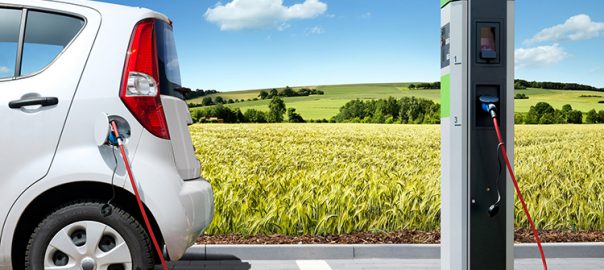
Electric Vehicle at charging station

Big Oil Gearing Up to Battle Electric Vehicles

[7 April] Last week Tesla unveiled the Model 3, a mass market, affordable electric vehicle with a starting price of $35,000 and a two hundred mile range.

Electric Vehicle at charging station

In just over five days, more than 276,000 people put down $1,000 to reserve their own Model 3, signaling that American appetite for electric vehicles (EVs) is on the rise.

That’s good news because greenhouse gas emissions from transportation are growing faster than in any other sector in the U.S. and account for about 30 percent of the total. A major shift to electrified vehicles in the transportation sector is necessary to give us a fighting chance to meet our climate goals.

Yet, just as EVs are poised for growth, oil industry interests are sharpening their knives. Energy companies, including Koch Industries, are increasing their public opposition to electric vehicles because they are realizing the significant potential impacts of EVs on oil demand.

Recently, for example, Jim Mahoney, board member of Koch Industries, penned an oped in Fortune about opposing government subsidies that favor one form of energy over another.

“Koch opposes all market-distorting policies, including subsidies and mandates—even if they may benefit the company,” he wrote.

What Mahoney was really taking aim at were incentives offered to the small but growing electric vehicle market in the U.S.

His op-ed was mum on fossil fuel subsidies—which the International Monetary Fund pegs at $5.3 trillion. And he certainly didn’t mention the 11 fossil fuel federal tax subsidies identified by the Department of Treasury that cost U.S. taxpayers $4.7 billion per year—some of which have been in place for more than 100 years. Or the numerous public lands leasing and royalty breaks for oil and gas production.

Mahoney singles out the electric vehicle tax credit because electric vehicles are a threat to oil, which is mainly used for transportation and his op-ed is part of a broader attempt to roll back tax credits that support advanced vehicles.

If you doubt that the tiny but growing electric vehicle market could threaten big oil, consider this: Bloomberg New Energy Finance (BNEF) projects that oil displacement as a result of increased electric vehicle deployment could lead to an oil crash by 2023. BNEF flags battery prices and strong policies as important drivers of EV growth. In fact, battery costs have dropped dramatically—falling by 65 percent since 2010. By 2030 they are estimated to fall from $350 per kilowatt-hour (kWh) to below $120 per kWh.

To-date, oil producers have underestimated the competitiveness of electric vehicles, but they are seeing the threat to their market share and are taking aim at the EV industry. Because they can’t do much to improve the environmental profile of their own core products, we can expect a growing effort by the oil industry to undermine the electric vehicle sector. It’s no surprise that Koch Industries is leading the way.

Read more: EcoWatch

Photo Credit:Leslie R in San Diego waits in hours-long line to pre-order the Tesla Model 3. Tesla Motors received more than 250,000 pre-orders within 72 hours of the vehicle’s unveiling

The Electric Car Goes Big

[6 April] This past week was unprecedented in the history of the automobile. Tesla Motors began accepting orders on the Model 3. In three days, they took some 300,000 reservations for the car, each with a $1,000 deposit.

If they all come through, that equates to over $10 billion in sales–in three days. For perspective, the Toyota Camry, the best-selling car in the country, sold about 430,000 units for all of 2015. Thousands stood in line for hours at Tesla stores around the world, including more than a few of us at Plug In America.

Photo Credit:Leslie R in San Diego waits in hours-long line to pre-order the Tesla Model 3. Tesla Motors received more than 250,000 pre-orders within 72 hours of the vehicle’s unveiling
Photo Credit:Leslie R in San Diego waits in hours-long line to pre-order the Tesla Model 3. Tesla Motors received more than 250,000 pre-orders within 72
hours of the vehicle’s unveiling

This feat was a tremendous accomplishment for Tesla and a tribute to the enormous power of the brand that Elon Musk and his team have built. But it was also an indicator of the excitement around the electric car, the sense that it is going mainstream, and an early indicator of the market transformation that we believe is coming.

Studies have suggested that a battery range of 200 miles is about the point where most people stop worrying about range and demand moves from early adopters into the broader market. The opening of reservations for the Tesla Model 3 has been the first true test of what the demand might be for a moderately priced car with a 200 mile range. In fact, demand turns out to be vastly larger than anyone had previously imagined.

While certainly a great success for Tesla, this incredible sales event should also give comfort to Carlos Ghosn of Nissan, Mary Barra of General Motors, and other automakers who are boldly investing billions of dollars into building the new generation of 200 mile range electric vehicles–and wondering whether the demand for the cars is really there. Well, it’s there. It turns out that this is a very big sandbox and there is plenty of room for everyone to play.

The fact that Tesla uncovered such extraordinary demand for a vehicle that is still years from delivery suggests that there is plenty of room for others to succeed as well. People have diverse needs and lifestyles. Just as there are many different gasoline cars that are successful in meeting the varying needs of a variety of consumers, there is every reason to believe that there will be a number of successful electric vehicles meeting various needs in this newly developing market, driven by the biggest change in automobile technology since the Model T.

Source: Plugin America

Tesla, rivals, software may kill petrol car as soon as 2025

The response to our article on Monday “Tesla Motor’s Elon Musk just killed the petrol car” was as fascinating as it was overwhelming. It is on track to be the most read story on our web-site to date.

The response was fascinating because it came from a mixture of those prepared to imagine the future, and read the signs of change, and those focused on short-term issues – be it meeting production schedules, reducing battery costs, or the immediate future of the Tesla share price.

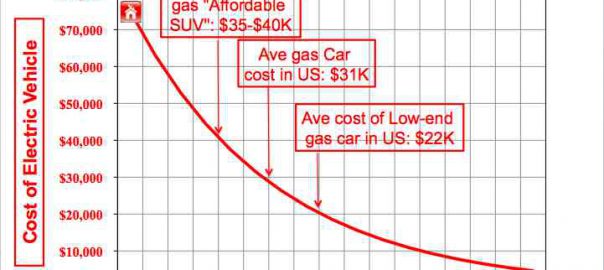
seba-ev_costs-fall_2025_CleanDisruption

Then there were those who simply didn’t want to know. The oil industry is one of them. It is making predictions, and seeking capital, as though the EV didn’t exist. The nuclear industry also wishes it wasn’t so. “This is bullish*t”, tweeted one of the most prominent nuclear advocates, still clinging to the old centralised energy model.

So we thought it would be useful to explain more about how it is that Musk has killed the petrol car. And for that we went back to Stanford University’s Tony Seba, the academic who predicts that fossil fuels, coal and oil in particular, will be redundant by 2030.

Seba tells RenewEconomy that the latest developments at Tesla, with the huge response to the sneak preview of its new Model 3, and the rollout over at General Motors of the Chevy Bolt, confirm his predictions. They may in fact accelerate them.

Seba’s message is not one that sits comfortably with incumbent industries, the auto and oil sectors in particular. He thinks that new internal combustion engine cars will not be on sale by 2025. Anywhere in the world. And there may not be many internal combustion engine buses, trucks, and tractors either.

Read more: Renew Economy