The modern internal combustion engine first came from Germany and now Germany wants to put a nail in its coffin. The Bundesrat has passed a resolution to ban the ICE beginning in 2030.
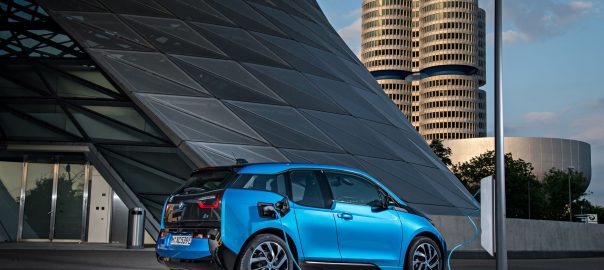
BMW i3 94Ah
[10/8/16] Germany’s Spiegel Magazin reported this morning that the country’s top legislative body was able to reach a bi-partisan agreement that hopes to allow only zero-emission vehicles on EU roads in 14 years. For the resolution to be instituted across Europe, it will have to be approved by the EU. But according to Forbes, “German regulations traditionally have shaped EU and UNECE regulations.”
Greens party lawmaker Oliver Krischer told Spiegel,
“If the Paris agreement to curb climate-warming emissions is to be taken seriously, no new combustion engine cars should be allowed on roads after 2030.”
The resolution calls on EU automakers to “review the current practices of taxation and dues with regard to a stimulation of emission-free mobility.” Creating a tougher tax burden could encourage manufacturers to push electric vehicles into production sooner, rather than later.
While larger approvals will still need to go through the legislative process, the fact that the country with the fourth-largest auto industry in the world is spearheading such sweeping change is a big sign of where we’re headed. It’s a road paved with slow-moving politicians making incremental changes and hoping the industry will warm up to the idea of not killing us all.
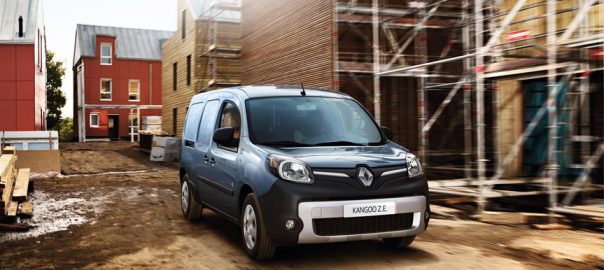
Renault Pro+ is to present the all-electric New Kangoo Z.E. on 13 January at the 2017 European Motor Show in Brussels, Belgium.
Renault Pro+ will equip the latest Kangoo Z.E. with a new motor and battery package that will increase the model’s driving range by more than 50 per cent, from 106 miles (170km) to 168 miles (270km) NEDC. That is equivalent to 124 miles (200km) in real world driving conditions.
The New Kangoo Z.E. will offer the longest available driving range in the small van market.
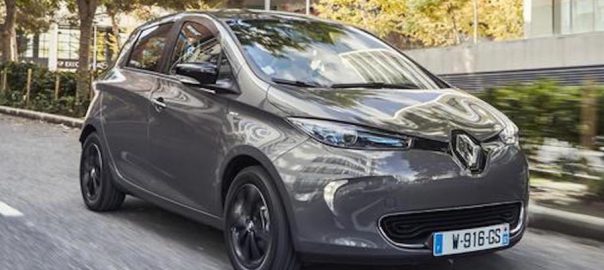
Kangoo Z.E. 2017 electric van (Image: Renault)
The Kangoo Van Z.E. is a completely practical solution for environmentally-conscious business customers who have praised the driving enjoyment it delivers, as well as its carrying capacity and competitive operating costs.
This announcement to increase the range on Kangoo Z.E. follows on from Renault recently launching at the 2016 Paris Motor Show the New Renault ZOE available with a new Z.E.40 battery that increases its NEDC driving range to 250 miles (186 miles in real world driving conditions) – the longest of any mainstream electric car.
Renault is Europe’s leading manufacturer of both all-electric LCVs and passenger cars.
More information about the New Kangoo Z.E. will be provided on 13 January 2017.
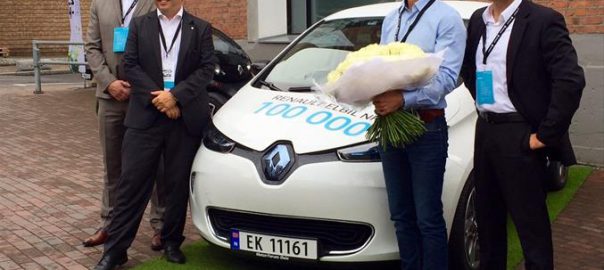
Renault has handed over the keys to its 100,000th electric car, a ZOE, in the Norwegian capital of Oslo, today
A pioneer of all-electric vehicles, Renault is the European leader with 27% market share for electric cars
Five years since the launch of its first electric vehicle, Renault has handed over the keys to its 100,000th electric car customer.
The Renault ZOE – the brand’s all-electric supermini – was sold to 41 year old Norwegian, Mr. Åsmund Gillebo. To truly complement his purchase of a ZOE, he has been presented with five years of Fortim recharging and 100,000 minutes of recharging time from Grønn kontakt, two local energy suppliers.
Renault: the European leader for electric cars
Renault has handed over the keys to its 100,000th electric car, a ZOE (Image: Renault)
In the first half of 2016, Renault sold more than 15,000 electric vehicles (excluding the Twizy), an increase of 32% on the previous year. This success confirms Renault’s status as the European market leader, especially for LCV. Indeed, on European roads, one in every four electric vehicles is a Renault. In France, half of all electric cars are Renaults. Renault’s main markets for electric cars are France, Norway, the UK and Germany. In the UK, Renault Z.E. sales grew to 1,199 in the first half of 2016 – an increase of 26.1 per cent. Of this, 1,069 of the vehicles were the all-electric ZOE – a 39.4 per cent increase on the first six months of 2015. Since the launch of its Z.E. vehicles in the UK in 2011, Renault has sold 5,977 electric vehicles to date comprising of Fluence, Kangoo Van Z.E, Twizy and ZOE.
Eric Feunteun, Director of Renault’s Electric Vehicle Division, said:
“Every year there are more customers for electric cars and Renault is making a major contribution to this with its constant innovation and dedication to developing infrastructure. Our customer satisfaction, which stands at 98% for the ZOE, encourages us to keep pushing onwards”.
Renault boasts the most comprehensive range of 100% electric cars on the market, enabling it to meet a variety of needs. The range is made up of the compact ZOE city car, the Kangoo Van ZE, the compact urban two-seater Twizy (and its utility version, the Twizy Cargo), and the stately saloon the RSM SM3 ZE (the best-selling electric vehicle in Korea).
The ZOE, the best-selling electric vehicle in Europe, dominates the market for electric private cars with over 23% market share. The Kangoo Van ZE, the leading electric LCV in Europe for the third year running, sets the benchmark for professionals and has won a number of tenders, including the French Post Office, and the French electricity provider ERDF in Norway. Lastly, with 17,000 models sold, the Twizy is the trailblazer for new ways to get around all over the world, and is extremely popular in car-sharing initiatives in both Europe and North America.
Renault, a key player in electric innovation
With cutting edge electrical technology, proven by its performance in Formula E, Renault is naturally winning over an increasing number of users. Since it began its electric adventure Renault has adopted a global strategy for electric mobility, and the development of infrastructure in particular. Renault is involved in a number of projects to install public recharge points, working with public bodies and other players in electric mobility like energy technicians. There are currently over 100,000 public recharge points around the world, 80,000 of which are in Europe, and they are constantly growing in number. As an example, Renault supports European Commission projects for the TEN-T fund (Trans European Transport Network), which has installed over 2,300 quick charge terminals along highways and major roads in over 15 countries.
In the UK, the ZOE has won numerous awards including What Car?’s ‘Best Electric Car Under £20,000’ for three consecutive years and was most recently voted second in the 2016 Auto Express Driver Power vehicle ownership survey out of 183 cars – Renault’s best ever ranking in the survey for one of its vehicles.
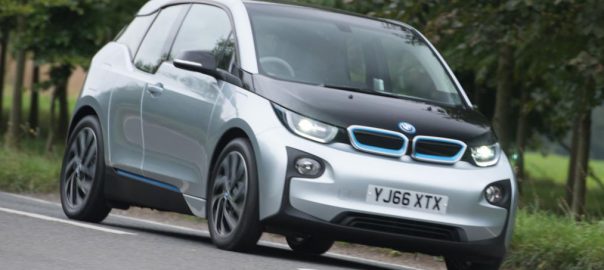
The updated BMW i3 is better than ever and this Range Extender makes range anxiety a thing of the past
BMW i3 REx range extender 94AH 2016 (Image: AutoExpress)
Verdict: 4 stars
The BMW i3 is a more compelling proposition than ever thanks to its bigger battery pack and improved range. The pure EV version will cost pennies to run, but it’s this REx model that steals the show. Unlike conventional plug-in rivals like the VW Golf GTE, the i3 offers a truly usable electric-only range, allowing you to feasibly avoid using the petrol engine at all. Added kit like DC charging should make it even easier to live with, too.
In a world of increasingly stringent emissions regulations, more and more buyers are considering the purchase of an electric vehicle. Range anxiety remains a problem, however, with many worried about simply running out of juice.
BMW thinks it has the answer. By fitting a denser 94Ah battery pack to its funky looking i3, engineers have almost doubled the car’s all-electric range. Now capable of up to 195 miles, the BMW i3 is more than suitable for the average daily commute.
But what if that’s not enough? What if the thought of being stranded at a motorway service station without access to a plug still terrifies you? Handily, bosses have seen fit to add the bigger battery to the Range Extender model, too.
The thing is, it’s not actually any bigger. The 94Ah battery slots into the same space as the old unit – meaning this new model is only marginally heavier than the outgoing car. BMW says it’ll do 288 miles on a single charge and full tank of fuel, charging from empty to 80 per cent full in only 40 minutes.
That super-fast charge time is thanks to the fact that all i3s now get DC Rapid Charge as standard. It’ll still allow you to top up from a standard three-pin wall socket, although that’ll take around 10 hours.
On the road, the i3 drives just as it did before. It has the same playful handling as we’ve grown to expect from a BMW, while the rear-wheel propulsion gives it a sporting edge often missing on competitor cars. The two-cylinder engine feeds the batteries rather than being directly connected to the wheels, meaning you’re never driving solely on petrol power. It’s whisper quiet, too, ticking away in the background without you even noticing.
As a result, the BMW i3 always benefits from the electric motor’s instant torque. It offers pleasing acceleration (0-62mph takes 8.1 seconds) – with the ability to surprise some supercars off the line. It tails off at motorway speeds, but still feels comfortable at 70mph.
Much-improved range and same suite of strengths make the Zoe an EV that more people than ever before can now consider
RENAULT ZOE Z.E. 40 DRIVE TESTS IN PORTUGAL (Image: Autocar)
What is it?
When the groundbreaking Nissan Leaf appeared in 2010, we were fed statistics that should, on paper at least, have alleviated a number of common fears and misconceptions that surrounded all-electric motoring. For example, the claim that a 100-mile range is enough for more than 75% of all journeys undertaken made the Leaf, with its 124-mile range, look positively practical.
However, what these statistics failed – and still fail – to take into account is that the car as a concept has been such a success over the past century thanks to its unparalleled flexibility. Having the freedom to go where you like, when you like and with a minimum of inconvenience is something the public simply don’t want to give up. In short, people care about that extra 25% of journeys.
Over the years a number of manufacturers have responded to the public’s fear of range anxiety, with BMW and Nissan recently taking steps to increase the performance of their pure EVs. However, as of yet, only Tesla offers an ‘entry-level’ EV capable of true long-distance motoring, in the form of the Model S P60D with its 267-mile range.
Thankfully, Renault now claims to have rectified this situation, with its new mass-market Zoe R90. Despite costing a whopping £34,345 less than the Tesla, the R90 is theoretically capable of travelling up to 250 miles on a charge – only 17 miles short of the premium US saloon. Granted, in real-world driving conditions that astonishing figure is predicted to fall to just 186 miles, but that’s still 80 miles more than the entry-level 20kWh Zoe and, according to Renault, is “the greatest range of any mainstream electric vehicle”.
This extra range comes courtesy of a new battery which has almost double the storage capacity of the current Zoe’s (at 41kWh) but, crucially, is no larger or heavier. This has been achieved by increasing the energy density of individual cells rather than adding more battery modules, thus Renault has been able to pack the battery into the same compact space as before.
Combined with a free home 7kW fast-charger, which takes just three to four hours to charge a Zoe to full capacity from empty, and new satellite navigation software that allows drivers to access paid charging points regardless of the operator, Renault says range anxiety is a thing of the past.
Speculation about the future of transportation, like common flu, appears to be contagious. Not a week goes by without another celebrity, business guru or executive predicting that future of transportation is electric.
That, you may say, is probable and not newsworthy. What is newsworthy is that many of the same people are predicting that the transition is likely to be at a pace much faster than many had expected.
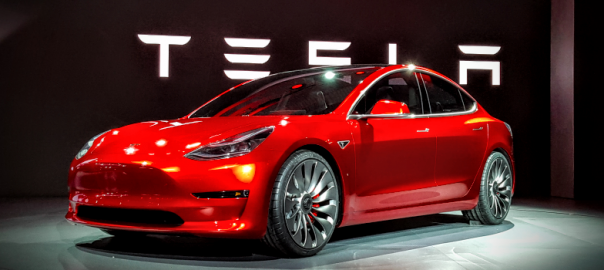
Tesla Model 3 at launch (Image: K. Field/CC)
In July 2016, for example, Virgin Group founder Richard Branson was quoted as saying that he suspected that 15 years from now every car on the road would be electric. Chances are that he made up the number – 15 years – without giving it much thought. One can also assume that he was talking about new cars sold in 15 years, not all cars on the road.
That, of course, is what makes Branson Branson. He was talking to CNN at a Formula E race, which he was attending to support the Virgin Racing team. He said,
“Formula E is pushing the boundaries forward into what will be the future. Fifteen years from now, I suspect every car on the road will be electric.”
He went on to elaborate:
“If governments set the ground rules — and they sometimes have to be brave and set positive ground rules — and for instance said, ‘more than 50% of cars must be battery-driven in 10 years and 100% in 15 years,’ we could make that happen. It will be great fun and really challenging to do. The cars would be much more efficient… and battery technology will get better and better.”
The car of the future will be electric, connected and, eventually, self-driving. But where does that leave the car industry of the future? In a series of articles this month, Heard on the Street takes a look at how investors should approach the biggest technological disruption the car industry has faced in decades.
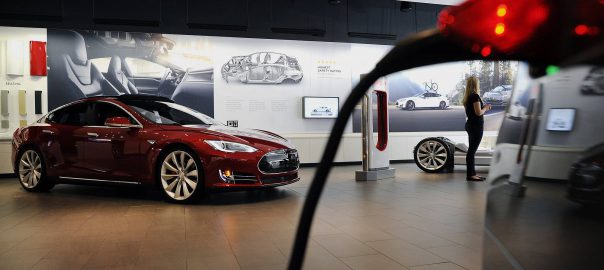
A Tesla showroom in San Jose, California (Image: Bloomberg)
Battery-powered electric cars outsold gasoline ones at the dawn of the automotive age. In a decade or so they may well do so again. Investors need to watch out they don’t get caught on the wrong side of history.
Precisely when electric cars leave their current luxury or green-tech niches and—after many false starts—enter the mainstream depends above all on relative cost. On that front, electric vehicles have momentum.
The plummeting cost of batteries is key. The growth of mobile computing has driven massive investment in the area, improving the range of electric cars while reducing their cost. Mercedes-maker Daimler thinks the production cost of engine and battery technology might reach parity in 2025. But the tipping point for consumers, who also factor in subsidies and running costs, will be earlier.
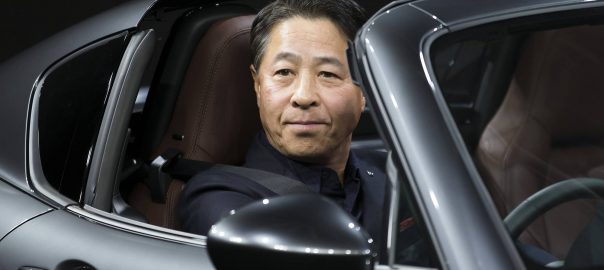
CEO Masamichi Kogai said the company would introduce zero-emission vehicles as standards tighten in the U.S.
Masamichi Kogai, president and chief executive officer of Mazda Motor Corp., at the wheel of the company’s Roadster RF in Tokyo last week. Mazda said it would introduce an electric car by 2019. (Image: Bloomberg)
TOKYO—The chief executive of Mazda Motor Corp. said the company plans to start selling electric vehicles in 2019, joining rivals at home that face tightening emission standards abroad.
“We’ve set the goal at 2019 to accommodate the ZEV regulations in North America,”
Mazda CEO Masamichi Kogai said in a group interview, referring to rules in California and some other states that mandate rising sales of zero-emission vehicles.
Nissan Motor Co. has sold its Leaf electric vehicle since 2010 and Toyota Motor Corp. said this month it wanted to get itself ready for commercializing electric cars.
Mr. Kogai said Mazda would add original features to its electric cars to differentiate itself. He said engineers were looking at ways to keep the cars running longer when the battery was nearly dead.
Mazda and Toyota last year said they would build a long-term partnership on car technology. Representatives from the two companies said collaboration on electric vehicles was an option but nothing was decided. Mr. Kogai said they weren’t considering a capital tie-up.