Category Archives: FAQ

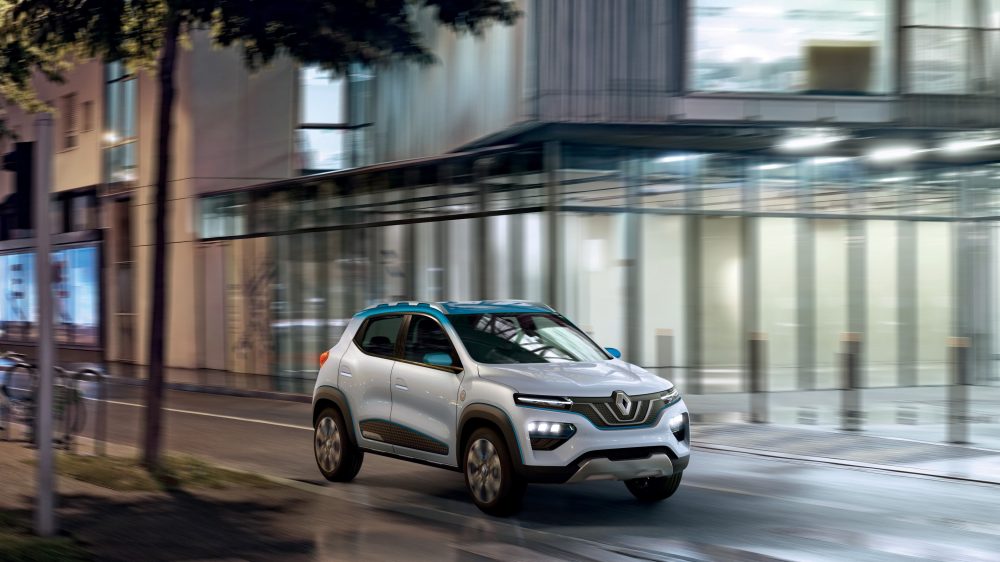
K-ZE All-electric Crossover (Image: Renault)

Renault’s Mégane E-Tech: a seductive bet on the EV future

Renault’s new 100%-electric Mégane E-Tech is the French company’s non-hedged bet it can convince drivers they’ve nothing to lose in swapping their traditional ICE rides for modern a EV – and gain considerable performance, cost, and flair advantages in the bargain. A day test driving the car on the roads of southern Spain suggests the company stands a good chance of winning that wager and setting some standards for European EV development as it does.

Renault electric SUV (Image: Auto Express/Playback)

Renault is in no way a newcomer to electric vehicles, having sold over 400,000 EVs since the 2012 rollout of its Zoe e-compact. Yet the Mégane E-Tech represents a veritable milestone in several ways. For starters, it’s the first battery-powered vehicle built using the firm’s common module family (CMF) platform, meaning it will inevitably influence later models. And while Renault is adamant the car is positioned to enter Europe’s C-segment at the top of the family hatchback class, its design, spaciousness, and operating chops may well convince some cross-over and the occasional SUV shoppers to reconsider their plans.

Indeed, as Renault staffers acknowledged when asked, the Mégane E-Tech is playing to several kinds of drivers and expectations at once. Conceived to provide the sound, solid, and powerful performance of a German-engineered car – rival Volkswagen ID.4, for example – Renault’s showcase EV is also an unabashed demonstration of French seductive flair. Its innovative design, stylish flourishes, myriad creature comforts, and various features play as much to the eye and heart as its emissions-free, sustainable, efficiently manufactured hardware and tech appeal to pragmatic buyer demands.

And it does so under the name of Renault’s most popular and recognizable Mégane model – but with everything in, on, or about it completely new and different.

Read more: electrek

It’s Time to Go Green!

If you would like to know more about Solar Panels and the PowerBanx range of home battery systems, and get a free instant quote, please complete our online form:

Nissan Leaf (Image: Qurren/Wikipedia)

How Much Range You Really Need in an Electric Car

Stop trying to re-create your gas engine car from electricity and the answer will become clear.

If you’re considering an electric vehicle, don’t make the mistake of buying one with too much range. Unlike combustion engine cars with virtually unlimited range, electric cars make the most sense when they have the right amount of range, not a surfeit of it.

There are several reasons to temper your instinct to get the most range possible.

Nissan Leaf – a Perfect Family Car

Cost

Range costs a lot of money. For example, a Nissan Leaf with 226 miles of range costs $6,600 more than the same trim level with 149 miles of range.

There is no real parallel with combustion cars as their cost of range is in the price and consumption rate of fuel, not the vehicle’s MSRP. You can argue that an EV earns back its overall cost premium in per-mile energy savings, but a long-range electric car will need many more of those low-cost miles — and probably years of covering them to do so.

The cost of EV range can make buyers recoil from one without knowing that their perception of sufficient range, not cost, is the real problem.

Weight

Longer range versions of a given electric car have larger, heavier batteries. Unlike a tank of gas that weighs about 100 pounds and gets lighter as it’s used, an EV battery can easily weigh 1,000 pounds and stays just as heavy as it is “emptied,” increasingly becoming dead weight the remaining amount of charge must lug around.

The long range Tesla Model 3 (358 miles of range) weighs 172 pounds more than the RWD version’s still-generous 272-mile range, a weight difference equal to the entire payload a car will most often carry: the driver. The difference is even more pronounced when comparing a long range Model 3 to a comparable conventional BMW 3 Series, which is about 475 pounds lighter.

Read more: RoadShow


It’s Time to Go Green!

If you would like to know more about Solar Panels and the PowerBanx range of home battery systems, and get a free instant quote, please complete our online form:

VW e-Golf (Image: Volkswagen.co.uk)

The 10 best electric cars to buy for the new 22 registration and their benefits

We have picked the top EVs you can buy now in terms of range, efficiency and desirability ahead of a ban on fossil-fuelled cars by 2030

Thinking about buying an electric car? You’re not the only one. Plenty of British buyers are wondering about when to switch from petrol or diesel to an electric model and it will be interesting to see the percentage of EVs sold in March with the advent of the new 22 registration.

There’s good news if you’ve decided to make the leap: the market is brimming with brilliant options. Indeed, it feels like each week a new electric car (EV) comes out that brings with it more range, more equipment, a lower price or even a combination of all three.


To keep up, we’ve revised our list of the 10 best electric cars to buy for 2022. This list, of course, is not exhaustive; there are plenty more excellent EVs on sale, and indeed, it’s taken us no small amount of teeth-gnashing, hair-pulling and some heated discussion to come up with this ranking.

With that in mind, it’s important to remember that these cars are very closely matched; there are no bad cars in this list, and what’s more, several very good EVs missed out by mere fractions of a hair’s breadth; honourable mentions must therefore go to the incomparably affordable MG ZS EV, the brilliantly practical Vauxhall Combo-E Life, a glut of much-vaunted Teslas, the quietly competent Skoda Enyaq and the surprisingly sporty Ford Mustang Mach-E.

Read more: The Telegraph


It’s Time to Go Green!

If you would like to know more about Solar Panels and the PowerBanx range of home battery systems, and get a free instant quote, please complete our online form:

Ubitricity Electric Avenue project lamppost charging (Image: Siemens)

Wandsworth Council EV charger rollout progresses with Liberty Charge installs

On-street electric vehicle (EV) chargepoints are being rolled out across Wandsworth, with 35 sites set to see installations.

Wandsworth Council began the rollout of the infrastructure in 2021 across 26 sites, with 10 already live. The latest installations will take the total number of sites to 35, comprising 65 dual socket EV chargepoints able to charge 130 vehicles at any one time.

Liberty Charge is to own and operate the chargepoints, which are to be delivered by its sister company Virgin Media O2, with the council having chosen the company due to its ability to deliver fully-funded chargepoints for residents without the means to privately charge their EV.


Ubitricity Electric Avenue project lamppost charging (Image: Siemens)

Additionally, Liberty Charge’s chargepoints are 22kW, which the council said is faster than other street chargepoints.

Liberty Charge is a joint venture between Liberty Global and Zouk Capital, utilising Virgin Media’s existing infrastructure – as the telecommunications company is owned by Liberty Global – for the chargepoints.

Its creation followed an EV charging trial using Virgin Media’s infrastructure, the Virgin Media Park & Charge project, which aimed to deploy 1,200 charging sockets in towns and cities across the country by early 2021.

Liberty Charge is to own, operate and maintain the Wandsworth chargepoints without requiring local taxpayer support, while the council helps to identify locations and grants the necessary approvals, with the sites in Wandsworth agreed after consultation with residents throughout the technology rollout.

“We want to not only increase the number of available charge points but to ensure that a charge point is easily accessible to all our residents,” said Kim Caddy, deputy leader of the council and cabinet member for finance, resources and climate sustainability.

Over the past year, EV take up in the borough increased by just under 1,000 vehicles, with the new charging infrastructure to support and encourage EV adoption across the borough.

Read more: Current+


It’s Time to Go Green!

If you would like to know more about Solar Panels and the PowerBanx range of home battery systems, and get a free instant quote, please complete our online form:

Nissan Leaf (Image: Qurren/Wikipedia)

E-transport is a game changer

Our company car is eight years old this month.

We purchased it secondhand just over five years ago. It’s a Nissan Leaf. All electric.

We purchased it in the days when people used to say ‘we haven’t got the infrastructure’ or ‘where are we going to get all the energy from?’ or ‘they don’t have the range’.

I let the wife conduct the research, just so she could build up her range anxiety until we saw an affordable great little car on sale from Stebbings on Hardwick Narrows.

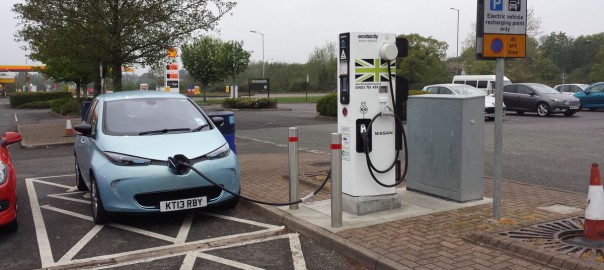
Since we have had the car we have never used a public charge point, of which there are six times as many as there are petrol pumps in the UK and growing by around 200 a week on top of the hundreds of home chargers installed daily. No, we just use the ‘granny charger’ which is basically a three-pin plug charger, like your mobile phone. It uses about half the energy a kettle uses and stays on for an hour here and an hour there to keep us topped up.

A showroom tour of a Nissan Leaf (Image: T. Larkum)

Read more: Lynn News


It’s Time to Go Green!

If you would like to know more about Solar Panels and the PowerBanx range of home battery systems, and get a free instant quote, please complete our online form:

SWARCO eVolt is supplying 45 charging units, including 11 of its Rapid Chargers capable of charging two vehicles simultaneously in 30 minutes, across 28 sites in East Lothian (Image: eVolt)

How much does it cost to charge an electric car? Running costs of EVs and how to find a charging point

One of the major draws of switching to an EV is the chance to avoid the petrol pump – here’s how much you could save

Growing numbers of us are switching to electric cars – in fact the latest UK sales data suggests sales of electric cars doubled last year.

One of the major draws of switching to an EV is the chance to avoid the petrol pump; this week the cost of fuel across the country jumped to a record high in a further squeeze to the cost of living.

But just how much could you save by switching to an electric car? And when you’re on the road away from home, how easy is it to find a plug point to recharge?

Ecotricity app display after ending session (Image: T. Larkum)

Charging at home is cheap

For EV drivers lucky enough to have a driveway and a home charger, charging at home is easy and much cheaper than the cost of refuelling a petrol or diesel car.

For a typical electric car with a 60kWh battery and a 200 mile range, a full charge at home would cost about £9.20, according to PodPoint, although cars with larger batteries can cost up to £20 to recharge at home.

That is still cheaper per mile than a petrol pump.

Charge for free on the go 

Growing numbers of employer are installing EV chargers at workplaces, and many offer charging to employees for free.

Likewise, supermarkets including Sainsbury’s, Lidl, and Aldi offer free charging to customers, and some councils also provide free-to-use chargers in their car parks.

Scotland has the highest number of free EV chargers, according to Zap Map.

Read more: inews

It’s Time to Go Green!

If you would like to know more about Solar Panels and the PowerBanx range of home battery systems, and get a free instant quote, please complete our online form:

The promise and peril of the electric car revolution

We can do better than electrified sprawl, if we try

The electric vehicle revolution is nigh. As recently as 2017, electric cars comprised just 1.4 percent of global sales. By 2021, they made up 8.6 percent, roughly a sixfold increase in just four years, with that last figure coming in a year when auto manufacturing was hamstrung by the shortage of computer chips.

Soon electric vehicles (EVs) will displace gas-powered ones, and that will be an improvement over the status quo — but only a modest one if American cities can’t take advantage of the broader benefits of electrification. We can do better than e-sprawl, if we try.

The reason EVs will win sooner or later is brute market dynamics. As anyone who’s ever felt the instant jolt of torque from an electric drive train can attest, they are simply better than gas-powered cars in almost every way, and they’ll only continue to improve.


EVs are more powerful, cleaner, and much cheaper to maintain and drive. As uptake increases, so will the network of charging stations. And since the vast majority of car trips are quite short, and almost every house and business in the country is already wired for electric power, it will be relatively straightforward to keep most EVs charged up most of the time. Couple all that to ever-tightening emissions rules and regulations in Europe and China (where the communist government basically bullied Toyota into shifting towards electric cars), and it’s simply a matter of time before the internal combustion engine is a quaint anachronism.

Read more: The Week

It’s Time to Go Green!

If you would like to know more about Solar Panels and the PowerBanx range of home battery systems, and get a free instant quote, please complete our online form:

Topping up at Tiverton (Image: T. Larkum)

Electric vehicles bring down CO2 emissions of new cars in UK to lowest level ever

Though only 12% of new sales were zero-exhaust electric vehicles, emissions fell by 11.2% in 2021


Topping up at Tiverton (Image: T. Larkum)

The carbon dioxide emissions of new cars sold in the UK dropped to the lowest level ever in 2021 thanks to the unprecedented surge in electric vehicle sales, industry data suggests.

Average new car CO2 emissions fell by 11.2%, to 119.7g for every kilometre driven, according to the Society of Motor Manufacturers and Traders (SMMT), a lobby group.

Battery electric vehicles accounted for only 12% of UK sales during 2021, but they rapidly drag down the figures because they produce zero exhaust emissions. Increased sales of hybrids, which include a battery alongside an internal combustion engine, also contributed to the fall in emissions, which was previously stymied in recent years by the rise of sales in higher-emission sports utility vehicles (SUVs).

In 2021, the SMMT reported a 38% drop in average new car emissions since 2000, although those data were produced under a different test methodology so are not directly comparable.

Car sales data for January, also published on Friday, showed that the number of battery electric cars more than doubled year on year to 14,400, accounting for 12.5% of cars sold

‘Ambitious’ UK plans for electric vehicles welcomed – with reservations
Read more

Total new car sales rose by 27.5% year on year in January, although that was compared with January 2021 when the UK was in a strict lockdown and car showrooms were closed. The industry reported that sales were still limited by the months-long shortage of computer chips that has forced carmakers to favour key vehicles, including electric cars – which are vital for meeting emissions legislation.

Mike Hawes, the SMMT’s chief executive, said: “Once again it is electrified vehicles that are driving the growth, despite the ongoing headwinds of chip shortages, rising inflation and the cost-of-living squeeze.

Read more: The Guardian

It’s Time to Go Green!

If you would like to know more about Solar Panels and the PowerBanx range of home battery systems, and get a free instant quote, please complete our online form:

Charging Station in Sunderland (Image: Fastned)

Shell replaces petrol pumps to open first UK EV charging hub

Shell has replaced existing petrol and diesel pumps at its Fulham fuel station with ultra-fast chargers to open its first electric vehicle (EV) charging hub in the UK.

The hub features nine 175kW chargepoints, as well as a timber canopy with built-in solar panels. These chargers run on 100% certified renewable electricity, with this certified through the Renewable Energy Guarantee of Origin (REGO) scheme.

Charging Station in Sunderland (Image: Fastned)


István Kapitány, Shell’s global executive vice president for mobility, said: “EV drivers are looking for a charging experience that is as fast, convenient and comfortable as possible. This is exactly what Shell Fulham aims to offer.”

The site also features a seating area, free Wi-Fi, a Costa Coffee café and a Little Waitrose & partners.

In 2021, Shell announced that up to 800 Shell EV chargepoints would be installed in as many as 100 Waitrose sites across the UK by 2025.

Additionally, Shell is aiming to install 50,000 on-street chargers in the UK by 2025 through ubitricity, having acquired the company in early 2021.

Read more: Current+


It’s Time to Go Green!

If you would like to know more about Solar Panels and the PowerBanx range of home battery systems, and get a free instant quote, please complete our online form:

Zappi 2018 EV Charge Point (Image: myEnergi)

Plug-in Car Grant for electric cars cut AGAIN

The government has cut the Plug-in Car Grant for electric cars by another £1,000, meaning motorists will save even less on affordable EVs

The Plug-in Car Grant to help make electric cars more affordable has been cut by further £1,000 in a surprise announcement that will infuriate electric car buyers and manufacturers alike.

Previously £2,500, the Plug-in Car Grant is now just £1,500 as of 7am today (15 December 2021).


Zappi 2018 EV Charge Point (Image: myEnergi)

What’s more, the qualifying maximum price of an electric car has been reduced, from under £35,000 down to less than £32,000.

Both cuts are effective immediately.

The government argues that its approach to Plug-in Car Grant cuts “is clearly working – whilst the grant has slowly reduced over time, the sales of electric vehicles has soared”.

Transport minister Trudy Harrison said the government is “refocusing our vehicle grants on the most affordable vehicles and reducing grant rates to allow more people to benefit, and enable taxpayers’ money to go further”.

Read more: Motoring Research


It’s Time to Go Green!

If you would like to know more about Solar Panels and the PowerBanx range of home battery systems, and get a free instant quote, please complete our online form: