Category Archives: FAQ

EU approves 2035 ban on selling petrol and diesel cars

No more emissions from 2035 for cars and vans sold in Europe

The EU has today voted to approve legislation effectively banning the future sale of petrol and diesel cars and vans. In order to sell vehicles in Europe, carmakers will have to cut emissions by 100 per cent by 2035 compared to 2021 levels, which means that all new cars and vans are going to be CO2-emission-free.

Though carmakers with small production numbers – less than 1,000 cars annually – will have exemption until 2035, mass production manufacturers are being encouraged with some pretty big carrots to create zero-emission and “well-performing plug-in hybrids” between 2025 and 2029. The 2035 zero-emissions standard is more aggressive than originally planned.

EU spokesperson Jan Huitema said: “This regulation encourages the production of zero- and low-emission vehicles. It contains an ambitious revision of the targets for 2030 and a zero-emission target for 2035, which is crucial to reach climate neutrality by 2050.

“These targets create clarity for the car industry and stimulate innovation and investments for car manufacturers. Purchasing and driving zero-emission cars will become cheaper for consumers and a second-hand market will emerge more quickly. It makes sustainable driving accessible to everyone.”

In a campaign entitled ‘Fit for 55’, the EU is aiming to reduce CO2 emissions by 55 per cent by 2030 compared to 2021 levels. To support this, passenger cars and light commercial vehicles sold from 2030 and 2035 respectively will have to comply with new emissions standards by law.

Read more: TopGear

It’s Time to Go Green!

If you would like to know more about Solar Panels and the PowerBanx range of home battery systems, and get a free instant quote, please complete our online form:

6 reasons to drive an EV

Sometimes, picking a new car is as simple as seeing a vehicle you just know you want. More often, it’s a complicated decision where you weigh up a range of factors before selecting the best option for you. If you’re in this position, here are six electric car advantages to make you think EV.

  1. You’re helping the environment

One of the main EV benefits is the reduced environmental impact they have on our world. Electric cars aren’t completely free of CO2, though. A lot of the electricity they use comes from non-renewable sources. Plus, they have to be built and transported, which is likely to involve emissions as well.

However, it seems safe to say that they are still a lot better for the environment than petrol or diesel engines. It generally produces less CO2 to create energy in a power station than it does to do it in a car engine. And some of your electricity will likely come from renewable sources as well.


“The response from police drivers to the BMW i3 has been very positive. It’s actually a very quick car.”

On top of that, an electric engine is around **three times for efficient** than a petrol engine in terms of how it uses its. All in all, you can be confident you’re making a difference.

Read more: FleetPoint

It’s Time to Go Green!

If you would like to know more about Solar Panels and the PowerBanx range of home battery systems, and get a free instant quote, please complete our online form:

Scottish Fire & Rescue ZOE (Image: Renault)

Fact or fiction: the truth about EVs and fleets

When it comes to battery electric vehicles (BEVs), fleet decision-makers tend to be among the best-informed people in the country.

And they need to be: fleets are setting the pace when it comes to electrification as organisations strive to lower emissions and costs and be ahead of the game when it comes to the 2030 ban on the sale of conventional petrol and diesel cars and vans.

However, not all fleets and company car drivers are enthusiastically embracing the technology.

BMW i3

Some of their opposition is rooted in traditional arguments against BEVs, such as cost, insufficient driving range and confusion over types of charging cables and the number of apps needed to charge a vehicle on the public network.

In this feature, we look at six of the most common concerns, in a bid to examine what the truth is and help fleet decisionmakers accelerate their transition to BEVs.

1 EVs are too expensive

When considered purely from the point of the vehicle purchase price, this would be a borderline open and shut case: as a general rule, BEVs typically have a retail price several thousand pounds higher than their petrol or diesel counterpart.

These increased prices are also reflected in their lease rates, making an electric car seemingly more expensive to add to a fleet than an ICE (internal combustion engine) model. The difference in cost for a zero-emission van is even higher.

Read more: FleetNews

It’s Time to Go Green!

If you would like to know more about Solar Panels and the PowerBanx range of home battery systems, and get a free instant quote, please complete our online form:

Cheap cars for sale

Calls for VAT relief on electric car ‘street charging’

Electric car owners with driveways are paying less to power their vehicles at home than those forced to rely on on-street charging points.

The disparity risks “undermining the Government’s net-zero transport strategy”, claim critics. Campaigners are now calling for VAT on public charging points to be slashed from 20 per cent to the domestic rate of five per cent.

The Government plans to ban the sale of new diesel and petrol cars from 2030.


But Bath MP Wera Hobhouse said: “Not everyone has access to home EV charging. In dense urban areas many do not have a driveway, so charging a vehicle at home is not an option.”

The RAC is calling for VAT on public charge-points to be cut to five per cent. Spokesman Simon Williams said: “A quality charging infrastructure will be key to helping people switch from conventional vehicles to electric ones.

“We must ensure those without driveways are not penalised with higher costs, otherwise there’s a risk the Government’s net-zero transport strategy will be undermined.”

But treasury minister Victoria Atkins said: “VAT relief for public EV charging would impose additional pressure on the public finances, to which VAT makes a significant contribution. VAT is the UK’s third largest tax, forecast to raise £157billion in 2022-23, helping to fund key spending priorities such as the NHS, education and defence.”

Read more: Express

It’s Time to Go Green!

If you would like to know more about Solar Panels and the PowerBanx range of home battery systems, and get a free instant quote, please complete our online form:

Help middle-class drivers make the switch to used EVs, says Auto Trader

Middle-class households will need incentives to buy used EVs in order to meet climate targets.

That’s according to Auto Trader, which says the government is falling short on making the uptake of used cars, particularly used ones, attractive, unlike abroad.

Used EV demand is said to be dropping thanks to increasing electricity prices, and the cost of used EVs, especially luxury ones, has dropped, with The Times reporting the average price of a used Jaguar I-Pace, pictured, to have decreased by 14.6 per cent in a year, while the Tesla Model X is down by 12.1 per cent.

Meanwhile, the price of a used Nissan Leaf has gone down by 1.6 per cent, while the cost of a Smart ForTwo has dropped by 1.3 per cent.

Jaguar I-PACE at Fully Charged Live show (Image: T. Larkum)

A working group has been set up by the Office for Zero Emission Vehicles to look at the used EV market, including how to stimulate demand, and Auto Trader warns in a report that ‘with supply ahead of demand, the used electric vehicle market needs urgent attention to address the imbalance’.

Auto Trader brand director Marc Palmer was quoted by The Times as saying: ‘What we really need is more mainstream demand.

‘We need middle-income households to be able to access electric cars and to be reassured electricity is OK.

Read more: CarDealer

It’s Time to Go Green!

If you would like to know more about Solar Panels and the PowerBanx range of home battery systems, and get a free instant quote, please complete our online form:

Just about to finish at Cherwell (Image: T. Larkum)

Moto exceeds 200 ultra-rapid EV charger installations in the UK

Moto, one of the UK’s largest motorway services operators, plans to install just over 1,600 ultra-rapid EV chargers by the end of the decade, and it has now opened 12 new ultra-rapid chargers at Moto Reading Westbound on the M4. This brings to 211 the total number of ultra-rapid chargers owned by Moto.

The new chargers are supplied by renewable energy and the charging hub has been opened by Moto, GRIDSERVE and Tesla.

The 350kW-capable ultra-rapid chargers can deliver up to 100 miles of range in less than 10 minutes.

By integrating further EV charging capabilities in the Midlands region, an extensive network is being created allowing EV drivers to navigate around the area via motorway networks. By having sufficient amounts of service stations with EV charging capabilities, this helps to decrease range anxiety and could in turn prompt further drivers to switch to EVs.

A row of electric cars at a rapid charger station (Image: Ecotricity)

“When we opened our first ultra-rapid EV Charging Hub at Moto Rugby, we knew it represented a major turning point in the feasibility of EV vehicle ownership – signalling the arrival of more accessible, more reliable and quicker on-the-go charging options,” said Moto chief executive Ken McMeikan.

“Now, just 18 months later, having over 200 such charge points across our network are a vast achievement. Together, with our partners, we have overcome significant planning, legal and infrastructure barriers to deliver a better charging experience for EV owners, as well as make the prospect of EV ownership more attractive.

Read more: Current+

It’s Time to Go Green!

If you would like to know more about Solar Panels and the PowerBanx range of home battery systems, and get a free instant quote, please complete our online form:

Zappi 2018 EV Charge Point (Image: myEnergi)

EVs soften car crash

BRITISH car production slumped to the lowest level since the 1950s in 2022 with 775,914 vehicles coming off production lines.

The sharp decline was caused by a crippling shortage of semiconductors, factory closures and supply chain issues caused by Covid lockdowns in China.

However, electrified vehicles continued to boom and accounted for almost a third of cars which, according to industry body the Society of Motor Manufacturers and Traders, was worth £10 billion in exports alone.

In 2022, UK factories turned out a record 234,066 battery electric (BEV), plug-in hybrid (PHEV) and hybrid (HEV) electric vehicles, with combined volumes up 4.5 per cent year-on-year to represent 30.2 per cent of all car production.


“The response from police drivers to the BMW i3 has been very positive. It’s actually a very quick car.”

Total BEV production rose 4.8 per cent, with hybrid volumes up 4.3 per cent, and boosting output of these vehicles will be critical in the attainment of net zero, for both the UK and major overseas markets.

Overall, the annual total was 84,561 units down on 2021 and 40.5 per cent off the 1,303,135 cars made pre-pandemic in 2019, equivalent to a loss of more than half a million cars.

The figures come as fresh SMMT analysis confirms the increasingly important role of electrified vehicle production to the UK economy, especially the value of exports.

Since 2017, the value of BEV, PHEV and HEV exports has risen seven-fold, from £1.3 billion to more than £10 billion.

As a result, electrified vehicles represent 44.7 per cent of the value of all UK car exports, up from a mere 4.1 per cent.

Read more: Eurekar

It’s Time to Go Green!

If you would like to know more about Solar Panels and the PowerBanx range of home battery systems, and get a free instant quote, please complete our online form:

Mythbusting the world of EVs: are energy prices killing electric cars?

With electricity prices on the rise, what’s cheaper? And what’s the underlying issue at play here?

MYTH: “Energy prices are killing EVs”

Spiking electricity prices have brought a spate of screaming headlines: “Shock – charging an electric car is as expensive as refuelling a diesel.” Yes, on average, the electricity price has gone skyward. But it’s still easy to travel cheaper per mile than diesel, and actually the public charger price is falling from its peak. Like the diesel price, which you might have noticed also had a convulsion.

Actually you could have done an ‘electricity dearer than diesel’ trip any time in the past three years. Underlying all this is the extreme – and extremely upsetting – variability at any given time of electricity prices. The dearest high power DC chargers, Ionity, have been 69p/kWh since they began trading three years ago. That’s well over 20p a mile, meaning if a diesel is doing better than 40mpg it’s cheaper.

But no one regularly charges at those. If you use public (not home) 7kW AC you’ll probably be around half that Ionity rate. If you plug in at home and have a tariff that responds in real time to local demand, you might still pay perhaps 10p/kWh overnight, or about 3p a mile.

Read more: TopGear

It’s Time to Go Green!

If you would like to know more about Solar Panels and the PowerBanx range of home battery systems, and get a free instant quote, please complete our online form:
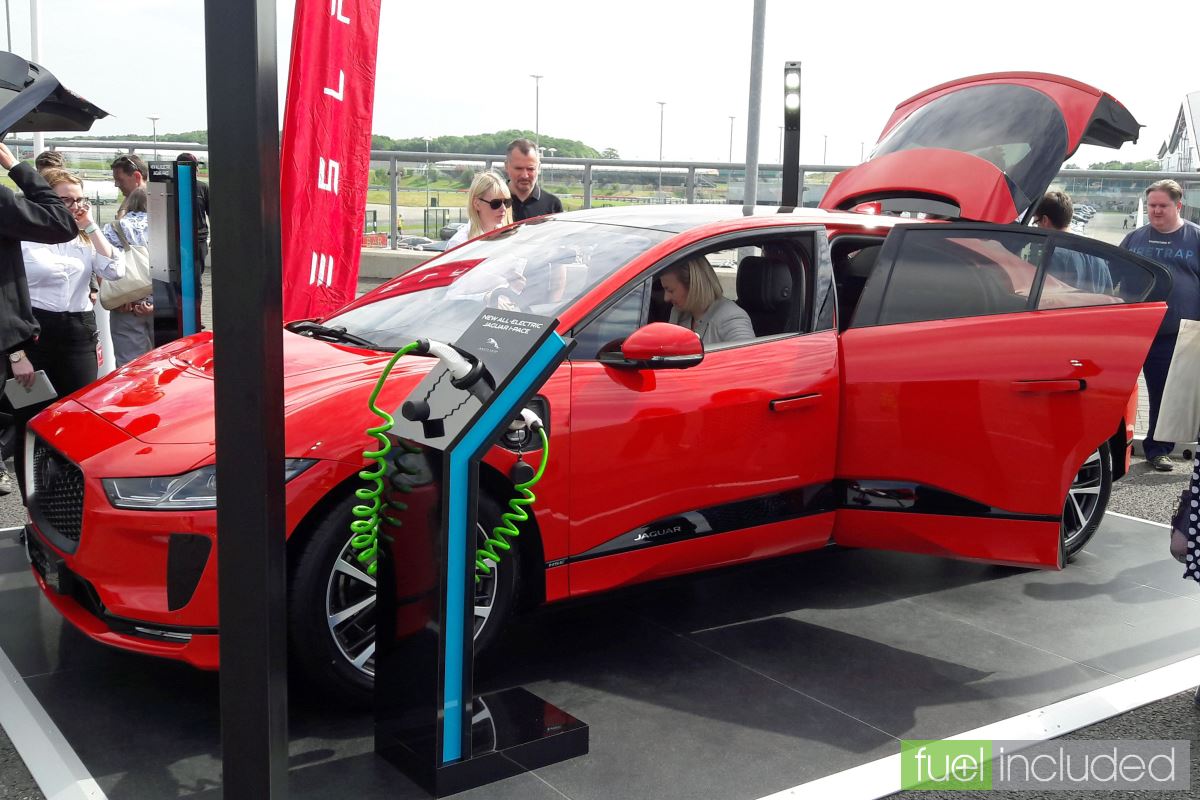
Truth about electric cars running out – how often it happens, and how it’s fixed

Helen Skelton reignited fears of electric car blackouts this week with an Instagram post

TV presenter and Strictly star Helen Skelton this week reignited questions over electric cars when she posted a video to her Instagram account showing she had broken down after running out of charge. Some people are put off switching from petrol and diesel to electric because of fears over how, where and how often they will have to stop to ‘top up’.

Those fears were also realised before Christmas when there were pictures of huge queues of electric cars waiting to charge at motorway service stations.


Posting to her social media on Monday, Helen Skelton revealed her car had run out of charge. She wrote: “I thought electric cars were the future,” followed by mind-blown and angry emojis. She said: “I had an electric car over a decade ago – a Nissan Leaf. It didn’t work out. I could never charge it and it was really impractical.”

She continued: “Over a decade later, an electric car – not working out. Can’t charge it and not for the first time…stranded.”

Read more: WalesOnline

It’s Time to Go Green!

If you would like to know more about Solar Panels and the PowerBanx range of home battery systems, and get a free instant quote, please complete our online form:
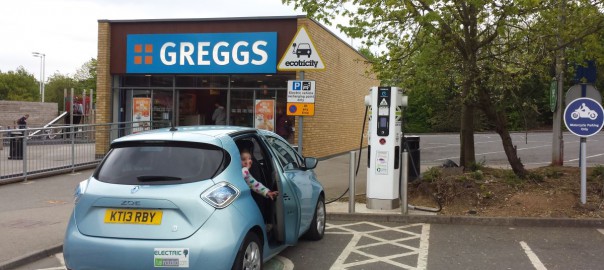
Charging a Nissan Leaf in the garage (Image: Chargemasterplc.com)

EV drivers could face £1,000 replacement fee by failing to use solar compatible charger

Electric vehicle (EV) drivers may be costing themselves £1,000 in the long run by failing to install solar-compatible chargepoints, home tech manufacturer myenergi has warned.

As domestic solar installation rates continue to rise – rates in 2022 tripled to those in 2021 – myenergi has called for UK households to seriously consider installing EV chargers that integrate with solar generation, to maximise future savings.


Untethered and Tethered Charge Points (Image: POD Point)

“While there are a number of excellent products available to specify, we believe that consumers should be thinking about the future. Charging your EV with mains electricity is typical today, but with decentralised domestic energy generation becoming ever-more commonplace across the UK, drivers should specify a device compatible with renewables to prevent buying twice,” said head of corporate communications at myenergi, Tom Callo.

“At myenergi, we believe that any EV driver who either has solar panels – or has the opportunity to install them in the future – should invest in a solar-compatible charger. With ongoing concerns around the rising cost of energy, taking advantage of solar power to keep costs down has become a hugely desirable option.

“Any EV driver installing a non-compatible device may come to regret their choice, as they will need to replace it if they choose to invest in renewables. Car manufacturers and leasing companies that are recommending non-solar chargers should therefore be making it clear that these chargers will not necessarily be future-proof for many.”

Read more: Current+

It’s Time to Go Green!

If you would like to know more about Solar Panels and the PowerBanx range of home battery systems, and get a free instant quote, please complete our online form: