Category Archives: Charging

Electric car owners celebrate 1 August as it’s when ‘average petrol bills surpass EV charging costs for the calendar year’

  • It’s been estimated that today is when EVs are ‘free to drive’ compared to petrols
  • Calculation is based on the cost to cover average annual mileage of 7,400 miles 

That’s because 1 August marks the date when the cost of filling up a petrol car surpasses the electricity bills to charge an EV for the calendar year, according to one business operating in the EV sector.

It estimates that the average EV owner pays £740 in charging costs per year – and drivers of petrol engine cars will have racked up the same amount in fuel receipts today.

Today is said to be the crossover point when EV owners are ‘driving for free’ compared to those who own petrol cars, says The Electric Car Scheme – a company that helps motorists access government tax incentives for EV salary sacrifice.


Mazda MX-30 EV (Image: Mazda)

It has dubbed 1 August ‘Electric Car Day’ as it ‘underlines just how much more affordable electric cars are, with average EV drivers essentially getting five months of free driving’.

The bold claim comes after it crunched the numbers on annual fuel costs for the average UK driver to travel 7,400 miles a year (the national average in 2019).

The calculation is based on the average price of petrol so far this year (146.26p a litre) and a vehicle returning 38.8mpg, bringing its total annual fuel bill to £1,268.

Read more: ThisMoney

It’s Time to Go Green!

If you would like to know more about Solar Panels and the PowerBanx range of home battery systems, and get a free instant quote, please complete our online form:

InstaVolt submits plan for ‘largest’ ultra-rapid charging hub in Brentford, London

UK public charging network InstaVolt has announced plans for London’s largest ultra rapid charging hub in Brentford.

The site, at Syon Park, is close to the A4 and M4, will provide rapid charging for people travelling into and out of the West of London.

InstaVolt is aiming to install 10,000 rapid chargers by 2030. InstaVolt operates an open charge model allowing any EV driver to use their charging points.

The company says their new hub will be the largest ultra-rapid charging hub within the M25. The site will feature 14 160kW BYD chargers, according to the planning application on the London Borough of Hounslow website.


Ecotricity rapid charger with LCD display (Image: T. Larkum)

Adrian Keen, chief executive of InstaVolt says: “The location of Syon Park is pivotal to engaging those who live on the commuter belt and providing them with an option to charge at a site where they themselves can switch off and recharge.”

“Being able to launch a large hub with reliable charging and access to amenities Syon Park offers, is key to encouraging a change of sentiment when it comes to charging in the UK. We want EV drivers to see charging as an opportunity to rest, take in nature, or stop for a bite to eat,” Keen said.

Earlier in July, InstaVolt announced plans to build what it says will be the UK’s largest electric vehicle (EV) charging ‘Super Hub’ near Winchester.

Read more: Current+

It’s Time to Go Green!

If you would like to know more about Solar Panels and the PowerBanx range of home battery systems, and get a free instant quote, please complete our online form:

Zapmap statistics show EV charge point installation up more than 80%

Electric Vehicle (EV) chargepoint mapping service Zapmap has published mid-year statistics showing that the rate of chargepoint installations has increased 82% since the first half of 2022.

Cornwall Insight recently published a report suggesting that the rate of increase in chargepoints had reached 70% over the past year, but now Zapmap says deployment of chargers is taking place even faster.

In the first half of 2022, an average of 891 charge points were installed each month, a figure which has increased to 1,622 in the first half of 2023, an increase of 82%.

Zapmap calculates that there will be more than 50,000 chargepoints across the UK by the end of 2023. At the moment there are around 44,000 public charging devices across the UK, an overall growth of 36% year on year.

Almost 20% of chargepoints are rapid or ultra rapid chargers, with 8,680 of these at the end of June. Ultra rapid chargers showed the biggest year on year growth. There were 1,803 ultra rapid chargers across the UK at the end of June 2022, which has grown to 3,493 at the end of June 2023, a 94% increase.

The statistics show that charging hubs, with six or more rapid/ultra rapid chargers in one location, are also opening at a significant rate. There were 79 hubs in June 2022, which has increased to 170, with another 77 Tesla Supercharger hubs.

Ultra rapid chargers are also well distributed across the UK, with 9/12 geographical regions in the UK seeing more than 100 new ultra rapid chargers installed, with the most in the South East with 269.

Read more: Current+

It’s Time to Go Green!

If you would like to know more about Solar Panels and the PowerBanx range of home battery systems, and get a free instant quote, please complete our online form:
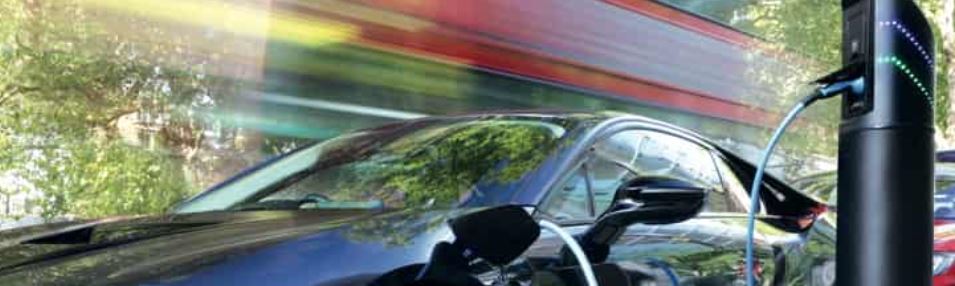
New rules to make it easier to use public electric car chargers

Motorists are currently forced to use multiple smartphone apps or membership cards to access different charging networks.

Electric car drivers will only need one app to pay for public chargepoints operated by different companies, under legislation laid in Parliament.

Motorists are currently forced to use multiple smartphone apps or membership cards to access different charging networks.

BP Chargemaster Rapid Charger at Milton Keynes Charging Hub (Image: T. Larkum)

Mandating so-called payment roaming is among new Department for Transport (DfT) regulations aimed at encouraging the uptake of electric vehicles by making it easier, cheaper and more convenient to charge them across the UK.

Operators will be required to accept contactless payments at newly installed chargepoints at eight kilowatts and above, and at existing rapid chargepoints.

A standardised pence per kilowatt hour price will be mandated to enable drivers to compare the cost of using different networks.

Rapid chargepoint networks will be required to function for 99% of the time during a calendar year, and a new helpline will be launched to support motorists when something goes wrong with electric vehicle charging.

Chargepoint data will also be opened up to make it easier for drivers to check their availability.

Transport minister Jesse Norman said: “As demand for electric vehicles continues to grow, the Government wants to make sure that drivers continue to have confidence in the UK’s charging network.

Read more: Independent

It’s Time to Go Green!

If you would like to know more about Solar Panels and the PowerBanx range of home battery systems, and get a free instant quote, please complete our online form:

Connected Kerb on-street charging (Image: Connected Kerb)

Off-peak kerbside EV charging costs drop by 10% in one month, says AA

The AA has revealed that off-peak slow kerbside electric vehicle (EV) charging in residential streets has dropped more than 10% in the past month to 33p/kWh.

According to the May 2023 AA EV Recharge Report, peak slow charging has also dropped by more than a quarter from 72p to 53p.

A reduction in the cost of kerbside EV charging is a positive for many within the industry. Previously, many had highlighted that with the introduction of the Energy Price Guarantee, home charging became significantly cheaper than public charging.

This caused issues when considering a “just transition” with this causing further EV charging disparity in the UK with those that are able to afford a driveway able to benefit from cheaper charging rates.

But with AA declaring that slow kerbside charging rates are now beginning to drop, this is a major boost for the industry and could well support the greater adoption of EVs on UK roads.

“Drivers without a driveway looking to switch to an EV will be happy to see off-peak kerbside charging now cheaper than the Energy Price Guarantee. This means they will feel some of the benefit EV owners with dedicated off-street parking have,” said Jack Cousens, head of roads policy for the AA.

Read more: Current+

It’s Time to Go Green!

If you would like to know more about Solar Panels and the PowerBanx range of home battery systems, and get a free instant quote, please complete our online form:

A standards war? A win for consumers? What the Ford and GM Tesla deals mean

And imagine if EV charging eventually follows the gas station model.

The news that rocked the electric transportation world earlier this month — General Motors’ deal to give its drivers access to the Tesla Supercharger network — is no doubt a big turning point for EVs in the U.S. It followed an identical deal in May between Ford and Tesla. Earlier this week, Rivian said its customers could access Tesla’s charging network starting in 2024. Together, these pacts could have serious ripple effects for the development of the charging network across the country.


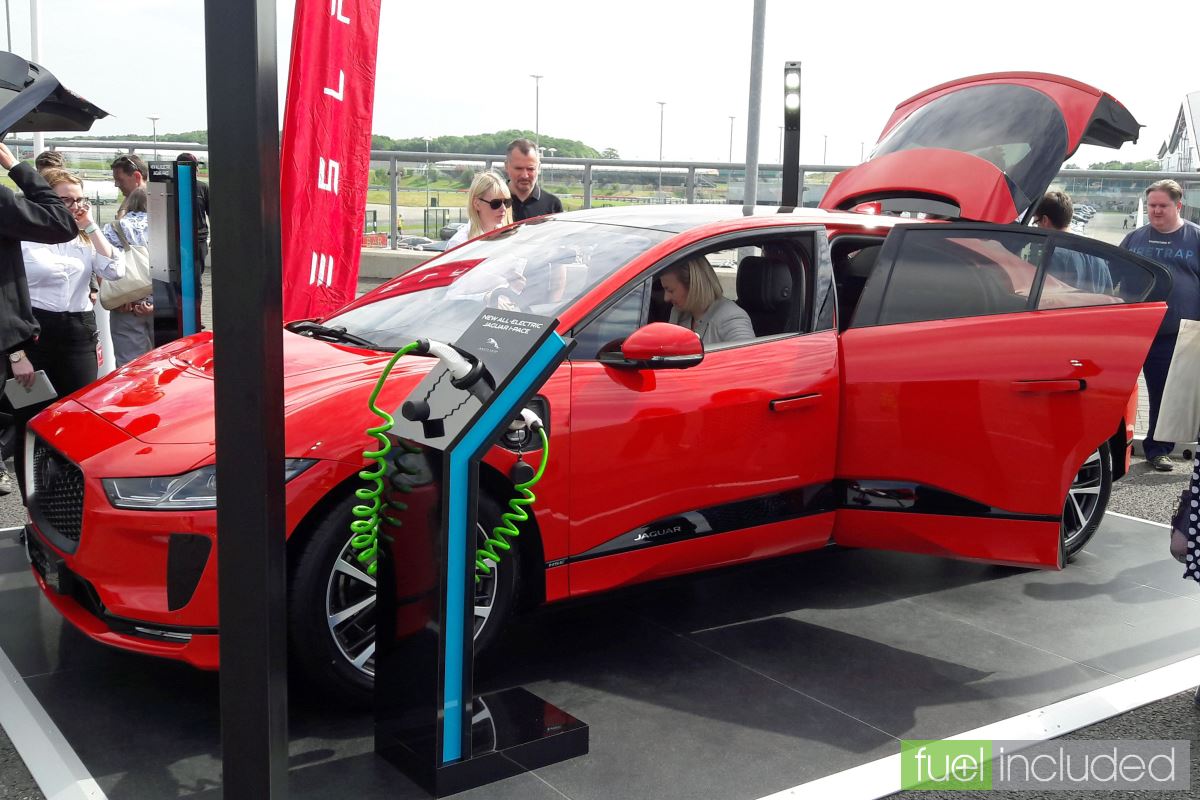
Jaguar I-PACE at Fully Charged Live show (Image: T. Larkum)

But they also generate a lot more questions than answers. Will these partnerships create a standards war between types of EV chargers? And will that hurt or help consumers? Experts don’t agree on that point, and they make varying predictions for what this news portends. It could usher in a new model for charging akin to gas stations, or it could be little more than a blip for drivers who will simply end up with a lot more charging options.

“I think it’s great news for the industry, and more generally for EV drivers, and for accelerating the electrification of the transportation fleet,” said Jeff Allen, executive director of Forth Mobility, an electric transportation advocacy group. “It’s creating more options for folks to charge, for one thing. And it is also going to push everybody to up their game in terms of reliability and customer experience.”

Read more: GreenBiz

It’s Time to Go Green!

If you would like to know more about Solar Panels and the PowerBanx range of home battery systems, and get a free instant quote, please complete our online form:

Debunking the Top 10 electric vehicle myths

Are you unsure about switching to an electric vehicle? Go Zero Charge debunks the Top 10 electric vehicle myths to help you transition to electrification.

As the UK heads toward the looming ban on the production of diesel and petrol cars in 2030, there’s still a significant gap in electric vehicle (EV) awareness and education in the motoring space, causing unfair prejudice against EVs due to myths that have grown in popularity.

In response, the team of EV experts behind the Optimus, www.GoZeroCharge.com‘s top-of-the-line smart EV charger, have exposed a handful of the most common electric vehicle myths in a bid to encourage more motorists to make the transition.

There’s no financial upside

One of the most common electric vehicle myths is that there are no financial upsides. In fact, owning an EV can lead to significant cost savings, particularly with the current measures in place to provide financial advantages to EV owners.

For instance, EVs are currently exempt from vehicle tax, although this exemption is scheduled to change from April 2025, when standard road tax rates (currently £165 per year) will be applicable.

In addition to the current vehicle tax exemption, some energy suppliers offer cheaper tariffs specifically for EV charging, and certain car parks provide free parking spaces for electric vehicles.

Read more: InnovationNewsNetwork

It’s Time to Go Green!

If you would like to know more about Solar Panels and the PowerBanx range of home battery systems, and get a free instant quote, please complete our online form:

Electric Vehicles and Electric Vehicle Charging: Risk and Opportunity

UK data shows that by September 2022, there were 1 million licensed plug-in vehicles (EV) in the UK. This equated to 2.5% of all licensed road using vehicles, up from 1.6% at the end of September 2021[1]. Additionally, the UK government currently plans to prohibit the sale of new internal combustion engine (ICE) vehicles in 2030[2].


Opel Corsa-e Electric Car (Image: Opel.com)

What’s the issue?

  • EVs provide significant advantages, with benefits including:
  • Quieter engines reducing urban noise pollution.
  • Emit less emissions, though debates rage if they are truly ‘green’ bearing in mind the associated costs of mineral extraction and battery recycling.
  • Cheaper maintenance costs as simpler drive trains reduce opportunities for components to fail.
  • Cheaper running costs as electricity rates allow a cheaper cost per mile in comparison to diesel and petrol vehicles. EVs becomes even more economical where homeowners have access to solar charging for their vehicle[3].

What are the risks?

Electric vehicles commonly rely on lithium ion batteries to generate electrical power. However, when damaged or improperly manufactured these batteries can fail. Failure can raise the surrounding temperature and subsequently become the source of thermal runaway resulting in catastrophic fire damage to the vehicle – potentially also spreading to surrounding infrastructure and buildings[4]. As a result, damaged battery packs may lead insurers to write off otherwise perfectly suitable vehicles.

Read more: Marsh

It’s Time to Go Green!

If you would like to know more about Solar Panels and the PowerBanx range of home battery systems, and get a free instant quote, please complete our online form:

Electric Car Line-up (Image: Go Ultra Low)

Osprey Charging opens ‘South West’s largest EV charging hub’

Osprey Charging has opened the “South West’s largest [electric vehicle] EV charging hub” consisting of 16 ultra-rapid chargepoints.

The EV charging hub is located on the A38 Devon Expressway at Salmon’s Leap in Buckfastleigh and designed to support EVs of all types.

Each charger is capable of providing 300kW charging for vehicles able to accept this high power without wasting power on lower-capability cars, Osprey said. This allows customers of the hub to add 100 miles of range in 15 to 25 minutes.

Osprey also stated that it will provide local residents, businesses and visitors with reliable EV infrastructure, help improve air quality, reduce noise pollution and support local decarbonisation efforts.


An extra stop at Sedgemoor (Image: T. Larkum)

“I’m incredibly proud of what we’ve created at Salmon’s Leap. We purchased the land so have been able to precisely design the space and install hardware that maximises availability and ease of use of chargers for all types of vehicles and drivers,” said Ian Johnston, CEO of Osprey Charging.

“Our largest site yet, it is a significant milestone for the Osprey team as we work tirelessly to ensure that our nationwide infrastructure deployment of rapid EV charging stations continues at an unprecedented pace.”

Osprey was amongst a number of founding members of the new trade association ChargeUK. Revealed in April 2023, the association is aiming to invest £6 billion by 2030 in EV charging and double the size of the UK EV charging network in 2023.

Read more: Current+

It’s Time to Go Green!

If you would like to know more about Solar Panels and the PowerBanx range of home battery systems, and get a free instant quote, please complete our online form:
‘We tried out driving from Yorkshire to Dordogne in an electric car’

Journalist Nick Jenkins reports on how charging stops worked out travelling to his second home in France

The screen told us we had 0% left in our battery as our electric car crawled up to the charger. We had been holding our breath but could finally let out a sigh of relief. We plugged the car in – and disaster… the charger was out of order.

Only kidding.

Nothing at all like that happened on our recent drive to Dordogne, though it might surprise those who believe everything they read on some Brits-in-France Facebook pages.

Electric cars are no longer a novelty, of course.

The Renault Zoe has been around since 2012. All the major manufacturers are now producing electric vehicles (EVs) and plug-in cars accounted for a quarter of new sales in France last December – and a third in the UK.


PARIS (Nov. 30, 2015) Ð As the official passenger-car provider for the United NationÕs COP21 climate conference in Paris, the Alliance will provide 200 pure electric vehicles to the annual summit which runs from Nov. 30 to Dec. 11. A network of 90 charge spots has been set up to charge the vehicles using low-carbon electricity provided by French energy supplier EDF.

No doubt many readers already drive one. They are clearly the future, but there is still resistance.

Some people are so attached to the quaint mid-Victorian technology of the internal combustion engine that they cannot accept change is coming.

“I’m not buying a Noddy car that only goes 50 miles,” one Luddite told me.

Read more: TheConnexion

It’s Time to Go Green!

If you would like to know more about Solar Panels and the PowerBanx range of home battery systems, and get a free instant quote, please complete our online form: