Category Archives: Electric Vans

News and reviews of electric vans (including plug-in hybrids).

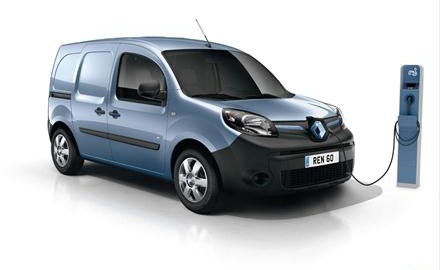
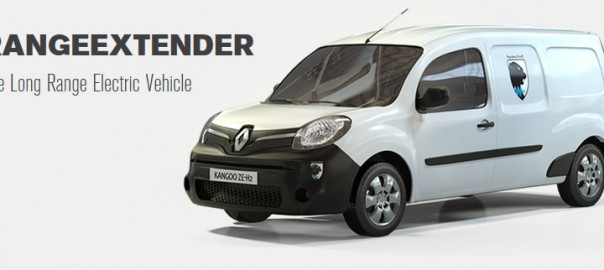
Renault Kangoo Z.E. with Symbio FCell’s hydrogen fuel cell range-extender

Symbio FCell Delivers First 5 Hydrogen Renault Kangoo Z.E.s

French company Symbio FCell delivered the first 5 out of 40 Renault Kangoo Z.E.s with hydrogen fuel cell range-extenders.

The electric vans are equipped with an ALP10 5 kW FC stack, which support batteries (at a certain level of discharge) to double the range.

Renault Kangoo Z.E. with Symbio FCell’s hydrogen fuel cell range-extender

The 1.8 kg hydrogen tank is good for up to 100 miles according to the press release, although we don’t know how much these modifications cost.

“In a major step towards the commercial deployment of zero-emission hydrogen-powered electric vehicles, Symbio FCell has put on the road the first five Renault Kangoo ZE Light commercial vehicles (LCVs) powered by its hydrogen Fuel Cell Range-Extender, as part of a full fleet project led by the Conseil Général de la Manche which will rapidly deploy 40 vehicles. This project demonstrates the effectiveness of hydrogen power but also the reliability of Symbio FCell’s as the world-leading provider hydrogen fuel cell Range-Extender.

“La Manche indeed counts amongst the first departments in France to own a hydrogen filling station (active in Saint Lo) and five plug-in hybrid battery fuel cell light vehicles. Furthermore, it has an important potential for low-carbon electricity production, based on marine renewable energies (hydrokinetic and offshore wind) and nuclear.

“The Conseil Général de la Manche aims to put on the road a total of forty hydrogen-powered Renault Kangoo ZE utility vehicles equiped with the Symbio FCell Range-Extender. This technology recharges the battery when it drops below a certain level and permits the vehicle to be refueled with 1.8kg of hydrogen, 1kg of which powers a distance of over 100km; the range-extender therefore almost doubles the daily range of battery powered vehicles, a significant improvement that makes hydrogen-powered electric vehicles more competitive in the automotive markets.”

Symbio FCell offers hydrogen fuel cell stacks from 5 kW to 300 kW.

Fabio Ferrari, CEO of Symbio FCell stated:

“The ‘Range-Extender’ increases both driving range and availability of Electric vehicles for commercial usage, while reducing the investment in battery recharging infrastructure for large fleet. Closer to a traditional ICE vehicle, this ensures seamless operations for professional intensive urban usages as demonstrated in previous experimentations such as La Poste.”

Source: Inside EVs
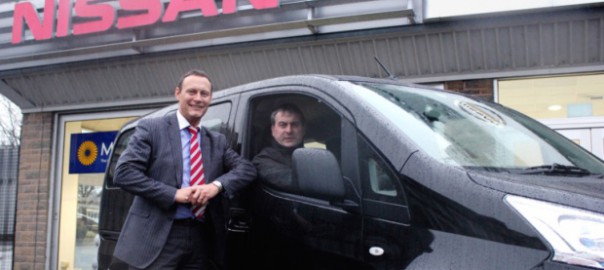
Mark Richards and Andy Lloyd (Image: Burnley Express)

Taxi boss in 700-mile round trip to pick up electric car

A Cornish cab driver has hailed a Burnley firm – after becoming one of the first people in the UK to take delivery of a new Nissan electric taxi.

Mark Richards clocked up more than 700 miles when he made the round trip from St Austell in Cornwall to the Chorley Group’s Nissan dealership in Westgate, Burnley.

But the taxi boss didn’t need to worry about his meter racking up a bill on the return journey because his all-electric new motor costs just 2p a mile to run.

The Chorley Group are one of the first Nissan dealers in the country to sell the new e-NV200 taxi.

Mark Richards and Andy Lloyd (Image: Burnley Express)

Mark, who works for C&C Taxis in St Austell, said:

“We’ve been using Nissan Leafs for a while now.

“The e-NV200 will have paid for itself in savings within a few years and it is much better for the environment than the big carriers we use at the minute.”

Andy Lloyd, general manager of the Chorley Group’s Burnley dealership, said the company had invested a lot of money in electric vehicle technology over the last 18 months and that demand was constantly growing.

Source: Burnley Express

Environment officers show off new electric van

A new electric van has been bought for use by Environmental Health Officers at Daventry District Council as part of the authority’s drive to reduce carbon emissions.

The Renault Kangoo Maxi ZE will be used for pest control, environmental crime and dog warden services, replacing a petrol-driven van.

The new vehicle has a range of about 100 miles, making it ideal for the trips around the district that it will be making. It has been bought following a successful trial held in February last year.

The petrol van was driven about 10,000 miles per year and based on that figure it is estimated that the new electric vehicle will allow the Council make a carbon saving of about 1.8 tonnes a year, as well as improving local air quality.

The Council benefited from a £5,000 Government Plug-In Grant, bringing the cost of the new vehicle down to £13,588 and, over four years, it is estimated it will be more than £2,500 cheaper to run than a diesel-powered equivalent.

Councillor Daniel Cribbin, Environment Portfolio Holder at Daventry District Council, said:

“This Council is always looking for ways to further reduce our carbon footprint so we saw this as a great opportunity. We also hope it inspires others, particularly local businesses, to look into the possibility of using electric vehicles.

“If it proves a success we will look to replace more of the Council’s vehicles with electric models. We’re also exploring the possibility of having an electric pool car for staff and increasing the number of electric vehicle charge points in the district.”

The move follows the installation of Daventry District’s first free public charging point for electric vehicles in the Lodge Road car park at the council offices in May 2013.

Sponsored by Woodford Halse firm Great Central Plastics, it allows owners of electric cars to recharge their vehicle for free for up to four hours in a designated parking bay.

Source: Northampton Herald and Post

The Electric Vehicle: Celebrating Five Years of Progress

Towards the end of 2009, zero-emission electric cars were little more than concept cars. At that year’s Frankfurt motor show Renault displayed four electric prototypes – the Fluence, Z.E sedan, the Kangoo Z.E van, the Twizy tandem two-seater and the ZOE subcompact… but that’s all they were: ideas. Electric cars were an utopian dream, something for the sci-fi magazines.

What a difference five years makes. Today electric cars are a reality. Manufacturers, led by Alliance partners Renault and Nissan, have a growing number of pure electric vehicles on sale – indeed, the trail-blazing Nissan LEAF is the world’s bestselling EV.

Major cities across the globe all have extensive recharging posts in place, and extended fast charging networks now link countries. Electric bikes and scooters are readily available and Renault is behind a global single-seat motor racing championship purely for electric vehicles – Formula E.

Cities and towns in France – 18 in all, including Paris, Lyon and Bordeaux – have car-sharing programmes, called Autolib, based around electric vehicles. EVs have caught on in London, too, where the electric Nissan e-NV200 has been developed into an iconic black cab and is due to start taking fares next year.

So what’s going to happen between now and 2020? There can be no doubt that charging networks will continue to expand and sales of EVs will rise and rise. And, who knows, electric vehicles might no longer need humans behind the wheels. Autonomous cars might be at the concept stage at the moment… but as we have seen, a great deal can happen in five years.

Source: Renault-Nissan Blog

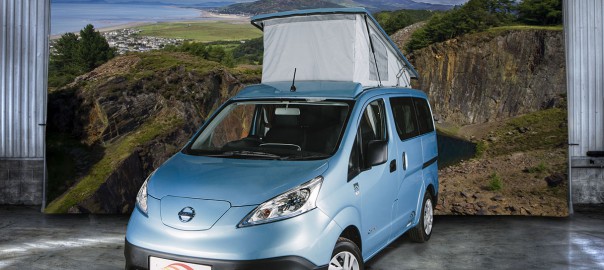
Dalbury E Electric campervan (Image: Hillside)

The Dalbury E – Electric Campervan Review

Introduction

I own a T5 campervan and use it as my daily driver for getting to work and back, but the main reason for owning a campervan is for family holidays and short breaks. I have two children under 10 and my family have enjoyed touring the South of France as well as many spontaneous long weekends away in the UK. When Hillside Leisure first told me they were launching The World’s First Electric Campervan at the Motorhome and Caravan show in Birmingham I was excited. Not only do I love everything campervan and camping but I also have a great interest in all things gadget and electric – especially when they can transport you from A to B with zero emissions! Hillside Leisure invited me to the launch to take a few photos but when they asked if I would like to take it out, I jumped at the chance!

First Impressions

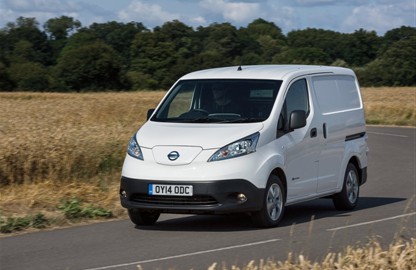
Coming from a background of owning a Volkswagen Transporter, my first thoughts turned to the base vehicle – a Nissan e-NV200. It doesn’t have as much history as the VW, but if anyone was going to take a campervan into the all electric age it would have to be a high tech Japanese manufacturer and I think it’s apt that Nissan brought out an electric base van. Nissan already manufacture the popular Nissan Leaf which has gained a huge EV following and this means they already know a thing or two about designing efficient electric vehicles.

Dalbury E Electric campervan (Image: Hillside)

On first inspection of the outside I thought the Nissan had a futuristic face with the nose showing an indication of a secret compartment and the colour choice of ‘electric’ blue was spot on. Although this was a base specification, the vehicle will benefit further from colour coded bumpers and alloy wheels as options available from Hillside Leisure. There’s not much on the outside to give the “all electric” game away apart from a few chrome badges showing “Zero Emission” and part of me felt it should have a few snazzy graphics hinting at electricity to stand out and be noticed as a pioneer and trend setter – another part of me realised that most owners would probably prefer a low profile.

Read more: Hillside Leisure Blog

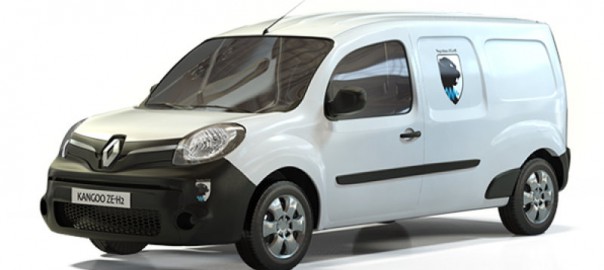
Symbio FCell fuel cell Kangoo ZE (Image: Symbio)

Symbio delivers first hydrogen range-extender Kangoo EVs

French company Symbio FCell thinks that electric vehicle technology and hydrogen fuel cells should get along. In the same delivery vehicle, in fact.

Last year, Symbio started testing a hydrogen fuel-cell range extender that was built into a Renault Kangoo electric vehicle. Today, Symbio announced it has delivered the first five of a planned 40-vehicle fleet of Renault Kangoo ZE Light commercial vehicles (LCVs) with a bespoke hydrogen fuel cell range extender. This system carries 1.8 kilograms (almost four pounds) of H2 on board and each kilogram extends the range by about 100 kilometers (62 miles). So, the Symbio system doubles the range of the Kangoo ZE, which “makes hydrogen-powered electric vehicles more competitive in the automotive markets,” Symbio says.

The vehicles were ordered as part of a project led by the Conseil Général de la Manche, which already has a hydrogen refueling station available and has what Symbio says is an “important potential” for making low-carbon electricity, like hydrokinetic, offshore wind and nuclear.

Read more: AutoBlog

UK electric fleet passes 24,500 mark

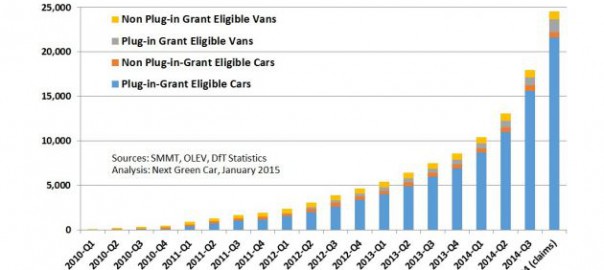
With the recent announcement from Office for Low Emission Vehicles (OLEV) that 23,083 claims have been made through the Plug-in Car Grant scheme, the total number of electric cars and vans in the UK is about to exceed 24,500 vehicles for the first time.

uk-registered_ulevs_2010-2014-3_NGC

These figures are supported by the Society of Motor Manufacturers and Traders (SMMT) which reports that 19,972 plug-in cars were registered in the UK by the end of 2014.

Taken together with the fact that at least 1,467 electric cars and vans which are not eligible for the Plug-in Grant scheme have also been registered, the total UK light-duty electric fleet will number at least 24,550 in the coming weeks as vehicles are delivered and formally registered for use on UK roads.

Given that the figure for the number of non-OLEV eligible registered EVs takes longer to become publicly known, it is highly likely that the total number of registered ULEVs in the UK now surpasses 25,000 vehicles in total (cars and vans).

Another indicator that the electric market is growing in strength is the number of fully electric and plug-in hybrid models available in the UK. While only 9 EVs were available for the major manufacturers in 2011, this increased to 18 models in 2013, and now stands at 29 high-quality, fully crash tested cars and vans with more models due for launch in 2015.

Dr Ben Lane, Director of Next Green Car said:

“The number of EVs registered in the UK continues to grow exponentially demonstrating that UK car buyers are continuing to embrace the EV revolution.

“Reports from new EV owners suggest that, rather than economic or environmental arguments, it is the dramatic improvement in driving experience that it really starting to change perceptions about electric power-trains.

“Recent research from Nissan also shows that driving range is much less of an issue than previously thought with European owners of Nissan LEAFs travelling more than 50% further per year (10,307 miles) than the European average for a petrol/diesel vehicle (6,721 miles).”

The latest EV model entrants include the Tesla Model S and Mitsubishi Outlander PHEV which have already made their mark in the UK market. Other high-quality models now available include the Kia Soul EV (which NGC range-tested in December 2014) and the Nissan e-NV200, the latter bringing all the benefits of electric to the small van market.

Source: Next Green Car

Nissan e-NV200 electric van (Image: Nissan)

Six of the Best for Pioneering Nissan e-NV200

The all-electric Nissan e-NV200 today scooped its sixth prestigious industry award in as many months, winning the Best Green Van honour at the Business Van of the Year awards in London.

The pioneering model triumphed at the independent awards after being put through its paces by an outside panel of expert judges, specialising in their own field and in the SME sector.

Their verdict supports that of the wider motoring media, which has bestowed a string of highly regarded awards on the van since its launch in the summer.

In December, the e-NV200 won What Van? magazine’s Green Award. It has also been named Industry Innovation of the Year by GreenFleet, LCV of the Year by Next Green Car and has helped Nissan to the ULEV Manufacturer of the Year title at the Energy Saving Trust’s Fleet Hero awards and the Green Van Manufacturer of the Year title at the Fleet Van Awards.

Congratulating Nissan, Ralph Morton, Editorial Director at Business Van, said: “Going green has never been so easy. The electric e-NV200 is just like the standard NV200 except it costs just two pence per mile to run, has a range in excess of 100 miles, is emission free, and still manages to provide an uncompromising flat load-space floor that takes two Europallets and a 703kg payload.

“It’s a brilliant achievement and the van to change the perception of the electric van – it’s practical, green, cost effective all in one.”

Barry Beeston, Corporate Sales Director at Nissan Motor (GB), said:

“The fleet and LCV media has been unanimous in its praise for the e-NV200 and the potential this incredible van has to help fleets simultaneously bring down costs and emissions.

“I would encourage fleet operators to try the vehicle for themselves to see just how easily and it could help them make a real impact on both their carbon footprint and their bottom line.”

Source: Nissan Newsroom

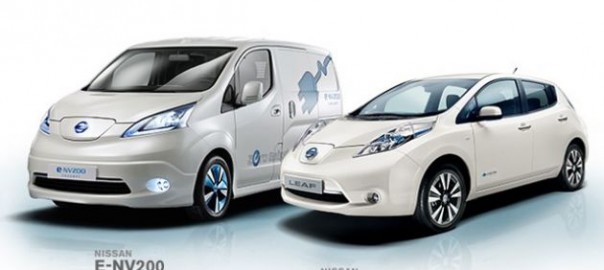
Nissan e-NV200 electric van and Leaf electric car (Image: Nissan)

2014: A bumper year for Nissan in the UK

NISSAN Motor GB Limited recorded its best ever sales year in 2014 with 138,338 cars sold in the last 12 months. This represents a 17% increase over 2013’s figure of 117,967.

Nissan also bolstered its position as the fastest growing top 10 brand in the UK, commanding a market share of 5.6% in 2014 – smashing yet another record. This increased share in the car market puts Nissan in sixth position in the UK.

Boosting this sales success was Nissan’s UK-built stars – the new Juke and the 100% electric LEAF and the Note – all of which broke sales records for another year.

The all-electric LEAF clocked up 4,051 sales in the UK, more than doubling the volume sold in 2013 (1,812), confirming that the British-built Nissan LEAF remains the nation’s electric model of choice. The Nissan LEAF boasts 55% of the pure EV market and outsold its nearest competitor by more than 2:1.

Nissan’s extraordinary sales success comes as Nissan’s Sunderland Plant broke the half a million production barrier again for the third year running, building a staggering 500,237 vehicles.

James Wright, Managing Director, Nissan Motor GB, said:

“Key to Nissan’s success in 2014 is the onslaught of new and updated products launched in the last year and I am immensely proud of the hard work and dedication displayed by the Nissan team in the UK.

“Our British-built offering continues to capture the attention of UK motorists and I am particularly delighted to see that the all-electric LEAF is still dominating the pure EV market, doubling its sales volume last year.”

Nissan has launched no-less than nine new and updated products, starting with the multi-award winning British-built Qashqai in January. This was then followed by the MY14 GT-R, new Juke, all-new X-Trail, GT-R NISMO and the all-electric e-NV200.

Including Light Commercial Vehicles (LCVs), Nissan sold 148,607 vehicles in the UK, up 16% from 128,586 in 2013.

Source: Nissan Insider

Leasing industry welcomes Renault battery U-turn

A new ownership package for two of Renault’s most popular electric vehicles has been welcomed by the leasing industry.

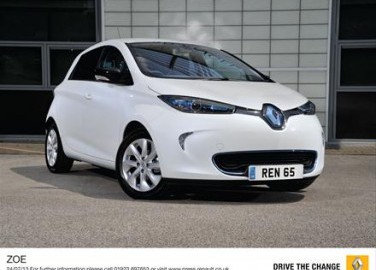
It will now offer customers in the UK the chance to buy the Kangoo ZE and Zoe with a battery; previously the only option was to lease the power source separately.

It’s a shift in policy that has won the support of some of the country’s biggest leasing companies, which struggled to forecast accurate residual values for the vehicles.

In fact, Zenith Leasedrive simply chose not to include the Kangoo ZE and Zoe in its EV line-up at all, but told Fleet News that both vehicles will now be offered to customers.

Ian Hughes, commercial director at Zenith Leasedrive, said:

“We are delighted with the change of direction by Renault in its electric vehicle strategy.

“It was particularly difficult to forecast an accurate residual value in circumstances when a vehicle is bought but the battery hired – a bit like trying to sell a car without an engine.”

The policy required Alphabet to create a complicated “workaround”, according to its head of consultancy services, Jon Burdekin. He said:

“This move from Renault removes the complication. It will also remove any potential confusion in the market as to whether the battery is included in the quote or not. By making things easier to understand, Renault brings itself in line with other manufacturers in an area which it was previously behind on.”

Lex Autolease, like Alphabet, was already offering Renault EVs, with Kangoo ZE and Zoe amongst a fleet of some 700-plus plug-in vehicles leased by the company.

But Chris Chandler, Lex Autolease’s principal consultant, also recognised the difficulties that came with the leased battery option. He said:

“The introduction of a battery purchase option will make contract hire simpler for Lex Autolease. It is much simpler for us as a business to own both the battery and the vehicle.”

The French manufacturer had insisted that its battery leasing model offered the best deal for drivers contemplating a plug-in car. It argued that it reduced the transaction price of its plug-in vehicles and made them more competitive (fleetnews.co.uk, March 11, 2014).

However, pricing expert CAP refused to forecast used values for Renault’s EVs until the battery was included, and new tax rules meant the cost of replacing the battery would have to be added to the car’s list price for P11D purposes from 2015/16 (fleetnews.co.uk, April 5, 2013).

Renault hopes that by simplifying its offer to the leasing industry it could create greater traction in the fleet market.

“This will open the door to fleet [customers],”

said Ken Ramirez, managing director of Renault UK.

“The addition of full purchase versions on our core EV models will offer business customers a greater choice and further strengthen our position in the EV market.”

The Zoe i – the ‘i’ stands for battery included – is available from £18,443 on-the-road, after the Government’s plug-in car grant, compared to £13,995 on battery lease. The Kangoo Van i range starts at £16,161 (+VAT) after the grant, compared to £12,995 (+VAT) if the battery is leased.

Steve Jones, general manager of asset risk at Leaseplan, agrees that the change could generate more interest from corporate customers. He said:

“Both Zoe and Kangoo are strong propositions in the electric vehicle market, but the leased battery added a level of uncertainty for fleets and contract hire companies alike.

“The process came across as complicated and some companies may not have considered Zoe and Kangoo ZE in their selection process as a result. Now this complexity has been removed, it’s much easier for customers to work with Renault so we should start to see an increase in adoption.”

This could also have a positive effect on RVs.

“The used car market doesn’t like uncertainty and the position on the battery lease has always been that,”

explained Nick Hardy, sales and marketing director at Ogilvie Fleet.

“The true test will be in how the used car market views these vehicles in three to four years’ time and what, if any, difference it makes with actual, real-world residual values.”

Source: Fleet News