Category Archives: Electric Taxis

The sun sets on drilling (Image: Pexels)

Blow for Putin and MBS as oil demand set to slow

Growth forecasts for global oil demand next year have been downgraded as the post-pandemic recovery stalls just as electric vehicle (EV) use surges.

The International Energy Agency (IEA) said on Friday that demand will rise by only one million barrels per day (bpd) in 2024, which is 150,000 bpd less than previously forecast.

This will be a blow to both Russian President Vladimir Putin, who is using oil and gas revenues to fund his war in Ukraine, and Saudi Arabia’s Crown Prince Mohammed bin Salman, whose oil profits are driving the country’s economic diversification.

The IEA said: “With the post-pandemic rebound running out of steam, and as lacklustre economic conditions, tighter efficiency standards, and new electric vehicles weigh on use, growth is forecast to slow to 1m bpd in 2024.”

The Paris-based energy watchdog has forecast that 14 million electric vehicles will be sold by the end of 2023, a 35pc surge compared to 2022.

By 2030, it expects EV use will be displacing five million barrels of oil per day.

But for now, world oil demand is still hitting record highs following China’s post-pandemic reopening and a rebound in global air travel.

In June, demand hit an all-time peak of 103m bpd. The IEA said August demand could surpass this level.

The IEA said global oil demand will jump by 2.2m bpd to hit 102.2m bpd in 2022, with China driving more than 70pc of this growth.

Read more: msn

It’s Time to Go Green!

If you would like to know more about Solar Panels and the PowerBanx range of home battery systems, and get a free instant quote, please complete our online form:

Electric Vehicles Are Better For People & The Planet

There’s quite a lot of misinformation and disinformation — deliberate misinformation — about electric vehicles online. One of the key bits of disinformation is the false notion that EVs aren’t that green because there are carbon emissions generated by mining for the materials in their batteries and manufacturing them. The false claim is that an EV owner would have to drive about 49,000 miles to offset the carbon emissions from manufacturing the battery and vehicle. The claim was based on a study that eventually was debunked.

The true figure was about 16,000 miles, after which an EV would be ‘greener’ than a gas- or diesel-powered vehicle. The word greener is in quotes because gas and diesel-powered vehicles are not at all green. They have been dirty ever since they were invented, and at no point could ever be considered green.

There’s also something disingenuous — read ‘fake’ — about the concern over an EV battery’s carbon emissions from materials mining and manufacturing, because the people who express it had no regard whatsoever for vehicle mining emissions before EVs came on the scene. That is, for decades before electric vehicles began to appear they never said a word about internal combustion engine or diesel-powered vehicle mining emissions, including their own. Additionally, fossil fuel mining is far worse.

“Every year, about 15 billion tons of fossil fuels are mined and extracted. That’s about 535 times more mining than a clean energy economy would require in 2040.

Read more: CleanTechnica

It’s Time to Go Green!

If you would like to know more about Solar Panels and the PowerBanx range of home battery systems, and get a free instant quote, please complete our online form:

Electric Vehicles and Electric Vehicle Charging: Risk and Opportunity

UK data shows that by September 2022, there were 1 million licensed plug-in vehicles (EV) in the UK. This equated to 2.5% of all licensed road using vehicles, up from 1.6% at the end of September 2021[1]. Additionally, the UK government currently plans to prohibit the sale of new internal combustion engine (ICE) vehicles in 2030[2].


Opel Corsa-e Electric Car (Image: Opel.com)

What’s the issue?

  • EVs provide significant advantages, with benefits including:
  • Quieter engines reducing urban noise pollution.
  • Emit less emissions, though debates rage if they are truly ‘green’ bearing in mind the associated costs of mineral extraction and battery recycling.
  • Cheaper maintenance costs as simpler drive trains reduce opportunities for components to fail.
  • Cheaper running costs as electricity rates allow a cheaper cost per mile in comparison to diesel and petrol vehicles. EVs becomes even more economical where homeowners have access to solar charging for their vehicle[3].

What are the risks?

Electric vehicles commonly rely on lithium ion batteries to generate electrical power. However, when damaged or improperly manufactured these batteries can fail. Failure can raise the surrounding temperature and subsequently become the source of thermal runaway resulting in catastrophic fire damage to the vehicle – potentially also spreading to surrounding infrastructure and buildings[4]. As a result, damaged battery packs may lead insurers to write off otherwise perfectly suitable vehicles.

Read more: Marsh

It’s Time to Go Green!

If you would like to know more about Solar Panels and the PowerBanx range of home battery systems, and get a free instant quote, please complete our online form:

Nissan Ariya EV SUV (Image: Nissan)

British drivers buying millions of EVs – second only to China in number of cars purchased

CAR BUYERS in the UK have purchased the second highest number of EVs in the world – second only to China.

The staggering rise in the number of electric vehicles (EVs) purchased by Britons was underlined by new figures showing the UK second only to China in the amount of battery-powered cars bought in the past ten years. The research by experts at PartCatalog showed there were more than 1.75million EVs sold in Britain since 2010.

It also showed that between 2015 and 2020, yearly sales of electric cars have increased a massive 444 percent globally, going from around 500,000 sales to just shy of three million per year over the five years.

Nissan Ariya EV SUV (Image: Nissan)

China leads the world in EV uptake with more than 4.5million cars sold over the past decade.

The country also manufactures more EVs than anyone else, with even US-based Tesla making more cars in Shanghai than they do in California.

But the UK is runner-up and way ahead of countries like Germany, the USA and France.

Even traditionally early technology adopters like Japan are way down the table.

Both China and the UK have seen their Governments hand large subsidies and grants to buyers to tempt them into buying electric vehicles, which is likely to be an influence on the amount sold.

However the Government here will shortly scrap the £350 grant for installing a home charger and last month lowered the grant for buying an EV from £2,500 to £1,500.

It was originally £5,000 when initially introduced but has been reduced every year since.

Read more: Express

It’s Time to Go Green!

If you would like to know more about Solar Panels and the PowerBanx range of home battery systems, and get a free instant quote, please complete our online form:

Ubitricity Electric Avenue project lamppost charging (Image: Siemens)

Wandsworth Council EV charger rollout progresses with Liberty Charge installs

On-street electric vehicle (EV) chargepoints are being rolled out across Wandsworth, with 35 sites set to see installations.

Wandsworth Council began the rollout of the infrastructure in 2021 across 26 sites, with 10 already live. The latest installations will take the total number of sites to 35, comprising 65 dual socket EV chargepoints able to charge 130 vehicles at any one time.

Liberty Charge is to own and operate the chargepoints, which are to be delivered by its sister company Virgin Media O2, with the council having chosen the company due to its ability to deliver fully-funded chargepoints for residents without the means to privately charge their EV.


Ubitricity Electric Avenue project lamppost charging (Image: Siemens)

Additionally, Liberty Charge’s chargepoints are 22kW, which the council said is faster than other street chargepoints.

Liberty Charge is a joint venture between Liberty Global and Zouk Capital, utilising Virgin Media’s existing infrastructure – as the telecommunications company is owned by Liberty Global – for the chargepoints.

Its creation followed an EV charging trial using Virgin Media’s infrastructure, the Virgin Media Park & Charge project, which aimed to deploy 1,200 charging sockets in towns and cities across the country by early 2021.

Liberty Charge is to own, operate and maintain the Wandsworth chargepoints without requiring local taxpayer support, while the council helps to identify locations and grants the necessary approvals, with the sites in Wandsworth agreed after consultation with residents throughout the technology rollout.

“We want to not only increase the number of available charge points but to ensure that a charge point is easily accessible to all our residents,” said Kim Caddy, deputy leader of the council and cabinet member for finance, resources and climate sustainability.

Over the past year, EV take up in the borough increased by just under 1,000 vehicles, with the new charging infrastructure to support and encourage EV adoption across the borough.

Read more: Current+


It’s Time to Go Green!

If you would like to know more about Solar Panels and the PowerBanx range of home battery systems, and get a free instant quote, please complete our online form:

SWARCO eVolt is supplying 45 charging units, including 11 of its Rapid Chargers capable of charging two vehicles simultaneously in 30 minutes, across 28 sites in East Lothian (Image: eVolt)

How much does it cost to charge an electric car? Running costs of EVs and how to find a charging point

One of the major draws of switching to an EV is the chance to avoid the petrol pump – here’s how much you could save

Growing numbers of us are switching to electric cars – in fact the latest UK sales data suggests sales of electric cars doubled last year.

One of the major draws of switching to an EV is the chance to avoid the petrol pump; this week the cost of fuel across the country jumped to a record high in a further squeeze to the cost of living.

But just how much could you save by switching to an electric car? And when you’re on the road away from home, how easy is it to find a plug point to recharge?

Ecotricity app display after ending session (Image: T. Larkum)

Charging at home is cheap

For EV drivers lucky enough to have a driveway and a home charger, charging at home is easy and much cheaper than the cost of refuelling a petrol or diesel car.

For a typical electric car with a 60kWh battery and a 200 mile range, a full charge at home would cost about £9.20, according to PodPoint, although cars with larger batteries can cost up to £20 to recharge at home.

That is still cheaper per mile than a petrol pump.

Charge for free on the go 

Growing numbers of employer are installing EV chargers at workplaces, and many offer charging to employees for free.

Likewise, supermarkets including Sainsbury’s, Lidl, and Aldi offer free charging to customers, and some councils also provide free-to-use chargers in their car parks.

Scotland has the highest number of free EV chargers, according to Zap Map.

Read more: inews

It’s Time to Go Green!

If you would like to know more about Solar Panels and the PowerBanx range of home battery systems, and get a free instant quote, please complete our online form:

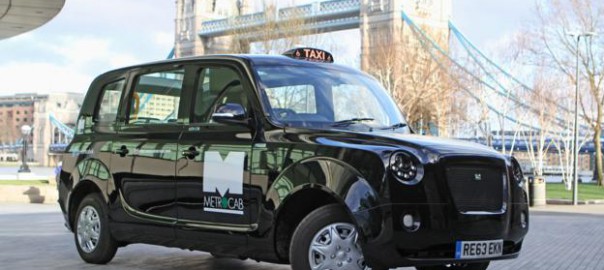
The release of the Metrocab, a battery-powered taxi capable of zero emissions, is one of the efforts to clean up the city’s transport (Image: Metrocab)

High-mileage EVs ‘cheaper to run’ than latest diesels

Electric vehicles (EVs) are becoming an attractive business proposition for high-mileage vehicle operators like Uber in some EU capitals, a new study suggests.

The new study, from Transport and Environment (T&E), does not include London in its analysis, but highlights the cost advantages of EVs in cities such as Paris, Berlin, Madrid and Lisbon.

Medium-sized battery EVs, such as the Nissan Leaf, are on average 14% cheaper to run than equivalent diesels today, if slow charging overnight near home and/or fast charging at preferential rates are available, it says.

The release of the Metrocab, a battery-powered taxi capable of zero emissions, is one of the efforts to clean up the city’s transport (Image: Metrocab)

The savings can be even higher (24%) in the case of Parisian drivers.

In monetary terms, these savings amount to €3,000 (£2,700) every year, because of cheaper electricity, lower EV retail prices and higher purchase incentives in France.

T&E says that the taxi and ride-hailing markets are best positioned to go fully electric first.

The economics of EVs – more expensive to buy but a lot cheaper to run – match perfectly with high-mileage, low-margin businesses like ride-hailing and taxis, the research suggests.

Uber-type drivers can travel up to five times the mileage of an average motorist.

Yoann Le Petit, new mobility expert with T&E, said: “This is a win-win-win situation for drivers, citizens and the planet.

“The sooner Uber and taxis go 100% electric, the sooner citizens will enjoy cleaner air.”

In London, the Mayor’s EV infrastructure taskforce estimates that 70% of the demand for slow and normal chargers in residential areas will come from Uber drivers alone.

Read more: Fleet News

It’s Time to Go Green!

If you would like to know more about Solar Panels and the PowerBanx range of home battery systems, and get a free instant quote, please complete our online form:

Uber updates London electrification plans with new ‘clean air fee’ and charger partnerships

Uber has teamed up with seven electric vehicle charging suppliers to offer its drivers cheaper prices for home charge points, while adding 15p per mile to each London journey to fund the switch to EVs across its London fleet.

The company’s latest Clean Air Plan is aiming to get every car in London on the Uber app to be fully electric in 2025 – a significant change to its pledge made in September last year to transition its London fleet of uberX vehicles to hybrid or fully electric by 2019, followed by the rest of the UK in 2022.

From early 2019, a ‘clean air fee’ of 15p per mile will be included on every trip booked through the app in London – averaging at 45p a journey – to be put towards aiding drivers in upgrading to an EV.

The amount of support drivers could receive will be based on the number of miles they have driven, with those using the app for an average of 40 hours per week likely to expect around £3,000 within two years’ time and £4,500 in three years.

This is in place of a similar charge proposed by Uber in September last year of 35p per journey to be put into a ring-fenced Clean Air Fund offering up to £5,000 to drivers towards the cost of upgrading to a hybrid or fully electric vehicle.

The company expects to raise £200 million in the coming years, with a goal to have all Uber vehicles fully electric in London in 2025, with the first 20,000 drivers upgrading to electric vehicles by the end of 2021.

Read more: Current News

The release of the Metrocab, a battery-powered taxi capable of zero emissions, is one of the efforts to clean up the city’s transport (Image: Metrocab)

Electric vehicles halve drivers’ exposure to toxic emissions says Kings College London

Zero emission capable taxis can halve a driver’s exposure to toxic exhaust pollutants, according to new research.

The study into air quality by King’s College London’s Environmental Research Group (ERG) monitored drivers of both diesel and electric taxis, measuring particulate matter and nitrogen dioxide inside and outside of their working environments.

It found that drivers of diesel taxis are exposed to pollution levels 1.8 times higher than those driving an electric model.

The research programme, partly funded by electric taxi firm LEVC, also set out to understand whether there are certain behaviours professional drivers can adopt to minimise their exposure to air pollution.

The release of the Metrocab, a battery-powered taxi capable of zero emissions, is one of the efforts to clean up the city’s transport (Image: Metrocab)

Ten London taxi drivers took part and provided 390 hours of air pollution data.

In-vehicle concentrations were measured over a period of four full working days during summer 2018. Initial analysis found that while cab drivers face the same level of exposure to poor air quality as other commercial vehicle drivers, and experience double the exposure at work compared to outside of work, their choice of vehicle made a very significant difference.

Average exposure to nitrogen dioxide and black carbon during a standard shift was 1.8 times higher for drivers of the older diesel taxis compared to those in all-new electric cabs.

Read more: Fleet News

Solar EV Charging Hub on Princes Street, Dundee (Image: eVolt)

eVolt installs rapid charging units for first solar power hub in Dundee

eVolt UK, the nationwide supplier of electrical vehicle (EV) charging units, has installed the latest versions of its rapid charging units for the first and largest purpose-built charging hub in the UK that includes solar power and energy storage.

The hub is located on Princes Street in Dundee city centre and features rapid charging units, 18 bays of solar canopies and an integrated energy storage system utilising second-life EV batteries. eVolt has also installed six of its Raption 50kW Rapid Chargers, capable of charging two vehicles simultaneously in approximately 30 minutes, and three 22kW eVolve chargers.

Solar EV Charging Hub on Princes Street, Dundee (Image: eVolt)

Fraser Crichton, Transport Officer at Dundee City Council, says the hub is a landmark development for the city

“We are so excited to have completed our latest EV infrastructure project as we continue to drive our e-mobility vision. With over 100 pure electric taxis in the city this hub will be vital to support our taxi fleet as well as benefitting the wider EV community ”

This is the second of three hubs to be introduced this year in Dundee through the Office for Low Emission Vehicles (OLEV) Go Ultra Low programme. The first hub was introduced at Aimer Square in April and has been used frequently since its launch. Six rapid chargers and two eVolve chargers will also be installed at Queen Street car park later this year.

Justin Meyer, General Manager of eVolt UK, says:

“This is the first hub of its kind, combining EV charging, solar canopies and energy storage, we are proud to be supporting Dundee Council’s project to lower emissions and to encourage more people to make the switch to sustainable e-Mobility.”

Source: eVolt / Gravity London