Category Archives: Tesla

News and reviews of Tesla electric cars (including plug-in hybrids).

Car review: The Tesla Model S P85D is seriously fast

Car review: The Tesla Model S P85D is seriously fast, with an “Insane” mode to scare off its rivals

Tesla, the darling of the alternative-power car makers, has made more progress in a few short years than the likes of Ford, General Motors and even Toyota when it comes to electric cars.
The American firm, co-founded by Elon Musk of PayPal fame, has not only made great strides technology-wise, but has also achieved much in terms of brand awareness. But Tesla is a fraction of the size of a traditional car maker, and it’s this that’s likely to have enabled the bullish firm to outmanoeuvre the lumbering giants who still have one foot in the previous century.

While the current focus is on Tesla’s premium market Model S, the firm’s original foray into electric was with Lotus Elise. The car’s 200-ish mile range and rapid acceleration were ample trade-offs for the patience required for charging the car.

Tesla’s moved on from the Roadster to the Model S, an altogether more upmarket and refined proposition, that’s not really a saloon but a large five-door hatchback. The car’s appearance is risk averse when viewed from a more adventurous European perspective, but that’s where the comparisons end.

The car’s voluminous hatchback boot, which is big enough to accommodate two rear-facing child seats if desired, is bookended by an impressively capacious front boot like what you’d find with Porsche’s Boxster, Cayman and 911 family.

Even the car’s cabin trumps many of its rivals. There are no bulky oily bits underneath to impact on cabin space, which is why the big Tesla offers its occupants a near flat floor, a generous amount of legroom and, upfront, oddment storage space where you’d normally find the gearlever and handbrake.

Where the Model S really differs from the usual premium suspects is in the ownership proposition and how it drives. And remember Tesla’s first model, the sporty Roadster? The firm has well and truly nailed its colours to the performance saloon mast with a supercar-baiting variant boasting two electric motors.

Heading up Tesla’s admittedly modest Model S line-up is the P85D, an all-wheel drive model complete with a similar electric range to the lesser variants and a zero to 60mph sprint time of 3.2 seconds. To put that into perspective that’s Porsche 911 Turbo territory. Not bad for a five-seat car positioned size-wise between BMW’s 5 and 7 Series.

The key to this performance is Tesla’s use of twin motors – one at each axle – producing a combined 682bhp and a similar amount of torque. And it’s the latter’s “twist action” that has the wow factor, as even the best supercar in the world can’t spin up its turbos fast enough to match the P85D’s rocketship-like acceleration.

Read more: City AM
Kia Soul EV second only to Model S in driving autonomy

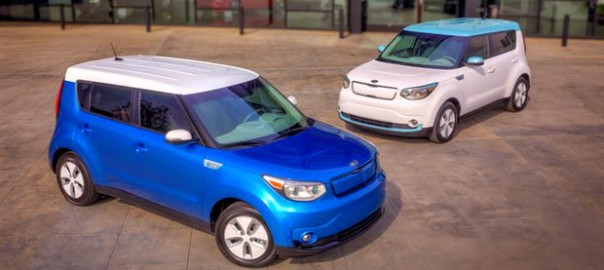
In my previous post about EVTEC’s four-port 100+ kiloWatt DC Fast Charging station, there’s a little footnote that deserves more attention — the Kia Soul EV supports 100 kiloWatt DC Fast Charging via CHAdeMO. The Kia Soul EV is getting strong reviews, with Kia making it available in several European countries, in Canada, and several U.S. States. The reviews indicate Kia carefully crafted an excellent electric car, and as a Soul EV owner I can attest to how good a car it is. That it also supports a 100 kiloWatt charging rate demonstrates the assertion that Kia paid attention to details with the Soul EV.

This, and the Soul EV’s driving range, make it second in driving autonomy to the Tesla Model S.

That’s a big claim to make about a car many people dismiss as a compliance car (it’s not), so let’s take a look at what it means.

Since September, the Soul EV has been shown twice alongside 100 kiloWatt CHAdeMO charging stations. Last September it was a Korean charging station maker demo’ing their station and the Soul EV in Europe. Then in late March, it was EVTEC (a Swiss company) showing off their four-port CHAdeMO/CCS station, alongside a Soul EV. Hence, while Kia hasn’t said much about it in public, this demonstrates the Soul EV’s capability of charging at 100 kiloWatts via CHAdeMO.

To my knowledge no other CHAdeMO or Combo Charging System (CCS) car can charge at this rate. Well…. that’s a hard assertion to test because the CHAdeMO and CCS public infrastructure doesn’t support 100 kiloWatts.

The Tesla Supercharger network, however, supports a 120 kiloWatt charging rate which is how the Model S is the first electric car that can implement proper road trips. That charging rate means a sub-1-hour recharge for a 260+ mile driving range.

Therefore, by supporting a 100 kiloWatt CHAdeMO charging rate, the Soul EV has the second fastest charging behind the Model S. BUT .. of course .. it’s difficult to be happy about that if you can’t find a 100 kiloWatt CHAdeMO station anywhere. We have to be satisfied with our 50 kiloWatt (or less) charging rate supported by the current infrastructure.

It does point to future standards compliant EV charging infrastructure, supporting electric cars from any manufacturer, with charging rates as fast as Tesla’s Supercharger system.

I said the Soul EV is “second in driving autonomy to the Tesla Model S”. We’ve just gone over the charging rate side of that, let’s now go over the driving range.

The Model S comes with two battery pack sizes – 60 kiloWatt-hours, 208 mile EPA range – 85 kiloWatt-hours, 265 mile EPA range.

The next longest electric car EPA range is the Kia Soul EV, coming in at 93 miles with many people reporting testing it at over 100 miles range. The Gen2 Toyota RAV4 EV has a longer EPA range, but is no longer on the market. The Mercedes-Benz B-Class Electric has a larger battery pack, but an 87 mile EPA range. Neither have fast charging.

The Kia Soul EV supports a 93 mile (or more) range, and 100 kiloWatt charging rate, with a 27 kiloWatt-hour battery pack. Some claim that a small pack like this cannot charge at such a rate without damaging the pack. Supposedly the rule of thumb is to not charge faster than 2x the pack capacity, so a Soul EV should max out at 54 kiloWatts charging rate.

That “rule of thumb” is a way of describing a 2C charging rate (1C means a 1 hour charging time, and 2C means a 1/2 hour charging time). The actual safe charging rate (“safe” meaning both actual safety from events like fire, and “safe” as in not damaging the pack) depends on the battery chemistry. Some chemistries can charge at a higher C rate than other chemistries. Did Kia choose battery technology that can charge at a 4-5C rate?

The phrase “driving autonomy” means a combination of charging speed and driving range. The gasoline cars are tops in both measures, with a 300+ mile driving range and a 5 minute recharge time. Our gasoline driving cousins prove every day what they can do with that sort of autonomy. It’ll be awhile before electric cars catch up (1 megaWatt charging rate?) but as the manufacturers push both driving range and charging rate forward we’ll get closer and closer to what the gasser drivers enjoy.

Going forward it’s best if electric vehicle drivers demand “autonomy” from automakers and charging network operators. That’s the only way to convince those stuck with range anxiety issues that electric cars are safe for adoption.

Source: The Long Tail Pipe

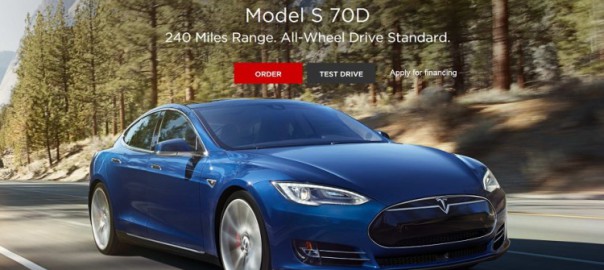
Tesla Introduces The New Base Model S – 70D (Image: Tesla)

Tesla Launches Model S 70D – Eliminates Base 60 kWh Model S

The Tesla Model S 70D is now the entry-level Tesla

It seems Tesla Motors is always tweaking its model lineup and making minor changes here and there to options, colors and so on. This latest change brings us a new model, while eliminating Tesla’s cheapest offering.

The new model, the Model S 70D, replaces the 60 kWh Model S. As the name implies, the 70D is a dual-motor AWD Model S that gets more range than the outgoing 60 kWh Model S. However, the price for entry jumps a bit from ~ $71,070 for the base 60 kWh Model S, to $75,000 for the dual-motor, all-new 70D.

Read more: Inside EVs

Tesla Model S A Game Changer? – Video

According to The Telegraph, the Tesla Model S is the one vehicle that could forever change our perception of electric cars:

“Seven reasons why the arrival of the Tesla Model S in the UK in 2014 could spark a change in how electric cars are viewed.”

We believe that the Model S has already changed the general perception of electrics, but the UK got the Model S years after the U.S., so it might take some time still for the UK’s perception to be changed.

And if you are talking about the P85D (AWD) right hand edition for the UK, it has still yet to arrived after being delayed a couple times. First delivers of the uber Model S aren’t expected until late summer.

Source: Inside EVs

Translogic Tests Tesla Model S P85D – Video

Tesla Model S was already covered by Translogic long ago, but with a major new version available on the market, it’s time for Translogic to check what the P85D is capable of doing.

Jonathon Buckley found that acceleration is addictive, while insane mode is incredible… and the crew confirms that too.

A big part of the video is on driving assist features, although for true autonomous driving features like self-parking, P85D will need further software updates.

Source: Inside EVs

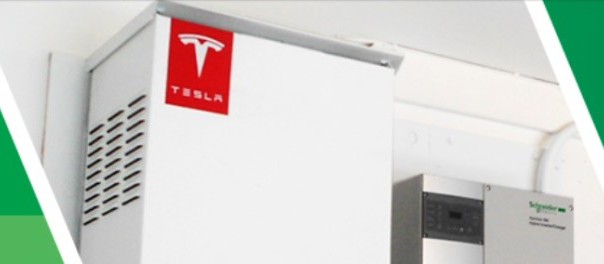
Tesla/Solar City Energy Storage Solution System Is In The “Pilot Program” Stage Today

Elon Musk Announces Major New Product Line

Tesla CEO Elon Musk took to his favorite source to disseminate breaking news (Twitter of course) on Monday to announce a “major new Tesla product line” will be debuting on April 30th at 8pm PT from the company’s Hawthorne, California Design Studio.

Mr. Musk stressed that it was “not a car” in the tweet.

No other hints were dropped at what this new product line could be by the CEO, but we are still free to speculate.

The most obvious choice would be standalone battery packs/”home energy storage” packages that are designed to independently power your home (or office) if need be.

Tesla/Solar City Energy Storage Solution System Is In The “Pilot Program” Stage Today

Of interest, Solar City (sister company to Tesla) already has a pilot “home energy storage solution” project running in conjunction with Tesla batteries and their own solar technology to over 300 clients today, and has promised to have that project be available to the masses by “late summer” with an announcement coming “mid-2015″ with all the finer details.

We think it is a good bet that Elon Musk’s announcement of an announcement in April will be related to this project.

In theory, this system could also allow for much higher speed residential/charging to the Model S (or future Model 3) with the aid of an external/auxiliary battery.

Then again, maybe it is just a line of Tesla-themed leisure wear, or personal use, James Bond inspired electric submarines.

Source: Inside EVs

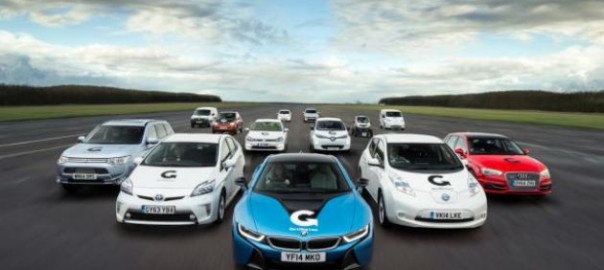
Go Ultra Low members boast 15 ULEVs across a range of segments (Image: OLEV)

Automakers race to double the driving range of affordable electric cars

Global automakers are readying a new generation of mass-market electric cars with more than double the driving range of today’s Nissan Leaf, betting that technical breakthroughs by big battery suppliers such as LG Chem Ltd will jump-start demand and pull them abreast of Tesla Motors Inc.

At least four major automakers — General Motors, Ford, Nissan and Volkswagen — plan to race Tesla to be first to field affordable electric vehicles that will travel up to 320 km (200 miles) between charges.

That is more than twice as far as current lower-priced models such as the Nissan Leaf, which starts at $29,010. The new generation of electric cars is expected to be on the market within two to three years.

To get a Tesla Model S that delivers 265 miles (427 km) on a charge requires buying a version that starts at $81,000 before tax incentives. Most electric cars offered at more affordable prices can travel only about 75 to 85 miles (121 to 137 km) on a charge – less in cold weather or when drivers have the air conditioning on.

Automakers need to pump up electric vehicle demand significantly by 2018. This is when California and eight other states will begin to require the companies to meet much higher sales targets for so-called zero emission vehicles — in other words, electric cars — and federal rules on reducing fuel consumption and greenhouse gases become much stricter.

BATTERY BREAKTHROUGHS

Tesla Chief Executive Officer Elon Musk said last week that

“200 miles is the minimum threshold” to alleviate consumer concerns over EV range. There is “a sweet spot around 250-350 miles that’s really ideal,” he said.

Musk has promised a more affordable Tesla, the Model 3, which will sell for around $35,000 and provide a driving range of 200 miles or more. That car is slated to begin production in mid-to-late 2017.

However, GM says it plans to field a 200-mile electric car, the Chevrolet Bolt, by late 2016.

The Bolt will use an advanced lithium-ion battery pack developed by Korea’s LG Chem, which also supplies batteries for the Chevrolet Volt hybrid. The newer batteries are said to have much higher energy density and provide much longer range between charges, thanks to breakthroughs in battery materials, design and chemistry, according to a source familiar with LG Chem’s technology.

“Several factors are at play that are landing at this 200-mile range” for a vehicle priced between $30,000 and $35,000, LG Chem Chief Executive Prabhakar Patil said in an interview. “We’ve been talking to several OEMs (automakers) regarding where our battery technology is and where it’s going.”

LG Chem also supplies standard lithium-ion batteries to the Ford Focus Electric and may supply the longer-range batteries to a new compact EV that Ford is tentatively planning to introduce in late 2018 or early 2019, according to three suppliers familiar with the program.

Compared with the 2015 Focus Electric, which has a range between charges of 76 miles, the new compact electric model would have a range of at least 200 miles, the suppliers said.

Nissan and VW both have battery supply deals with LG Chem, and both are working on longer-range EVs for 2018 and beyond.

Nissan is planning to introduce a successor to the Leaf in early 2018, according to a source familiar with the program, and that model is expected to offer significantly greater range than the current Leaf, the best-selling electric car in the United States, which can go 84 miles (135 km) between charges.

The 2015 Leaf uses batteries made by a joint venture between Nissan and supplier NEC. It is not clear if the future model will shift to LG Chem, although Nissan CEO Carlos Ghosn has identified LG Chem as a potential battery supplier.

VW plans to expand its current range of electrified vehicles, including a successor to the battery-powered e-Golf in 2018 with much longer range, according to two sources familiar with the program. The current e-Golf uses batteries made by Panasonic and has a range between charges of 83 miles.

Volkswagen plans to decide in the first half of this year whether new battery technology under development at U.S. startup QuantumScape Corp, which may expand an electric vehicle’s driving distance between recharges to as much as 700 kilometers (430 miles), is ready for use in its electric cars.

Source: Electric Vehicle News

Better Place Battery Swapping

Tesla Navigation Update Echoes Better Place System Of 3 Years Ago

It was another typically hyperbolic statement from Tesla Motors CEO Elon Musk.

A simple tweet on a Sunday afternoon claimed that Tesla was “About to end range anxiety … via [over-the-air] software update. Affects entire Model S fleet.”

As usual, the media erupted with wild speculation about what Musk could do to “end range anxiety” in cars the company had sold more than two years ago.

But when the actual announcement came, it seemed to disappoint a number of people: route planning and an alerting system didn’t sound so exciting.

So why do I think there is much more to this announcement than do other commentators?

A truth universally acknowledged by electric-car owners is that people who’ve never lived with a plug-in vehicle don’t really understand how they work in real life.

Range anxiety is largely a mythical bogeyman. I view it as something that petrolheads tell other petrolheads to keep the cult of liquid fuel alive.

Electric-car owners know the range capabilities of their cars. They drive on regular routes, day in and day out, using similar amounts of electricity, and they know what their cars can and can’t do.

Planning an out-of-the-ordinary trip, however, requires some help. Especially one that hasn’t been made before and when the overall trip, including return, is close to or beyond the car’s range.

What Musk actually announced on Thursday sounds quite similar to what failed battery-switching startup Better Place delivered several years ago in Israel (and Denmark).

In fact, I predicted as much last week.

Musk spoke about two integrated systems, “Range Assurance” and “Trip Planner,” that would work together.

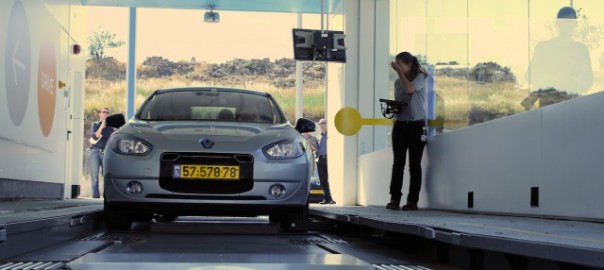
Back in 2012 when I picked up my Better Place Renault Fluence ZE, I had capabilities remarkably similar to those Tesla announced.

Whenever my battery dropped below 12 percent, I would get a phone call from an actual person. He or she would ask if I knew where I was going – and would, if necessary, remotely re-route me to a charge spot or battery-switching station.

I filmed a video of the trip planning feature, including the system working out a 220-mile route from Tel Aviv to Eilat involving multiple battery switches along the way. Effortlessly.

Both of these features also took into account the real-time status of the infrastructure.

Better Place was aware of the status of everything in their network–switch stations, Level 2 charging stations, and cars–and if a switch station wasn’t working, drivers would be alerted and re-routed.

Read more: Green Car Reports

Tesla Motors Adds Range Assurance and Trip Planner

[From 19 March 2015]

As promised by Tesla Motors CEO Elon Musk on Sunday, the Californian automaker has just revealed a new over-the-air software update for owners of its Model S luxury electric car which it hopes to push to all customers in around ten day’s time. What’s more, it includes two brand new features which Tesla hopes will not only tackle the real spectre of range anxiety among first-time owners but also make it ‘impossible’ for a Tesla Model S owner to run out of charge in their car without intentionally setting out to do so.

These two features, called Range Assurance and Trip Planner, make use of the wireless Internet connection built into every Tesla Model S, along with Tesla’s integrated network of super-fast Supercharger stations.

Other features included in the 6.2 updates include mainly improvements to accelerator and brake mappings, but also mark the inclusion of a Valet Mode and improved top speed for owners of Tesla’s latest car, the Tesla Model S P85D, as well as the switching on of active safety features such as automatic safety braking, side collision warning system and blind spot warning system.

Read more: Transport Evolved

Tesla Shares Rise as New Safety System is Launched

Tesla Motors Inc., of Palo Alto, California announced in the early hours of 1st April the launch of its latest electric car safety system, causing its share price to rise substantially as soon as the stock market opened, Fuel Included (http://fuelincluded.com/news/press-release/) can exclusively reveal.

Tesla has been in the forefront of many safety developments since the launch of its original Roadster and has enhanced them significantly during the development of the Model S. In NHTSA safety testing in 2013 it achieved a 5 star rating, and it did the same in 2014 in the European NCAP system. Following some issues with collisions with road debris the Model S was the first car to be retrofitted with a titanium undershield. At the end of 2014 it was announced that any Model S manufactured from September 2014 would get auto-pilot features including automatic steering, adaptive cruise control and lane departure warning.

The latest Tesla safety system solves a known susceptibility of electric cars to water ingress into the electrical systems. It builds on earlier work begun by other manufacturers. One of the earliest of these was developed by Mercedes-Benz (part of the Daimler group) for its Smart ForTwo Electric Drive. This protected the vehicle from water ingress even during a heavy rainstorm. It was ground-mounted, however, which limited its use to the owner’s home.

Smart Car Rain Protection System (Image Credit: M. Stanley/TrendHunter.com)

When Toyota followed up the success of its Prius hybrid with the launch of the Prius Plug-In electric car it produced an enhanced rain protection system. Like the Smart system it was deployed to shield the car’s electrical systems from water ingress but unlike that system it could be transported in the car. Therefore at any time that it was required the driver was able to pull over and deploy the system without the need to return home to shelter.

The Tesla system, however, is significantly more advanced than any previous system. It is fully integrated into the Model S and can be deployed at speed without restriction. Its umbrella configuration allows it to fully protect the car’s electrical system from even a powerful rainstorm.

Toyota Rain Protection System Deployed on a Prius Plug-in (Image Credit: WITHCOMBEM/Photobucket.com)

In one impressive step forward Tesla has demonstrated that it can achieve the ‘holy grail’ of deploying an electric car that can be driven in severe environmental conditions. In this way Tesla has become the first electric car manufacturer to eliminate ‘rain anxiety’.

Automatically Deployed Tesla Rain Protection System (Image Credit: FuelIncluded.com)

Those familiar with the company’s plans have suggested that Tesla may build on this success by adding a kite-deployed conductor to the next-generation Model X and so produce an electric car that can charge itself in a thunderstorm.